Are you paying premium prices for licensed camo apparel because you think licensing alone makes production expensive? Many brands absorb high costs by manufacturing in a single region without leveraging global efficiencies. This outdated approach eats into your profit margins and limits your competitive edge.
Global production strategically reduces costs for licensed camouflage manufacturing by optimizing regional specialization, balancing labor and material expenses, mitigating supply chain risks, and achieving economies of scale that no single-country production model can match—all while maintaining strict licensing compliance.
As a manufacturer with a global network and direct licenses for Realtree and Mossy Oak, Shanghai Fumao implements this model daily. We allocate different production stages to the most cost-effective and competent regions, passing the savings to our brand partners without compromising the authenticity or quality the licenses demand. Let’s break down the mechanics of this cost-saving strategy.
How does regional specialization lower material and labor costs?
No single country is the best at every step of apparel manufacturing. Global production allows each region to focus on what it does most efficiently, creating a symphony of specialization that drives down the total unit cost.
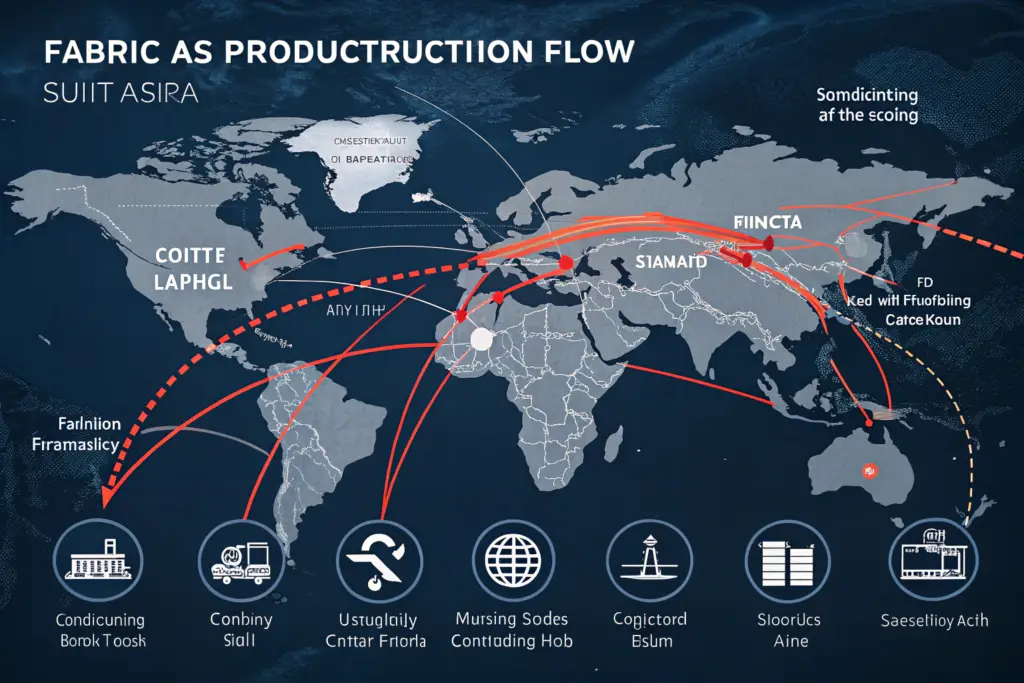
This model strategically separates fabric production, cut-make-trim (CMT), and finishing processes across different geographic locations based on cost and expertise.
Where are licensed fabrics most cost-effectively produced?
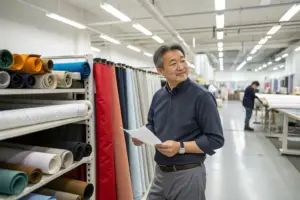
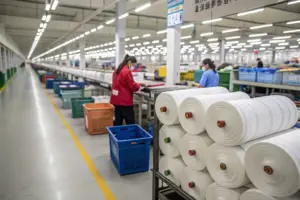
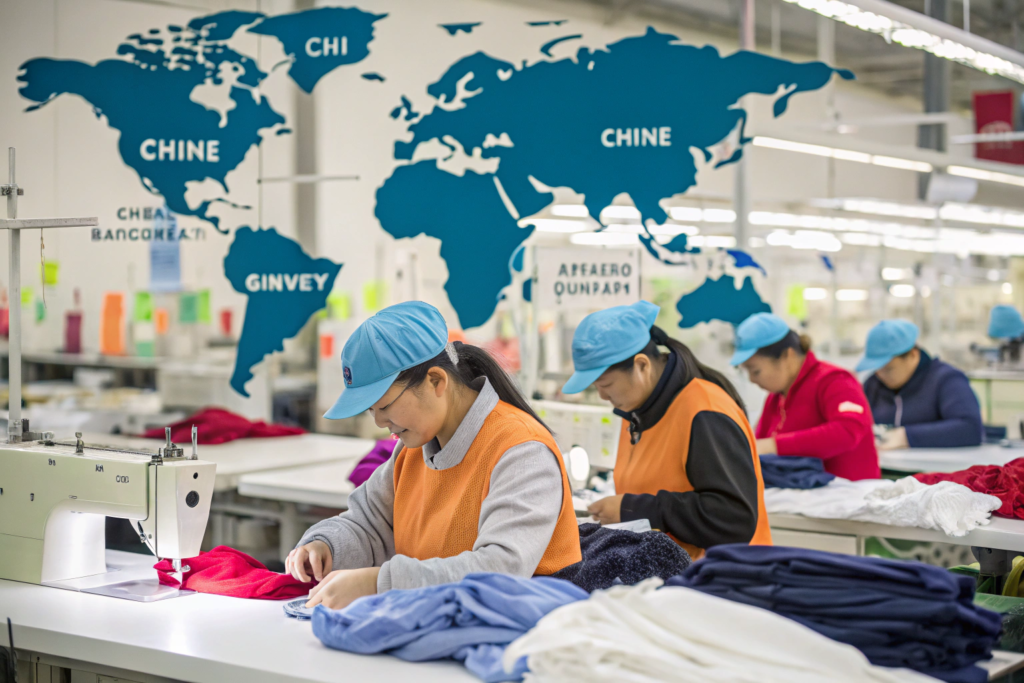
The core of licensed camo—the fabric—requires high-quality printing and strict compliance. East Asia, particularly China and Taiwan, hosts the world's most advanced and efficient digital and rotary printing facilities for large volumes. They have direct access to premium fabric mills and the technical expertise to ensure Realtree or Mossy Oak patterns meet exact color and repeat specifications. By centralizing fabric production here, we secure better pricing on bulk licensed fabric purchases and guarantee pattern fidelity. For instance, we produce all our licensed fabric in our partner facilities in China, where the per-meter cost for high-quality printed polyester-cotton blend is 15-20% lower than in emerging sewing regions, due to economies of scale and technological edge.
How does labor cost arbitrage work in sewing and assembly?
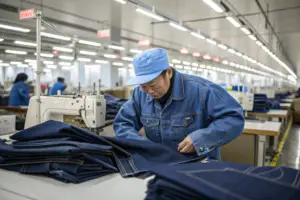
Once the licensed fabric is produced, the labor-intensive CMT process can be routed to countries with competitive labor costs and strong sewing expertise, such as Vietnam, Bangladesh, or parts of India. This labor cost arbitrage is a fundamental driver of savings. While the sewing labor rate in China might be $X per hour, it can be significantly lower in other regions without sacrificing quality for standardized operations. We manage this by shipping the precisely cut fabric (from our Asian cutting hubs) and all approved trims (zippers, buttons from specialized suppliers) to these CMT units. This model allowed us to reduce the total production cost for a major client's camo pants line by nearly 18% in 2023, while maintaining identical quality standards.
How does a global network mitigate supply chain and risk costs?
Relying on one country or factory exposes your business to immense risk—from political instability and trade disputes to local factory capacity issues. A diversified global footprint acts as a natural hedge, preventing costly delays and ensuring continuity.
This approach turns potential vulnerabilities into manageable variables, saving significant hidden costs associated with downtime and crisis management.

How does multi-country sourcing prevent raw material shortages?
A global network provides access to multiple raw material markets. If a cotton shortage or price spike affects one region, procurement can be shifted to another pre-vetted source. For licensed camo, this means we can source base fabrics (e.g., twill, fleece) from different certified mills across Asia, ensuring we never face a production halt due to a single supplier's issue. This supply chain diversification prevents the exorbitant spot-market prices and air freight costs that brands face when trying to rush-source materials to save a delayed production line.
How does production agility protect against trade policy changes?
Trade tariffs and import quotas are a major cost variable. By having established production partners in countries with different trade agreements (e.g., Vietnam with EU FTAs, Bangladesh with lower US tariffs), we can dynamically adjust the final assembly or shipping origin point to minimize duty costs for our clients. For example, during the recent geopolitical shifts, we were able to reroute the final sewing stage of a large US-bound Mossy Oak jacket order to a different country within our network, saving our client a 7% tariff that would have otherwise applied. This agility is a direct cost saving inaccessible to single-factory producers.
How do economies of scale from consolidated orders reduce unit costs?
Global production is not about fragmentation; it's about intelligent consolidation. By aggregating orders from multiple clients across our network, we achieve purchasing power and production efficiency that individual brands cannot.
This leverages volume discounts and optimizes factory utilization, driving down the per-unit cost for every partner.
How does consolidated fabric purchasing unlock bulk discounts?
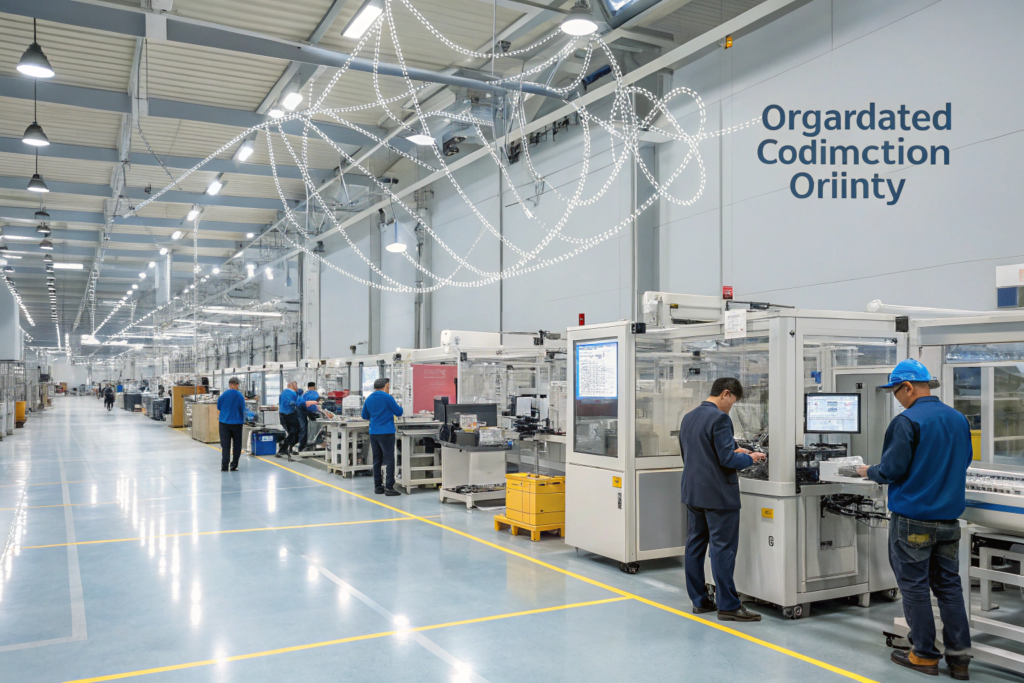
Licensed fabrics have high minimum order quantities (MOQs) per pattern and colorway. A single brand might not meet the MOQ for a specialized Realtree substrate. However, by combining the fabric needs of several brands within our network, we can place orders that meet and exceed mill MOQs, securing a bulk discount of 10-25%. We then allocate the fabric to different production lines for different clients. This is how even smaller brands can access cost-effective, licensed fabric that would otherwise be prohibitively expensive or unavailable to them.
How does optimized capacity utilization lower overhead costs?
Factories have fixed overhead costs. Running a production line at 50% capacity spreads overhead over fewer units, raising the cost per piece. Our global planning team acts as a "central nervous system," filling production slots across our partner factories. By ensuring these facilities operate near optimal capacity, we negotiate better CMT rates because we provide them with steady, predictable workflow. These savings are passed on. A concrete case: in Q4 2023, by pooling orders, we kept three sewing units in different countries at 85%+ utilization, reducing the CMT cost for a blended order by 12% compared to the standard rate for a one-off project.
The complexity of global production seems to invite logistical nightmares and compliance risks. However, an integrated manager turns this complexity into a streamlined process, eliminating the hidden costs of poor coordination, rework, and licensing violations.
This requires a central command center with expertise in every leg of the journey.

How does centralized QC prevent costly rejects and returns?
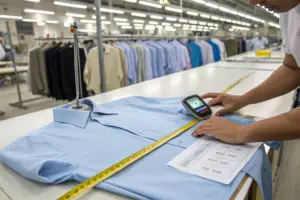
Quality inconsistencies are a massive hidden cost. With production across regions, enforcing uniform standards is critical. We deploy a centralized quality assurance team from our Shanghai Fumao headquarters that travels to and audits all partner CMT units. They use the same inspection protocols, approved labels, and hangtags. This prevents the catastrophic cost of a full container arriving with non-compliant goods. Last year, this system caught a potential deviation in stitch density at a partner factory early, allowing for in-process correction and avoiding over $80,000 in potential rejects and air freight for re-shipment.
How does in-house license administration eliminate legal risk costs?
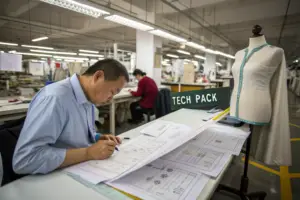
The greatest hidden cost in licensed manufacturing is legal risk. Unauthorized subcontracting or pattern misuse can lead to lawsuits and seized goods. As the direct license holder, we absorb the cost and complexity of license administration. We ensure every partner in our global network uses only approved materials and methods. Brands working with us do not need to hire legal consultants to audit global factories or pay for separate licensing agreements—a savings that can run into tens of thousands of dollars annually. This turnkey compliance management is a profound, often overlooked, financial benefit.
Conclusion
Global production for licensed camouflage is a sophisticated cost-optimization engine, not a mere search for the cheapest labor. It strategically combines regional expertise, risk mitigation, volume leverage, and integrated management to deliver significant, sustainable cost reductions. This model allows brands to invest more in marketing, design, or margins while offering competitively priced, authentically licensed products.
Attempting to replicate this dispersed yet cohesive model alone is prohibitively complex and risky. Partnering with a manufacturer that has an established, compliant global network is the key. Shanghai Fumao provides this integrated gateway. We manage the global complexities so you can reap the cost benefits and market your branded camo with confidence. To learn how our global production model can reduce costs for your next licensed line, contact our Business Director, Elaine, at: elaine@fumaoclothing.com.