I learned the true cost of poor quality control early in my career. A client from New York trusted us with a large order of women's blouses. We did everything right on our end, but we sourced fabric from a new mill without running our full battery of tests. The fabric looked perfect. It felt perfect. But after the garments were packed and shipped, we got a frantic call. The blouses were arriving at the retailer with yellow spots. The mill had changed their finishing chemicals without telling us, and the dye was reacting to the local water in New York. We had to air-freight replacements at our own expense. That mistake cost us money, but more importantly, it taught me that quality control must be absolute and uncompromising.
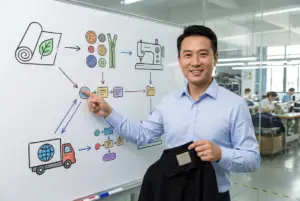
At Shanghai Fumao, our full package model ensures quality control by embedding inspection protocols at every single stage of production, from raw material verification to pre-shipment checks, using a combination of in-house labs, AQL standards, and real-time corrective action.
We don't believe in a single "final inspection" that simply tells you your goods are bad after it's too late to fix them. Our system is designed to catch problems before they become defects. We treat every order as if it were our own brand on the line. Let me walk you through exactly how we build quality into every garment we produce.
How does Fumao inspect materials before production even begins?
The quality of your finished garment is determined the moment we select the fabric. If the base material is flawed, no amount of skilled sewing can fix it. This is why we start our quality control process weeks before the first piece is cut. We treat incoming materials with the same scrutiny we apply to finished goods.
I remember working with a brand from Los Angeles that makes high-end men's shirts. They specified a very fine Egyptian cotton fabric. When the fabric arrived from our mill, our lab ran our standard tests. We found that the thread count was slightly below the specification. It was a difference that most manufacturers would have ignored. But we knew this client's reputation depended on that specific feel. We rejected the fabric immediately and worked with the mill to rush a replacement. The client never knew there was a problem because we solved it before it ever touched their order.
What specific tests does Fumao perform on incoming fabrics?
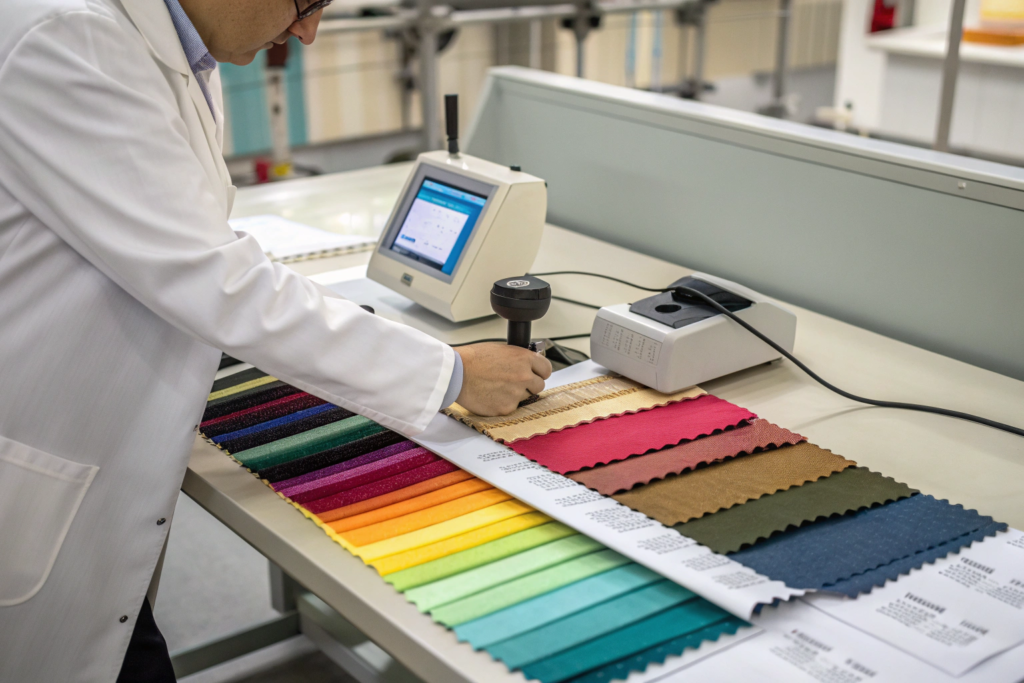
We run a comprehensive battery of tests on every roll of fabric before it is approved for cutting. First, we verify the weight and construction against your specifications. We check the width to ensure our markers will be efficient. We test for colorfastness to washing, light, and perspiration. We run shrinkage tests so we can build the correct allowances into our patterns. We also test for fabric strength and pilling resistance. For specialty fabrics, we conduct additional tests. For activewear, we check stretch and recovery. For children's wear, we verify compliance with flammability standards. We document every test result and share them with you. If anything falls outside the acceptable range, we stop and find a solution before proceeding.
How does Fumao verify trims like buttons and zippers meet brand standards?
Trims are often the first thing to fail on a garment. A zipper that jams or a button that cracks ruins the customer experience. We test every trim component before it goes to the sewing line. We test zippers by opening and closing them hundreds of times to ensure durability. We check buttons for impact resistance to ensure they won't crack during washing or wearing. We verify that snaps and rivets are properly set and will hold under tension. We also check that all custom logos on buttons or zipper pulls are crisp and correctly aligned. We learned this lesson the hard way years ago when a shipment of jackets had buttons that looked perfect but started tarnishing after two weeks in a store window. Now, we test for everything.
What in-process quality checks happen on Fumao's production lines?
Waiting until the end of production to check quality is like waiting until a cake is baked to check if you used sugar or salt. By then, it is too late. Our philosophy is to build quality into the process, not just inspect for it at the end. This means we have trained supervisors on every line, at every step, watching for issues in real time.
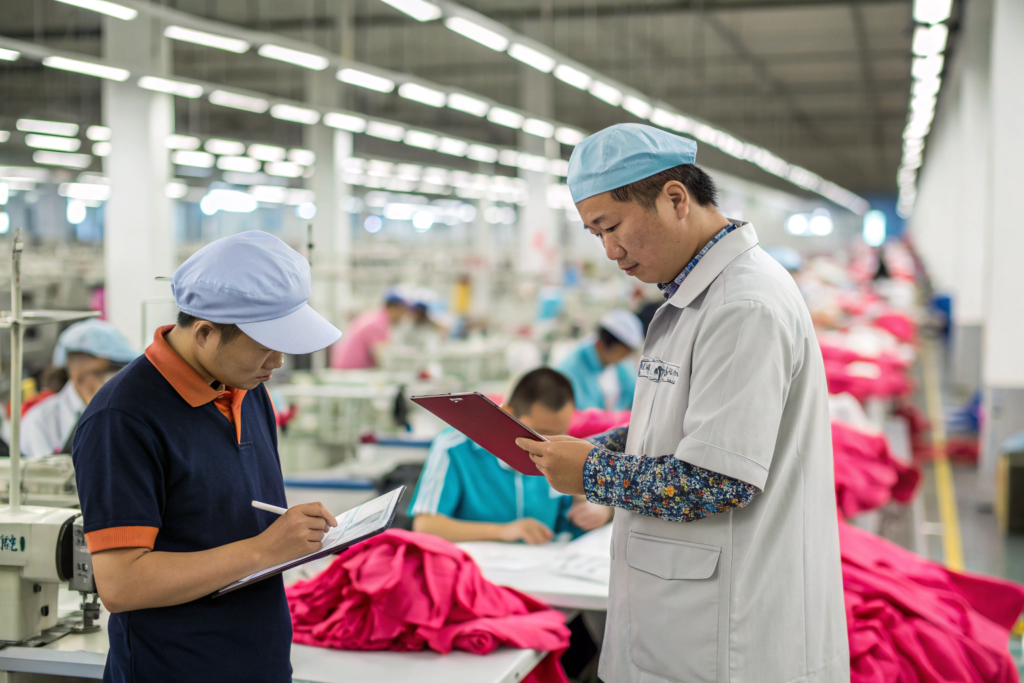
A few years ago, we were producing a complex women's jacket for a client in Chicago. The design had multiple panels and a tricky lining attachment. During the first hour of production, our line supervisor noticed that one sewing operator was consistently stitching the lining slightly too tight. It was a small error, but it would have caused the jacket to pull and distort after one wear. We stopped the line, retrained the operator, and inspected every piece she had already completed. We fixed the issue immediately. Because we caught it in-process, we only had to rework a few pieces instead of hundreds at the end.
What are the key inspection points during cutting and sewing?
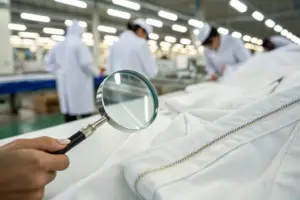
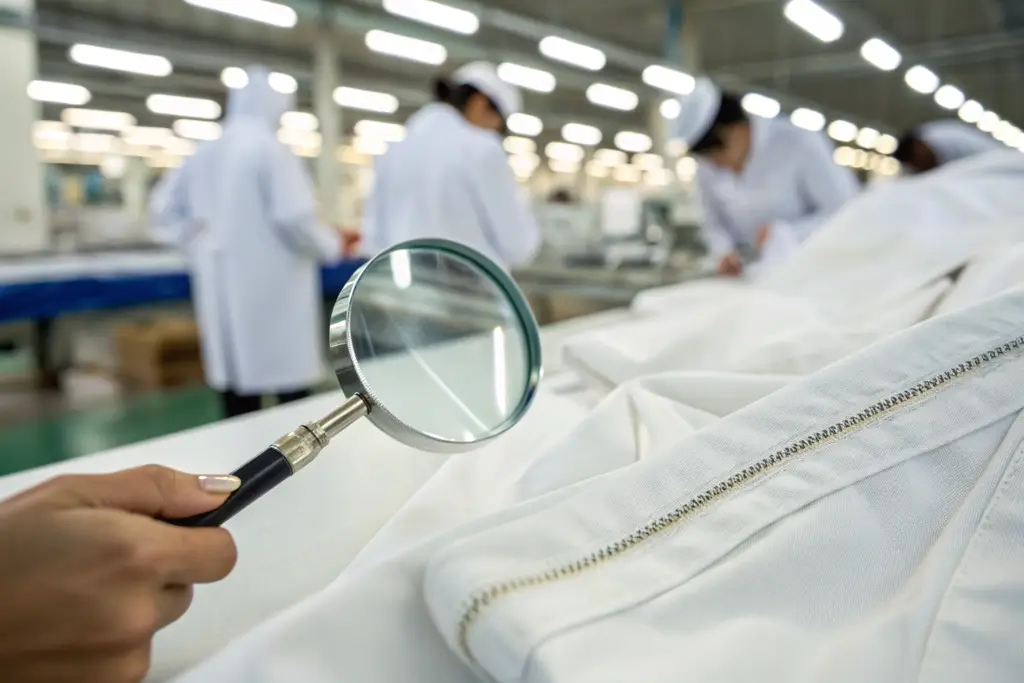
Our in-process inspections happen at multiple defined points. During cutting, we check that the fabric layers are perfectly aligned and that the pattern pieces are cut accurately. We inspect the first few pieces from each cut to ensure there is no distortion. During sewing, we have "bundle inspections" at critical construction points. For example, after collars are attached, we inspect a sample before they move to the next operation. After sleeves are set, we check again. This way, if a machine goes out of adjustment or an operator makes a mistake, we catch it within minutes, not days. We also have roving supervisors who randomly pull pieces from any bundle to verify quality against the master sample.
How does Fumao handle corrective actions when issues are found mid-production?
When we find an issue, we follow a strict protocol. First, we stop the affected operation immediately. We isolate all potentially affected pieces. Then, our supervisor and the operator analyze the root cause. Is it a machine problem? Is it a training issue? Is it a problem with the material? We fix the cause first, then we re-inspect all isolated pieces. Only pieces that pass re-inspection go back into the production flow. Defective pieces are either sent for repair or scrapped. We document every issue in our quality log so we can look for patterns and prevent recurrence in future orders. This systematic approach ensures that small mistakes never become big problems.
How does Fumao use AQL standards for final random inspections?
When the garments are finished, packed, and ready to go, we conduct our final quality verification. But we don't inspect every single piece. That would be inefficient and actually less effective because inspector fatigue leads to missed defects. Instead, we use internationally recognized Acceptable Quality Limit standards. This is the same system used by major retailers and brands worldwide.
I recall working with a sportswear brand from Florida that was nervous about a large order of custom team jerseys. They had been burned before by suppliers who shipped defective goods. We invited them to send their own third-party inspector to our factory for the final inspection. The inspector pulled a random sample using our AQL plan. They checked every detail. At the end of the day, they found the defect rate was well below the acceptable limit. The client was relieved, and the shipment went out on time. That trust is built on transparent, standard processes.
What does an AQL 1.5 or 2.5 standard actually mean for my order?
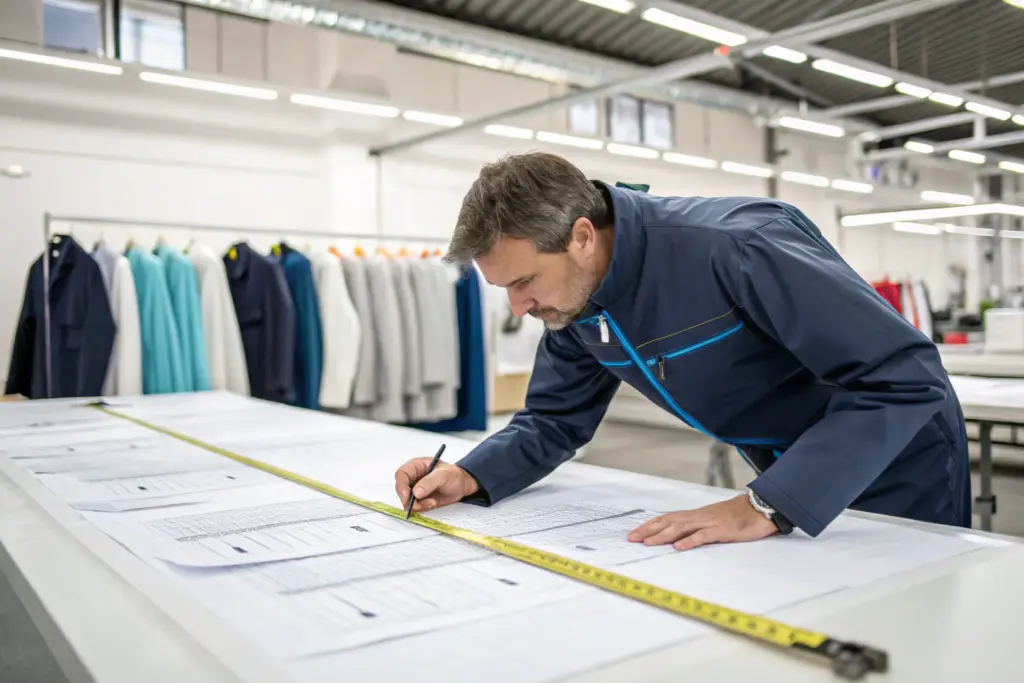
AQL stands for Acceptable Quality Limit. It is a statistical tool. When we agree to an AQL of 1.5 for major defects, we are saying that we will inspect a random sample of your order. If the number of defects found in that sample is below a specific limit, the entire lot is accepted as meeting the quality standard. If the defects exceed the limit, the entire lot is rejected and must be re-inspected 100% before a new sample is pulled. For most of our apparel clients, we work with AQL 1.5 for major defects and AQL 4.0 for minor defects. This is the industry standard for department store quality. For luxury brands, we often use a tighter AQL 1.0 standard.
How does Fumao classify major versus minor defects during inspection?
We have clear definitions that our inspectors are trained to follow. A major defect is something that would affect the wearability or saleability of the garment. This includes broken zippers, holes, incorrect sizing, mismatched patterns, or missing buttons. A minor defect is something a customer might notice but would not typically return the garment for. This includes loose threads, slightly uneven stitching, or minor shading that is only visible under close inspection. Critical defects, like a safety issue or a strong chemical smell, cause immediate rejection of the entire lot. We provide you with detailed inspection reports showing exactly what was found and how it was classified.
What role does Fumao's in-house lab play in ongoing quality assurance?
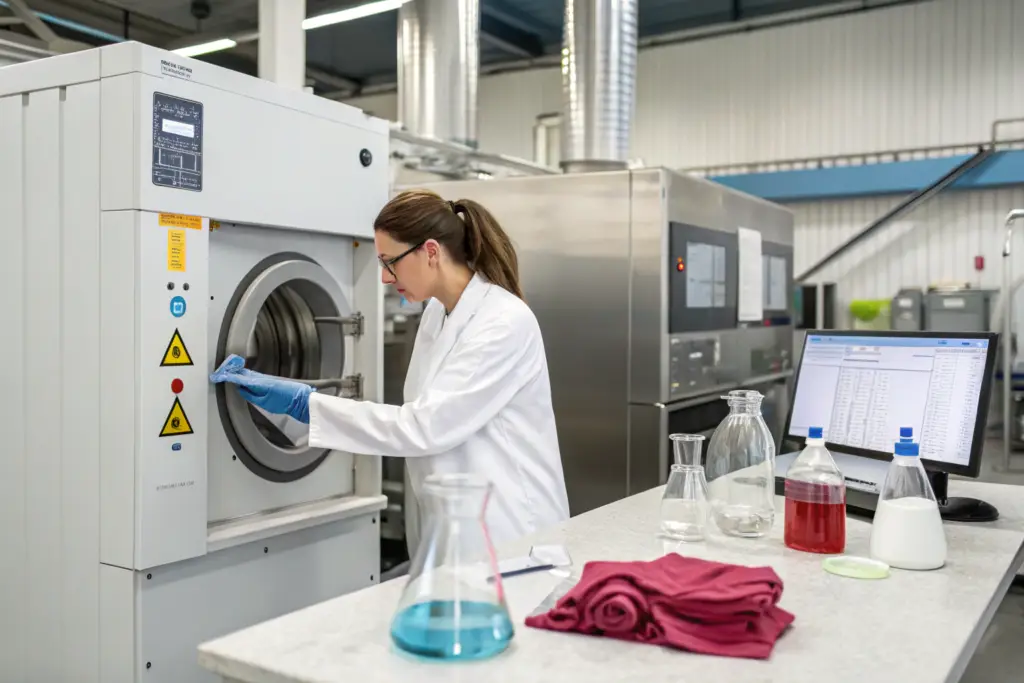
Our in-house lab is not just for testing incoming materials. It is a continuous quality assurance tool that runs throughout the production process and even after. We use it to verify that the production running today matches the samples we approved months ago. We also use it to anticipate problems before they happen.
A client from Seattle who produces high-end outdoor gear once asked us to test a new water-resistant coating on their jackets. They had concerns about durability. Our lab ran accelerated wear tests that simulated months of use in days. The results showed the coating would start to fail after about 20 washes. We worked with their team and our mill to adjust the formula and retest until it passed. By the time we produced the actual jackets, we were confident they would perform in the field. That client still works with us today because they know we take their product performance as seriously as they do.
How does the lab test for durability and performance during production?
Throughout production, we pull random samples from the line and bring them to the lab. We run wash tests to verify shrinkage remains within tolerance. We check seam slippage to ensure the stitching holds under stress. We test colorfastness again to confirm there has been no variation in dye lots. For activewear, we test stretch recovery to ensure the garment bounces back after movement. We document every test and compare results against the original approved samples. If we see any trend toward a deviation, we alert production immediately so they can adjust before any significant quantity is affected.
Can Fumao provide independent lab reports for compliance and certification?
Absolutely. We regularly work with independent, accredited third-party labs like SGS, Bureau Veritas, or Intertek to provide you with official test reports. These reports are essential for compliance with U.S. regulations, especially for children's wear, which requires CPSIA testing. We also provide certification for organic content, recycled materials, or Oeko-Tex standards. We coordinate the sampling, shipping to the lab, and reporting. We provide you with the original certificates and reports you need to satisfy your retailers and protect your brand. We never falsify certificates. Your reputation and our partnership are far too valuable for that.
How does Fumao ensure quality is maintained through final packing and shipping?
The quality journey doesn't end when the garment passes final inspection. How it is packed, folded, and shipped can introduce new problems. Moisture during transit can cause mildew. Improper folding can create permanent creases. Poor packing can lead to crushed boxes and damaged goods. We control these final steps with the same rigor.
I remember a situation where a client from Texas received a shipment that looked perfect, but when they opened the boxes, they found a musty smell. The goods had been packed perfectly, but a small leak in the shipping container had allowed moisture in during the ocean voyage. We immediately filed a claim with the shipping line, but more importantly, we changed our process. Now, we add desiccant packs to every container we pack, and we inspect the container interior before loading. We haven't had a moisture issue since. We learn from every problem and build that learning into our standard procedures.
What packing standards does Fumao use to prevent damage in transit?
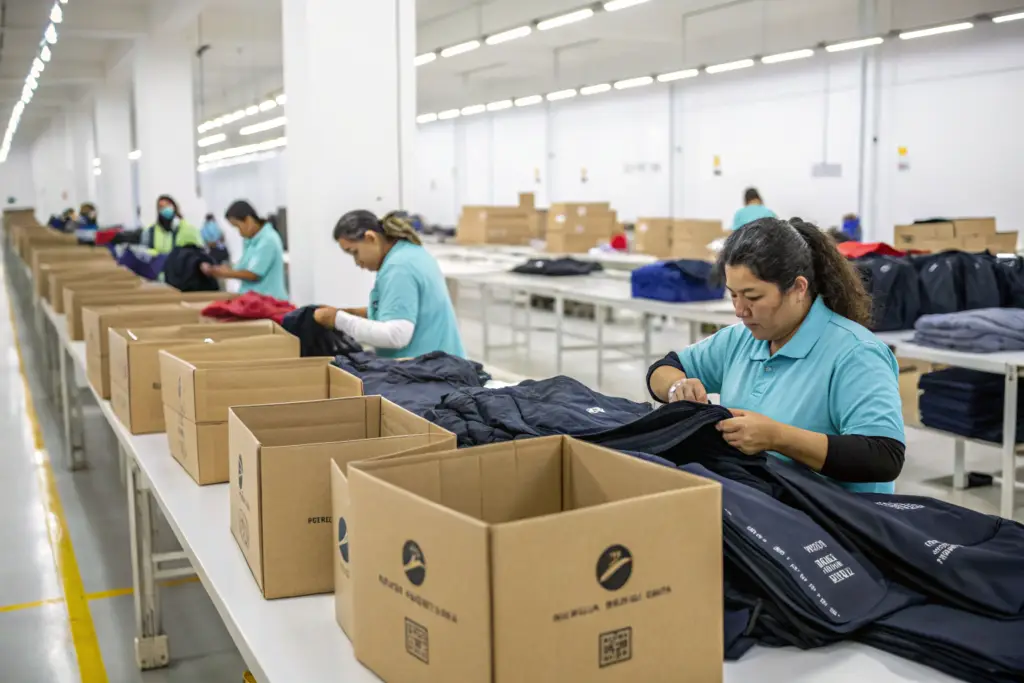
We use professional packing standards designed for the rigors of ocean freight. Garments are carefully folded or hung according to your specifications. We use high-quality poly bags that protect against moisture and dust. We pack cartons to the correct weight limits to prevent crushing. We seal cartons with reinforced tape. We label every carton clearly with style, color, size, and quantity. For fragile items like beaded dresses, we use additional internal packing to protect the decorations. We also offer specialized packing like garment on hanger (GOH) for retailers who want to receive goods ready to hang on the sales floor.
How does Fumao verify the final shipment matches the packing list?
Before any container is sealed, we conduct a final quantity and style verification. Our packing team counts every carton. Our supervisors then verify that the counts match the packing list. We use a "four-eye" principle, where two different people independently verify the count. We then seal the container with a high-security bolt seal and record the seal number. This number is included in all shipping documents. When your warehouse receives the container, they can verify the seal is intact, ensuring the container was not opened in transit. We provide you with photos of the loaded container and the sealed doors for your records.
Conclusion
Quality control at Shanghai Fumao is not a single checkpoint. It is a comprehensive system that protects your brand from the moment raw materials arrive until the container reaches your warehouse. We test fabrics and trims before cutting. We inspect work-in-progress on the line to catch issues early. We use statistical AQL standards for final inspection. We maintain an in-house lab for continuous testing. And we control the packing and shipping process to ensure everything arrives in perfect condition. This system exists because we have seen what happens when quality fails. We have learned those lessons so you don't have to.
When you partner with Shanghai Fumao, you are not just buying production capacity. You are buying a quality assurance system that protects your reputation. We understand that every garment with your label represents your brand to your customers. We treat that responsibility with the seriousness it deserves. Our entire team, from the lab technicians to the sewing operators, is focused on one goal: delivering products that meet your standards and delight your customers.
If you are tired of worrying about quality issues or dealing with returns, let's talk. Let us show you how our full package quality control system can give you peace of mind. Please contact our Business Director, Elaine, directly at strong>elaine@fumaoclothing.com. Tell her about your brand and your quality concerns. Let's build a partnership where you never have to worry about what's inside the box again.