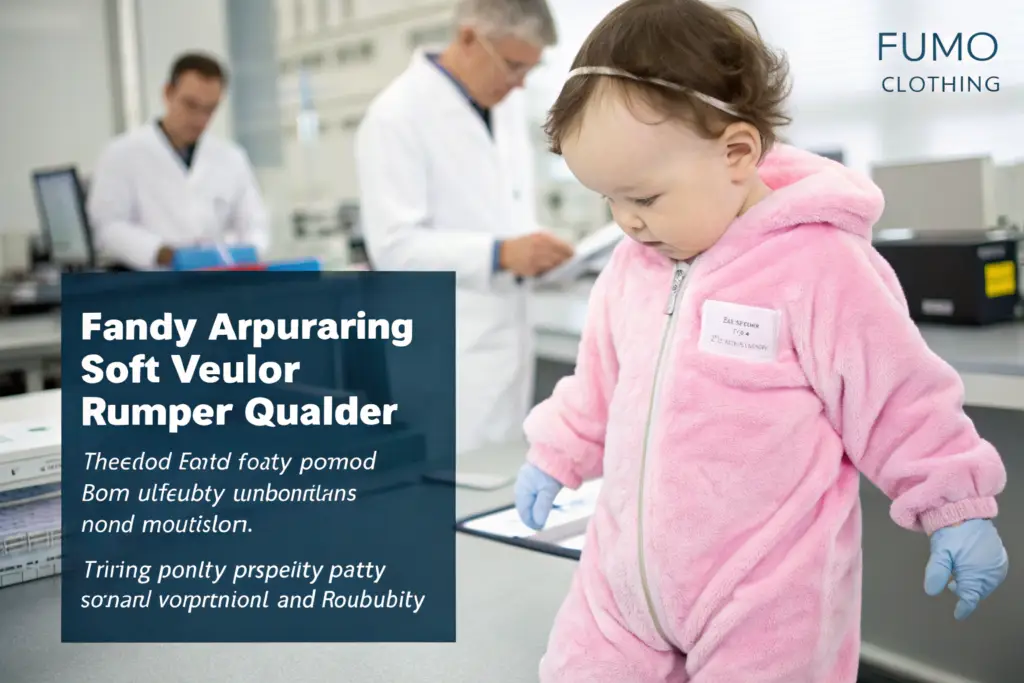
When parents pick up a velour romper for their baby, they feel the softness first. But as a brand owner, you must see beyond the plush surface to the chemical reality underneath. Velour—a knitted fabric with a cut pile—requires intensive dyeing, brushing, and finishing to achieve its signature feel. In 2022, a well-known brand faced a major recall when their velour sleepers were found to contain formaldehyde levels above safe limits for infants, traced back to a resin used for pile stability. At Fumao Clothing, we don't just make velour rompers; we engineer them to meet the strictest safety benchmark in the world: OEKO-TEX Standard 100 Class 1 (Grade 1). Here is how our system turns a high-risk category into a guaranteed-safe product.
Fumao Clothing ensures safety for velour rompers through a vertically integrated control system that starts with sourcing OEKO-TEX Class 1 certified yarns, employs only approved dyes and auxiliaries, manages the velour finishing process with certified chemistry, and subjects the final assembled romper—every component from fabric to snap—to rigorous third-party testing and annual audits, all documented and verifiable by our clients.
This is not a single checkpoint; it's a comprehensive safety ecosystem built specifically for the vulnerabilities of babies and the complexities of plush fabrics. Let's walk through the journey of a velour romper in our care.
Stage 1: Certified Inputs – The Foundation of Safety
You cannot produce a safe finished product from unsafe raw materials. Our protocol begins at the very source.
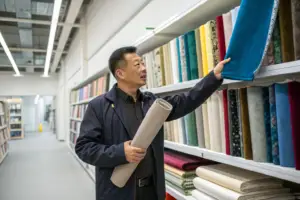
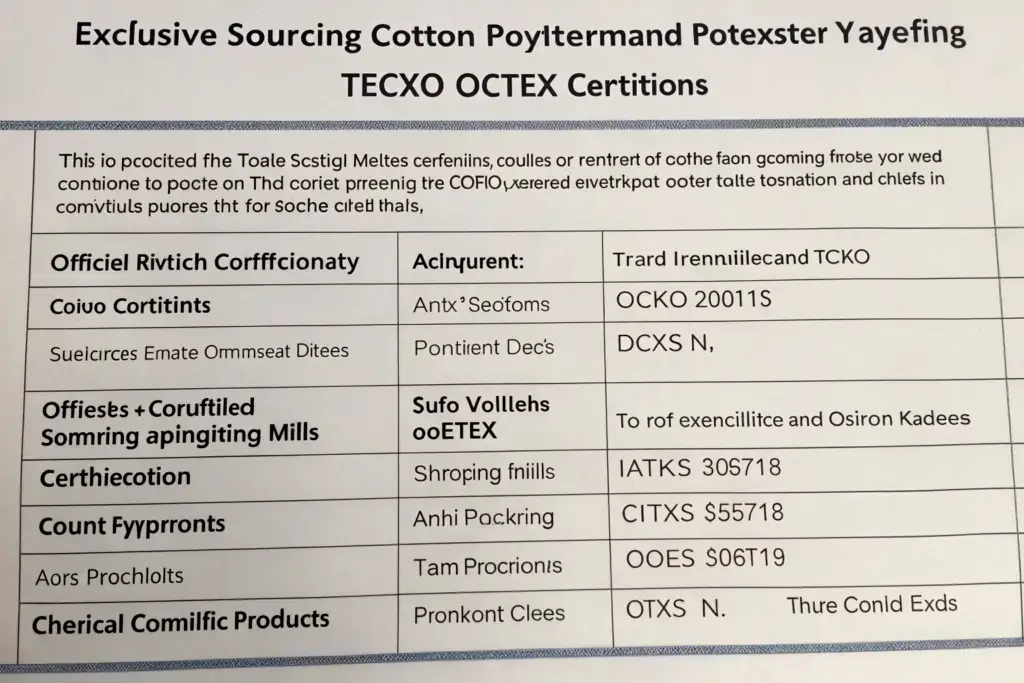
We exclusively source cotton and polyester yarns from spinning mills that hold valid OEKO-TEX Class 1 certification for their fibers. This is verified through official Transaction Certificates (TCs) for each batch. For dyes and critical chemicals (softeners, anti-pilling agents), we mandate our suppliers provide OEKO-TEX ECO PASSPORT certification, which is specifically designed for safe chemical products.
Why is Yarn-Level Certification Non-Negotiable?
Contaminants can originate at the fiber stage. For example, cotton may contain pesticide residues, and synthetic fibers might have catalyst remnants. By requiring Class 1 certification at the yarn stage, we push safety compliance upstream, ensuring the very foundation of our fabric is pure. Our procurement team maintains an approved vendor list (AVL) for these certified materials, which is audited as part of our own OEKO-TEX STeP certification.
How Do We Handle the Special Chemistry of Velour?
Velour production requires specific chemicals:
- Dyestuffs: Must be free of banned arylamines and heavy metals.
- Brushing & Shearing Auxiliaries: Lubricants used must be non-toxic.
- Pile-Fixing Resins: Often formaldehyde-based. We use only low-formaldehyde or formaldehyde-free alternatives that have passed ECO PASSPORT.
We learned early on that using a generic softener could violate pH limits. Now, our chemical inventory is 100% vetted, a system we call "Chemistry by Certification."
Stage 2: Controlled Manufacturing – Where Safety is Preserved
Bringing certified materials into an uncontrolled factory can break the safety chain. Our production environment is engineered to maintain integrity.
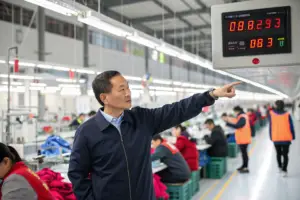
Our knitting, dyeing, and finishing departments operate under the framework of our OEKO-TEX STeP (Sustainable Textile Production) certification. This means we have documented environmental and chemical management systems, ensuring that Class 1 certified velour fabric is produced in a facility that controls emissions, treats wastewater, and safeguards worker safety—factors that indirectly but critically impact product purity.
What Does "Segregated Production" Mean for Velour?
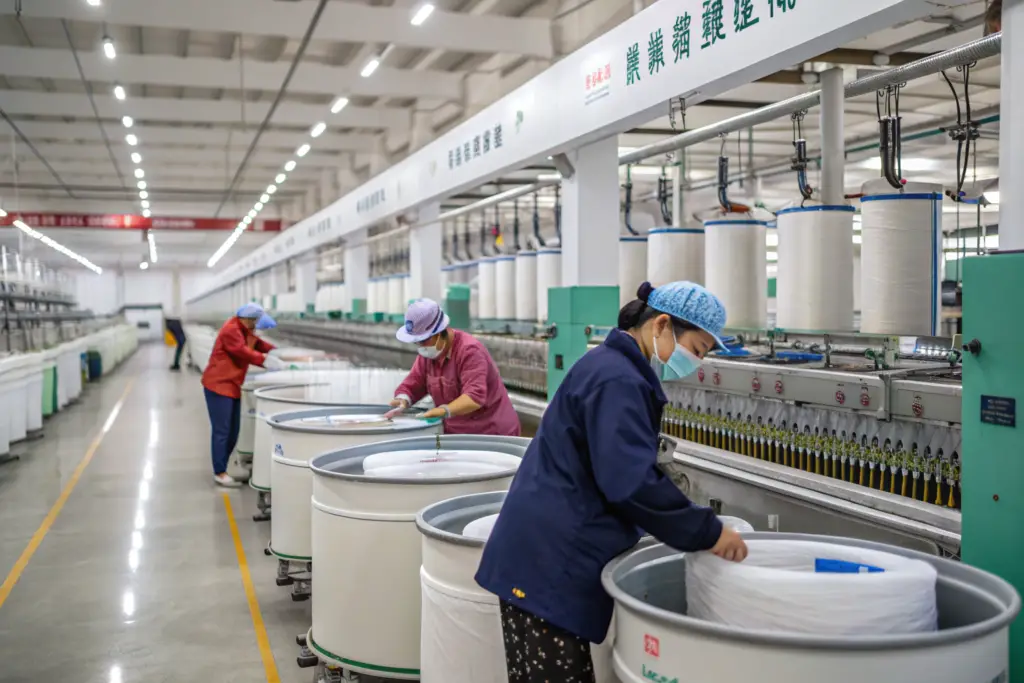
We run OEKO-TEX Class 1 orders on dedicated or thoroughly cleaned production lines. For example, the brushing machines used for infant velour are not used for uncertified adult velour without a validated cleaning procedure to prevent cross-contamination. Fabric rolls are stored in designated areas with clear "Class 1" signage. This physical discipline is a cornerstone of our quality assurance and is a key point we demonstrate during client factory audits.
How is the Critical "Pile Fixation" Process Managed?
To prevent the velour pile from shedding excessively, a light resin application is often used. This is a high-risk step for formaldehyde. Our process:
- Uses only pre-approved, certified resins.
- Precisely controls curing temperature and time to ensure complete fixation and minimize free formaldehyde.
- Conducts in-house spot tests for formaldehyde on every batch using gas detection tubes before the fabric moves to cutting.
This granular control turns the highest risk step into a guaranteed safe one.
Stage 3: Component and Assembly Certification – Every Detail Counts
A velour romper is more than fabric. It's snaps, elastics, threads, and labels. OEKO-TEX Class 1 demands every part is safe.
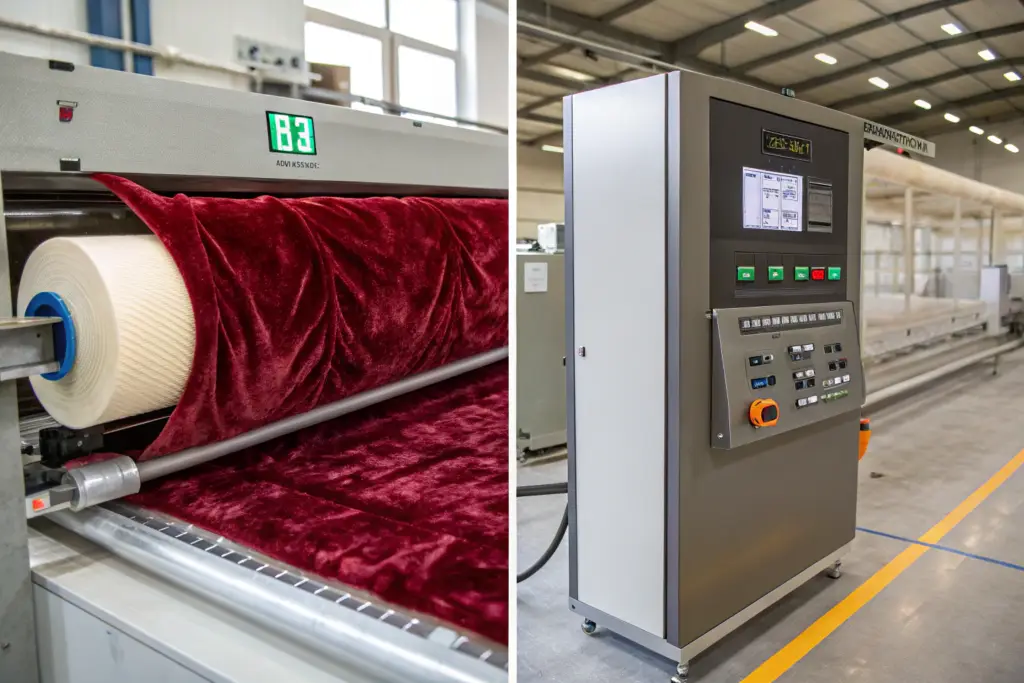
For each romper style, we submit a full component dossier to the certification body. This includes samples of the velour fabric, the ribbing elastic, the polyamide sewing thread, the plastic snaps, and even the care label. Each must have its own supporting certification or pass testing. Only when the complete assembled romper passes does it receive its unique OEKO-TEX Class 1 certificate.
What are the Hidden Risks in Romper Components?
- Snaps and Metal Parts: Tested for heavy metal release (lead, cadmium, nickel).
- Elastics: Tested for allergenic disperse dyes and elasticity-retention chemicals.
- Sewing Thread: Often overlooked, but it must meet the same dye safety standards.
We pre-select all trims from our certified component library, so designers can create freely within a "safe sandbox." This prevents last-minute sourcing of uncertified trims that would void the certification.
How Do We Handle Custom Prints or Embroidery?
For printed velour, the print paste must be certified. For embroidery, the embroidery thread must be certified. We manage this by using only partnered suppliers who provide the necessary OEKO-TEX documentation for these specialty materials. The finished print or embroidered panel is then included as a component in the overall garment certification.
Stage 4: Verification, Documentation, and Transparency
Our final step is providing you with undeniable proof. Trust is built on transparency.
Upon order completion, we provide a comprehensive compliance dossier that includes: the OEKO-TEX Class 1 certificate for the specific romper article (verifiable online), Transaction Certificates for key materials, and test reports from the accredited third-party lab (e.g., SGS or TESTEX). We encourage clients to use the certificate number on their hangtags for parent verification.

How Can You, as a Brand, Verify Our Claims?
We give you the tools for your own due diligence:
- Live Database Check: We provide our OEKO-TEX certificate numbers. You can check their "valid" status in real-time on the official website.
- Audit Access: We welcome virtual or onsite audits of our material storage, chemical inventory, and production segregation practices.
- Sample Testing: You are free to send purchased samples to any accredited lab for independent verification.
This open-book policy is how we partner with brands like yours to build mutual confidence and shared success.
What Does This Mean for Your Brand and Your Customers?
For you, it means de-risked sourcing and a powerful marketing asset. For the end customer—the parent—it means peace of mind. The OEKO-TEX Class 1 label on your hangtag is the culmination of this entire rigorous process, a simple symbol representing a vast system of care. It tells a parent that the romper is safe for their baby to snuggle, crawl, and even chew on.
Conclusion
At Fumao Clothing, OEKO-TEX 100 Grade 1 for velour rompers is not a certificate we seek; it is a product definition we fulfill. It is the result of a deliberate, investive, and transparent system that spans from the chemistry of dyes to the click of a snap. We understand that in children's wear, especially for babies, safety is not a feature—it is the product.
By choosing to manufacture with this rigor, we do more than make rompers. We provide you with the certified security to build your brand with confidence, market to parents with authenticity, and sleep soundly knowing the plush softness you deliver carries a guarantee of purity as unwavering as a parent's love.
If you are looking for a manufacturing partner that delivers both enchanting design and uncompromising safety for your most sensitive products, let's build together. Contact our Business Director Elaine at elaine@fumaoclothing.com to discuss your velour romper line or any OEKO-TEX Class 1 project.