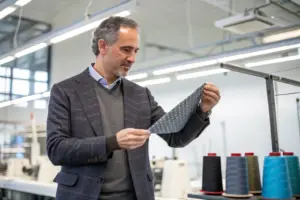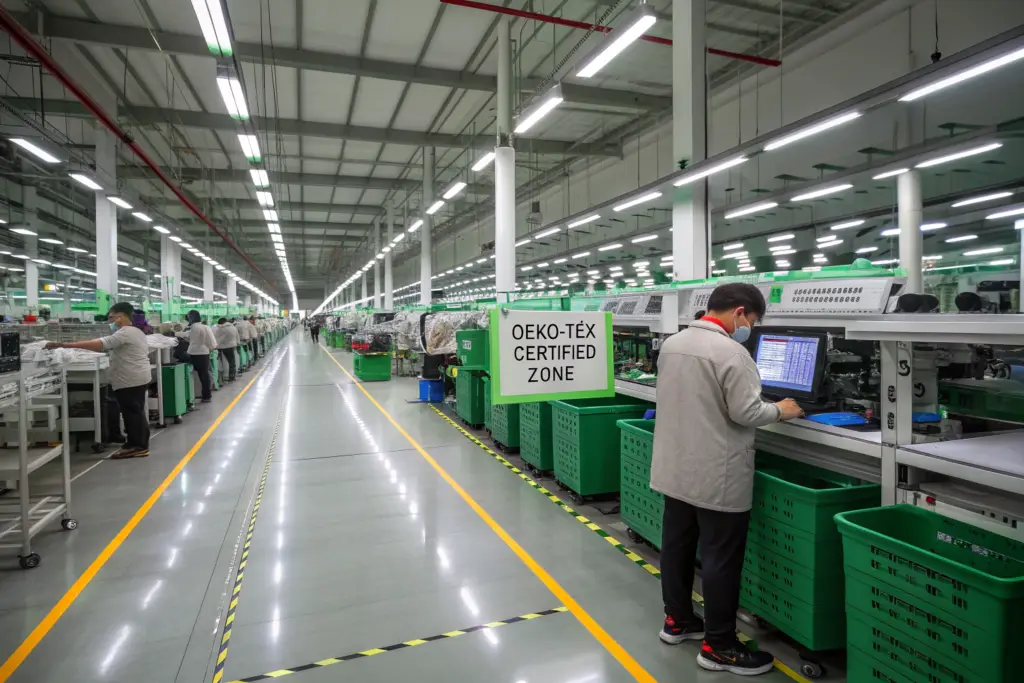
The moment of truth came during an unannounced audit. A major European brand's compliance officer arrived at our factory, requesting to see our OEKO-TEX controlled production in real-time. She didn't want to see a certificate in an office; she wanted to walk the floor. We started at Line 3, dedicated to their premium golf polo order. She saw fabric rolls with clear OEKO-TEX lot tags in a locked cage, a digital screen at the cutting station showing the certified material specs for that job, and a separate rack for OEKO-TEX compliant threads and trims. Then she asked to see Line 1, which was running a basic, non-certified order for a different market. Her question was pointed: "How do you prevent cross-contamination? How do you ensure my certified polos on Line 3 aren't compromised by the non-certified fabric on Line 1?" Our answer wasn't a promise—it was a live demonstration of a system. We showed her the physical segregation, the color-coded tool carts, and the digital production logs that track every component from intake to carton. She left not just with a certificate, but with embedded trust in our process. This is how we turn a complex standard into a reproducible, scalable manufacturing discipline across all five lines.
Fumao Clothing ensures OEKO-TEX compliance across 5 production lines through a integrated system of Physical Segregation, Digital Traceability, and Procedural Lockdown. We don't just test products; we engineer our entire workflow to prevent non-compliance from entering the value stream. Each line can operate in a certified or non-certified mode, but never in a mixed state, with every material, tool, and process step governed by a central compliance protocol.
Scalability is the true test of a compliance system. Anyone can manage one certified order. Managing multiple, simultaneous certified and non-certified orders across parallel lines without error is what separates a compliant factory from a reliable partner. Here's our blueprint.
What is the System of Physical Segregation and Zoning?
The foundation of preventing cross-contamination is physical separation. We treat OEKO-TEX certified production as a "clean room" process within our broader factory.
Our system of physical segregation involves dedicating specific lines or time blocks exclusively to certified production, creating locked "Certified Material Stores" for each line, and using color-coded tooling and containers. This creates a visible, tangible barrier between compliant and non-compliant workflows, eliminating the risk of a non-certified thread spool or cleaning agent accidentally being used on a certified garment.
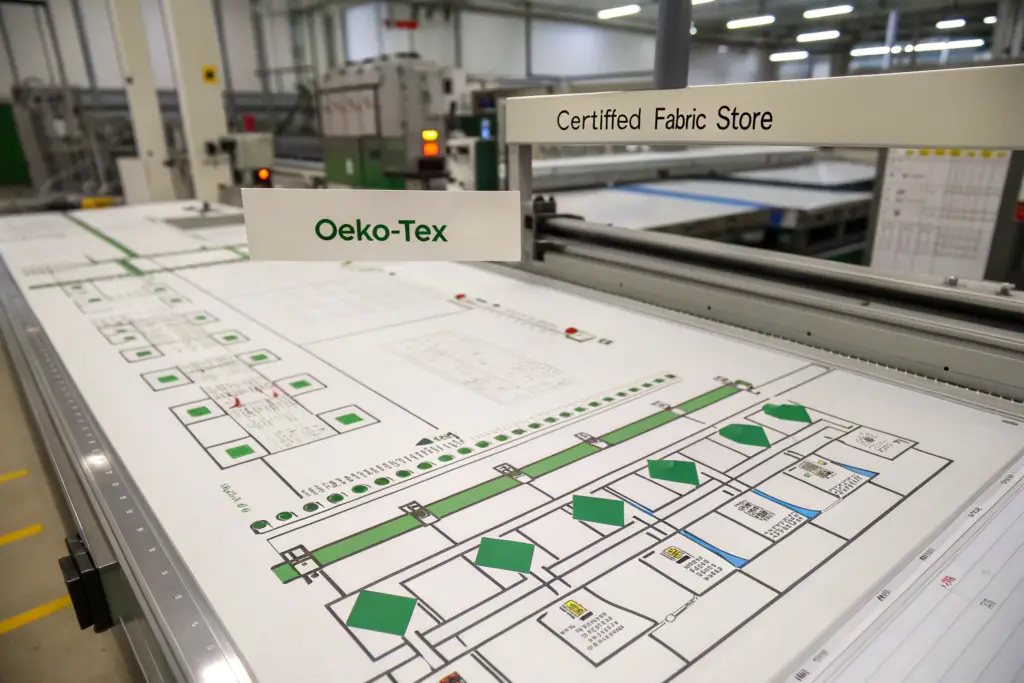
How are materials stored and issued?
Certified fabric rolls, threads, zippers, and labels are not kept in the general inventory. They are stored in a dedicated, access-controlled cage adjacent to their assigned production line. Each item has a physical OEKO-TEX lot tag from the supplier and a Fumao internal tracking barcode. Materials are issued to the line supervisor via a digital scan, creating a log. Nothing leaves this cage without a scan linking it to a specific certified work order. This is the first gate in our quality assurance chain.
What about tools and machines?
We use a color-coding system. Tools for certified lines—scissors, measuring tapes, lint rollers—have green handles. Sewing machine oil and cleaning solvents for these lines are specially sourced OEKO-TEX compliant chemicals and stored separately. When a line switches from certified to non-certified production (after a full clean-down), the tooling is swapped out. This eliminates the risk of a contaminated oil drip or a scissors used on non-certified fabric transferring residues.
How Does Digital Traceability Power Real-Time Compliance Management?
Paper-based systems fail at scale. Our digital backbone is what makes managing compliance across five lines not just possible, but efficient and auditable.
Digital traceability powers compliance by giving every component a digital twin. From the moment certified fabric enters our warehouse, it is scanned into our ERP/MES system, linked to its OEKO-TEX certificate, and assigned to a specific production order and line. As it moves through cutting, sewing, and packing, each transfer is logged by barcode scan, creating an immutable audit trail from certificate to carton.
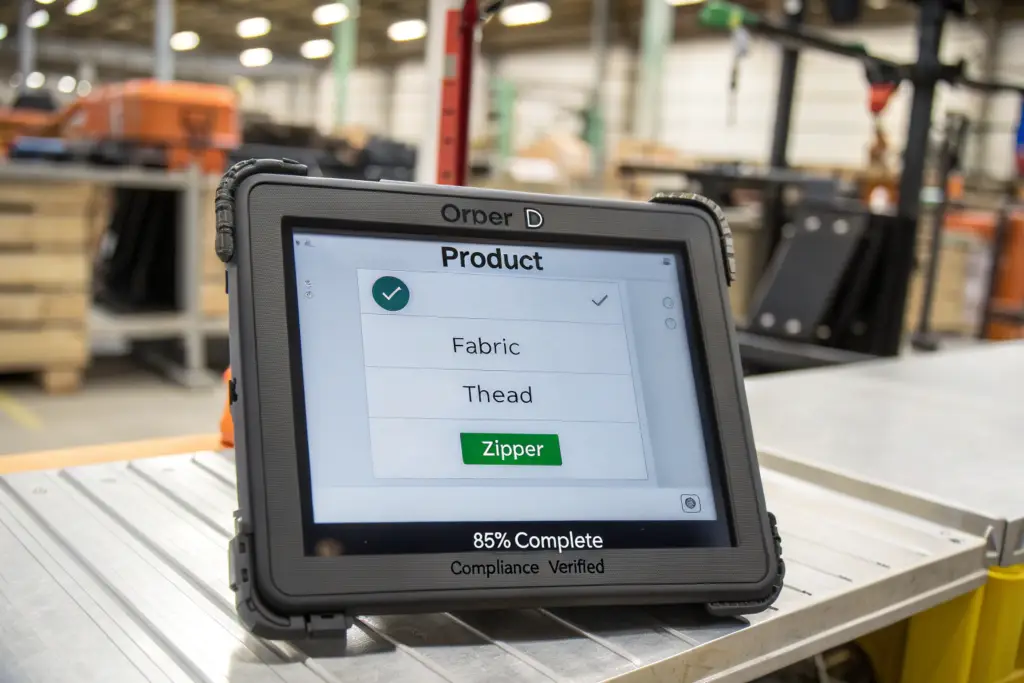
Can you trace a single garment back to its certified materials?
Yes. Every finished garment has a unique serial number (UPC or RFID tag). In our system, you can enter that number and pull up the complete Bill of Materials (BOM) with the OEKO-TEX certificate numbers for each component, the production line it was made on, and the time stamps of each manufacturing step. This level of traceability is what allows us to provide irrefutable proof of compliance to brands and retailers.
What happens if a non-compliant material is accidentally scanned?
The system is designed to fail safely. If a worker attempts to scan a material barcode that is not pre-approved and linked to an active certified order, the system will trigger an audible and visual alert at the station and send a notification to the line supervisor and quality control manager. The line cannot proceed until the anomaly is resolved. This is our digital "lockout" preventing procedural errors.
What Are the Standardized Procedures for Line Certification and Changeover?
A line running certified orders must be in a "certified state." Achieving and maintaining this state requires strict Standard Operating Procedures (SOPs).
Our standardized procedures cover: 1) Line Clearance & Cleaning: A full mechanical clean-down and vacuuming of all machines and surfaces before a certified run. 2) Tool and Consumable Swap: Replacing all tooling and chemicals with certified-line versions. 3) Pre-Production Verification: A supervisor signs off a checklist confirming the line is in a compliant state before any certified fabric is laid. 4) In-Process Checks: Scheduled audits for material verification and tool integrity during the run.

How do you manage changeover from certified to non-certified production?
The changeover process is equally rigorous. All remaining certified materials are returned to the locked cage and scanned back into inventory. The line undergoes a cleaning procedure to remove any potential residues. The green-coded tools are swapped back for standard tools. The digital system is updated to change the line's status from "Certified Active" to "General Production." This clear demarcation prevents "certification drift."
Who is responsible for enforcing these procedures?
Compliance is not just the QC team's job; it's built into every role. Line supervisors are directly accountable for their line's state. Each operator is trained on the importance of using the correct tools and reporting any irregularities. Our central Quality Assurance team conducts random spot-checks and audits against the SOPs. This creates a culture of collective responsibility, which is far more robust than top-down policing.
How Does This System Integrate with Our Full-Package Sourcing Model?
Our compliance system is not an add-on; it's the operational expression of our full-package production philosophy. Control over the entire supply chain is what makes the system viable.
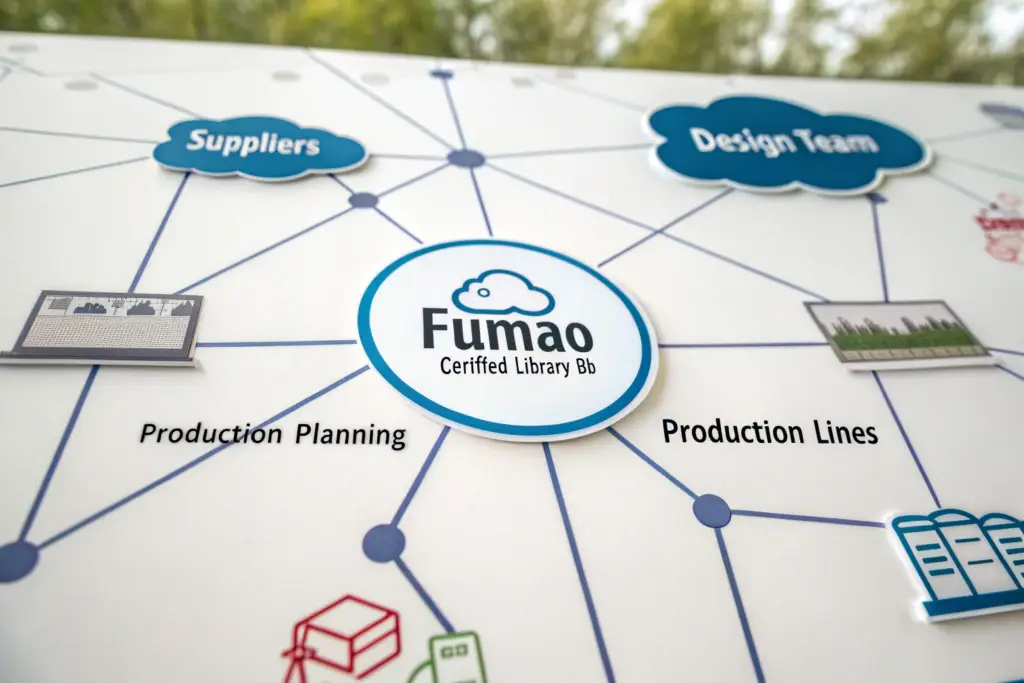
This system integrates seamlessly because we control the sourcing of all components. Our Certified Component Library—a curated list of OEKO-TEX certified fabrics, trims, and sundries from vetted suppliers—feeds directly into our digital ERP. When a brand orders a certified golf shirt, we design it from this library. The system already knows the certificate status of every potential component, so planning and executing production across multiple lines becomes a matter of logistics, not guesswork.
How does this benefit brands working with multiple product categories?
A brand might have certified golf polos on Line 3 and certified wind jackets on Line 1 simultaneously. Because our system is component-based and digital, we can allocate different certified materials to different lines without conflict. The system ensures the right certified fabrics go to the right line for the right product. This multi-product, multi-line capability is a key advantage of partnering with a full-package specialist like Shanghai Fumao.
What is the impact on DDP (Delivered Duty Paid) reliability?
This rigorous system is the ultimate guarantee behind our DDP promise. Because we have systemic control over compliance, we have near-zero risk of a shipment being rejected or delayed due to OEKO-TEX certification failures. The documentation we provide (the certificate and supporting traceability logs) is a true reflection of the product in the box. This reliability is a core part of the value we deliver.
Conclusion
OEKO-TEX compliance at scale is not about having five certificates; it's about having one unbreakable system replicated across five lines. It's a manufacturing philosophy built on segregation, traceability, procedure, and integration. This is what allows us to offer brands the confidence that their certified orders are protected from the chaos of a busy factory floor, no matter which line they run on.
For brands, this means you can scale your certified product lines with us, order after order, with unwavering consistency. You are not buying a test report; you are buying into a controlled ecosystem designed to manufacture trust as reliably as it manufactures garments.
If your brand requires compliance that is systematic, scalable, and transparently managed, our five-line engine is built for you. Contact our Business Director, Elaine, at elaine@fumaoclothing.com to audit our system firsthand and see how true compliance is manufactured.