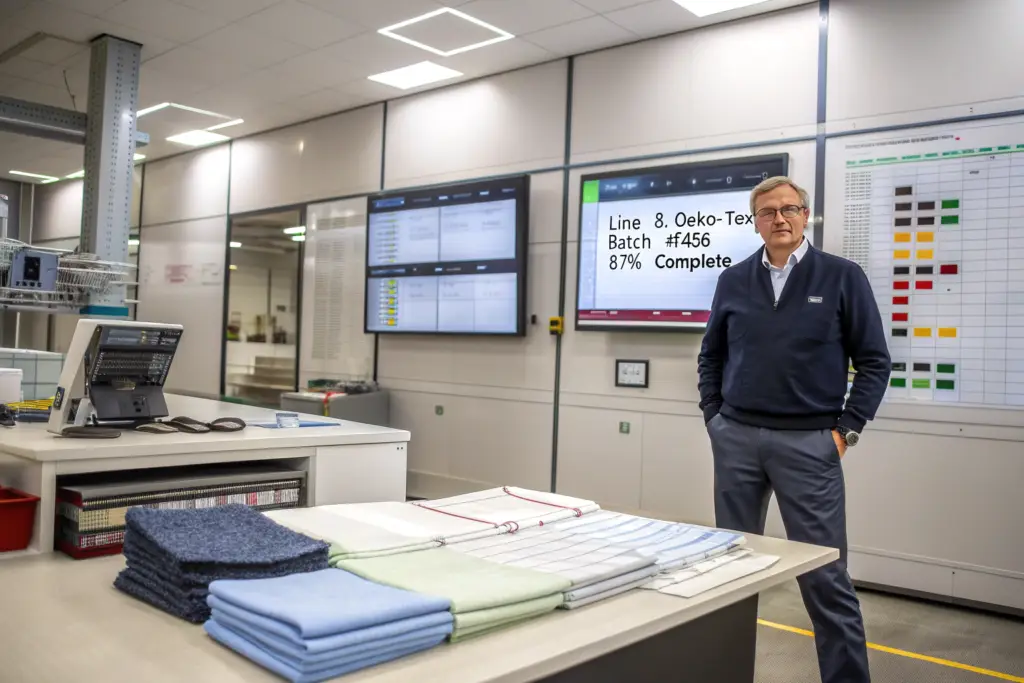
As the owner of Fumao Clothing, this isn't a theoretical question for me—it's the operational heartbeat of our factory. When a buyer signs a contract with us for OEKO-TEX certified apparel, they're buying into a system, not just a promise. With five dedicated production lines running simultaneously for different clients and product categories, the challenge isn't just getting one batch certified; it's maintaining flawless, verifiable compliance at scale, every single day.
Fumao Clothing ensures OEKO-TEX compliance across all 5 production lines through a vertically integrated control system that combines segregated material management, digitally tracked production lots, rigorous in-process checkpoints, and a culture of accountability, ensuring that certified and non-certified production never cross-contaminate and that every component in every garment is traceable to its source certificate. It's engineering, not just enforcement.
Let me pull back the curtain and show you the specific, actionable systems we've built to be your reliable, certified manufacturing partner.
What is Our "Segregated Flow" System for Materials?
The greatest risk in a multi-line factory is cross-contamination: a roll of non-certified fabric ending up on a certified line, or certified thread being used on a standard order. We eliminate this risk physically and systematically.
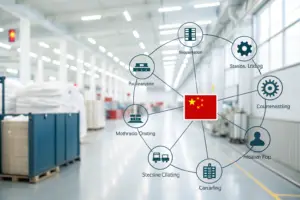
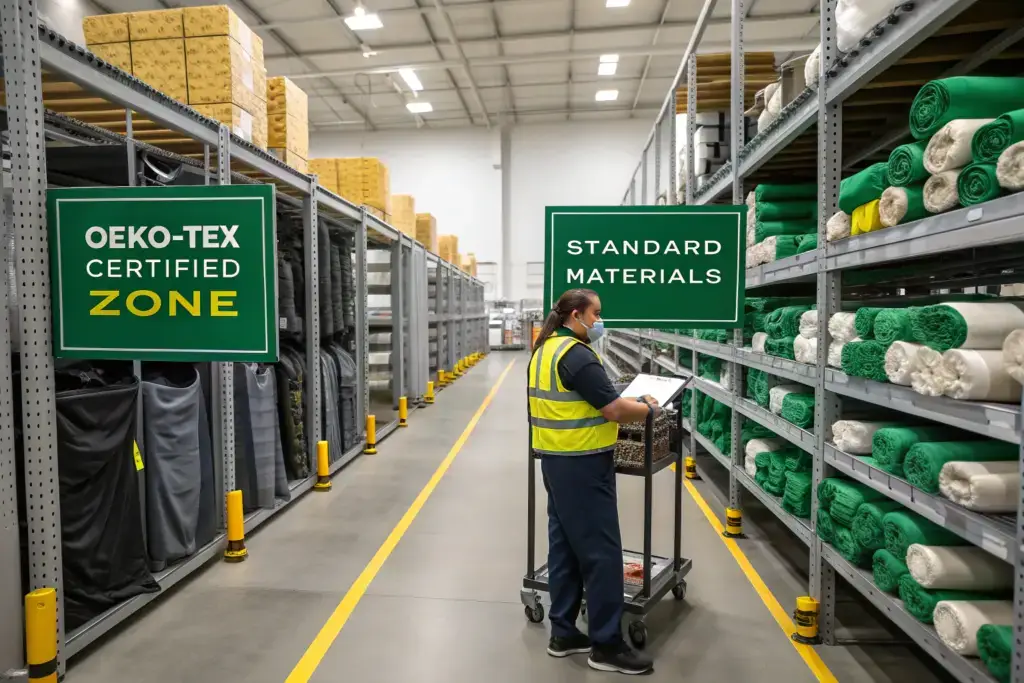
Our "Segregated Flow" system mandates that all OEKO-TEX certified raw materials—fabrics, threads, trims, and packaging—are received, stored, and issued in a physically separate warehouse zone with distinctive color-coded labeling, and are only allocated to pre-designated certified production lines, following a strict FIFO (First-In, First-Out) inventory protocol. Separation is built into our floor plan.
How is the Warehouse Physically Organized?
Our warehouse is divided by permanent aisles and signage.
- Zone A (Green): Exclusively for OEKO-TEX certified materials. Each storage location is numbered and logged in our Digital Warehouse Management System (WMS).
- Zone B (Yellow): For conventional materials.
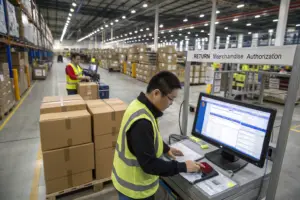
- Receiving Dock: Has two separate staging areas. Incoming certified materials are immediately inspected, tagged with a unique green RFID/Barcode label, and moved to Zone A by a dedicated team.
We learned this the hard way early on: a single mix-up of similar-looking grey threads cost us a week's delay and retesting. That incident funded our current WMS. Now, when a cutting order for a certified golf polo is generated, the system only allows release of materials from Zone A. A barcode scan at each transfer point confirms compliance.
What Documentation Travels with Every Batch?
Every certified material batch has a "Compliance Passport." This is a physical document folder (and a digital twin) that contains:
- The supplier's original OEKO-TEX certificate.
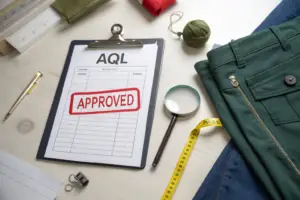
- Our own inbound inspection report (checking for damage, odor, and a spot pH test).
- The unique batch/lot number from the mill.
This passport moves with the material from warehouse to cutting, to sewing, to finishing. No passport, no production. This provides a paper trail that any auditor—or client like you—can follow.
How Do We Maintain Line Discipline and Traceability?
Once certified materials hit the production floor, the challenge is to keep them identified and isolated through every manufacturing step. Our lines are not generic; they are specialized.
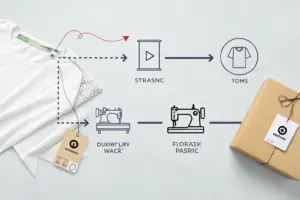
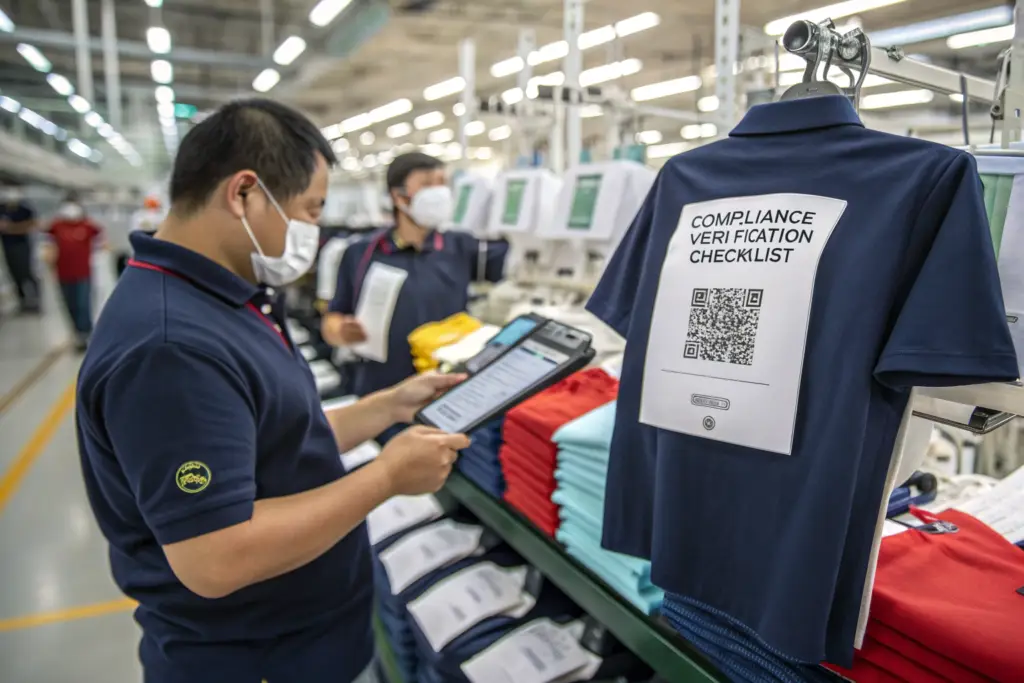
We maintain line discipline and traceability by dedicating specific production lines primarily to certified orders, implementing a "Job Ticket" system with QR codes that track each bundle through sewing, and conducting daily line audits to verify that only compliant inputs (thread, interlining) are present at each station. Every piece is accountable.
What is a "Dedicated Line" Strategy?
While we have flexibility, we strategically dedicate Line 2 and Line 4 as our primary OEKO-TEX certified lines. The workers on these lines receive specialized training on compliance importance. The tooling (e.g., sewing machine models) and even the cleaning supplies used around these lines are standardized to avoid introducing contaminants. For example, we only use OEKO-TEX approved sewing machine oils on these lines. This specialization reduces human error and builds expertise.
How Does the QR Code Job Ticket System Work?
When the cutting room finishes a lay of certified fabric, each bundle of cut pieces gets a unique QR code ticket. This code links to a digital file containing:
- Purchase Order & Style Number
- Fabric & Trim Certificate Numbers
- Sewing Instructions
- Required In-Process QC Checks
As the bundle moves, each scan updates its real-time location and completion status in our MES (Manufacturing Execution System). Most importantly, it alerts the system if a bundle is scanned at a non-certified line, triggering an immediate stop. This system was pivotal when a large US brand audited us last year; we could trace a specific jacket back to the exact roll of fabric and down filling batch in under 3 minutes.
What Are Our In-Process Quality Control Checkpoints?
Compliance isn't just checked at the end; it's verified at multiple stages. We assume that errors can occur and build checkpoints to catch them early, when the cost of correction is lowest.
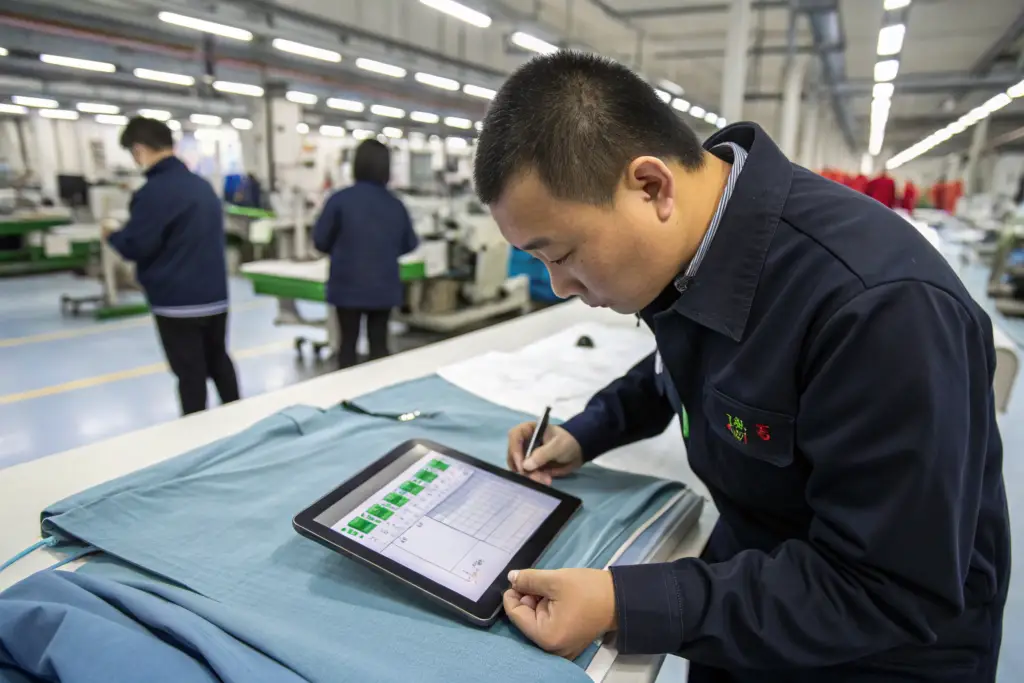
Our in-process QC checkpoints include pre-production material verification, mid-production audits of trim usage and chemical auxiliaries (like washing agents), and final pre-shipment testing protocols that go beyond the typical to ensure the finished garment as a whole system is compliant. We inspect what we expect.
Can You Describe a Key Mid-Production Checkpoint?
A critical checkpoint is at the Printing/Embroidery Stage. If a polo requires a custom logo, we verify:
- The ink or thread is from an approved, certified supplier (certificate on file).
- A strike-off sample is made and approved before bulk production.
- During bulk printing, we check the viscosity and pH of the ink mix to ensure it hasn't been altered.
We once caught a subcontractor trying to substitute a cheaper, non-certified white ink for embroidery backing. Our checkpoint, which requires a material sample check before batch approval, stopped that substitution. The entire lot would have failed final certification.
What Does Final Pre-Shipment Verification Involve?
Before shipment, a random sample of finished garments from each production lot is pulled for a final review. This isn't just a visual check. It includes:
- Verifying the correct OEKO-TEX label is sewn in.
- Conducting a "sniff test" in a sealed bag to detect any abnormal chemical odor.
- Reviewing the complete "Compliance Dossier" for the order to ensure all component certificates are present and valid.
Only after this review is the Certificate of Conformity issued and the shipment cleared for export. This final gate ensures that the system's output matches its design.
How Do We Manage Supplier Compliance and Documentation?
We are only as compliant as our weakest supplier. Therefore, we manage our supply chain as an extension of our own factory floor.
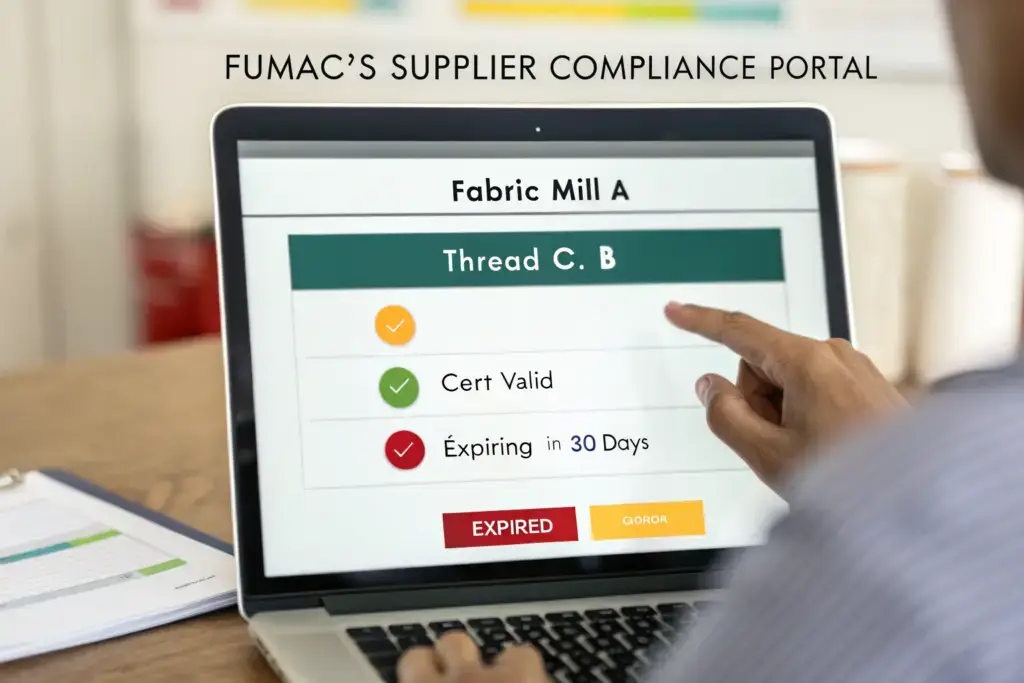
We manage supplier compliance through a stringent Approved Vendor List (AVL), mandatory annual certificate updates for all certified material suppliers, and a digital document management system that provides instant access to the entire compliance chain for any order, ensuring we never use an expired or invalid certificate. We vet so you don't have to.
What is the Process for Onboarding a New Certified Supplier?
A new supplier must submit:
- A valid business license and audit reports (like BSCI).
- The relevant OEKO-TEX certificates for the materials they will supply.
- Samples for our internal testing.
Our technical team then conducts an evaluation (often a virtual audit). Only after approval are they added to our AVL and their certificates uploaded to our Central Compliance Database. This database is tagged to material codes, so when a designer selects "Fabric Code #GRN-TER-OE," the system automatically attaches the correct certificate to the production order.
How Do We Handle Certificate Renewals?
Supplier certificates expire annually. Our system automatically flags expiring certificates 60 days in advance. Our procurement team then contacts the supplier for the updated document. If a certificate is not renewed on time, the supplier is automatically placed on "Hold" in our system, and no further purchases of that material can be made until the new certificate is uploaded. This automated enforcement prevents human oversight from derailing a client's order.
Conclusion
At Fumao Clothing, OEKO-TEX compliance across five production lines is not an afterthought or a marketing department's claim. It is the result of a deliberate, investment-heavy operational architecture built on segregation, digital traceability, layered checkpoints, and strict supply chain governance. This system exists to de-risk your order, protect your brand, and deliver the certified quality you pay for, consistently and at scale.
When you partner with us, you gain access to this entire system. You are not just hiring a factory; you are deploying a compliance engine. If you are looking for a manufacturing partner whose processes match the seriousness of your brand's commitment to safety and quality, let us demonstrate this system for you. Contact our Business Director Elaine at elaine@fumaoclothing.com to schedule a virtual tour of our compliance operations at Shanghai Fumao. See for yourself how we build trust into every stitch.