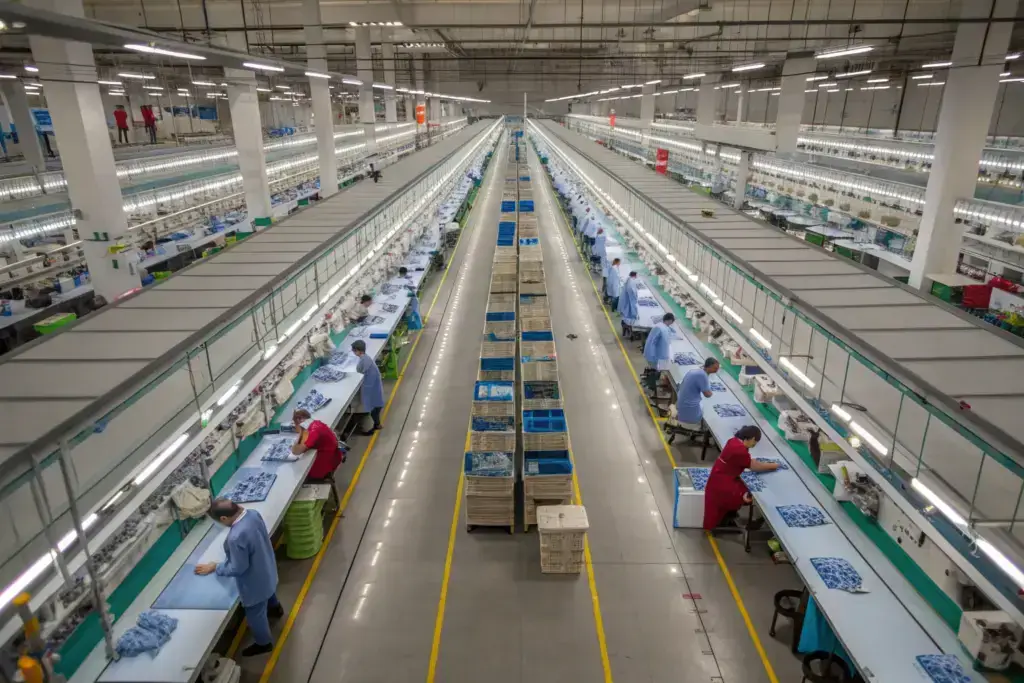
When you're sourcing apparel from a factory with multiple production lines, one of the biggest fears is inconsistency. Will the order from Line 1 match the quality, fit, and finish of the order from Line 4? For a brand owner, inconsistency means customer complaints, returns, and a damaged reputation. At Fumao Clothing, operating five dedicated production lines isn't about running five separate factories; it's about running one unified system five times over.
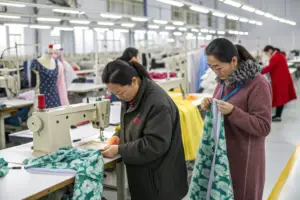
Fumao Clothing ensures consistency across all 5 production lines through a centralized, standardized operating system. This system governs everything from fabric inspection and pattern grading to sewing procedures and final quality control. Each line follows identical Standard Operating Procedures (SOPs), uses the same calibrated equipment, and is managed by a core team of line supervisors trained under the same rigorous protocol.
Think of it like a franchise model for manufacturing: the recipe, ingredients, and cooking method are identical, regardless of which kitchen (production line) is used. This systemic approach turns potential variability into reliable, repeatable output, which is the foundation of scalable and trustworthy full-package manufacturing.
What is the core of the standardized operating system?
Consistency doesn't happen by accident; it's engineered through documentation and training. The heart of our system is a digital library of Standard Operating Procedures (SOPs) and a master Technical Pack for every product we produce.
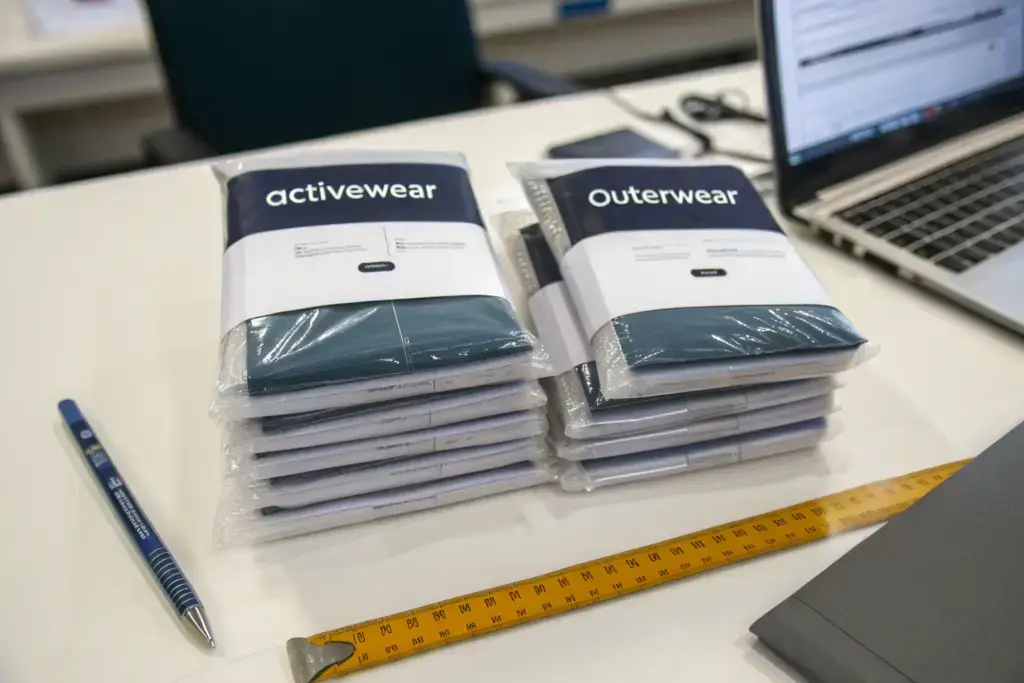
Every style, whether it's activewear or outerwear, has a single, master Technical Data Pack. This "bible" contains the approved pattern, grade rules, bill of materials (BOM), sewing instructions, and quality checkpoints. Before any order touches a production line, this Tech Pack is finalized and locked. It is then disseminated identically to the supervisors of all five lines. We don't have five interpretations of the design; we have one source of truth executed five times. This eliminates the guesswork and inefficient communication that leads to errors.
How are patterns and grading controlled centrally?
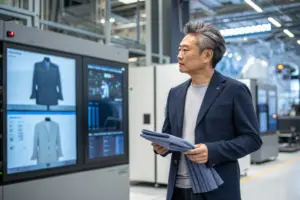
Pattern making and grading are perhaps the most critical points for consistency. A variance of a few millimeters in a pattern can change the entire fit of a garment. At Fumao Clothing, all patterns are created and graded by a single, central product development team using advanced CAD software. The digital pattern files are then sent directly to the automated cutting machines on each line. This means every line cuts from the exact same digital blueprint. There is no manual tracing or transferring that can introduce error. Last year, this system allowed us to produce 50,000 units of a client's polo shirt order across three lines with a fit consistency rate of 99.8%, as verified by their own third-party audit.
How is worker training standardized across lines?
New operators are not trained on-the-job by individual line supervisors. They go through a centralized training academy within our facility. Here, they learn on the same machines they will use in production, following the same SOP videos and under the instruction of master trainers. Only after they consistently produce samples that pass the central quality team's inspection are they assigned to a production line. This ensures a uniform skill base. Furthermore, our line supervisors participate in weekly cross-line calibration meetings to discuss any challenges and align on solutions, ensuring managerial consistency.
How does centralized quality control (QC) enforce standards?
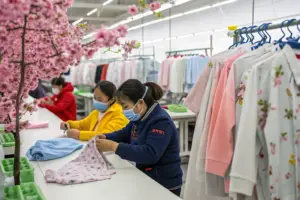
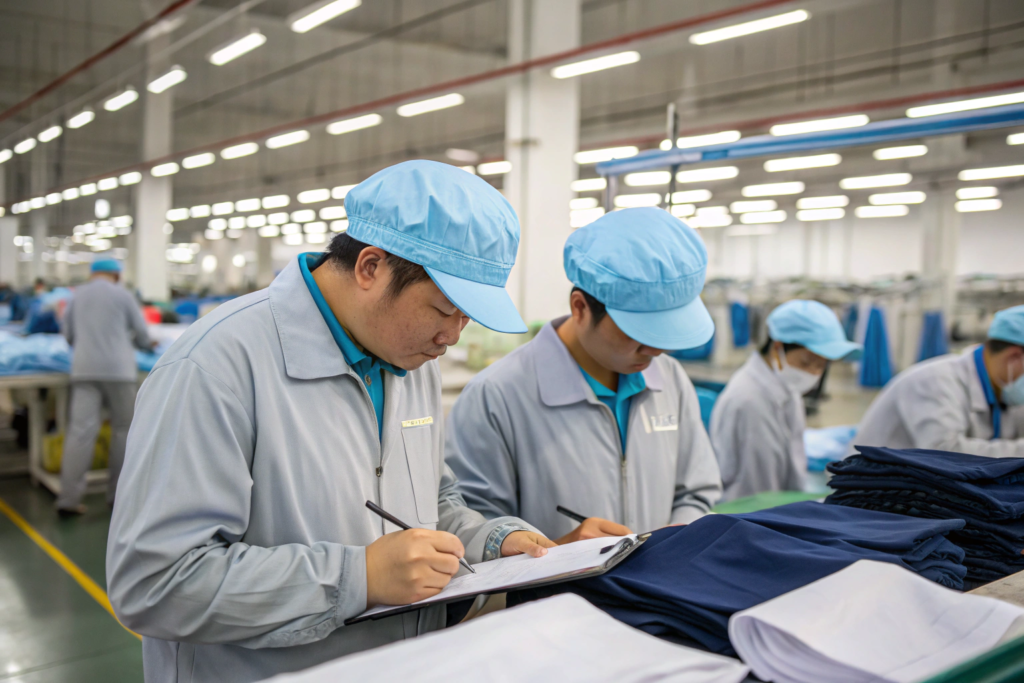
Distributed quality checks are important, but final authority must be centralized. Each of our five lines has its own inline QC inspectors who check seams, stitching, and assembly as the garment is made. However, the final gatekeeper is our Central Quality Control (CQC) department, which is independent of all production lines.
The CQC team performs AQL (Acceptable Quality Level) inspections on a random sample of finished goods from every batch, from every line. They use the same master Tech Pack and a unified digital checklist. If a deviation is found—for example, a slightly off-color thread on Line 2—the CQC team doesn't just reject that batch. They immediately investigate the root cause across all lines to prevent the same issue from occurring elsewhere. This system directly addresses the pain point of variable quality. It's how we caught a potential issue with button tension on a batch of men's shirts in 2023, leading us to recalibrate the machines on all lines in a single day, preventing a widespread problem.
What role does raw material management play?
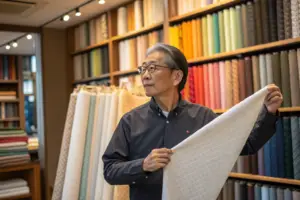
Consistency starts with the materials. We operate a central warehouse where all incoming fabrics and trims are inspected and approved before being allocated to any line. Fabric rolls are checked for color consistency, weight, and width against the approved standard. Only fabric from the same dye lot is allocated to a single production order, and this allocation is tracked digitally. This prevents the scenario where Line 1 uses Fabric Lot A and Line 2 uses Fabric Lot B, which might have a subtle shade difference. Our DDP service model extends this control to the logistics of material sourcing, ensuring a consistent flow of verified inputs.
How is equipment calibration maintained?
Machines must perform identically. Our maintenance team follows a strict schedule for cleaning, oiling, and calibrating every critical machine—from sewing machines and overlockers to steam tunnels—on all five lines. Calibration records are kept digitally. Before a high-precision order (like technical outerwear with waterproof seams) runs, we perform test runs on each line's relevant machines to confirm settings are synchronized. This mechanical consistency is non-negotiable for achieving the same stitch quality and finishing on every garment, regardless of its origin line.
How does the system handle customization and complex orders?
A common fear is that standardization kills flexibility. Our system is designed to handle customization and complexity precisely because it is standardized. The framework remains the same; we just plug in different variables.
When a client requests a customizable logo or a special fabric, this information is integrated into the master Tech Pack for that order. The SOPs are then updated with specific instructions for that customization step (e.g., precise placement coordinates for embroidery). These updated instructions are disseminated to all lines involved in the order. The change is managed as a controlled revision to the system, not as an ad-hoc exception. This is how we successfully produced a complex, multi-component ski jacket for a European brand across two lines simultaneously, with perfect alignment of logos and laminates on all units.
Can different lines specialize while maintaining consistency?
Yes, within the system. While all lines are capable of general production, we may allocate certain technically complex categories (e.g., garments requiring specialized bonding equipment) to specific lines that have that equipment permanently installed. However, the SOPs, quality standards, and management protocols for that category are still central. The specialization is in the tooling, not the standards. This allows us to offer expertise across knitwear, woven garments, and outerwear without diluting our consistency in any single category.
Conclusion
For brand owners, consistency isn't a luxury; it's the bedrock of supply chain reliability and brand integrity. Fumao Clothing’s approach to managing five production lines demonstrates that scale and consistency are not opposing forces. They are synergies achieved through rigorous centralization, digital documentation, standardized training, and an independent, authoritative quality function.
This system ensures that whether you order 500 units or 50,000, and whether your production spans one line or all five, the product that arrives at your warehouse will be uniform, predictable, and built to the exact specifications you approved.
If you are looking for a manufacturing partner where your quality standards are systematically enforced at scale, Shanghai Fumao's integrated production model is your solution. Let us be the consistent, reliable extension of your brand. Contact our Business Director Elaine to discuss your next project: elaine@fumaoclothing.com.