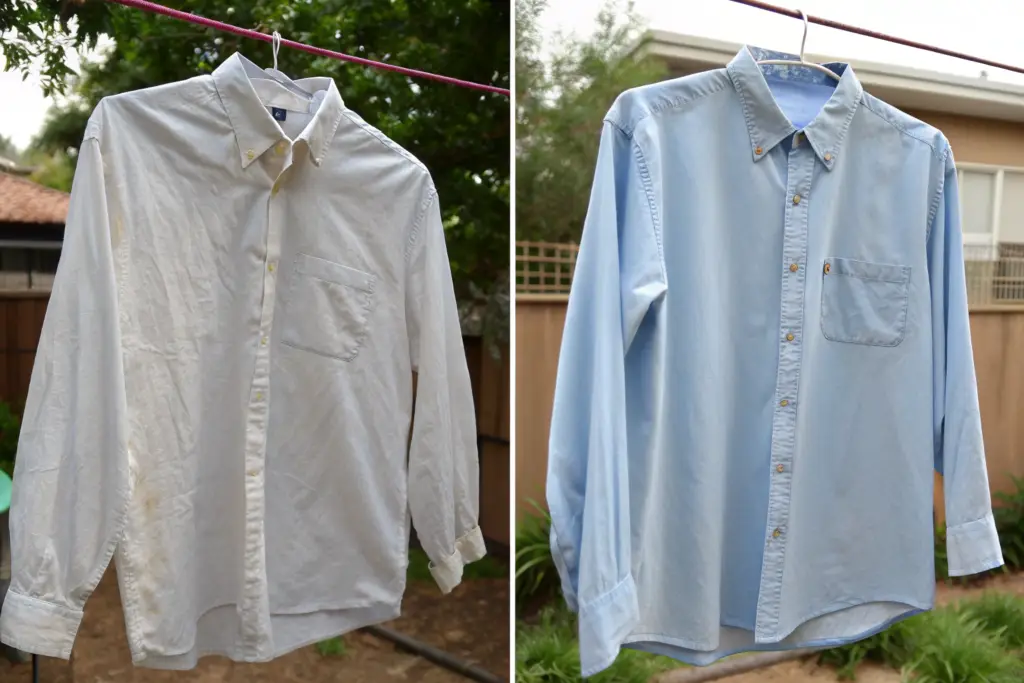
Have you ever bought a shirt that lost its shape after three washes, or a pair of jeans that faded unevenly within months? You invest in designs, marketing, and brand storytelling, only to have customer loyalty eroded by garments that wear out prematurely. The single most critical factor determining whether your apparel line earns a reputation for durability or disposability is not the stitching or the brand label—it's the fabric you choose.
Fabric quality is the foundational determinant of apparel longevity. It dictates a garment's resistance to pilling, fading, shrinkage, and tearing throughout its lifecycle. High-quality fibers with a high tensile strength, woven or knitted into dense, stable constructions, and finished with durable treatments, will maintain their integrity, appearance, and comfort through countless wears and washes. Conversely, inferior fabric inevitably leads to premature deterioration, directly impacting customer satisfaction, return rates, and brand reputation.
Think of fabric as the skeleton and skin of your garment. A weak skeleton collapses; poor skin ages quickly. For brand owners, understanding this connection is not just about product specs—it's about risk management, brand equity, and long-term profitability. Let's dissect exactly how fabric quality governs the lifespan of your products.
How Do Fiber Properties Directly Impact Durability?
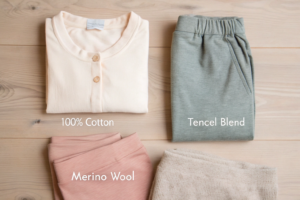
The journey to a durable garment begins at the microscopic level with the fibers themselves. The type, length, and inherent strength of the fibers are the DNA of fabric longevity. You cannot build a durable fabric from weak, short fibers, no matter how it is constructed.
Choosing the right fiber is the first and most consequential decision in defining your product's lifespan. This is where partnerships with mills and manufacturers who understand fiber science become invaluable.
What Is The Role Of Fiber Tensile Strength And Abrasion Resistance?
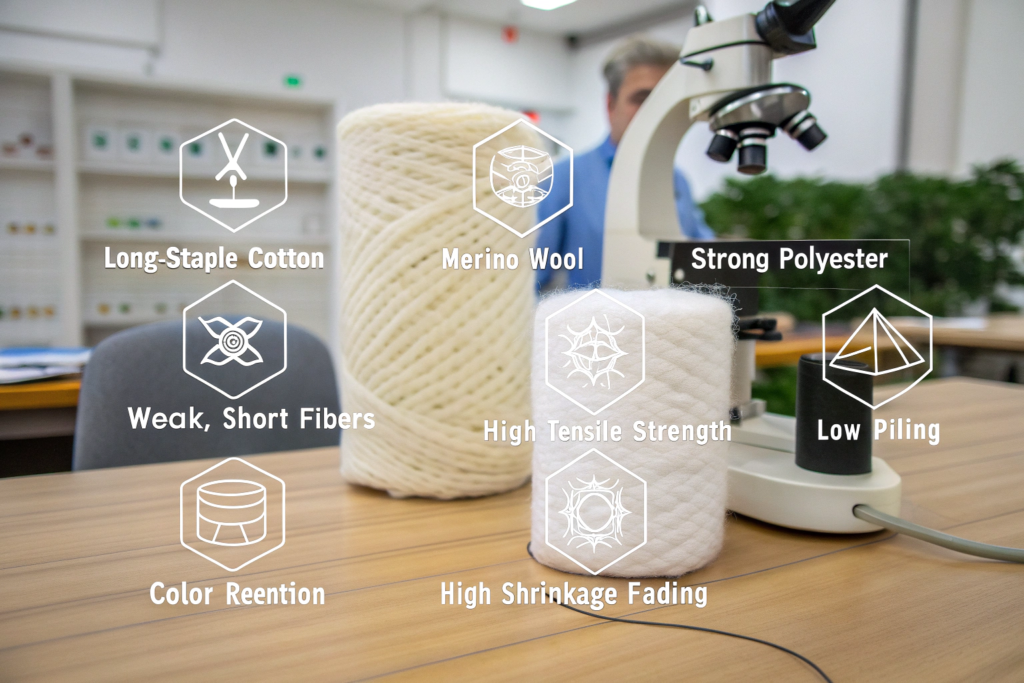
Tensile strength refers to how much force a fiber can withstand before breaking. Abrasion resistance is its ability to withstand surface wear from rubbing.
- High-Strength Synthetics: Fibers like nylon and certain polyesters have exceptionally high tensile strength, making them ideal for activewear, outerwear, and items that undergo stress.
- Natural Fiber Longevity: In cotton, long-staple varieties (like Egyptian or Pima) have longer, smoother fibers that spin into stronger, finer yarns less prone to pilling and breaking compared to short-staple cotton.
- The Pilling Problem: Pilling is the formation of small fiber balls on the surface. It occurs when short or weak fibers break, tangle, and migrate to the fabric surface. A client once sourced a budget cotton jersey for basic tees. The fabric, made from short-staple fibers, began pilling heavily after just five home washes, leading to a surge in customer complaints. We resolved this by switching to a combed, long-staple cotton for their next order, which virtually eliminated pilling and extended the perceived garment life by over a year.
How Does Fiber Choice Affect Color Fastness And Shape Retention?
Color fastness (resistance to fading) and dimensional stability (resistance to shrinking/stretching) are fiber-dependent.
- Synthetics & Dyes: Polyester fibers have excellent affinity for disperse dyes, resulting in superb colorfastness to washing and light. This is why sportswear colors often remain vibrant.
- Cotton Preparation: For natural fibers, the dyeing process is crucial. Reactive dyeing on mercerized cotton (a treatment that strengthens fibers and increases dye uptake) yields far better color retention and reduces shrinkage.
- Wool's Natural Recovery: Wool fibers have a natural crimp and elasticity, granting wool garments superior shape recovery compared to many plant-based fibers.
At Shanghai Fumao, we insist on using mercerized cotton for all our branded knitwear projects. A case study from last fall involved a polo shirt line where this specification reduced post-wash shrinkage to under 3% (meeting AATCC standards) and maintained color vibrancy twice as long as the client's previous supplier.
How Does Fabric Construction Determine Structural Integrity?
Even the strongest fibers can be undermined by poor construction. The way yarns are woven or knitted into fabric—its density, balance, and tension—creates the physical structure that must endure daily strain.
Think of construction as the architecture of the fabric. A loose, uneven weave is like a building with a shaky frame; it will fail under pressure.
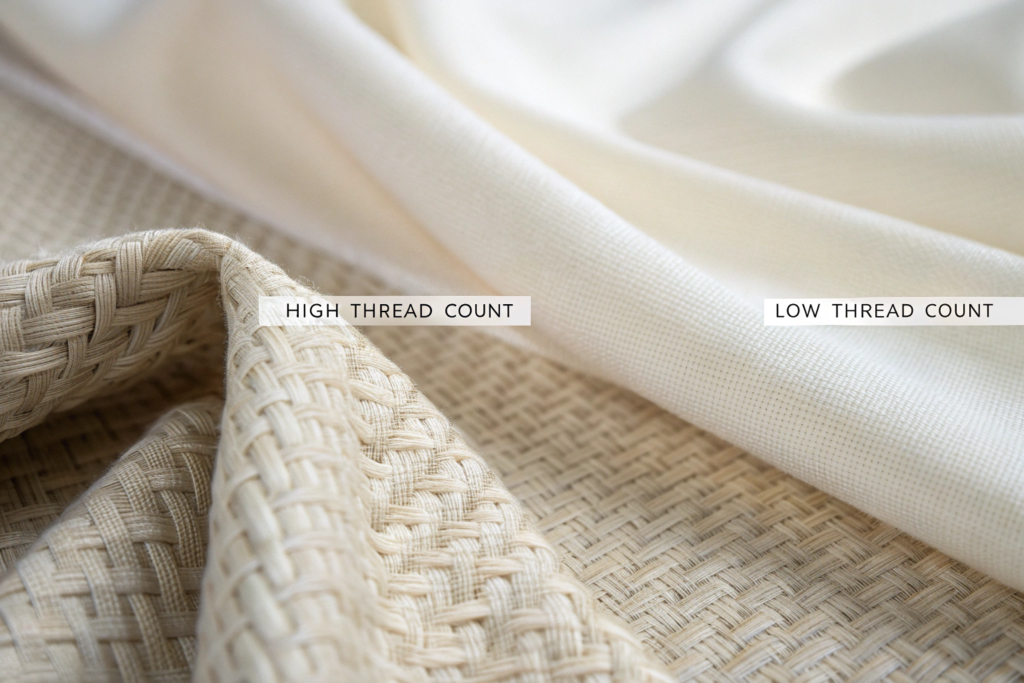
Why Are Fabric Weight and Thread Count Critical Metrics?
Fabric Weight (grams per square meter, GSM) and Thread Count (threads per square inch) are primary indicators of density and durability.
- GSM as a Proxy for Durability: Heavier fabrics (e.g., a 220 GSM jersey vs. a 140 GSM one) generally use more yarn, resulting in a denser, more opaque, and more durable material. A lightweight, sheer fabric will naturally be more prone to tearing.
- The Truth About Thread Count: In wovens, a balanced, high thread count typically signifies a tighter, stronger, and more durable fabric that resists tearing and seam slippage. However, quality of yarn is equally important.
We provide clients with a Fabric Specification Table for every development:
| Fabric Type | Recommended GSM Range | Key Longevity Benefit | Common Use Case |
|---|---|---|---|
| Premium Jersey | 180 - 220 | Resists pilling & tearing, holds shape | Everyday T-shirts, Polos |
| Poplin/Shirting | 100 - 120 | High thread count for smooth durability | Dress Shirts, Blouses |
| Denim (12oz+) | 12 oz and above | High abrasion resistance | Jeans, Jackets |
| Fleece | 280 - 350 | Pile durability, maintains warmth | Hoodies, Sweatshirts |
How Do Weave and Knit Types Influence Wear and Tear?
The construction pattern itself dictates performance.
- Woven Durability: Twill weaves (like denim) are inherently stronger and more resistant to abrasion than plain weaves due to the diagonal rib pattern, which distributes stress. A broken twill construction can further reduce fabric torque and twisting.
- Knit Considerations: In knits, a tighter knit gauge (needles per inch) creates a more stable fabric less prone to stretching out. Interlock or double-knit constructions are more stable and durable than single jersey.
A sportswear brand came to us with a problem: the side seams on their single jersey workout leggings were twisting after repeated use. Our analysis pointed to a lightweight, low-gauge knit with high stretch recovery but poor torsional stability. We developed a double-knit construction with a specific yarn blend, which solved the twisting and added years to the garment's functional life.
How Do Finishing Processes Lock In Longevity?
Fabric finishing is the final, transformative step that can either enhance or undermine the inherent durability of the fibers and construction. These chemical and mechanical treatments are applied to the greige (raw) fabric to impart specific performance characteristics.
Proper finishing acts as a protective shield, while poor or excessive finishing can weaken the fabric's core structure.
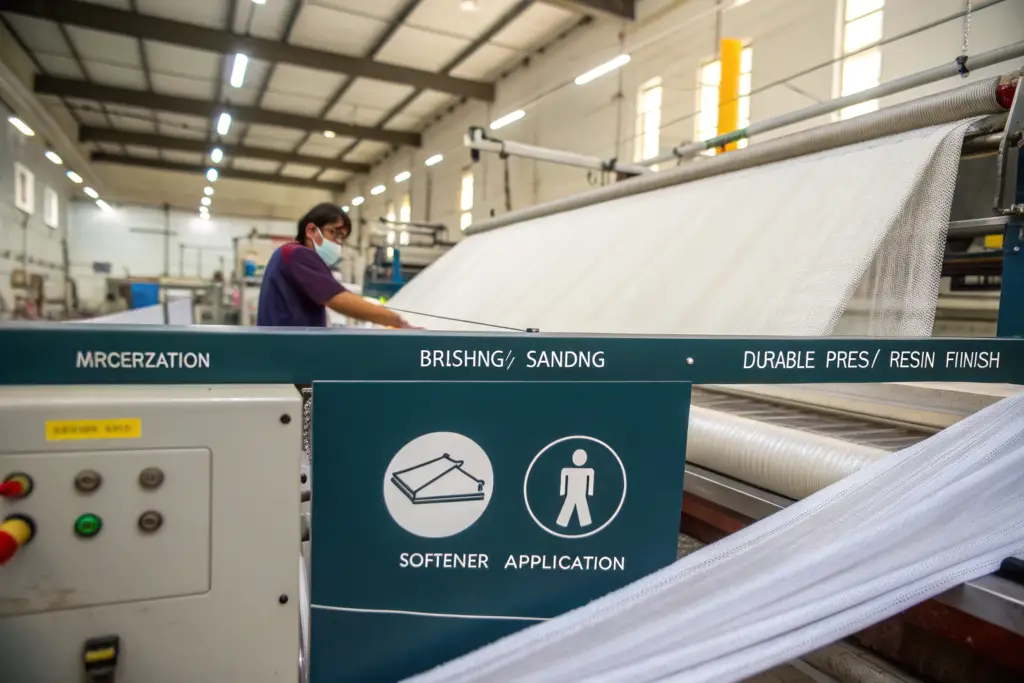
Which Finishes Enhance Durability and Which Can Harm It?
Beneficial Finishes:
- Mercerization: For cotton, this caustic soda treatment increases fiber strength, luster, and dye affinity, directly boosting longevity.
- Sanforization: A controlled compressive shrinkage process that pre-shrinks woven fabrics, ensuring minimal further shrinkage for the life of the garment.
- Durable Press (DP) / Resin Finishes: Cross-link fibers to improve wrinkle recovery and shape retention, though must be applied correctly to avoid fabric embrittlement.
Potentially Harmful Treatments:
- Over-Sanding or Brushing: Used to create a soft, peach-skin feel (e.g., on microfiber or some jerseys). Excessive mechanical action can critically weaken the yarns, leading to premature tearing. We audited a failed batch of "brushed" T-shirts for a client where over-processing had reduced the fabric tear strength by over 40%.
- Harsh Chemical Washes: Overuse of enzymes, stones, or acids in denim or garment washing can degrade fibers if not meticulously controlled.
How Does Quality Control Testing Predict Real-World Longevity?
A reputable manufacturer invests in pre-production lab testing to predict and assure durability. Key tests include:
- Martindale Abrasion Test: Measures a fabric's resistance to wear by rubbing. A high number of cycles indicates better durability for upholstery and heavy-use apparel.
- Tear Strength Test (Elmendorf): Measures the force required to propagate a tear in the fabric.
- Wash & Light Fastness Tests: Rate color loss against standard scales after repeated washing (AATCC Test Method 61) and light exposure.
At Shanghai Fumao, we run a standard battery of physical tests on all incoming fabric rolls. For a recent line of workwear jackets, the Martindale test data allowed us to confidently guarantee the fabric would withstand years of abrasion, a claim we could back with data for our B2B client.
Conclusion
Fabric quality is not a single attribute but a chain of interconnected decisions—from the genetic selection of fibers, through the precision of construction, to the science of finishing. Each link in this chain directly dictates how your apparel will withstand the tests of time, wear, and customer expectation. Choosing a manufacturer that masters this chain is the most significant step you can take to ensure your brand is synonymous with durability and value.
Investing in superior fabric quality is an investment in customer trust, reduced returns, and a sustainable business model built on products that last. It transforms your apparel from a seasonal commodity into a long-term asset for the wearer.
Don't let subpar fabric cut your brand's lifespan short. Partner with a manufacturer that prioritizes and understands the science of durability at every stage. Shanghai Fumao combines material expertise with rigorous testing to ensure the garments we produce for you are built to endure. Contact our Business Director, Elaine, to discuss how we can source and engineer fabrics that extend the life—and success—of your apparel line. Email elaine@fumaoclothing.com and explore our technical capabilities at Shanghai Fumao Clothing.