For creative directors and designers, the blank slate of a new collection is a realm of pure potential. Visions of innovative silhouettes, unexpected fabric combinations, and bold technical details come to life. Then, the practical question arises: "We want this line to be OEKO-TEX certified." Does this requirement become a constraint, a creative cage that limits what's possible? Or can it be reframed as a catalyst for smarter, more innovative design?
Certification fundamentally shifts—rather than limits—design freedom. It moves creativity from an unrestricted exploration of anything possible to a focused innovation within the parameters of what is responsibly achievable. This discipline often leads to more durable, intentional, and ultimately more marketable designs. It's the difference between freeform sketching and the genius of architecture within a building code.
At Shanghai Fumao, we've seen this dynamic firsthand. Last year, a boutique brand came to us with a design for a fully bonded golf jacket—a seam-free, waterproof shell that required specific adhesives and laminates. Their initial concern was that certification would force them to abandon the sleek look. Instead, our technical team worked with specialized mills to source OEKO-TEX certified bonding films and membranes. The process took an extra three weeks in development, but the result was a groundbreaking jacket that won a design award and commanded a 40% price premium, precisely because its innovation was paired with verifiable safety. The certification became part of its story of advanced, conscious engineering.
Does Certification Dictate a "Minimalist" or "Boring" Aesthetic?
A common misconception is that certified apparel defaults to a palette of beige and simple basics. This is a myth born from a lack of collaboration between design and technical development teams. In reality, certification governs the chemical composition and safety of materials and processes, not their visual or tactile expression.
Certification does not dictate a minimalist aesthetic; it dictates a verified supply chain. Color, texture, pattern, and silhouette remain fully within the designer's domain, provided the chosen materials and decoration methods can be sourced or adapted to meet the standard. The challenge is one of curation and adaptation, not prohibition.
How Are Color and Print Innovation Affected?
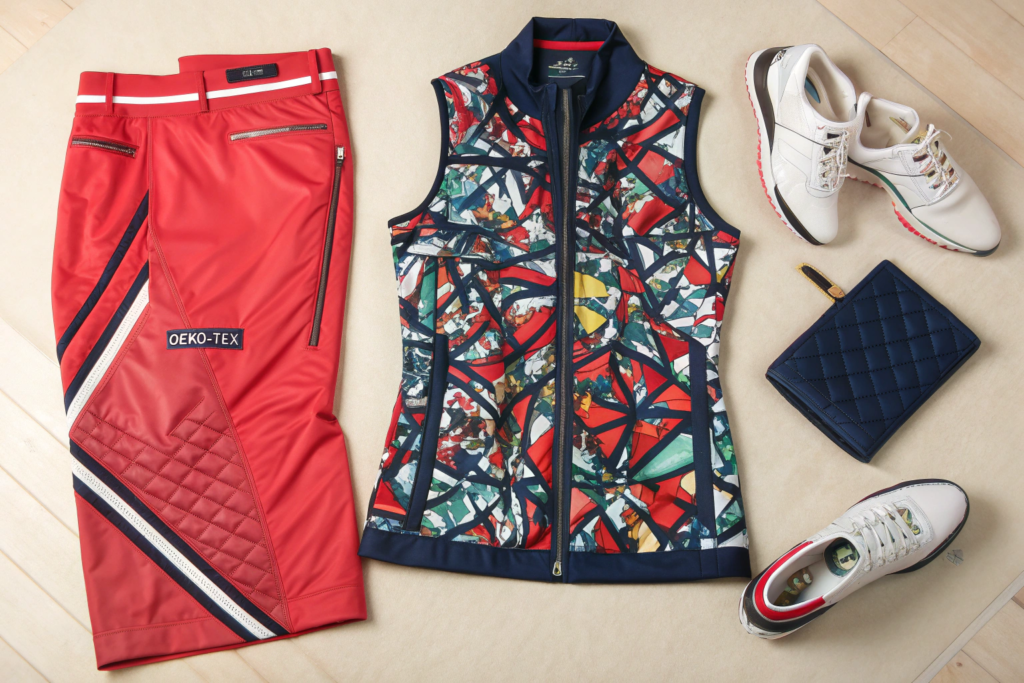
The realm of color and print is where the certification's influence is most technically felt—and where the greatest innovation is happening. The restriction lies not in the hues themselves, but in the dyes and pigments used to create them.
- Dye Chemistry: Certified dyes must be free of specific arylamines, heavy metals, and allergenic dispersants. This eliminates certain cheap, older dye classes but pushes designers and mills toward newer, more advanced colorant technologies. The result is often superior colorfastness and vibrancy.
- Printing Techniques: Digital prints, sublimation, and screen prints must use certified inks. For a brand we worked with, achieving a specific, luminescent neon green for a performance trim required testing three different ink systems from certified suppliers until the exact shade and performance were matched. The effort resulted in a unique, signature color that became a brand identifier.
The key is early collaboration. When designers involve technical partners like Shanghai Fumao at the color ideation stage, we can immediately present a curated palette of achievable, certified options, preventing disappointment later.
Can You Use Complex Constructions and Embellishments?
Yes, but with forensic-level sourcing. The complexity isn't in the sewing; it's in the bill of materials. A simple golf skirt might have 8 components (main fabric, lining, thread, zipper, hook & eye, label, waistband interlining, care label). A high-fashion version could have 15+ (adding specialty lace, bonded appliqués, custom metal grommets, silicone grippers, etc.). Each must be certified.
Our role is to manage this complexity. We maintain a library of pre-certified components—from eco-friendly sequins to approved metal hardware. When a designer wants a non-standard item, we initiate a sourcing and pre-testing protocol early in the timeline. This system doesn't say "no"; it says "let's find a way, and here's the timeline and cost to do it right." This transforms the design process from a guessing game into a managed, creative engineering project.
How Does It Influence Fabric Development and Sourcing?
This is where certification has its most profound and positive impact on design freedom. It moves fabric selection from a purely aesthetic and cost-driven exercise to a holistic consideration of performance, safety, and origin.
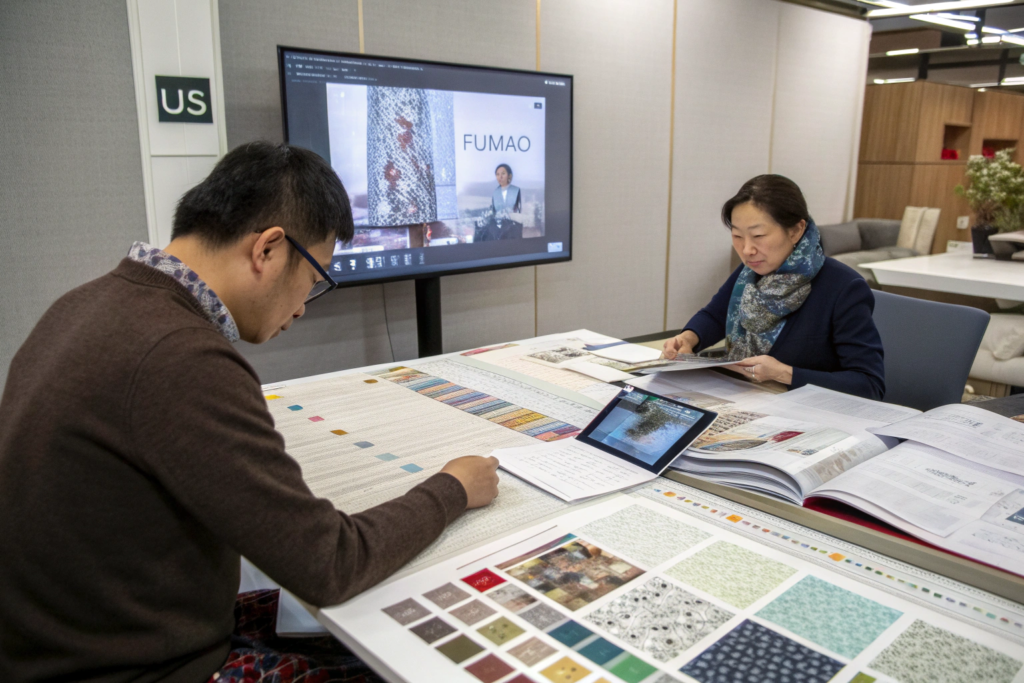
Certification influences fabric development by incentivizing deeper partnerships with advanced mills, fostering innovation in "clean chemistry" performance finishes, and making material traceability a foundational part of the design narrative. You don't just choose a fabric; you choose a story.
| Traditional Sourcing Focus | Certification-Influenced Sourcing Focus | Result for Design |
|---|---|---|
| Cost, Hand-feel, Visual Appeal | All of the above, plus: Mill's certification credentials, dye class, finish chemistry, traceability. | More durable, reliably performing fabrics with a verifiable backstory. |
| Off-the-shelf selections. | Co-development with mills for custom certified fabrics. | Truly unique materials that competitors cannot easily copy. |
| Short-term cost savings. | Long-term value and risk mitigation. | Designs that maintain integrity (color, shape) over time, protecting brand equity. |
Does It Limit the Use of Novel or Sustainable Materials?
Paradoxically, it often expands it. The drive for certification is accelerating the development of novel materials that are inherently compliant. For instance:
- Bio-based Polymers: Fabrics derived from castor oil or corn are often easier to certify from the ground up than petroleum-based alternatives with complex chemical histories.
- Natural and Regenerated Fibers: Advanced lyocells (like TENCEL™) and responsibly sourced merino wools frequently come from mills that already operate within strict environmental and chemical protocols, making certification a smoother process.
For a client pursuing a "circular" line, we co-developed a fabric blend of GRS-certified recycled polyester and OEKO-TEX certified lyocell. The certification process validated the entire recycled content chain and the safety of the lyocell processing, giving the brand a powerful, dual-certified story that was central to their launch campaign.
What is the Real Impact on Development Timelines?
Honesty is crucial here. For a design using entirely pre-vetted, certified materials from our library, the timeline impact is minimal. For a design requiring the development and certification of a new custom fabric or novel component, it can add 4-8 weeks to the development phase. This is not "delay"; it is the necessary duration for responsible innovation. Smart brands plan for this by starting their certified collection development earlier, treating it with the same strategic timeline as a major technical collaboration.
Can Certification Itself Become a Design Inspiration?
The most forward-thinking brands are flipping the script entirely. Instead of viewing certification as a constraint on design, they are using its principles as a direct inspiration for their creative direction.
Certification can absolutely become a design inspiration, leading to aesthetics of "honest construction," "transparent layering," and "functional purity." The parameters of the standard can inspire minimalist detailing, innovative seam placements that reduce chemical finishes, and a color palette derived from natural, certifiable dyes. The rulebook becomes the muse.
What Does "Designing to the Standard" Look Like in Practice?
It involves asking a new set of questions at the sketch phase:
- Can we achieve this drape with a single, certified fabric rather than a laminate that requires adhesives?
- Can this visual effect be created through structural knitting (which is easier to certify) rather than a chemical coating?
- Can we use contrast-color stitching instead of a printed graphic to avoid inks?
- Can we make the certification label a visible, designed element of the garment?
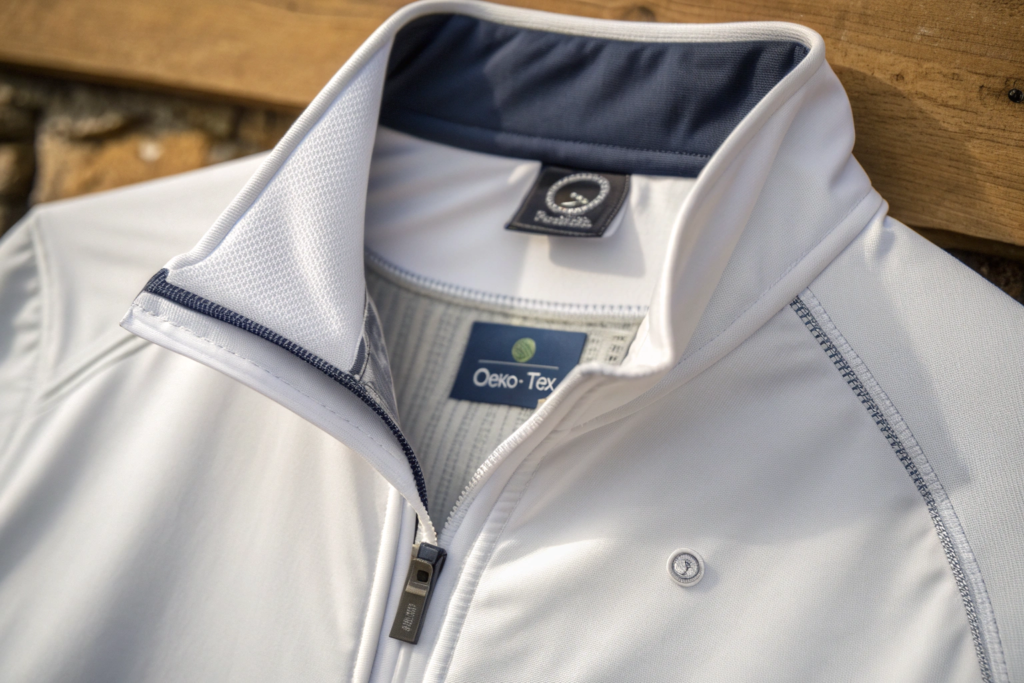
This mindset led one of our partner brands to create a bestselling "Inside Out" polo, where the beautifully finished interior seams and OEKO-TEX label were featured as design elements on the cuff and placket, telling a story of inner quality.
How Does This Build a Stronger, More Cohesive Brand?
When design and certification are in harmony, every aspect of the product communicates the same message. The aesthetics, the material story, the verified safety, and the brand's marketing all align into a powerful, singular proposition. This cohesion builds immense consumer trust and brand loyalty. The garment is no longer just a "product"; it is a complete, authentic brand statement. By mastering this integration, Shanghai Fumao empowers designers to create with purpose, where every aesthetic choice is reinforced by a foundation of verifiable integrity.
Conclusion
The impact of certification on golf wear design freedom is not one of limitation, but of transformation. It shifts the creative process from unrestricted possibility to guided, responsible innovation. It challenges designers and manufacturers to collaborate more deeply, source more thoughtfully, and engineer more intelligently. The outcome is apparel that is not only beautiful and functional but also durable, safe, and rich with a credible story.
Embracing this paradigm requires a manufacturing partner who speaks both the language of design and the language of compliance. If you are ready to explore how certification can become a catalyst for distinctive, market-leading design in your next collection, let's begin that creative journey together. Contact our Business Director Elaine at Shanghai Fumao to connect your design vision with our technical mastery. Email her at elaine@fumaoclothing.com.