You’re building a ski apparel brand in a market dominated by giants like The North Face. They have massive marketing budgets, decades of brand heritage, and global retail dominance. As a smaller or emerging brand, how do you carve out your space and win customer loyalty? The answer isn't to try and outspend them, but to outmaneuver them on the battleground of trust and authenticity. This is where strategic certification, particularly OEKO-TEX, becomes a powerful equalizer.
Certification helps ski brands compete with The North Face by providing an objective, third-party validation of quality and safety that levels the playing field. It allows smaller brands to build instant credibility, tell a compelling story of responsibility, and directly address the specific concerns of today’s conscious consumer—areas where even large brands can be perceived as opaque or slow-moving.
Competing isn't about being bigger; it's about being sharper, more transparent, and more aligned with evolving consumer values. Let's explore how certification can be wielded as a strategic tool to challenge market leaders.
How Does Certification Build Instant Brand Credibility?
For a new or lesser-known brand, the biggest hurdle is lack of trust. Consumers ask, "Why should I buy your $400 jacket over The North Face's?" You can't rely on legacy; you must build trust from the ground up. A recognized certification like OEKO-TEX acts as a trust transfer.
It’s a shortcut. When a consumer sees the OEKO-TEX label, they don't just see your brand's promise; they see the promise of an independent, globally respected institute with rigorous scientific testing behind it. This instantly elevates your brand's perceived quality and safety to an internationally benchmarked level. It tells the customer, "Our standards are so high, we invited a strict third party to verify them." At Shanghai Fumao, we’ve seen this work for our clients. A startup brand from Colorado used their OEKO-TEX certification as the centerpiece of their launch campaign, with the tagline "Proven Safe. Built for the Peak." They reported that in customer surveys, over 60% of first-time buyers cited the certification as a key factor in their decision, directly comparing it to the lack of such clear claims from some established brands' specific product lines.
How does this work in digital marketing and e-commerce?
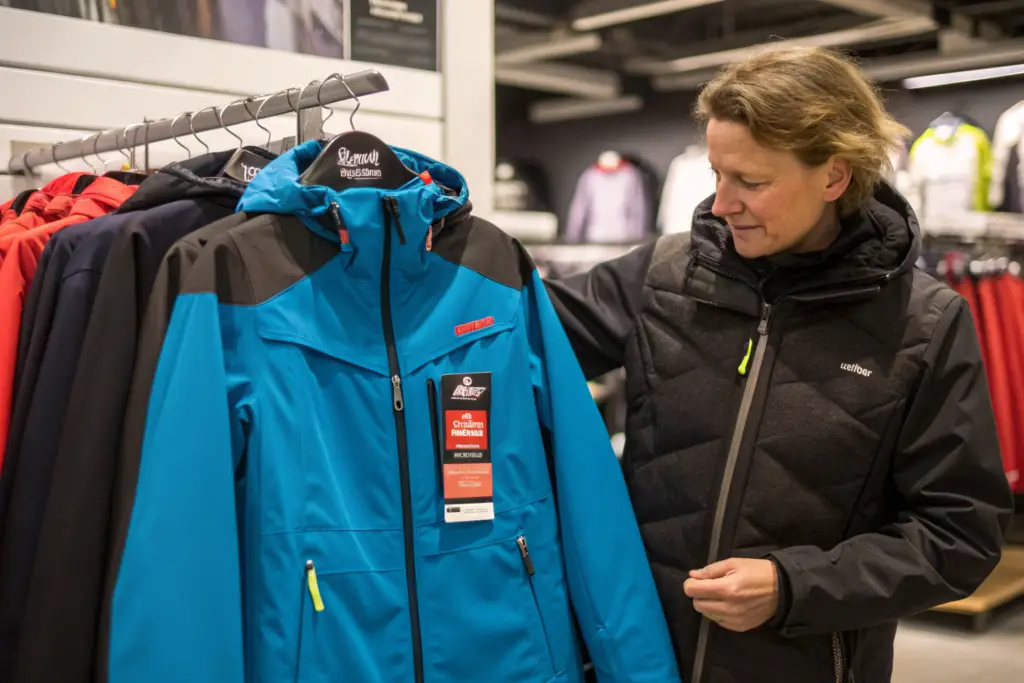
Online, you lack a salesperson to build trust. Certifications become visual trust signals. Displaying the OEKO-TEX badge prominently on product images, in the checkout flow, and in ads acts as a constant reassurance. It improves conversion rates by reducing purchase anxiety. It also boosts SEO for terms like "safe ski wear" or "non-toxic snowboard jacket," allowing you to attract customers actively searching for these values—customers who may be disillusioned with the mainstream offerings. This is a targeted way to compete for specific, high-intent segments of the market.
Can certification help with press and influencer outreach?
Absolutely. Journalists and influencers are inundated with pitches. A story about "just another ski jacket" isn't compelling. A story about "a small brand taking a stand for radical transparency and safety" is. Certification provides a concrete, newsworthy hook. It gives influencers a genuine, values-aligned reason to partner with you, beyond just paying for a post. This earned media and authentic advocacy are marketing channels where you can genuinely outperform larger competitors who may seem less personal or more corporate.
How Does Certification Enable a More Compelling Brand Story?
The North Face tells stories of exploration and athletic achievement. You can tell a deeper story: the story of what your product is made of, and what it's not made of. In an age of greenwashing and ingredient consciousness, this narrative is powerful.
Certification allows you to operationalize transparency. You can talk about the "why": "We chose OEKO-TEX because we believe performance should never come at the cost of your health." You can take customers behind the scenes into the testing lab, explain what "tested for harmful substances" really means, and highlight the safety of materials against sensitive skin. This creates an emotional connection based on care and responsibility—positioning your brand as a protector, not just a provider. For a family-focused brand, this story is especially potent. You're not just selling kids' ski wear; you're selling "peace of mind on the slopes."
How can you leverage this in direct-to-consumer (DTC) models?
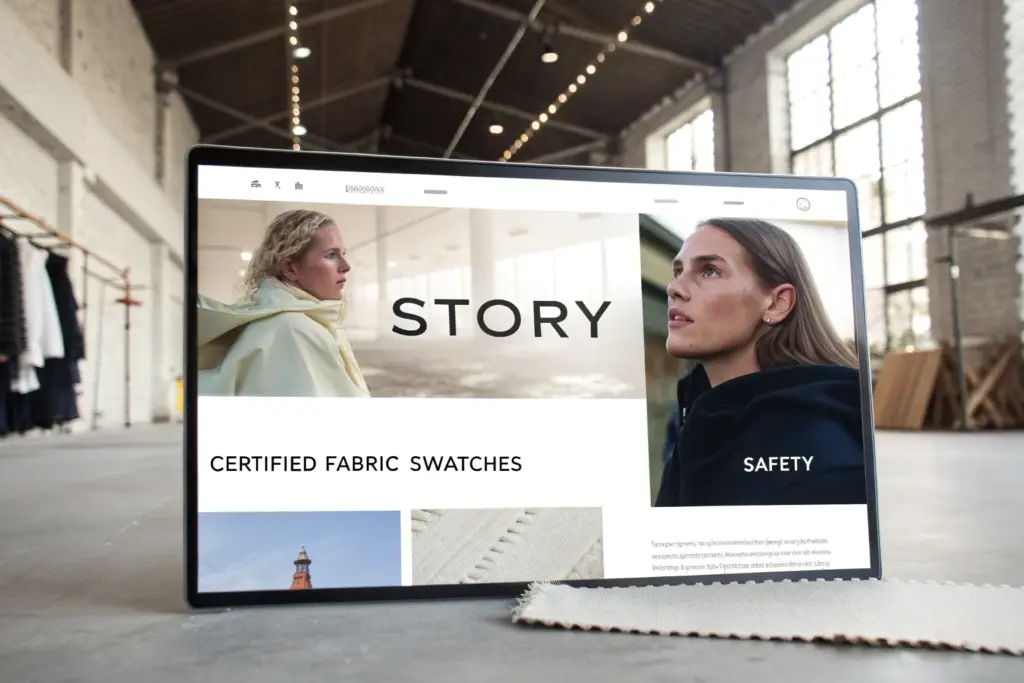
DTC brands have a direct dialogue with their customers. Use this channel to educate. Send emails explaining your certification. Include detailed information on your "Our Standards" page. This builds a community of informed advocates. Large brands selling primarily through wholesale may struggle to have this direct, educational conversation at the point of sale in a multi-brand retailer. Your DTC channel becomes not just a sales platform, but a teaching platform, deepening loyalty.
What about competing on innovation and material science?
Large brands often innovate on performance (e.g., a new waterproof membrane). You can innovate on purity and safety. You can be the first to market with a fully OEKO-TEX MADE IN GREEN certified ski collection, combining product safety with sustainable production. This is a distinct and defendable innovation territory. You can partner with mills developing new, compliant, high-performance fabrics and tell that story: "We worked with X mill to create the world's first 100% recycled, PFC-free, OEKO-TEX Class I waterproof fabric." This positions you as a pioneer.
How Does Certification Strengthen Your Position with Retailers?
Winning shelf space in key retailers is critical. Retailers themselves are under pressure to curate responsible assortments and de-risk their supply chains. Certification gives you a compelling argument for why they should choose you over another brand.
When you pitch to a premium retailer like REI, Backcountry, or a specialty European shop, you can present a complete package: great product + a verified safety story + reduced risk for them. You can say, "Our entire line is OEKO-TEX certified, which means you have independent verification of safety, reducing your liability and aligning with your sustainability charter. Our transaction certificates provide batch-level traceability." This makes you a lower-risk, higher-value partner for the retailer. It can help you secure better terms, placements in featured "clean" collections, and more supportive sales staff training. Large brands may have certified some products, but as a smaller brand, you can make it your core, universal commitment, which is simpler and more powerful for retailers to merchandise and explain.

How does it help with international expansion?
When entering new markets like Europe, Japan, or South Korea, local consumers and retailers may not know your brand, but they know and trust OEKO-TEX. It serves as a universal quality passport, reducing the friction of market entry. It demonstrates that you understand and meet global standards, not just domestic ones. This is a significant advantage when competing against global giants who are already established; your certification shows you are playing at the same level from day one.
Can certification improve your supply chain resilience?
Indirectly, yes. To achieve certification, you must work with a factory that has robust chemical management and traceability systems (like Shanghai Fumao). This often means your supply chain is more transparent, auditable, and less prone to the kind of scandals (e.g., illegal chemical use, labor issues) that can suddenly plague opaque supply chains and destroy a brand's reputation overnight. This operational integrity is a form of competitive insurance that large brands, with vast and complex supply webs, can sometimes struggle to maintain uniformly.
What Are the Strategic Limitations and How to Overcome Them?
Certification is a powerful tool, but it's not a magic bullet. It must be part of a holistic strategy. Recognize its limitations and complement it with other strengths.
Limitation 1: Certification alone doesn't sell. The product must still have excellent design, fit, and performance. Certification is the reason to believe in the product's safety and quality, but the product must first meet functional needs.
- Solution: Partner with a manufacturer that excels in both technical construction and compliance. Ensure your gear performs flawlessly on the mountain, with certification as the foundational layer of trust.
Limitation 2: Large brands can also get certified. They have the resources to certify specific lines if they choose.
- Solution: Be faster and more authentic. Make certification your brand's DNA, not a marketing add-on. Communicate it more consistently and passionately. While a large brand might certify a "green" sub-line, you can build your entire brand identity around being the most transparent, safest choice. Own the category.
Limitation 3: There is a cost.
- Solution: Frame the cost as an investment in your brand equity and customer loyalty, not an expense. Communicate the value clearly to justify a slight price premium, targeting consumers for whom this is a priority. Efficient manufacturing partners can help manage these costs through integrated systems.

How to integrate certification into a full competitive strategy?
Your strategy should be a triangle:
- Product Excellence: Superior design, technical performance, and durability (enabled by a top-tier factory).
- Authentic Story: A brand mission built on transparency, safety, and responsibility (powered by certification).
- Community Focus: Deep engagement with a specific community (e.g., backcountry skiers, eco-conscious families, freestyle athletes).
Certification supercharges point #2 and supports point #1. By focusing on a specific community (point #3), you avoid competing head-on with The North Face across their entire broad market, and instead, dominate a niche that values your unique proposition.
Conclusion
Certification is not just a compliance sticker for ski brands competing with giants like The North Face; it is a strategic lever for differentiation, trust-building, and market access. It allows smaller brands to compete on the powerful axes of transparency, safety, and authenticity—values that are increasingly decisive in today's market.
By using certification to build instant credibility, tell a more compelling story, strengthen retailer relationships, and reinforce supply chain integrity, emerging brands can create a formidable position. The goal is not to become the next The North Face, but to become the first and best version of your own brand—one defined by proven responsibility and unwavering quality.
Ready to build a ski brand that competes on integrity and innovation? Partner with a manufacturer who provides the certified quality and strategic insight to make it happen. At Shanghai Fumao, we help ambitious brands turn certification into a competitive advantage. Contact our Business Director, Elaine, to start building your distinctive path in the market. Reach her at elaine@fumaoclothing.com.