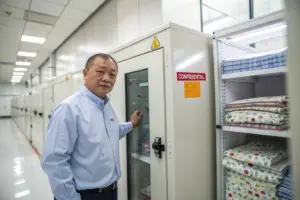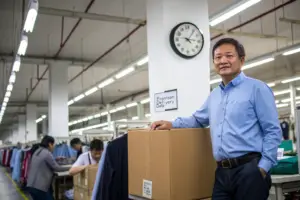
Managing production capacity across multiple camouflage product lines is a major challenge for apparel brands. You want to launch new designs but worry about production delays, quality inconsistencies, and missed seasonal deadlines. These problems can hurt your profits and brand reputation. Understanding how a capable partner handles this complexity is key to a successful partnership.
A skilled manufacturer manages production capacity for multiple camo lines through strategic factory floor planning, dedicated raw material sourcing for each pattern, and implementing advanced production scheduling software. This integrated approach prevents cross-contamination, ensures color accuracy, and maximizes on-time delivery for all lines, even during peak seasons.
At Shanghai Fumao, we have specialized in serving U.S. brands for years, and we understand that your success depends on flawless execution. We've seen how poor capacity planning can lead to disaster. Last fall, a U.S. outdoor brand came to us after their previous supplier mixed fabric lots for two different digital camo patterns, resulting in a shipment where greens didn't match. We had to re-prioritize two of our own lines to absorb their urgent re-order, a feat made possible by our systematic approach. Here is how we turn the chaos of multiple camo productions into a streamlined, reliable process.
What are the key strategies for factory floor planning with camo patterns?
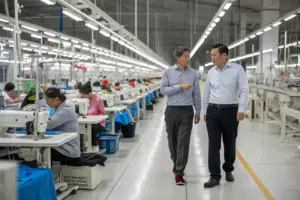
Efficient factory floor planning is the first defense against production bottlenecks and quality issues. Camouflage patterns require meticulous attention to detail to prevent dye lots from mixing and patterns from being mismatched.
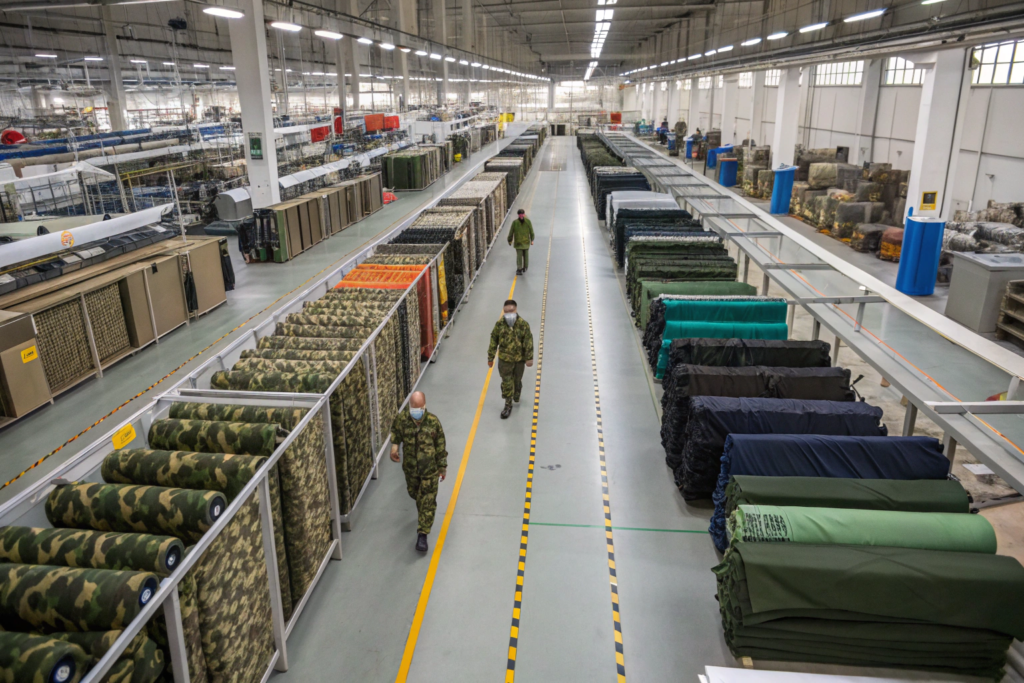
A smart strategy involves creating physically separated production zones or dedicated lines for specific camo families. For example, a line running woodland patterns should be separated from a line handling digital urban camo. This minimizes the risk of cross-contamination of fabric scraps or thread. Furthermore, implementing a clear batch processing workflow is non-negotiable. Each camo line is treated as a complete batch from cutting to sewing to finishing, and these batches are scheduled with buffer time for machine changeovers and quality checks.
How does zoning prevent color and pattern mix-ups?
Physical separation is more than just organization; it's a quality control necessity. Camouflage fabrics, especially those with multiple colors like MARPAT or Multicam variations, are sensitive. Lint or threads from a green-dominant pattern can easily contaminate a grey-dominant one during sewing. We designate specific areas for each major pattern type. We even use color-coded bins for fabric rolls and cut pieces. This system was validated when we simultaneously produced a large order of hunting camouflage and a smaller run of tactical gear camo. The clear zoning prevented any mix-up, ensuring each garment met its strict color fastness standards and pattern specifications.
What role does production scheduling software play?
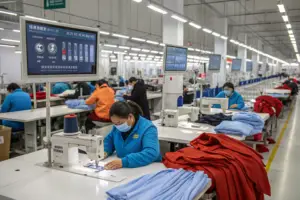
Relying on manual scheduling for multiple lines is asking for trouble. We use Enterprise Resource Planning (ERP) systems tailored for apparel manufacturing. This software gives us a real-time dashboard of every production line's status. We can see if Line 3 is ahead of schedule on a Realtree APG order, which might allow us to move up the start date for a Kryptek Highlander batch. The software tracks work-in-progress (WIP) inventory at each stage, alerting managers if a bottleneck is forming. For a brand owner, this translates to reliable updates and predictable delivery dates. It's how we guaranteed on-time delivery for a client launching three new camo hoodie lines last spring, despite a tight 60-day turnaround from fabric sourcing to final shipment.
Why is dedicated raw material sourcing critical for camo lines?
The consistency of your camouflage pattern starts long before the fabric reaches the cutting table. Sourcing raw materials—especially printed or dyed fabrics—in a consolidated and dedicated manner is the foundation of quality and capacity management.
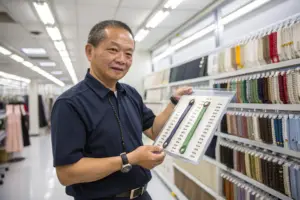
When a factory sources fabrics for different camo lines from multiple mills or at different times, shade variations are almost guaranteed. We manage capacity by working closely with a select group of trusted fabric mills. We forecast the total yardage needed across all our clients' camo projects for a season and place consolidated orders. This ensures the dye lots are as consistent as possible. We then allocate this pre-approved fabric to specific production lines and orders, creating a closed-loop system that tracks material from the mill to the finished garment.
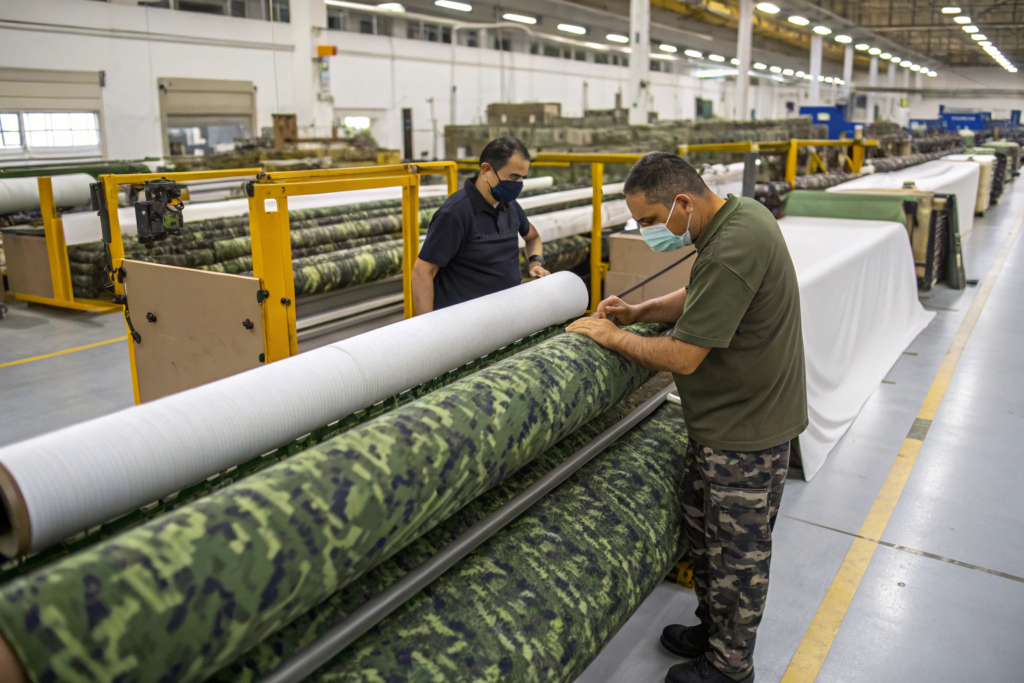
How does fabric consolidation ensure color consistency?
Imagine producing two batches of the same "woodland camouflage" shirt, but the green hues are slightly off between batches. This is a branding nightmare. Our approach is to source the base fabric and coordinate the printing or dyeing for all similar patterns in one large batch. By working with certified mills that specialize in printed fabrics, we maintain strict control over the color formulas. We request and archive lab dips and strike-offs for every pattern before full production runs. This means whether you order 500 units or 5,000 units over several months, the color and pattern clarity will match. This level of control is a core part of the full-package manufacturing service that brands like ours at Shanghai Fumao provide.
What certifications should you look for in a camo fabric supplier?
| Quality raw materials are defined by more than just appearance. For the U.S. market, especially for workwear or hunting apparel, fabric performance and safety are key. We insist our fabric suppliers provide certified test reports. Relevant certifications include: | Certification | Focus Area | Why It Matters for Camo Apparel |
|---|---|---|---|
| OEKO-TEX Standard 100 | Harmful Substances | Ensures the printed/dyed fabric is free from allergens and illegal chemicals, crucial for skin-contact garments. | |
| ISO 9001 | Quality Management | Indicates the mill has a systematic quality process, leading to more consistent fabric rolls. | |
| Bluesign® | Environmental & Safety | Approves the chemicals and processes used, important for brands with sustainability goals. |
Requesting these certificates upfront avoids the critical pain point of suppliers falsifying documents. We audit our mills regularly and keep all certification records on file for our clients' review, providing total transparency in our supply chain management.
How can advanced scheduling optimize multiple production lines?
Capacity is not just about having enough sewing machines; it's about timing their use perfectly. Advanced production scheduling transforms a factory's capacity from a fixed number into a flexible, optimized resource.
We treat our five production lines as a unified network, not isolated units. Using Finite Capacity Scheduling (FCS) within our ERP, we can simulate different production scenarios. The software considers each line's capability, order priority, and the complexity of each camo pattern. For instance, a simpler, single-layer camo print might be scheduled on a faster, automated line, while a complex, multi-layer laminated camo for outerwear is routed to a line with specialized presses and skilled operators. This dynamic scheduling allows Shanghai Fumao to maximize overall output and meet diverse client deadlines.
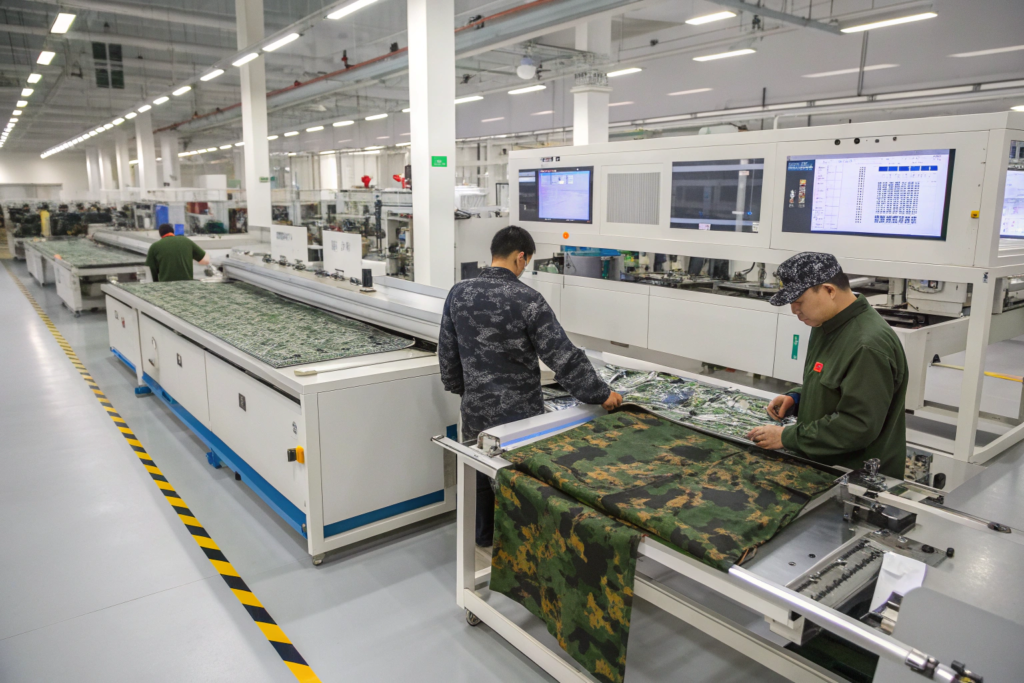
What is the benefit of Finite Capacity Scheduling (FCS)?
FCS stops the common practice of overbooking. Traditional scheduling might assume a line can switch from one camo pattern to another instantly. FCS knows it takes 4 hours to clean the machines and change the thread colors. It factors in these changeovers, material arrival times, and operator skill sets. The result is a realistic, achievable production calendar. For you, this means fewer "surprise" delays. Last year, a client needed an urgent, mid-season top-up order of their best-selling camo tee. Because our FCS showed available capacity on Line 2 after a minor rescheduling, we could commit to the order without disrupting other clients' timelines.
How do you balance urgent orders with existing schedules?
Urgent orders are a reality in fashion. The key is having a transparent and fair prioritization protocol. We maintain a small block of "buffer capacity" across our lines for this purpose. When an urgent order comes in, our management team assesses its impact on all running orders. We then communicate proactively with any clients whose orders might be affected by a minor shift (e.g., a 2-day delay). This honest communication is what sets reliable partners apart. We solve the pain point of inefficient communication by assigning a dedicated project manager to each client, who serves as the single point of contact for all scheduling discussions and updates.
What quality control measures are essential for different camo styles?
Producing multiple camouflage lines means managing multiple quality benchmarks. A flaw that is minor on one pattern could be catastrophic on another. A rigorous, adaptable quality control process is the final pillar of successful capacity management.
Our QC process is integrated at every stage, not just a final inspection. For camouflage, we focus on pattern alignment, color consistency, and durability. We use standardized inspection light boxes (D65 light source) to check colors under consistent lighting. Each camo style has its own approved reference sample and a specific inspection checklist. For example, a symmetrical woodland pattern has different alignment tolerances at the seams compared to an asymmetrical digital pattern.
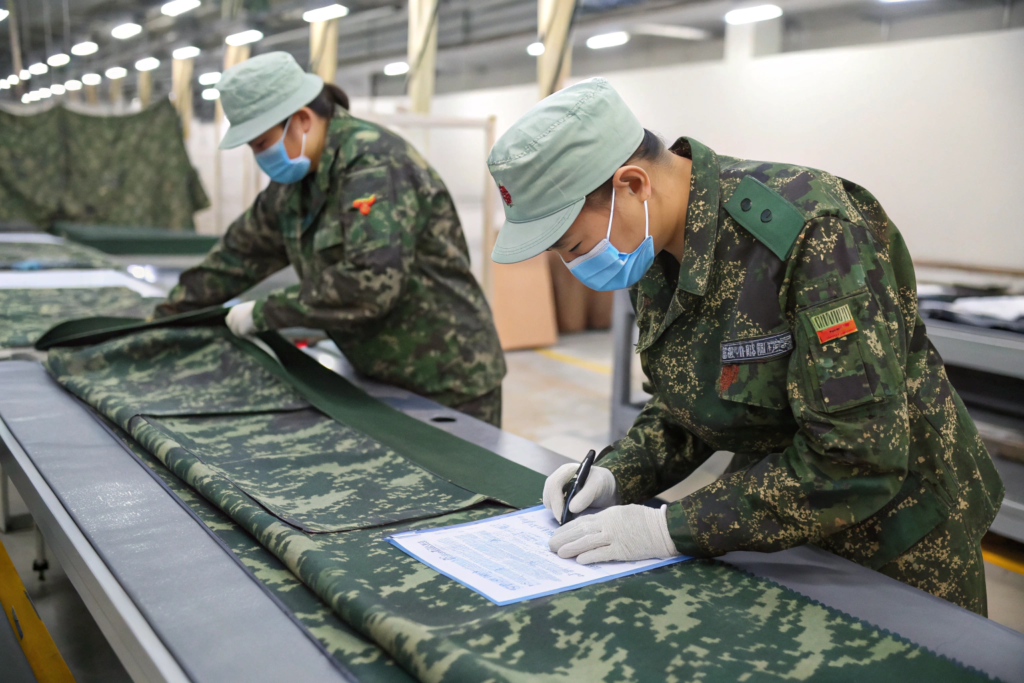
How do you inspect pattern matching and alignment?
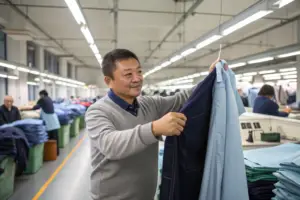
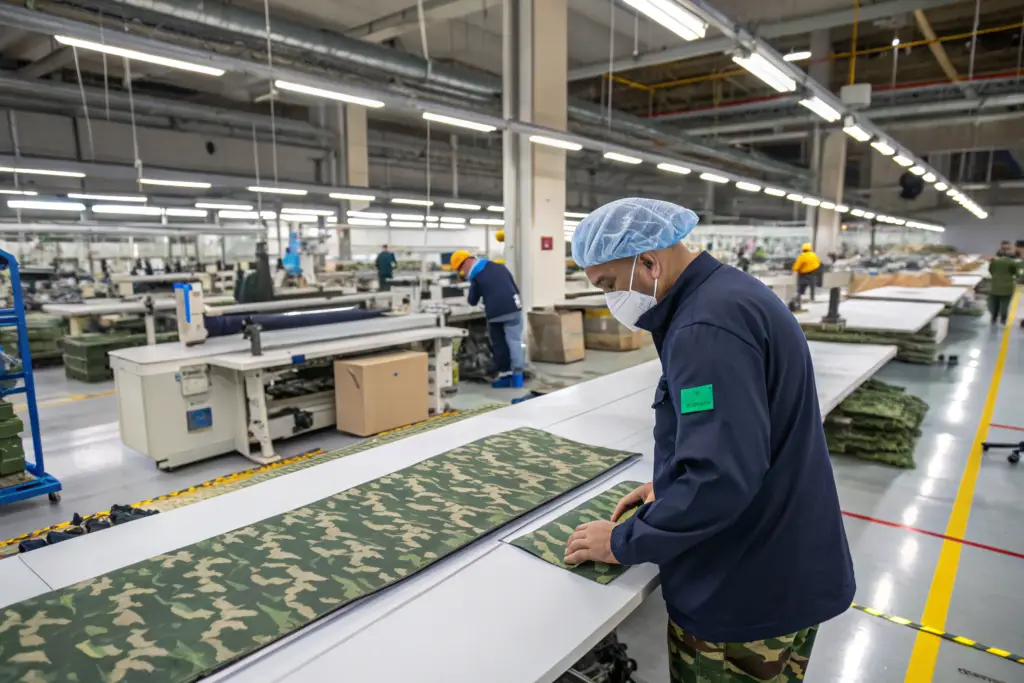
Pattern matching, especially at seams like shoulders, sleeves, and pockets, is critical for camouflage's visual integrity. For woven camo shirts, our cutting department uses notches and markers to ensure pattern pieces are cut with alignment in mind. During sewing, operators use guides and templates. Our in-line QC inspectors check alignment at critical junctions using laser guides and physical templates made from the approved sample. This attention to detail ensures the camouflage pattern flows seamlessly across the garment, a hallmark of top quality manufacturing.
Why is in-process testing better than final inspection only?
Finding a defect at the final inspection stage is costly and time-consuming, often requiring re-working entire batches and delaying shipment. Our in-process QC catches issues early. For instance, we perform frequent fabric abrasion tests and color fastness to washing tests during production runs for activewear camo lines. If a test shows the print is not durable enough, we can pause production, adjust the curing process, and fix the issue before thousands of garments are made. This proactive approach saved a major order for us in 2023 when we detected a slight weakening of print adhesion on a new type of polyester camo fabric during pilot runs, allowing us to correct the process before full-scale production began.
Conclusion
Managing production capacity for multiple camouflage lines is a complex dance of logistics, technology, and meticulous quality oversight. It requires a factory to be more than just a production facility; it must be a strategic partner with robust systems in place. Success hinges on intelligent factory zoning, consolidated and certified raw material sourcing, dynamic advanced scheduling, and a multi-stage, pattern-specific quality control regime.
The goal is to transform potential chaos into predictable, reliable output. This ensures that every camouflage line, from classic hunting patterns to modern tactical designs, meets its quality benchmarks and, most importantly, arrives on time to hit your critical selling seasons. By mastering these elements, a manufacturer protects your brand's reputation and supports your growth.
If you are looking for a manufacturing partner who understands these intricacies and can reliably manage your diverse camouflage apparel lines, let's talk. At Shanghai Fumao, we are committed to being the dependable extension of your brand. We invite you to reach out to our Business Director, Elaine, to discuss how we can help bring your next camo collection to life. You can contact her directly at: elaine@fumaoclothing.com.