Sourcing licensed products like Realtree camo apparel for major U.S. retailers is a massive opportunity, but it’s also filled with potential pitfalls. A single misstep in licensing, production, or logistics can lead to costly delays, legal issues, and lost sales for your brand.
For brand owners and buyers partnering with overseas factories, the core question is: how do you ensure your large-volume Realtree order is executed flawlessly from license verification to final delivery? The answer lies in a factory’s integrated system that combines strict licensing compliance, specialized production lanes, and robust supply chain coordination specifically designed for licensed goods.
Many factories can sew a camo pattern, but handling a nationwide rollout for a major retailer requires a different level of operational rigor. It’s about transforming a complex, high-stakes project into a smooth, predictable process. Let’s break down exactly how a capable partner manages this, turning your large order from a source of anxiety into a reliable revenue stream.
How to ensure licensing compliance for large Realtree orders?
Navigating the legal landscape of licensed camo is the non-negotiable first step. A mistake here isn't just about a delayed shipment; it can result in seized goods, fines, and damage to your brand's reputation with retailers. The factory must act as your first line of defense.
The key is proactive and verifiable compliance management. This means the factory has a clear process to validate your license, manage documentation, and ensure all artwork submissions are pre-approved by the licensor before a single thread is cut. They should function as an extension of your compliance team.
A reliable factory will have a dedicated compliance officer or team. Their job is to understand the specific requirements of licenses like those from Realtree. They know that each license has unique guidelines regarding where the pattern can be placed, minimum logo sizes, and approved product categories. For instance, last year, we worked with a midwestern hunting apparel brand on a 50,000-piece Realtree order. Before production, our team identified a discrepancy in the submitted artwork's logo placement against the latest Realtree brand guidelines. We facilitated the swift correction and re-approval, preventing a potential rejection at the retailer's distribution center.

What documentation is required before production starts?
You cannot start production without the right paperwork. The factory should request and securely file your official Certificate of Authorization (COA) from Realtree. This document proves you are permitted to produce goods under their trademark. Additionally, a Licensed Product Agreement (LPA) outlining the terms, royalty rates, and reporting obligations is crucial. The factory's role is to confirm these documents are current and cover the exact product types and volumes you plan to manufacture. They should also be familiar with DDP (Delivered Duty Paid) terms, as this affects how licensing information is communicated to customs brokers during export to the U.S.
How does a factory manage artwork approval and lab dips?
The licensor must approve every color and print. A professional factory will submit precise lab dips (fabric color samples) and strike-offs (print samples) to you and, through your portal, to the licensor for approval. This step ensures the Realtree pattern colors match their standards perfectly under different lights. We maintain a digital library of previously approved colors and patterns, which can expedite this process for repeat orders. Effective quality control starts here, not at the inspection stage.
What are the production strategies for high-volume camo orders?
Volume amplifies every challenge. A strategy that works for 1,000 pieces will collapse under 100,000. Handling large-volume Realtree orders requires dedicated production planning, from fabric sourcing to sewing line optimization.
The core strategy is isolation and specialization. This means dedicating specific production lines and fabric rolls solely to the Realtree order. This prevents contamination with other orders, maintains color consistency, and allows for streamlined efficiency.
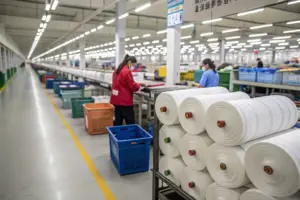
For example, when we at Shanghai Fumao prepared for a 200,000-unit order of Realtree hoodies for a national retail chain, we allocated two full production lines and reserved the entire output of a specialized knitting mill for two weeks. This "dedicated lane" approach allowed us to control the entire workflow, minimize changeover downtime, and achieve a consistent output of 5,000 high-quality pieces per day. This reliability is what ensures on-time delivery for critical selling seasons.
How is fabric sourcing and inventory managed for large runs?
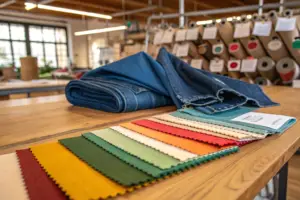
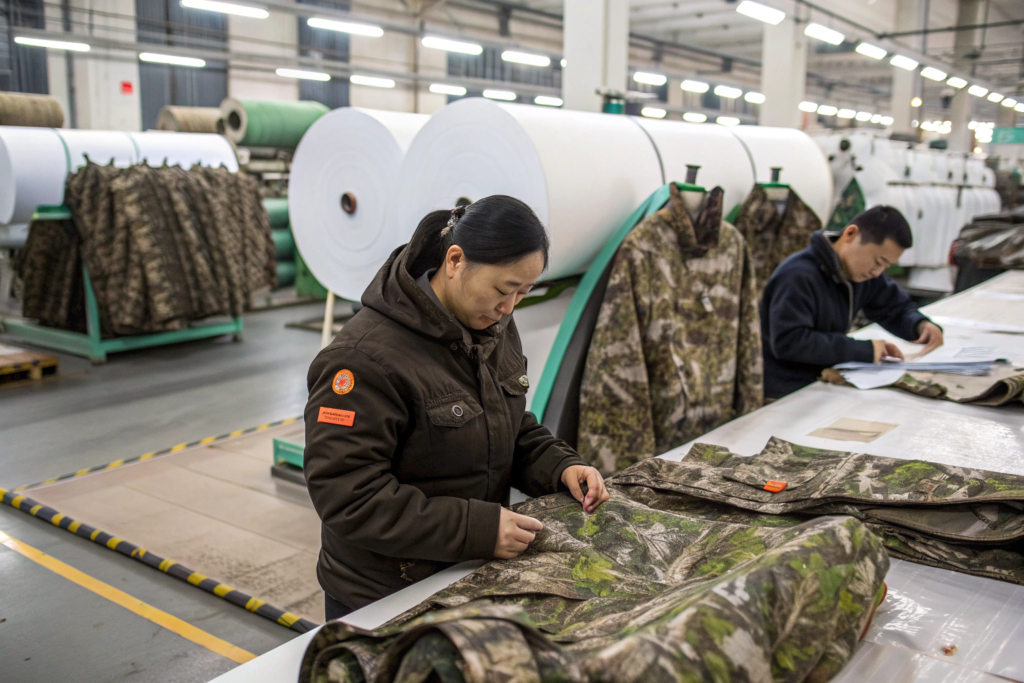
Sourcing the correct licensed fabric is the foundation. The factory must work with mills pre-approved by the licensor or capable of producing fabric that meets strict certification standards. For large orders, we engage in forward buying of greige fabric (unbleached, untreated cloth) once the order is confirmed. We then manage the entire dyeing and printing process with partner facilities under strict supervision to ensure every meter meets the Realtree color standard. This vertical control is a significant advantage of partnering with a full-package manufacturer like Shanghai Fumao.
How are production lines optimized for camo pattern matching?
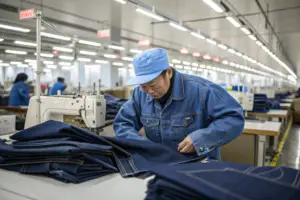
Camo patterns require careful pattern matching at seams (like sleeves and sides), which is more fabric-intensive and skill-demanding than solid colors. Our technical designers create marker plans that optimize fabric usage while respecting matching requirements. Sewing lines are staffed with operators trained specifically in handling and aligning patterned fabrics. We often use a pilot run of 500-1000 pieces to fine-tune these processes before launching the full mass production, ensuring efficiency and minimal waste.
| Strategy | Benefit for Large Realtree Orders | Common Risk if Not Done |
|---|---|---|
| Dedicated Production Lines | Ensures consistency, prevents color/fabric mix-ups. | Inconsistent garment quality, order contamination. |
| Forward Fabric Buying | Locks in material supply and cost, secures timeline. | Fabric shortages causing major production delays. |
| Pilot Run (PP Sample) | Validates processes, pattern matching, and quality. | Uncaught errors leading to mass production defects. |
| Trained Specialist Operators | Higher quality output, efficient pattern alignment. | Increased waste, poor craftsmanship, slower line speed. |
How to maintain quality control across thousands of pieces?
Quality cannot be inspected into a product; it must be built into the process. With large volumes, a robust quality assurance system is the only way to guarantee that the 10th piece and the 10,000th piece meet the same high standard required by U.S. retailers.
Effective quality control for large orders is a multi-layered defense. It moves beyond final inspection to include inline checks at critical production stages. This proactive approach catches defects early when they are easier and less costly to correct.
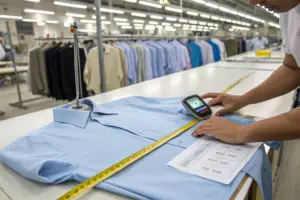
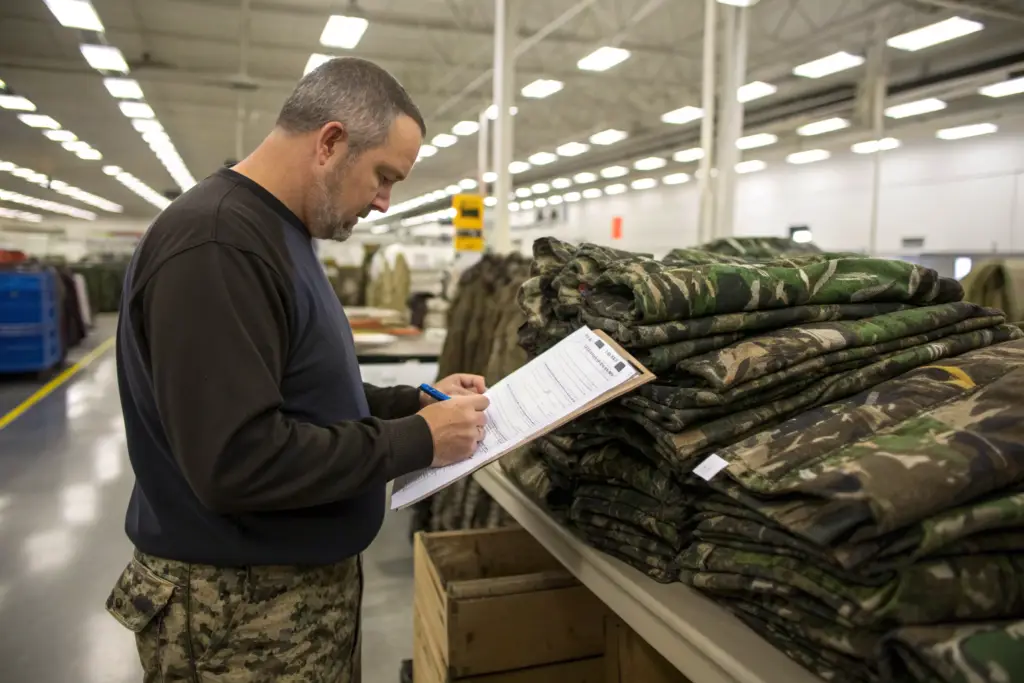
We implement a Four-Stage Inspection System for all large-volume orders. For a recent order of Realtree cargo pants, this meant: 1) Checking fabric upon arrival (for weight, color, and pattern accuracy). 2) Inline checks during cutting and sewing (for pattern matching and construction). 3) A thorough During Production Check (DUPRO) when 20% of units were complete. 4) A Final Random Inspection (based on AQL sampling standards) before packing. This system helped us identify a minor stitching tension issue early, which was corrected on the spot, avoiding a major rework later.
What are the critical checkpoints for camo apparel?
For Realtree garments, specific checkpoints are vital. Inspectors must verify pattern alignment at major seams (center front, sleeves, pockets). They check that the licensed hangtags and labels are correct and securely attached. The color fastness and durability of the print are tested for rubbing and washing. Additionally, all care labels must comply with U.S. FTC regulations and be securely sewn. Missing or incorrect labels are a common cause for rejection at U.S. ports and distribution centers.
How does technology aid in consistent quality?
Beyond human inspectors, we use technology for consistency. Digital color matching systems ensure lab dip accuracy. Barcoding systems track batches of fabric and cut pieces through the production line, providing full traceability. High-resolution cameras are sometimes used in inspection areas to document the quality of random samples, creating a transparent record for the client. This integration of skilled personnel and technology is what builds a reliable quality control framework.
What logistics ensure on-time delivery to US retailers?
The final challenge is physical delivery. A perfectly made order is worthless if it misses the retailer's delivery window. Logistics for large-volume Realtree orders require precision planning, experienced partners, and clear communication.
Successful logistics hinge on consolidation, clear communication, and contingency planning. The factory must manage the journey from its dock to the retailer's Distribution Center (DC) as a single, coordinated effort, providing you with real-time visibility.
We manage this by appointing a dedicated logistics coordinator for each major account. For instance, when shipping a multi-container Realtree order to a retailer with DCs on both the East and West coasts, our coordinator worked with a trusted freight forwarder to plan a split shipment. Part of the order was routed via the Port of Los Angeles and part via the Port of Savannah. This optimized transit times and ground transportation costs. We provided DDP service, handling all customs clearance, duties, and final leg delivery, giving the client one simple invoice and a guaranteed delivery date.

Planning for peak seasons (like Q3 for holiday hunting merchandise) starts months in advance. We book shipping container space early and maintain relationships with multiple carriers to have options. We always advise clients on the latest U.S. customs import regulations for textiles. Furthermore, we build buffer time into the schedule. If the production finish date is October 1st, we promise the retailer a DC arrival date of November 15th, even if shipping normally takes 30 days. This buffer protects against unexpected delays like port congestion.
What is the role of packaging and documentation?
Retailers have strict packaging and labeling requirements (like ASN - Advanced Shipping Notices, and RFID tags). Our packing lines are configured to meet each retailer's precise specs, whether it's polybag packaging, hanger-ready garments, or specific carton markings. All shipping documents, including the commercial invoice, packing list, and bill of lading, are meticulously prepared to ensure smooth customs clearance. Accurate documentation is as critical as the physical shipment itself for on-time delivery.
Conclusion
Handling a large-volume Realtree order for U.S. nationwide retailers is a complex symphony, not a simple task. It demands a factory partner with a disciplined system that integrates licensing compliance, specialized high-volume production, rigorous multi-stage quality control, and experienced, flexible logistics. The goal is to transform this complexity into a seamless, reliable extension of your own operations.
When you choose a partner, you are choosing their system. You need a factory that sees beyond the sewing machine to the entire journey—from license verification to the retailer's shelf. This end-to-end ownership of the process is what separates a true partner from just another supplier. It’s what ensures your investment is protected, your brand reputation is upheld, and your products reach your customers at the right time, every time.
If you are planning a large-volume licensed apparel order and seek a partner with the proven systems and dedication to execute it flawlessly, we should talk. Let Shanghai Fumao become your reliable manufacturing extension. Contact our Business Director Elaine to discuss your next project: elaine@fumaoclothing.com.