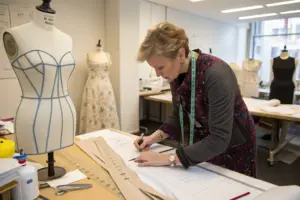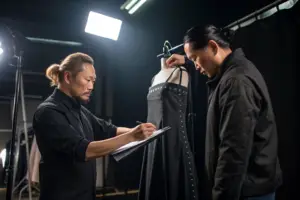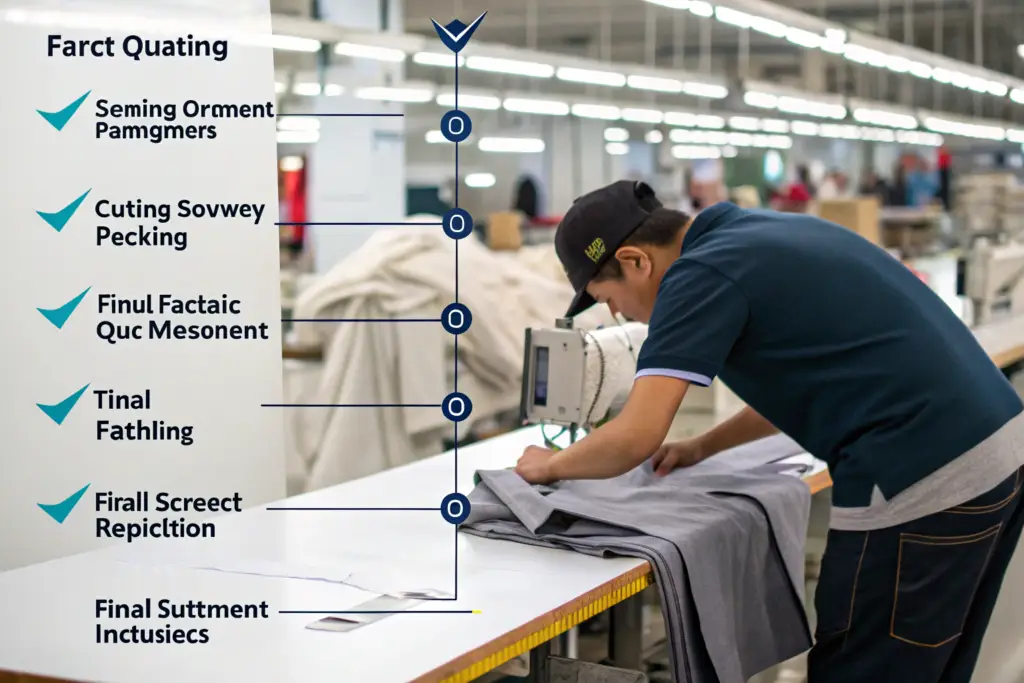
You know that final inspection is important. But if you're only checking quality at the end, you're just counting defects after the money is spent. Real quality isn't inspected in; it's built in. For business owners who source overseas, the challenge is ensuring that this "building in" happens consistently, thousands of miles away, without constant oversight. How can you trust that every stitch, seam, and button is being monitored before it becomes part of a 10,000-piece order?
We integrate quality checks at every stage by implementing a layered, preventative system—known as In-Process Quality Control (IPQC)—that embeds inspection points into the production flow itself, from raw material to packed carton, preventing errors from moving to the next stage. This systematic approach transforms quality from a final gatekeeping function into a guiding principle of the entire manufacturing process. At Shanghai Fumao, this isn't a separate department's job; it's the responsibility of every team member, from the merchandiser to the sewing operator, supported by a formalized IPQC framework.
Moving from a reactive to a proactive quality model requires deliberate structure. It means having clear checkpoints, defined standards, and immediate corrective actions. The goal is to catch and fix a problem where it occurs, when it occurs, at the lowest possible cost. Let's walk through how this integrated system functions at each critical stage.
What Is The First Critical Quality Gate: Raw Material Inspection?
The foundation of a quality garment is quality material. Allowing defective fabric or substandard trims into production guarantees defective finished goods. The first and most crucial integrated check happens before a single pattern is cut.
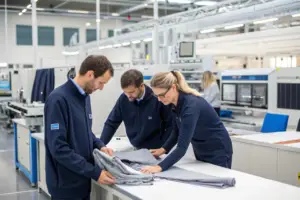
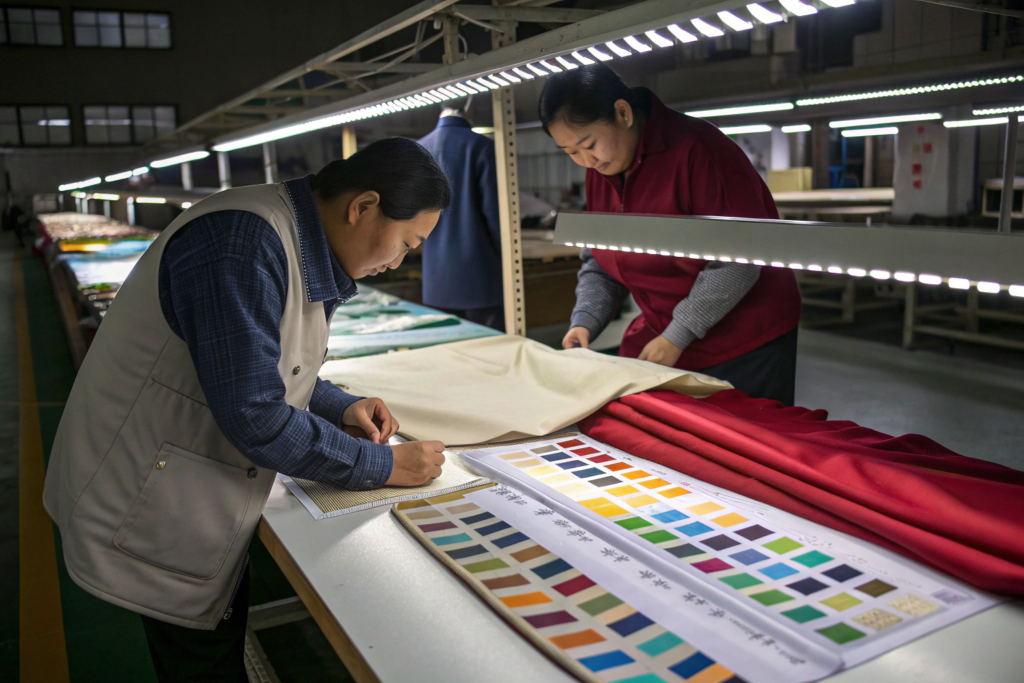
The first critical quality gate is a 100% raw material inspection, where every meter of fabric and every batch of trims (zippers, buttons, threads) is checked against approved standards for defects, composition, color consistency, and performance before being released to the cutting room. This step prevents mass production with flawed inputs, which is the most costly type of error to rectify. Our QC team uses backlit inspection tables to identify weaving flaws, color bars to verify dye lot uniformity, and performs lab tests for shrinkage, colorfastness, and composition.
How Does Fabric Inspection Prevent Bulk Defects?
Fabric inspection is a standardized process. We use the 4-Point System, a widely accepted industry standard, to quantify defects and determine if a roll is acceptable. Inspectors scan the fabric under proper lighting, marking defects. If a roll exceeds the allowable penalty points per 100 square yards, it is rejected and returned to the mill. For instance, last month, for an order of linen-blend shirts, we rejected 30% of the initial fabric shipment due to excessive slubs and inconsistent weave density. While this delayed our cutting schedule by five days, it prevented what would have been a 100% quality failure in the finished shirts, saving the client from a total loss.
Why Must Trims Be Certified Before Use?
Trims are often an afterthought, but they are critical for safety and function. For every order, we require suppliers to provide material test reports for items like buttons (lead content), zippers (durability), and elastics (recovery). We also perform our own physical tests: checking button tensile strength, zipper smoothness, and print durability against rubbing. For a children's wear client, our pre-production testing found that the provided plastic snaps failed the small parts safety test. We sourced and certified a compliant alternative before production began, ensuring the entire order met CPSIA standards without last-minute panic.
How Are Quality Controls Embedded in The Cutting & Sewing Process?
Once materials pass, the risk shifts to human and machine error during transformation. This is where "in-process" control becomes vital. Integrated checks on the cutting floor and sewing lines are designed to stop errors in real-time, before they are replicated hundreds of times.
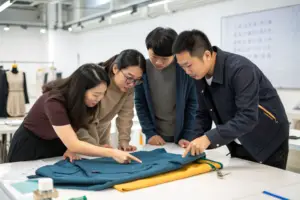
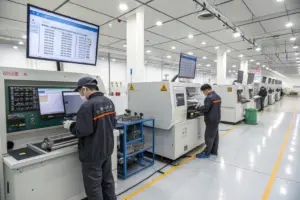
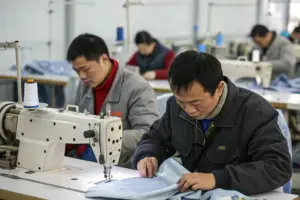
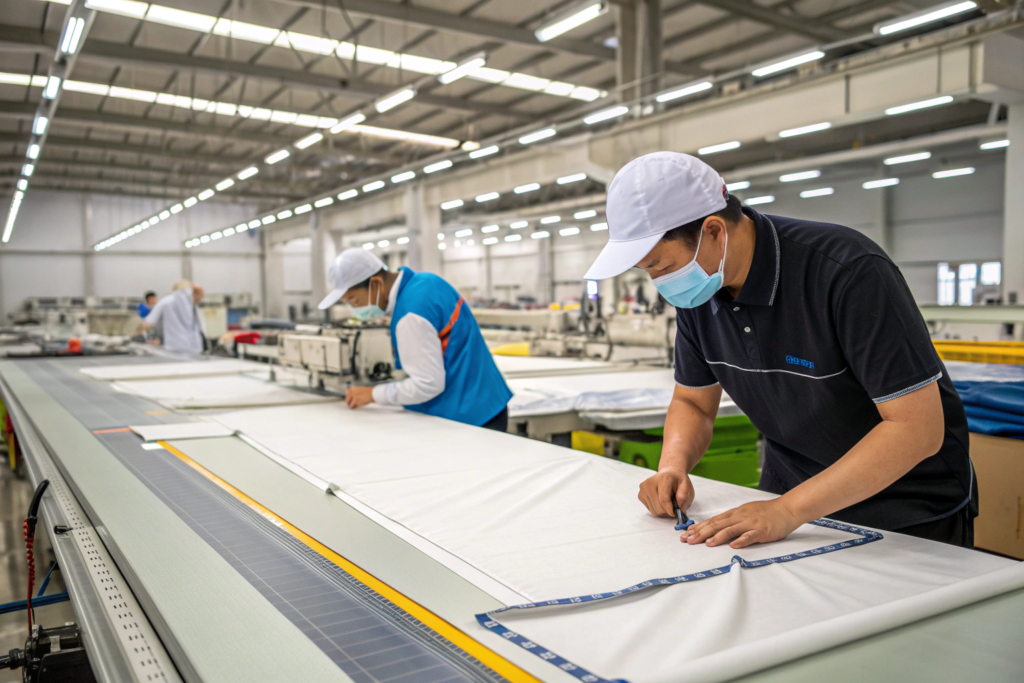
We embed controls in cutting and sewing through a combination of marker approval, cut panel audits, First Article Approval, and hourly line checks by production supervisors and dedicated IPQC staff, ensuring dimensional accuracy and construction integrity from the first piece to the last. The system is designed for immediate feedback and correction.
What Is The Role of First Article Inspection (FAI)?
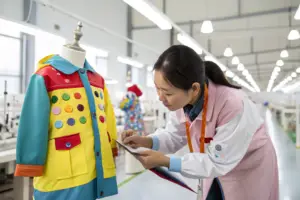
Before bulk sewing starts, the first complete garment off the line is thoroughly dissected. This First Article Inspection is a formal check against the tech pack, focusing on:
- Measurements: Every critical dimension is measured and recorded.
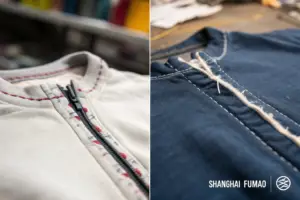
- Construction: Seam types, stitch density (SPI), and assembly sequence are verified.
- Materials: Correct fabric, trim, and thread are confirmed.
- Workmanship: The overall finish is assessed.
We photograph this sample and send a detailed report to the client for approval. This step aligns expectations and catches systemic errors. For a recent complex outerwear order, the FAI revealed that the insulation quilting was causing the shell fabric to pucker slightly. We adjusted the quilting tension before proceeding, fixing an issue that would have affected all 2,000 units.
How Do Hourly Line Checks Maintain Consistency?
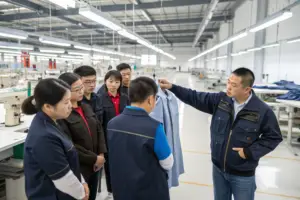
Sewing lines are dynamic. To maintain consistency, line supervisors and IPQC staff perform random checks every 60-90 minutes. They pick garments from each operator's station and check for recurring defects specific to that operation (e.g., pocket placement, collar point symmetry). If a trend is spotted—like inconsistent topstitching width—the machine is recalibrated, and the operator is re-instructed on the spot. This real-time intervention is documented on a line audit sheet. This practice reduced stitching defects by over 70% for a client's polo shirt order, as issues were corrected hourly instead of accumulating until the end of the day.
What Systems Govern Final Assembly & Pre-Shipment Verification?
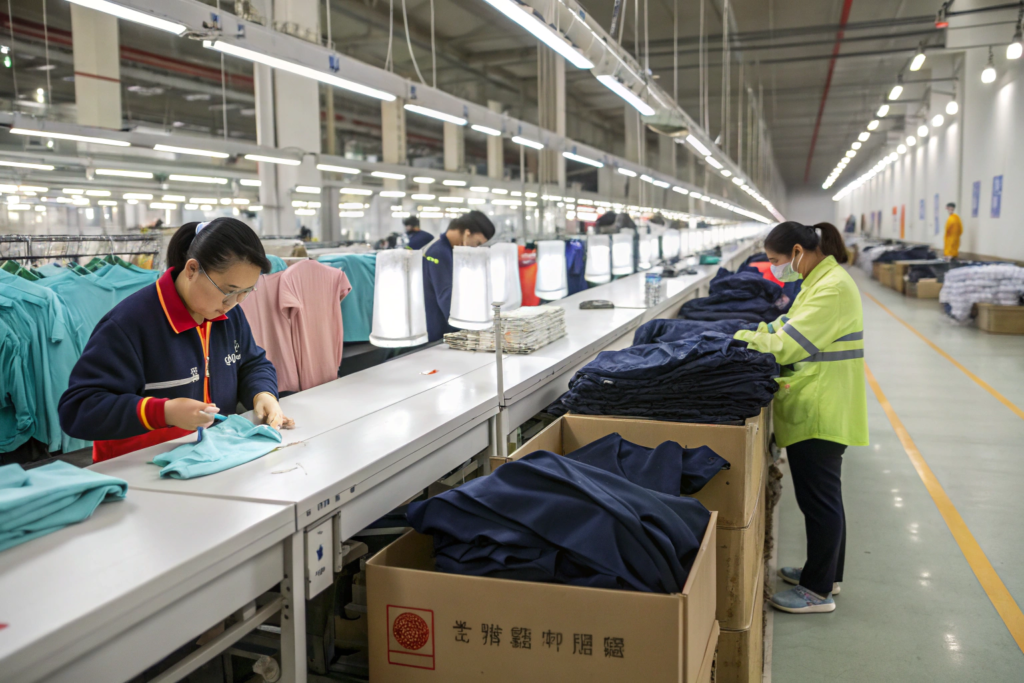
After sewing, garments move to finishing: washing, pressing, trimming, and packing. Even here, integrated checks are essential to catch any issues missed earlier and to ensure the product is presentation-perfect. This phase culminates in the final, formal audit before the box is sealed.
The systems governing final assembly and pre-shipment verification include inline final inspection during finishing, a formal AQL (Acceptable Quality Level) audit, and a meticulous packing check to ensure accuracy, presentation, and compliance with shipping instructions. This is the last line of defense, verifying that the integrated process has worked.
How Does The AQL Audit Work?
The AQL audit is a statistical sampling method (based on standards like ISO 2859-1) used for the final random inspection. It is objective and scalable. Inspectors randomly select a sample size from the finished, packed order based on the total order quantity. Each garment is checked for visual, measurement, and workmanship defects. The number of defects found determines if the entire batch passes, fails, or requires 100% sorting. We typically use AQL 2.5 for major defects and AQL 4.0 for minor defects, which is the industry standard for general apparel. This method provides a scientific confidence level that the bulk quality meets the agreed standard. A client from New York once requested a tighter AQL 1.5 for their luxury knitwear, which we implemented, resulting in a near-zero defect rate upon receipt at their warehouse.
Why Is Packing The Final Quality Checkpoint?
Incorrect packing is a direct path to chargebacks. Our final checkpoint verifies:
- Polybag & Labeling: Correct size, style, price tickets, and barcodes.
- Folding & Presentation: Consistency and neatness.
- Carton Marking: Accurate shipping marks, carton weight, and dimensions.
- Assortment: Correct size and color ratio per carton as per the packing list.
One step we added after a past error is a "golden sample" carton. The first packed carton is approved by the QC manager as the benchmark for all others. This simple visual standard ensures uniformity. For a client requiring specific retail-ready hangers and sensor tags, our packing team had a dedicated station to assemble these packs, which was then audited separately to prevent costly in-store processing errors.
How Is Data From Integrated Checks Used For Continuous Improvement?
The ultimate value of integrated checks is not just in rejecting defects, but in eliminating their root causes. Data collected at every stage is meaningless unless it is analyzed and used to drive improvement in people, processes, and machines.
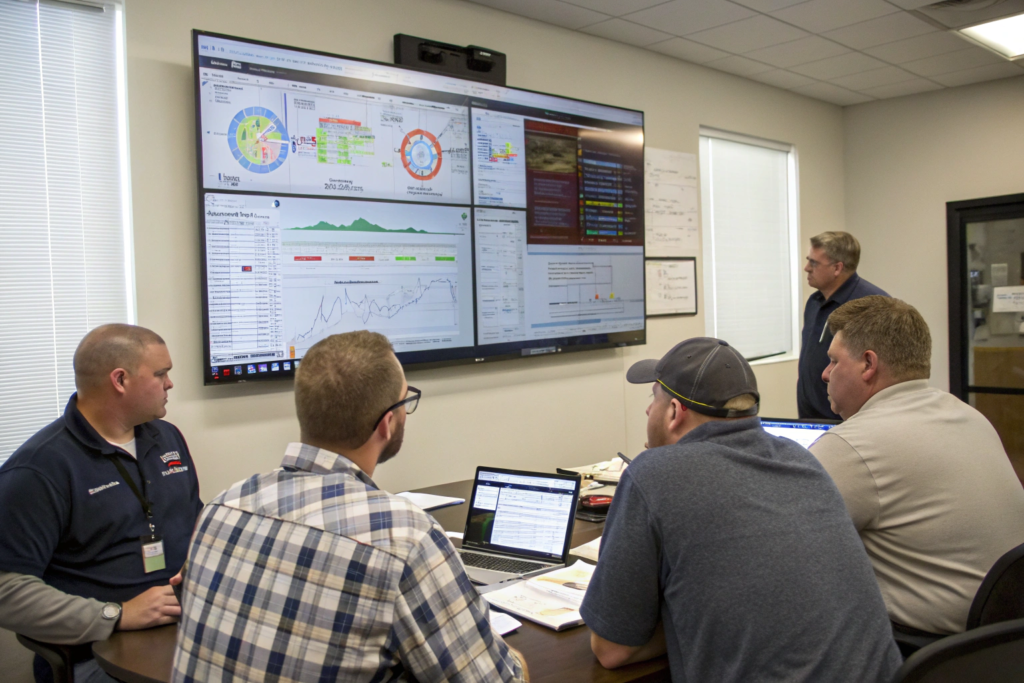
Data from integrated checks fuels continuous improvement through daily review meetings, Pareto analysis of defect types, targeted re-training programs, and machinery maintenance schedules, creating a closed-loop system that prevents error recurrence and systematically elevates overall quality performance. We track all defects by type, location, and operator in a central database.
How Does Defect Analysis Lead to Better Training?
Every week, production and QC managers review the top three defect categories. For example, if "uneven hemming" is a recurring issue, the analysis goes deeper: Is it a machine issue (presser foot pressure)? A method issue (lack of a guide)? Or a skill issue (operator technique)? Based on the finding, we implement a corrective and preventive action (CAPA). If it's a skill issue, we organize a focused 15-minute training session for all affected operators using the "good vs. bad" sample method. This data-driven training reduced recurring sewing defects by an average of 40% across our lines last year.
Can Process Adjustments Be Quantified?
Absolutely. Data allows us to measure the impact of changes. When we noticed a high rate of collar-point defects on men's dress shirts, we introduced a specialized collar-point turning machine and a new inspection jig. We tracked the defect rate for this specific issue for the next three production runs. The data showed a 90% reduction, validating the investment. This evidence-based approach to process improvement is what allows Shanghai Fumao to consistently lower defect rates and increase efficiency for our clients, turning quality data into a competitive advantage.
Conclusion
Integrating quality checks at every stage is not about adding more inspectors; it's about designing a production system where quality verification is a natural, inseparable part of the workflow. From the moment raw materials arrive to the final sealing of the shipping carton, each step has a defined standard, a clear check, and a feedback loop. This proactive, prevention-focused methodology is what separates manufacturers who deliver consistent quality from those who deliver constant surprises.
For you, the buyer, this integrated system translates to fewer defective goods, fewer chargebacks, happier customers, and a brand reputation built on reliability. It turns quality from a hoped-for outcome into a predictable, managed result.
If you are looking for a manufacturing partner whose quality process is as robust and detailed as your own brand standards, Shanghai Fumao's integrated IPQC system is engineered for your success. We provide transparent quality reports at each stage, so you are never in the dark. To discuss how our layered quality controls can be tailored to your next order, please contact our Business Director, Elaine. She can arrange a virtual tour of our QC process and share relevant case data. Reach her at: elaine@fumaoclothing.com.