As the owner of a garment factory, I see brands ask more questions about certifications every year. They want assurances. They want proof. One question I hear often, especially from brands looking to enter the premium market, is about the real value of OEKO-TEX. They see brands like the luxury ski and fashion house Fusalp proudly display the STANDARD 100 by OEKO-TEX label. They wonder: Is this just a marketing tool, or is it a critical part of modern, responsible apparel production?
Luxury ski brands like Fusalp use OEKO-TEX certification as a non-negotiable foundation of their brand promise. It provides scientific proof that their materials are free from harmful substances, aligning with their commitment to quality, safety, and the environment, which is crucial for performance apparel worn close to the skin. This certification allows them to meet the high expectations of their discerning customers and strengthen their premium positioning in a competitive market.
The world of apparel manufacturing has changed. Today’s informed consumer, whether they are buying a luxury ski suit or a basic t-shirt, cares deeply about what touches their skin. Certifications are no longer optional extras; they are essential tools for brand trust and market access. For manufacturers like us at Shanghai Fumao, understanding and integrating these standards into our full-package manufacturing process is key to serving ambitious brands. Let’s explore why certifications like OEKO-TEX are so pivotal.
What Exactly Does OEKO-TEX Certification Test For?
Every brand that partners with us mentions quality and safety. But translating that into a tangible, testable standard is where OEKO-TEX comes in. A brand owner once asked me, “Does this just cover the final fabric?” The answer is much more comprehensive.
The OEKO-TEX STANDARD 100 is a globally uniform testing and certification system for textile raw materials, intermediate, and end products at all stages of production. The tests screen for over 100 regulated and non-regulated harmful substances, including pesticides, heavy metals, carcinogenic dyes, and allergenic dispersive dyes. The key is that every component of the finished article is tested—not just the main fabric, but also the threads, zippers, buttons, prints, and coatings. This holistic approach is what makes it a gold standard.
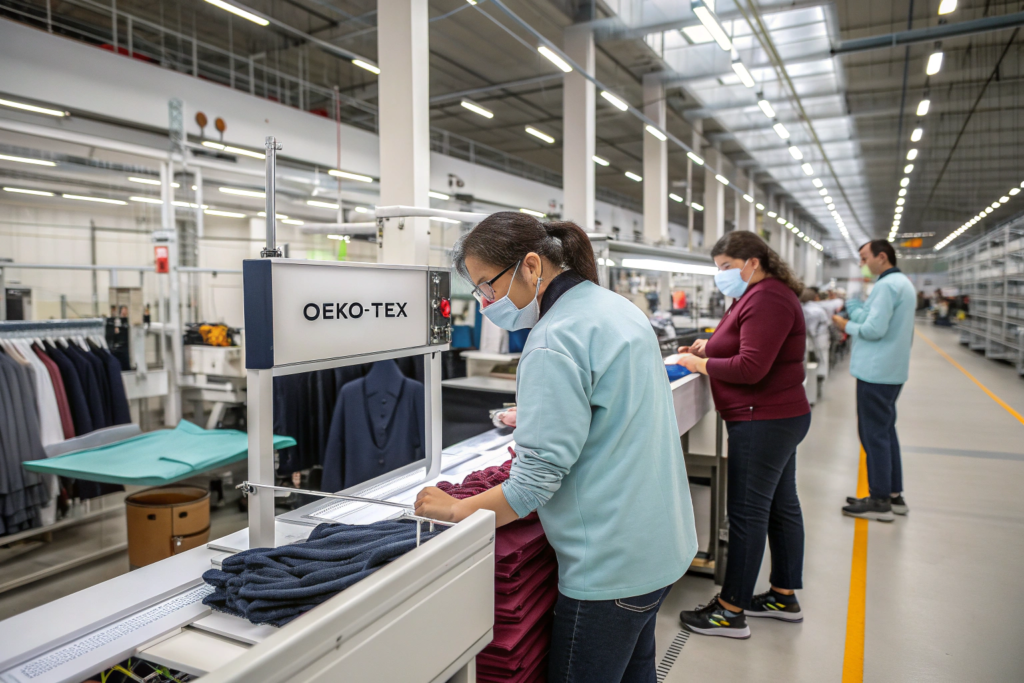
Many assume the certification is only about final products. In reality, it builds a chain of trust from the very beginning. We can source OEKO-TEX certified fabrics from our trusted mills, which simplifies the process. However, even with certified materials, we must re-certify the final garment because processes like dyeing, sewing, and adding trims can introduce contaminants. Last spring, we worked on a line of children’s knitwear for a U.S. brand. They insisted on OEKO-TEX certification. We learned that the specific blue dye used for the logo embroidery thread, though safe in general, had to be tested and approved as part of the complete garment system to pass. This attention to detail is non-negotiable.
Why is testing for “non-regulated” substances important for luxury brands?
Legally, brands must follow regulations like REACH in Europe. But these laws have limits and can be slow to update. OEKO-TEX often includes substances that are scientifically concerning but not yet legally banned. For a luxury brand like Fusalp, this proactive approach is a major selling point. They can assure their customers that their product safety standards exceed minimum legal requirements. It’s a powerful form of risk management. By choosing a supplier like us at Shanghai Fumao that is fluent in these certifications, brands mitigate the risk of future recalls or scandals related to harmful chemicals, protecting their reputation.
How does the certification process work with a manufacturer like ours?
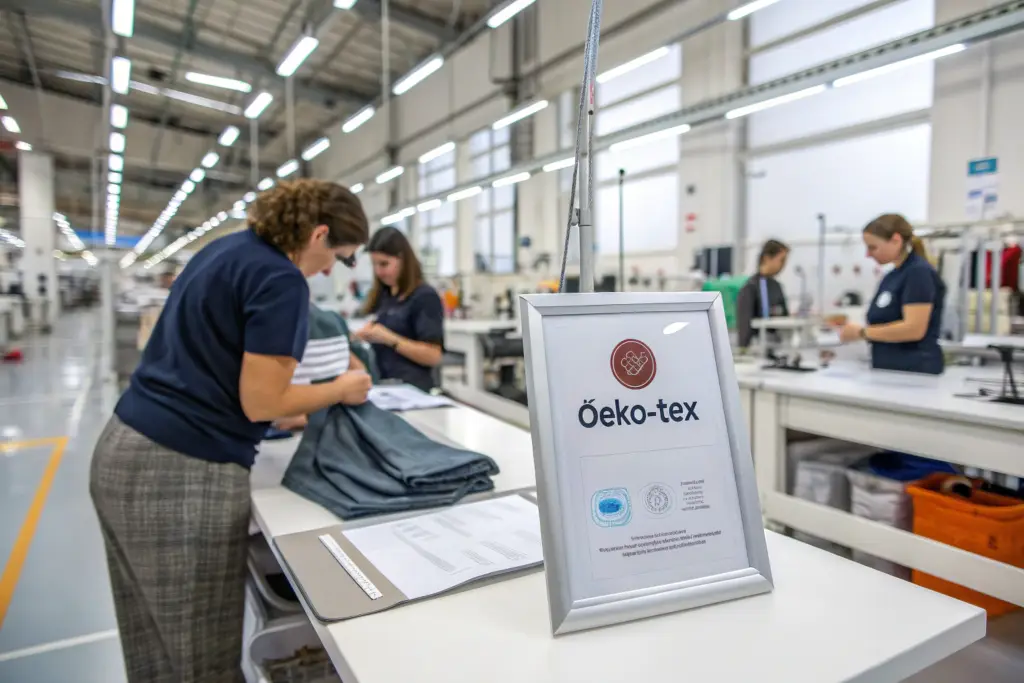
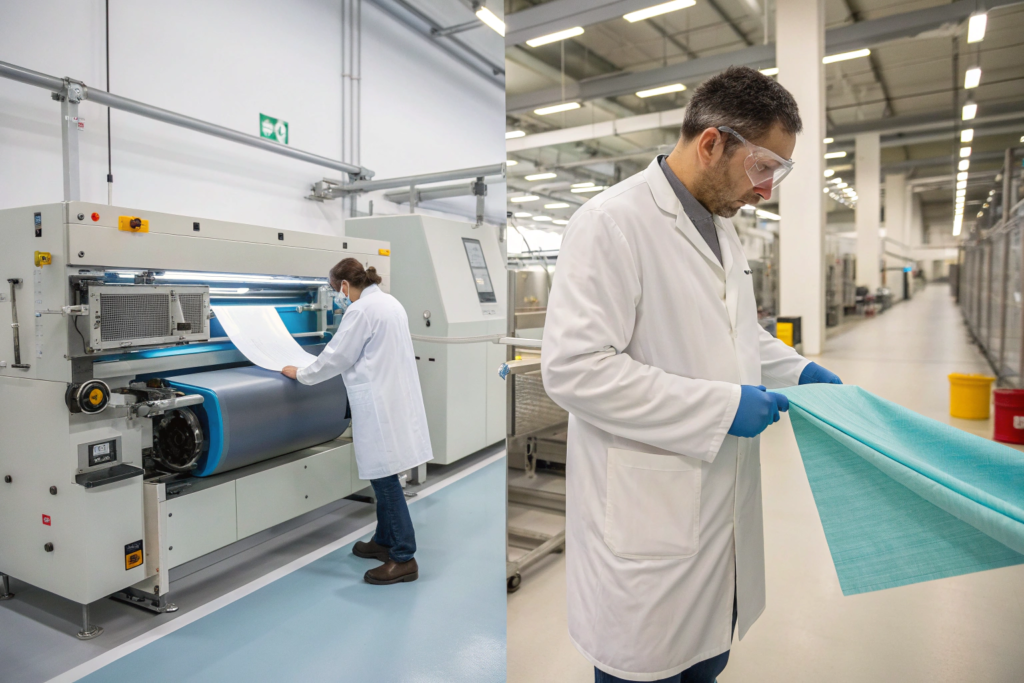
The process is rigorous but straightforward with an experienced partner. First, we identify all materials and components for the product. We then submit samples of each material and a sample of the finished garment to an independent OEKO-TEX institute laboratory. The lab conducts the tests against the standard’s strict limit values. If all components pass, the specific product type receives a certificate valid for one year. For our clients, we manage this entire workflow. We document the supply chain transparency, coordinate sampling, and liaise with the labs. This end-to-end service is part of our value, turning a complex requirement into a smooth, managed process for the brand.
Why is OEKO-TEX a Key Marketing Tool for Premium Brands?
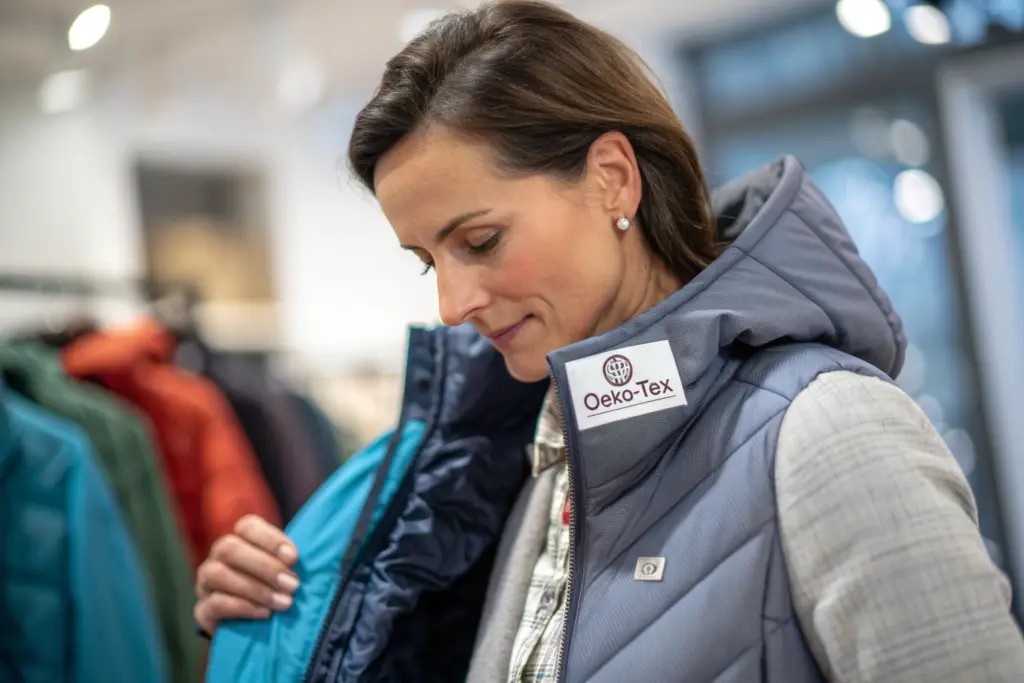
In the crowded premium sportswear and outerwear market, features and style are table stakes. Trust is the differentiator. A certification like OEKO-TEX translates complex supply chain and chemical management efforts into a simple, recognizable label that consumers understand.
The label acts as a silent salesman. It answers a customer’s unspoken safety concerns at the point of purchase. For performance wear, where garments are in direct contact with skin during strenuous activity, this assurance is invaluable. The customer doesn’t need to understand the specifics of arylamine limits; they just need to know a trusted third party has verified the product’s safety. This builds immense brand equity. When a shopper sees that familiar label on a Fusalp jacket and a no-name brand jacket, the choice becomes clearer, justifying the premium price.
From our experience, brands that leverage this certification in their marketing see tangible benefits. We had a client, a startup creating technical base layers, who invested in OEKO-TEX from their first collection. They featured the certification prominently on their hangtags and website product pages. They reported that in customer surveys, over 60% of buyers said the OEKO-TEX label influenced their purchase decision. This direct feedback proves its marketing power. It’s not just a cost; it’s an investment in customer acquisition and loyalty.
How do brands communicate this certification effectively?
Smart brands integrate OEKO-TEX into their entire storytelling. It’s not just a badge on the website. It’s woven into their “About Us” page, explaining their commitment to safety. It’s mentioned in product descriptions, especially for items like children’s wear or sensitive skin lines. Social media posts can educate followers on what the label means. This turns a technical certificate into a narrative of care and responsibility. For a sportswear manufacturer, this story is as important as the story about moisture-wicking technology.
Does certification impact pricing and perceived value?
Absolutely. There is a cost for testing and certification, which is factored into the FOB price. However, for the premium market, this cost is not a barrier; it’s a value-adder. Consumers in this segment are willing to pay more for verified safety and quality. The certification objectively justifies a higher price point. It moves the conversation from “why is this so expensive?” to “this is why this product is worth it.” For our partners, we help them calculate this into their cost structure, ensuring the certification delivers a clear return on investment through enhanced brand positioning and customer willingness to pay.
What Are the Practical Benefits for Brands Working with OEKO-TEX Certified Factories?
Choosing a factory that is experienced with OEKO-TEX, like Shanghai Fumao, goes beyond just getting a certificate. It brings operational and strategic advantages that directly address common importer pain points.
First, it streamlines communication and reduces risk. One of the biggest frustrations for buyers like Ron is “suppliers occasionally falsify certificates.” When you work with a factory integrated into the OEKO-TEX system, verification is simple. Every certificate has a unique number and QR code that can be checked instantly on the OEKO-TEX database. This eliminates doubt and builds a foundation of trust. Furthermore, our experience with the standard means we know which chemicals in textiles to avoid from the start, preventing costly production mistakes or failed tests later.
Second, it ensures supply chain reliability. The OEKO-TEX standard requires a degree of supply chain transparency. As a certified manufacturer, we must know and document the sources of our key materials. This discipline helps prevent issues like delayed shipments due to substandard raw materials failing quality checks. We once helped a client who came to us after another supplier delayed their order by 8 weeks because the fabric failed a basic safety test. By using our pre-vetted network of certified mills and our internal quality control processes, we guaranteed a right-first-time production run, ensuring they hit their critical selling season.

How does this help with logistics and customs clearance?
Increasingly, global markets are tightening regulations on imported goods. Having an OEKO-TEX certificate can smooth the customs clearance process in regions with strict product safety laws, like the European Union and North America. The certificate serves as documented evidence that the product meets high safety standards, reducing the risk of hold-ups, rejections, or expensive retesting at the border. This contributes directly to reliable delivery, which we know is paramount for our clients’ business success.
What is the impact on long-term brand development?
For a brand aiming to scale or enter new markets, a history of certified production is a significant asset. It demonstrates a mature, responsible approach to manufacturing. If a brand seeks investment, plans to sell to larger retailers, or is subject to a corporate social responsibility audit, having a supply chain built on internationally recognized standards like OEKO-TEX is a tremendous advantage. It shows due diligence and forward-thinking management.
How Does OEKO-TEX Fit into a Broader Strategy of Ethical Production?
OEKO-TEX is often the first step for brands into the world of sustainable and ethical certifications. While it primarily focuses on human-ecological safety (product safety for the user), it is a cornerstone of a broader responsible strategy.
For luxury and premium brands, consumer expectations are holistic. They want a product that is not only safe to wear but also made in a way that considers environmental and social impact. OEKO-TEX has other standards that complement STANDARD 100. For instance, STeP by OEKO-TEX certifies environmentally friendly and socially responsible manufacturing sites, while MADE IN GREEN is a traceable product label for sustainably produced textiles. A factory like ours can guide brands through this ecosystem. Starting with product safety (STANDARD 100) builds confidence, then we can work on processes (STeP) and full traceability (MADE IN GREEN).
We advise our partners to view OEKO-TEX not as an isolated checkbox, but as part of their brand’s integrity portfolio. For example, combining OEKO-TEX with a focus on durable, high-quality materials reduces waste and promotes long-term product use. Last year, we developed a line of organic cotton sweaters for a Californian brand that were both GOTS (Global Organic Textile Standard) and OEKO-TEX certified. This dual certification allowed them to tell a powerful story about soil health (GOTS) and end-user safety (OEKO-TEX), which resonated deeply with their audience and justified a significant price premium.
What's the difference between OEKO-TEX and other certifications like GOTS?
It’s crucial to understand the scope. This is a common point of confusion.
| Certification | Primary Focus | Scope |
|---|---|---|
| OEKO-TEX STANDARD 100 | Product Safety (for the user) | Tests final product for harmful substances. |
| GOTS | Organic Fibers & Ethical Production | Covers organic material origin, environmental & social criteria throughout processing. |
| BLUESIGN | Environmental Impact of Production | Focuses on input stream management (chemicals, resources) at the manufacturing site. |
A brand might use OEKO-TEX for all products to ensure baseline safety and GOTS for a specific organic collection. They are complementary, not competing.
How can a brand start implementing this strategy with a manufacturer?
The journey begins with a conversation. When you engage with a potential manufacturing partner, ask about their experience with certifications. Do they have in-house expertise? Can they provide references from other certified clients? At Shanghai Fumao, we begin every new partnership by discussing the brand’s short-term and long-term goals around quality, safety, and sustainability. We then create a practical roadmap. Maybe step one is OEKO-TEX certification for their flagship product line. This manageable step builds capability and trust, setting the stage for more comprehensive initiatives down the line, all within a framework that ensures efficient export and logistics.
Conclusion
For luxury and premium apparel brands, especially in performance sectors like ski wear, OEKO-TEX certification is far more than a tag. It is a critical component of product integrity, consumer trust, and market competitiveness. As we’ve seen with leaders like Fusalp, it provides the scientific backbone for marketing claims about safety and quality. For brands, the value lies not just in the certificate itself, but in partnering with a manufacturer who understands how to integrate this standard seamlessly into development, production, and storytelling.
The journey toward responsible, trusted manufacturing starts with choosing the right partner—one who sees certifications not as a hurdle, but as a shared language of quality and reliability.
If you are looking to build a brand that stands for safety, quality, and trust, let’s discuss how we can help. Our team is ready to guide you through certifications like OEKO-TEX to ensure your products meet the highest standards and your customers’ expectations. For a deeper conversation about your next project, please reach out to our Business Director, Elaine, at elaine@fumaoclothing.com. Let Shanghai Fumao be your reliable partner in bringing your vision to market with confidence.