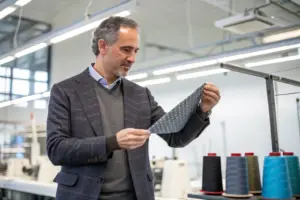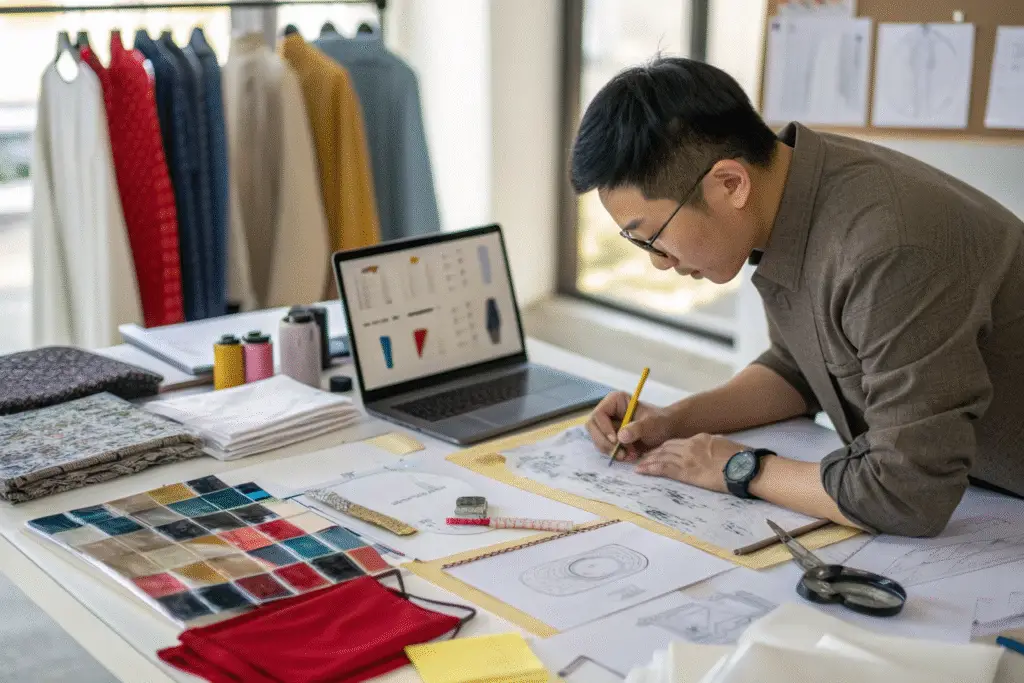
You have a vision for your clothing brand—designs that reflect your unique style, quality that stands apart, and a connection with customers who share your aesthetic. But between that vision and your first sold-out collection lies a complex journey of manufacturing decisions, business planning, and strategic execution. Where do you actually begin when the path seems overwhelming with options and uncertainties?
Starting a private label clothing line begins with thorough market research and a clear brand identity, followed by developing technical designs and finding the right manufacturing partner. The most successful launches combine creative vision with practical business planning, focusing on a specific niche where you can genuinely compete and connect with customers. This systematic approach transforms your concept into a viable business while avoiding the common pitfalls that derail many aspiring fashion entrepreneurs. Let's walk through the essential steps that bridge the gap between your ideas and your first production order.
How do you define your brand and target market?
Before you sketch your first design or contact any manufacturers, you must answer fundamental questions about who you are as a brand and who you're serving. This foundational work determines everything from your design direction to your pricing strategy and marketing approach.
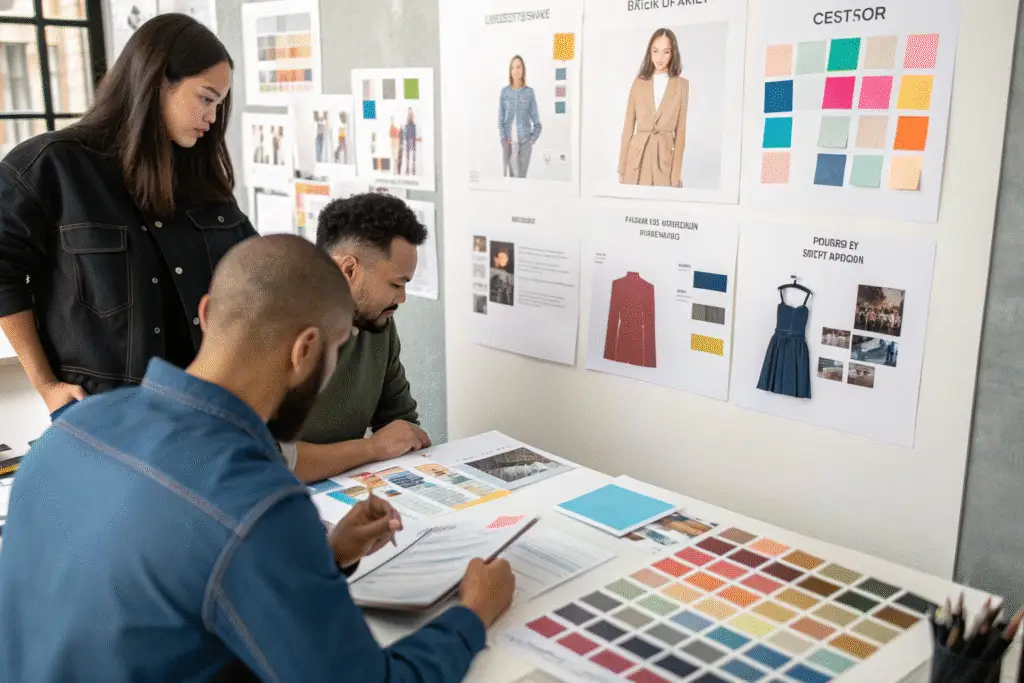
Start by identifying your specific niche—the gap in the market that your brand will fill. Are you creating sustainable activewear for yoga enthusiasts? Premium basics for minimalist professionals? Vintage-inspired streetwear for a specific subculture? Your niche should reflect both market opportunity and genuine passion. We recently worked with a founder who identified an underserved market: tall women seeking fashionable, properly-proportioned athletic wear. By focusing exclusively on this specific customer, she avoided competing with giant sportswear brands and built a loyal community from her launch.

What elements comprise a strong brand identity?
Your brand identity includes your name, logo, color palette, typography, and brand voice—but more importantly, it encompasses your core values and unique selling proposition. Document what makes your brand different: Is it your ethical manufacturing practices? Your innovative fabrics? Your community focus? One successful client built their entire identity around transparent pricing, showing customers exactly how their $78 sweater cost $32 to manufacture, $18 to market, and generated $28 profit. This radical transparency became their competitive advantage in a market hungry for honesty.
How do you research your target customer?
Go beyond basic demographics to understand your ideal customer's lifestyle, values, shopping habits, and pain points with current options. Create a detailed customer avatar: Give them a name, age, occupation, interests, and fashion challenges. We helped a menswear client identify that their target customer wasn't just "men 25-40" but "creative professionals who value craftsmanship but dislike shopping." This specificity informed everything from their unboxing experience to their content marketing strategy, resulting in a remarkably focused and effective launch.
What are the essential steps in product development?
Once your brand foundation is solid, product development transforms your concepts into manufacturable designs. This phase requires balancing creativity with technical feasibility and cost considerations—a process where many new brands either overcomplicate or underestimate what's required.
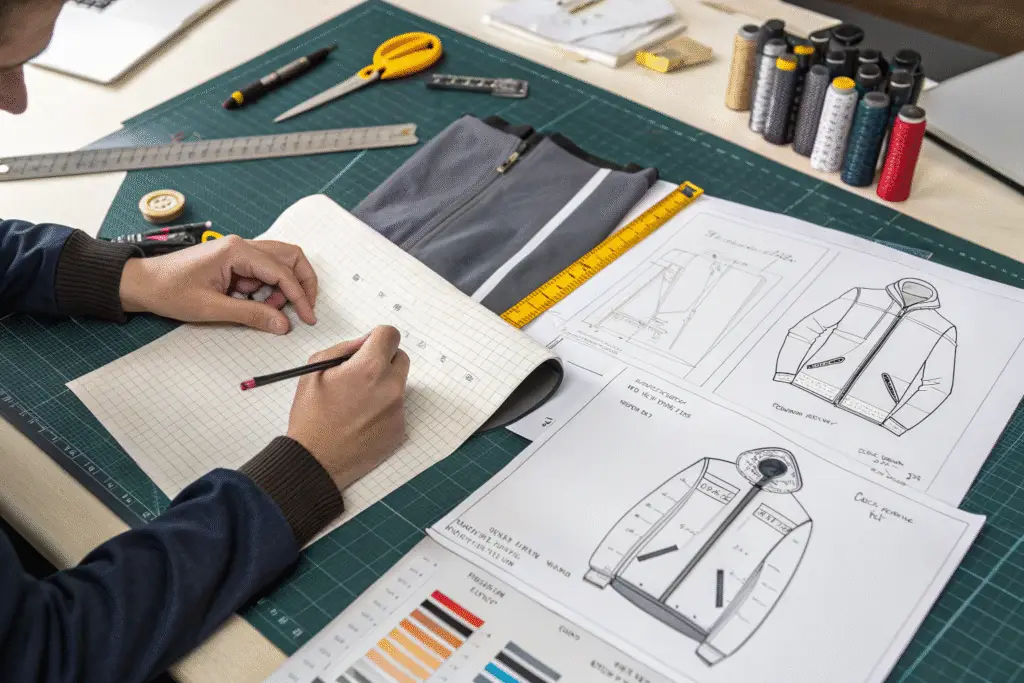
Begin with creating tech packs—the technical blueprints that factories need to accurately quote and produce your designs. Even if you're not a technical designer, you can create basic tech packs including flat sketches, materials list, and construction details. We worked with a first-time founder who developed her initial tech packs using online templates, then had our technical team refine them. This approach saved her thousands in design fees while ensuring she maintained creative control. Her clear documentation resulted in accurate sampling and saved weeks in back-and-forth revisions.
How important is fabric selection?
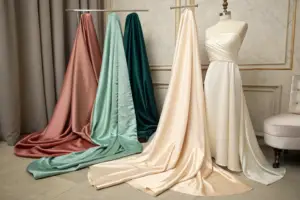
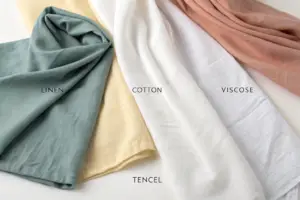
Fabric choice impacts cost, quality, manufacturing feasibility, and customer satisfaction. Research different materials' properties, care requirements, and appropriate applications. We always recommend starting with fabrics you understand well rather than experimenting with unfamiliar textiles for your first collection. One client insisted on using a delicate silk blend for their first product, despite our warnings about the manufacturing challenges. After experiencing high defect rates and customer returns due to fabric issues, they switched to a more manageable cotton blend for their second collection, dramatically improving their product quality and customer satisfaction.
What should you expect during sampling?
The sampling process typically involves 2-3 rounds: proto samples (basic shape and construction), fit samples (tested on live models), and pre-production samples (final verification before bulk production). Each round addresses different aspects of your design. A recent client learned this process intimately when their first samples revealed that their designed sleeve mobility didn't work in real life. Through three sample iterations, we perfected the pattern, saving them from producing 500 jackets with poor functionality. This systematic approach to prototype development prevents costly bulk production errors.
How do you find and evaluate manufacturers?
Your manufacturing partner can make or break your private label business. The right factory becomes an extension of your team, providing guidance, quality execution, and reliability. The wrong choice can lead to missed deadlines, quality issues, and financial losses.
Research potential manufacturers through trade shows, industry referrals, and B2B platforms like Alibaba. Look for factories with experience in your product category and price point. When evaluating potential partners, ask specific questions about their quality control processes, communication protocols, and minimum order quantities. We recently helped a client navigate this process by providing a manufacturer evaluation checklist we've developed over years of industry experience. Using this tool, they avoided a factory that seemed perfect on paper but had concerning patterns of delayed shipments according to their references.
What should you look for in a manufacturing partner?
Beyond capabilities and cost, consider communication style, problem-solving approach, and business philosophy alignment. The best manufacturing relationships feel like partnerships. One of our longest-standing client relationships began when they chose us over a cheaper competitor because during the quoting process, we identified potential production challenges they hadn't considered and suggested solutions. This proactive approach demonstrated that we were invested in their success beyond just executing an order. This alignment on quality standards and business values has sustained our partnership through seven successful collections.
How do production estimates guide your decision?
A detailed production estimate reveals a factory's professionalism, transparency, and understanding of your project. Look for comprehensive breakdowns rather than single-line pricing. When a client showed us a competitor's estimate that was 30% lower than ours, we helped them analyze why: the cheaper estimate excluded pattern making, fabric testing, and proper finishing. Our transparent approach helped them understand true costs versus apparent savings, preventing what would have been a disastrous partnership based on incomplete information.
What business fundamentals must you address?
While creative vision drives fashion brands, business fundamentals determine their longevity. Legal structure, financial planning, and operational systems provide the framework that allows your creativity to flourish sustainably.
Establish your business legally by choosing the appropriate structure (LLC, corporation, etc.), registering your business name, and understanding tax obligations. Consult with professionals about trademarks to protect your brand identity. One client learned this lesson the hard way when they had to rebrand six months after launch because another company held the trademark to their chosen name. The rebranding cost them significant momentum and required reproducing all their packaging and marketing materials.
How do you create a viable financial plan?
Your financial plan should include startup costs, operating expenses, pricing strategy, sales projections, and cash flow management. Be ruthlessly realistic about your numbers. We helped a client create a financial model that accounted for the full product lifecycle—not just manufacturing costs but also marketing, storage, shipping, returns, and deadstock. This comprehensive approach revealed they needed to sell 40% of their inventory at full price to break even, shaping their pricing architecture and discounting strategy.
What operational systems do you need?
Implement systems for inventory management, order fulfillment, customer service, and accounting from the beginning. Many founders try to manage everything through spreadsheets and email initially, but this becomes unmanageable quickly. We recommend starting with integrated e-commerce platforms that include basic inventory and order management. One client grew 300% in their first year because they invested in proper systems early, allowing them to scale smoothly while founders of similar brands struggled with operational chaos at the same growth stage.
Conclusion
Starting a private label clothing line merges creative passion with business discipline. By systematically addressing brand definition, product development, manufacturing partnerships, and business fundamentals, you transform your vision into a viable enterprise. The most successful founders recognize that beautiful designs must be supported by solid operations, financial planning, and strategic partnerships.
Your manufacturing relationship deserves particular attention—it impacts your quality, reliability, and ultimately, your brand reputation. As you begin this exciting journey, start with a comprehensive production estimate that provides clarity on costs, timelines, and feasibility. Contact our Business Director Elaine at elaine@fumaoclothing.com to request your complimentary, no-obligation estimate and take the first concrete step toward launching your private label clothing line with confidence.