When I first considered screen printing T-shirts at home, I faced confusion and uncertainty. Choosing the wrong equipment led to messy prints, wasted materials, and frustration. So, how exactly can I screen print T-shirts at home successfully?
Screen printing T-shirts at home involves creating a stencil (screen), applying emulsion, exposing a design onto the screen, applying ink through the stencil onto the fabric, and curing the print with heat. Basic home setups require screens, squeegees, inks, emulsion, and a curing method like a heat gun or home oven.
Clearly understanding what's needed, choosing suitable equipment, and knowing the differences between methods ensures smooth and successful home screen printing. Let's dive deeper into essential materials, equipment, and methods.
What Do I Need to Screen Print T-Shirts?
When I first tried home screen printing, not knowing what I needed led to poor-quality results and wasted materials. Clearly understanding necessary equipment and supplies was critical. So, what do I really need for home screen printing?
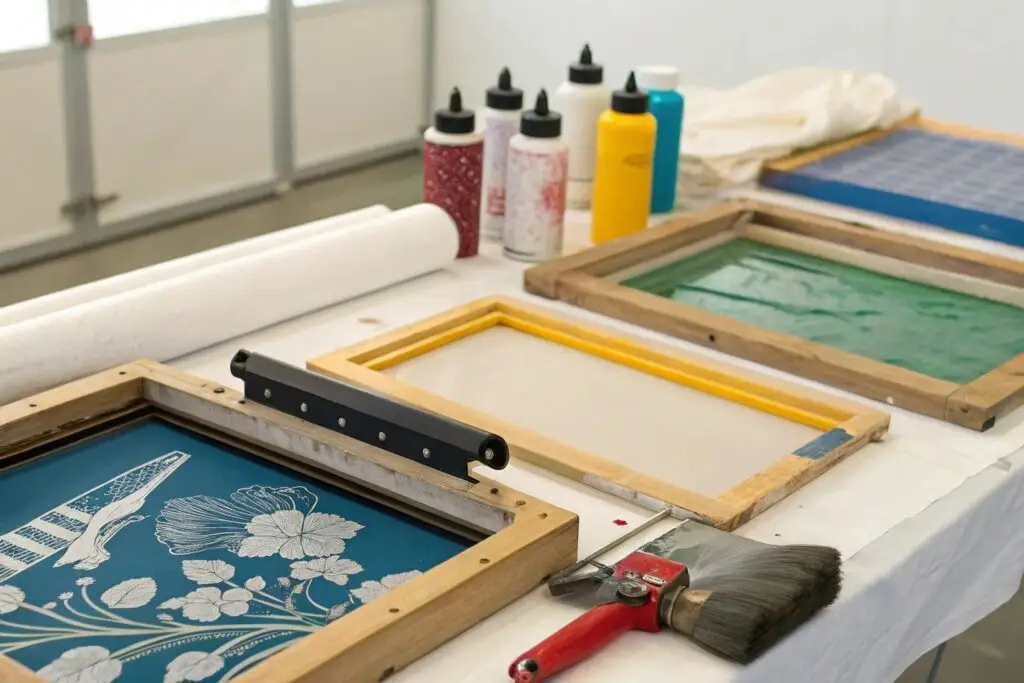
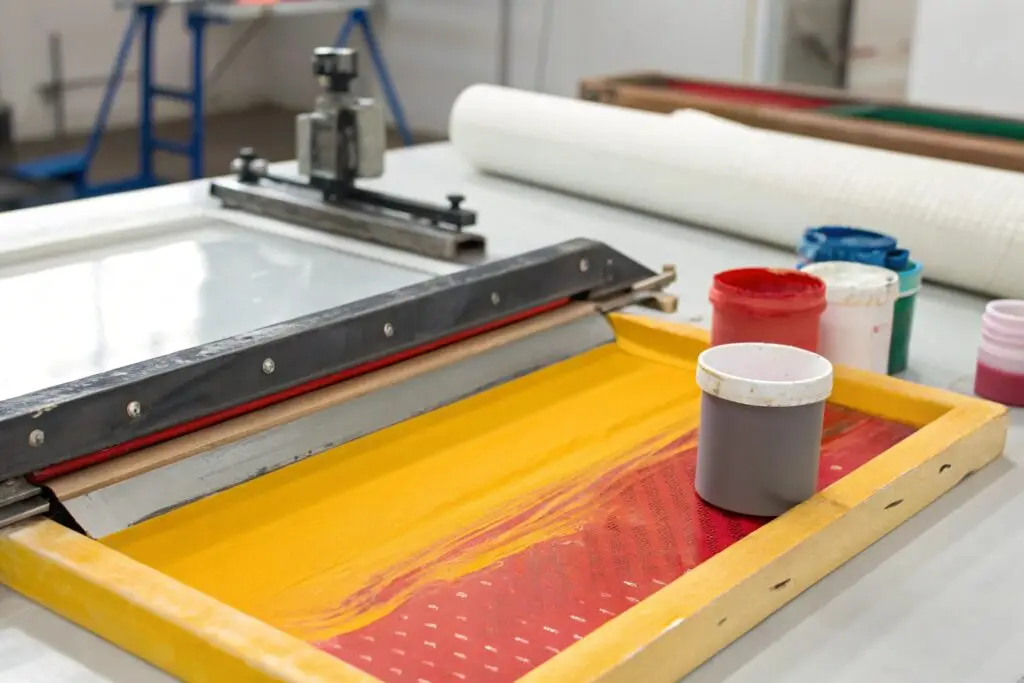
Essential items for home screen printing include screens (mesh frames), screen printing inks, a squeegee, emulsion, exposure unit or light source, adhesive spray, curing equipment (heat press or heat gun), masking tape, and cleaning supplies. These ensure efficient, clear, and durable prints.
Essential Checklist for Home Screen Printing:
Here's the simplified list of everything needed:
| Item | Description & Usage |
|---|---|
| Screen & Frame | Mesh stretched frame for design transfer |
| Squeegee | Spreads ink evenly across screens |
| Emulsion | Creates a stencil on the screen |
| Exposure Unit | Exposes the stencil onto screen |
| Inks (Plastisol) | Durable inks for vibrant results |
| Curing Method | Heat gun or heat press for curing ink |
| Adhesive Spray | Keeps T-shirts secure during printing |
| Cleaning Supplies | Removes leftover ink, keeps workspace tidy |
How important is curing the ink properly?
Proper curing is extremely important to maintain print quality. It ensures prints last through many washes without cracking or fading. Using a heat press or heat gun effectively cures ink for long-lasting results.
Can I Use a Regular Printer for Screen Printing?
Initially, I thought a regular printer could simplify screen printing, leading to poor stencil creation and print failure. Understanding whether regular printers can help screen printing at home is important to avoid costly mistakes. Can I use a regular printer for screen printing?
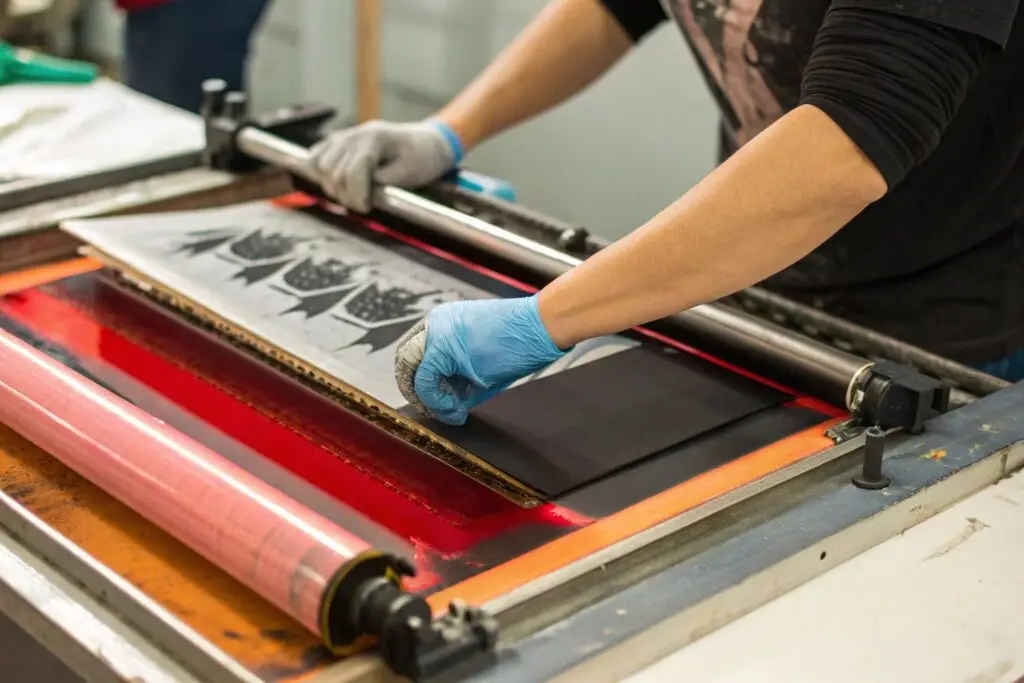
A regular printer can be used indirectly in the screen printing process to create transparent films for stencils but cannot directly print onto T-shirts. An inkjet or laser printer creates film positives, which are then used with screens and emulsions to transfer designs onto garments.
What role does a regular printer play in screen printing?
A regular printer plays an important but limited role in screen printing:
- Creates Film Positives: Used to expose designs onto emulsion-coated screens.
- Does Not Print Directly on Shirts: Regular printers can't directly apply ink to fabric.
Which printers work best for making screen printing stencils?
Printers suitable for creating film positives:
| Printer Type | Film Transparency Quality | Cost |
|---|---|---|
| Inkjet Printer | High-quality transparencies | Affordable |
| Laser Printer | Acceptable transparencies | Affordable |
An inkjet printer remains my preferred choice because it produces sharp, detailed stencils.
What Is the Difference Between Screen Print and Heat Press?
Initially, confusion about heat press and screen printing resulted in poor-quality prints. Understanding clearly the differences between screen printing and heat press significantly improved my outcomes. What's the difference between these two methods?
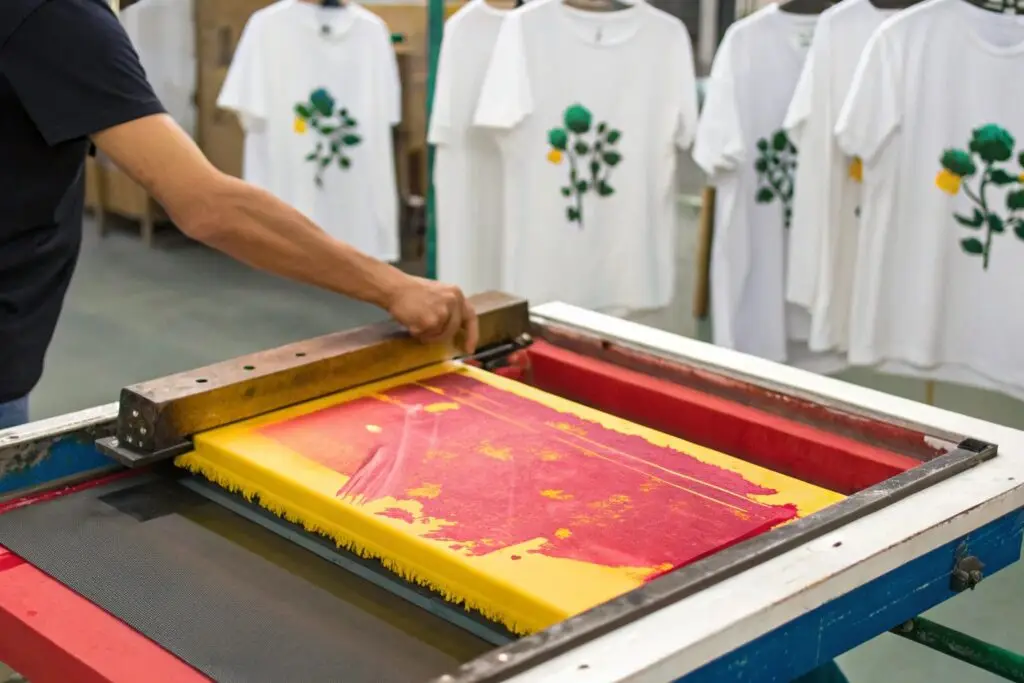
Screen printing pushes ink through a stencil directly onto fabric, ideal for large quantities and long-lasting, vibrant designs. Heat press involves transferring pre-printed designs onto garments using heat, ideal for small runs or custom, detailed designs but with moderate durability compared to screen printing.
Screen Printing vs Heat Press:
Clear comparison based on my experiences:
| Feature | Screen Printing | Heat Press |
|---|---|---|
| Ideal Order Size | Bulk orders (20+) | Small batches (1-20) |
| Print Durability | High | Medium |
| Design Complexity | Simple designs | Complex, detailed designs |
| Setup Costs | Higher initial costs | Lower initial costs |
When is heat pressing more suitable than screen printing?
Heat pressing is preferable when:
- Making personalized items or one-off shirts
- Printing complex or detailed graphics quickly
- Limited workspace or budget constraints exist
Can I Make My Own Screen Print Screen?
Initially, I thought screen printing screens required expensive professional setups. The lack of clarity caused me unnecessary expenses. Can I make my own screen print screens affordably at home?
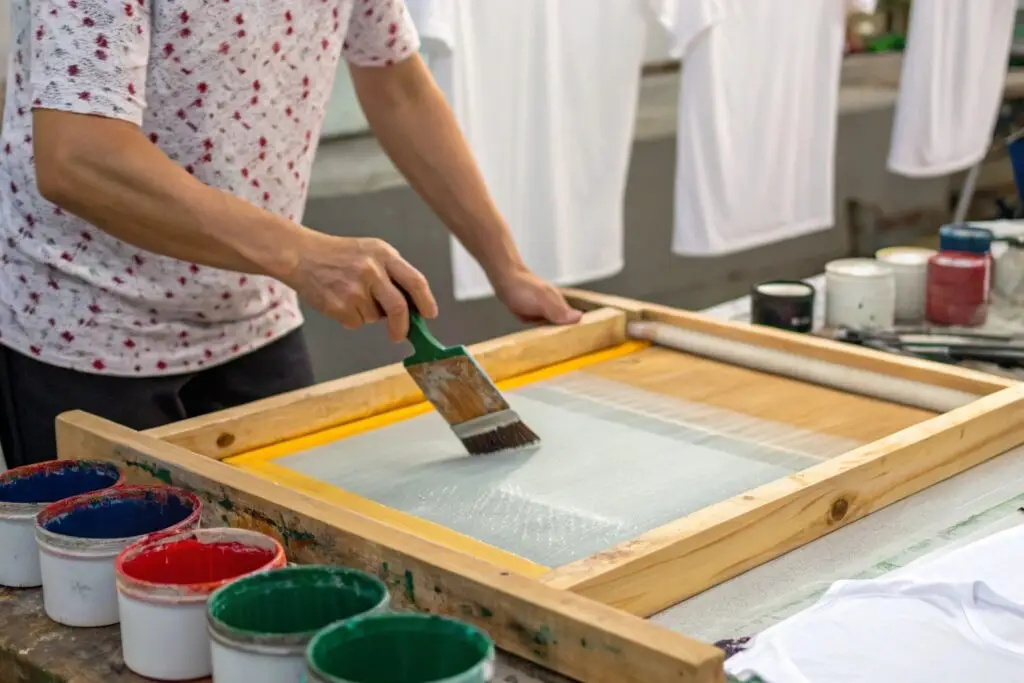
Yes, you can make your own screen printing screens. This involves attaching a mesh fabric (silk or polyester) onto a wooden or aluminum frame, coating the mesh with emulsion, exposing your design onto the emulsion-coated mesh with UV light, washing out unexposed areas, and drying thoroughly.
Step-by-step guide for creating your own screen:
Simple steps from my personal experience:
| Step | Action Details |
|---|---|
| 1 | Build or purchase a frame and stretch mesh tight |
| 2 | Coat mesh evenly with photo emulsion |
| 3 | Dry emulsion-coated screen in a dark room |
| 4 | Expose your design onto the screen using UV light |
| 5 | Wash out unexposed emulsion with water |
| 6 | Allow the screen to fully dry |
Is DIY screen making cost-effective?
Creating your own screen can save money, especially for beginners or smaller operations. DIY screens cost between $10–$25, compared to purchasing pre-made screens at $25–$50 each, providing substantial savings for smaller businesses or hobbyists.
Conclusion
Clearly understanding the materials, equipment, and processes involved in screen printing at home helps ensure successful prints, satisfied customers, and cost-effective outcomes. Knowing exactly what tools are necessary, how to properly prepare screens, and the differences between screen printing and heat pressing significantly improves my screen printing business.