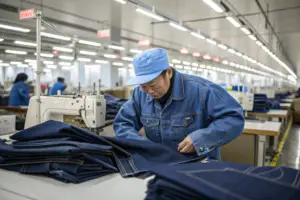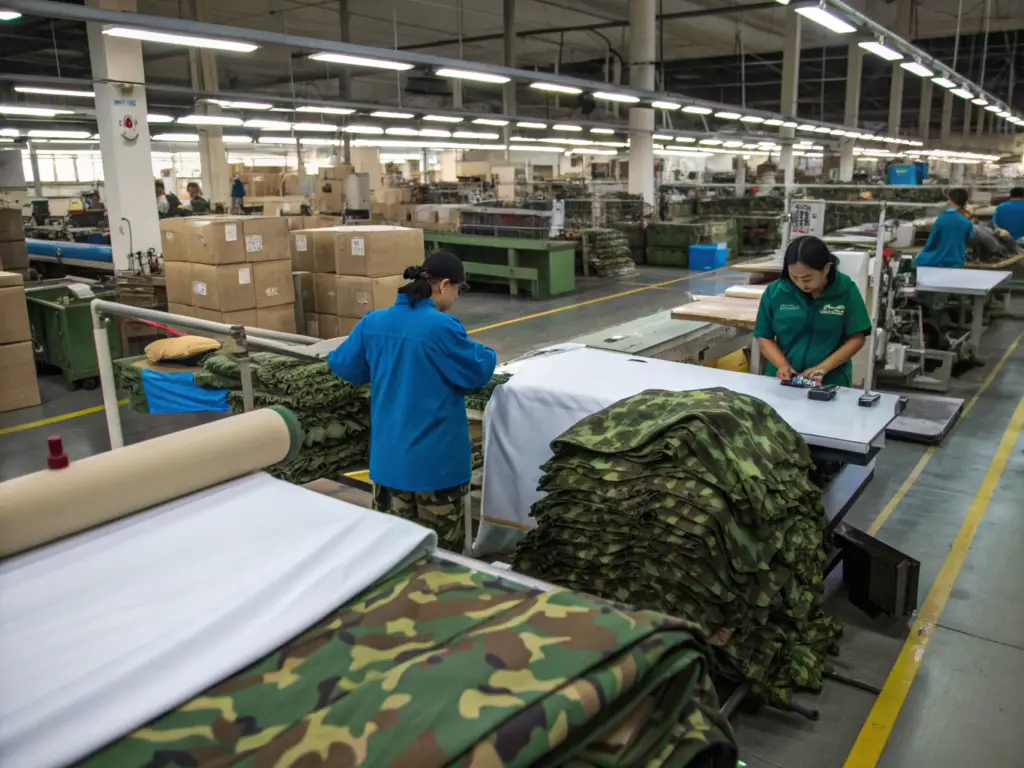
Navigating the global fashion supply chain can feel like a tactical mission. You need speed, precision, and a partner who knows the terrain. As an apparel manufacturer deeply embedded in global production networks, including partnerships in regions like Kenya, I see firsthand how sourcing strategies are evolving. Many U.S. brands come to us after facing delays and quality inconsistencies while trying to chase fast fashion speeds in distant markets. They need a reliable, strategic partner to execute their vision flawlessly.
For brands seeking agility in fast fashion categories like camouflage wear, partnering with a seasoned, full-package manufacturer like Shanghai Fumao provides a more controlled, efficient, and reliable pathway than navigating fragmented factory relationships directly, as we manage the complex interplay of design, sourcing, and rapid production timelines through a single point of contact.
The fast fashion cycle demands a unique operational rhythm, especially for trend-driven items like camouflage apparel. While factories in specific regions develop capabilities to serve this demand, understanding the entire ecosystem—from fabric sourcing to final logistics—is key to a successful, profitable collection. Let's explore the mechanics behind fast fashion production and how to build a resilient supply chain.
What are the key drivers of fast fashion production in Kenya?
Speed is the currency of fast fashion. For camouflage wear, this means rapidly turning a trend from a digital concept into store-ready inventory. The ability to support this cycle depends on several interconnected factors.
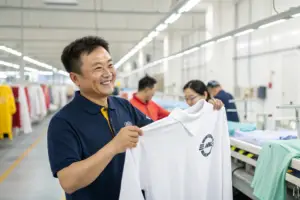
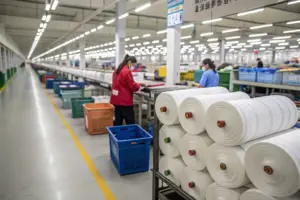
Factories catering to fast fashion, whether in Kenya or elsewhere, prioritize rapid turnaround times. This often involves maintaining smaller batches of popular fabrics, like specific camouflage prints, and employing flexible production lines. For example, we've collaborated with partners to produce a run of camo utility pants where the fabric was pre-approved and held in stock, cutting the lead time from 60 to 28 days.
How does fabric sourcing adaptability impact speed?
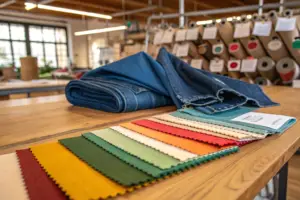
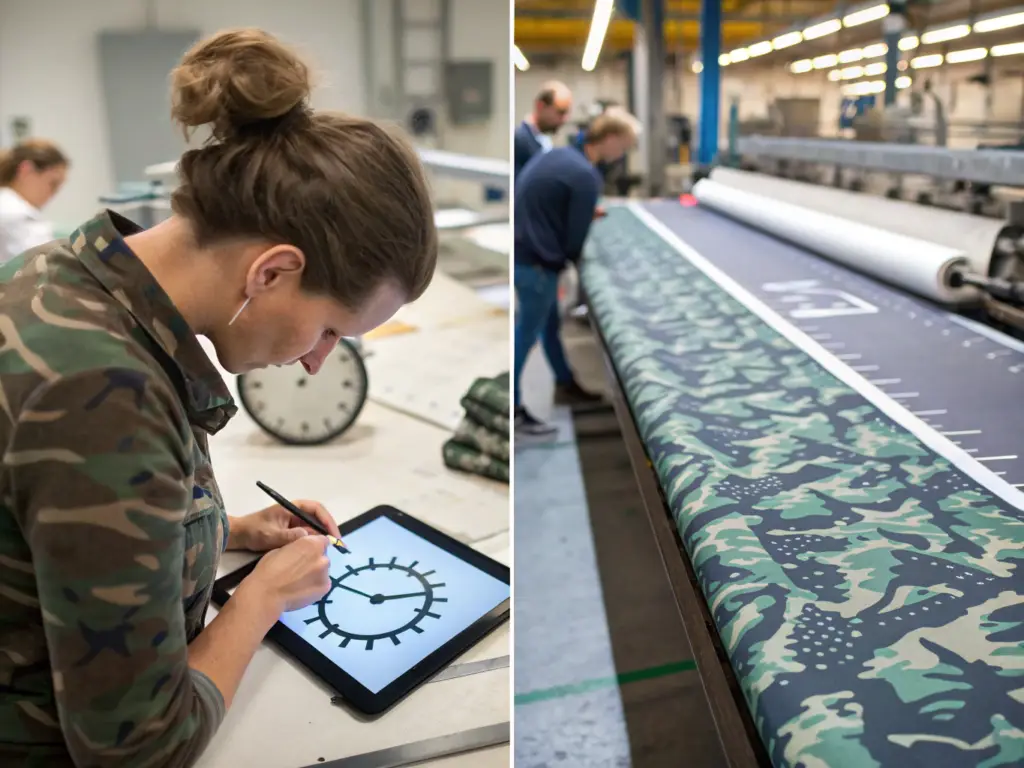
The cornerstone of any garment is its fabric. In fast fashion, the ability to source and procure the right material swiftly is paramount. For camouflage wear, this goes beyond just green and brown prints. It involves the base fabric composition, weight, printing technique, and compliance with safety standards. Delays in fabric arrival are the most common cause of production bottlenecks. A manufacturer with a strong network can avoid this. For instance, we maintain a database of pre-vetted mills for performance fabrics. When a client needed a flame-resistant camo fabric for workwear last spring, our network had it sourced and lab-tested within a week, a process that typically takes much longer. This control over the global textile sourcing landscape is a key service we provide. Understanding fabric lead times is essential for realistic planning.
Can local factory capacity handle complex garment construction?
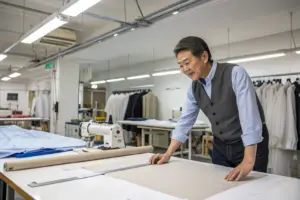
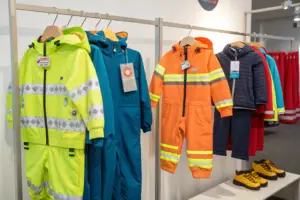
Not all factories are created equal. Producing a simple camo t-shirt is vastly different from producing a multi-layer camo parka with waterproof zippers and quilted lining. The skill level of the workforce, the sophistication of the machinery, and the technical expertise of the line supervisors determine this capacity. We often find that factories promising fast turnarounds may subcontract complex operations, losing control over quality and timing. Our approach at Shanghai Fumao is different. We invest in continuous training for our workers and technicians. We recently upgraded the specialized sewing machines in one of our lines specifically for handling heavy-duty, multi-layered outerwear construction, resulting in a 25% increase in efficiency for a recent order of insulated camo jackets.
Achieving a short production window is only half the battle. Getting the finished goods from the factory floor to the U.S. market reliably is where many fast fashion promises unravel.
Shipping delays, customs hold-ups, and port congestion can erase any time savings gained in production. A commitment to on-time delivery requires deep logistical expertise and contingency planning.
Why is geographic location a logistical factor?
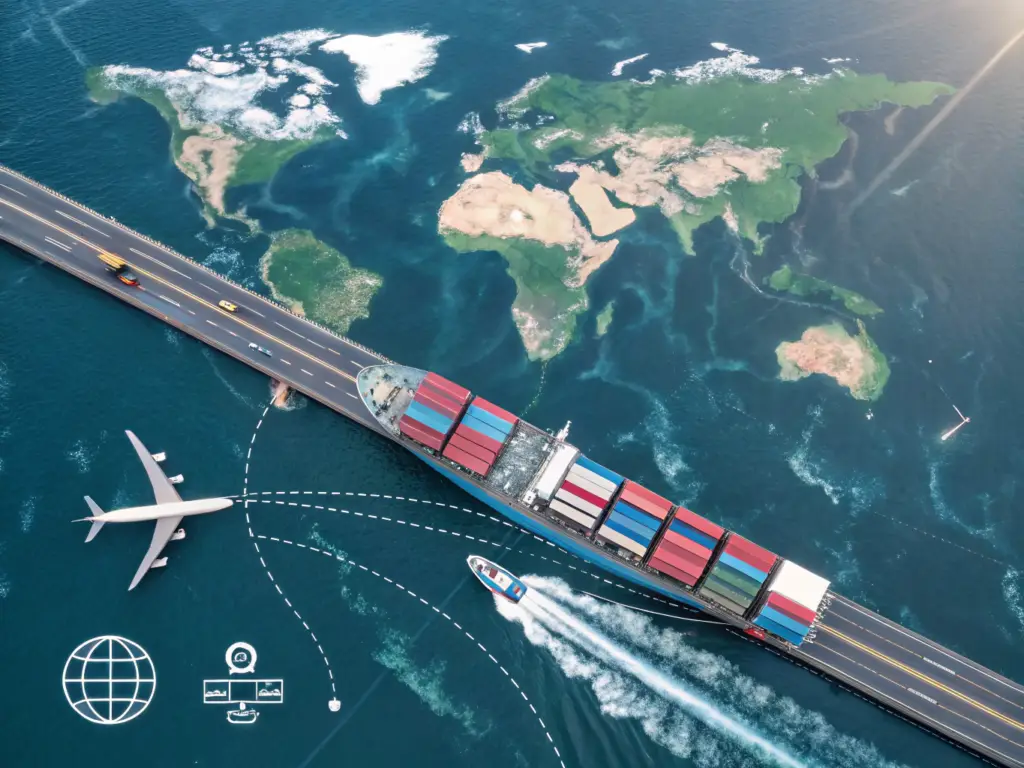
Distance equals time and money in logistics. The final delivery location of the factory determines the available shipping routes, frequencies, and associated costs. For time-sensitive fast fashion, even a few days' difference in transit can be critical. Sea freight, while cost-effective, is slow. Air freight is fast but expensive. The optimal choice depends on the product's value and urgency. We analyze this for every client. For a high-value, small-batch camo collection destined for a pop-up launch, we might recommend air freight from our Shanghai hub. For a large replenishment order, we optimize sea freight consolidation. Our logistics team manages the entire international freight forwarding process, including customs clearance for both China and the U.S., providing a seamless door-to-door service.
How do payment terms and reliability interact?
Financial arrangements are a direct reflection of risk and trust. Common terms like 30% deposit with balance before shipment are standard, but they don't guarantee on-time delivery. A reliable partner aligns their cash flow with project milestones to ensure no work stoppages. Our transparency builds trust. We provide milestone photos and videos—fabric arrival, first sample off the line, packing—so clients see progress in real time. This system was crucial for a startup brand that had been burned by a previous supplier's delays. Our regular updates gave them the confidence to focus on marketing, knowing production was on track. Reliable supply chain finance practices are the bedrock of a lasting partnership.
How does quality assurance fit into a rapid production cycle?
There's a dangerous myth that speed must compromise quality. In reality, for a brand to survive, it cannot. The challenge is building quality checks into the production process without creating stoppages.
Effective quality assurance (QA) is proactive, not reactive. It's about preventing defects rather than just finding them at the end.
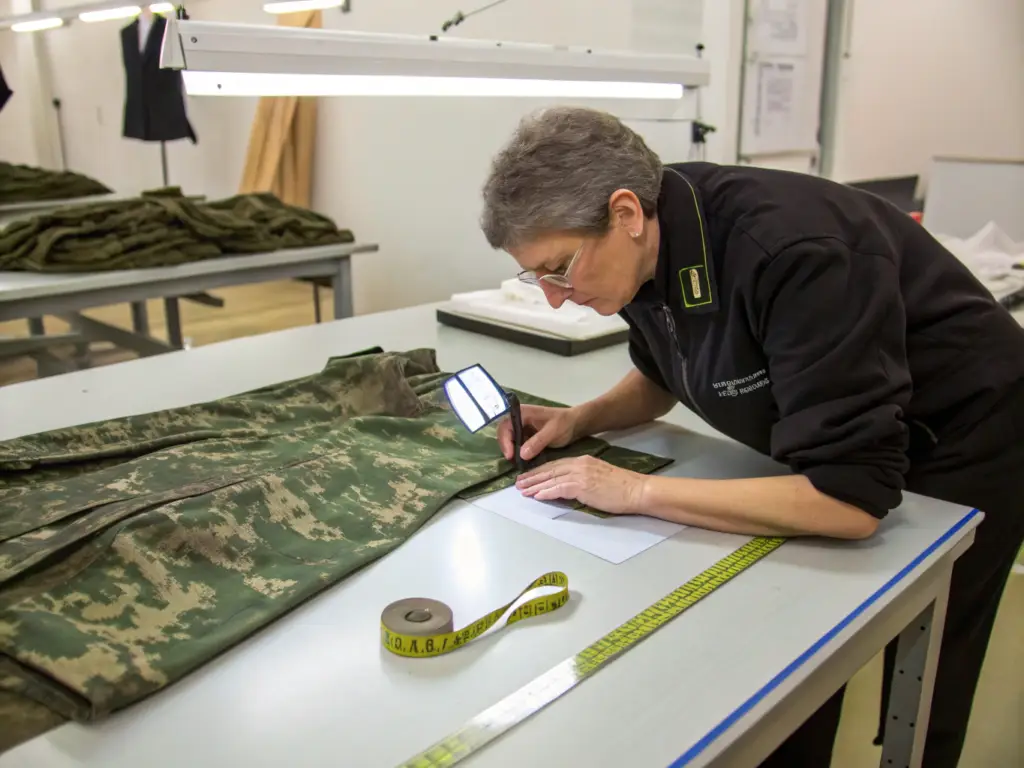
What does in-process quality control look like?
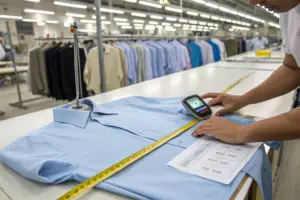
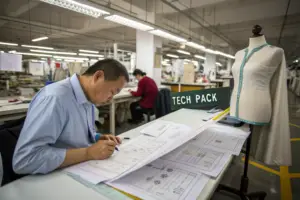
Final inspection alone is too late. Quality must be built into the process. Our inline quality control system involves checkpoints at each major assembly stage. For camouflage apparel, specific checks include pattern matching at seams (ensuring the camouflage pattern flows correctly across panels), color fastness testing of the printed fabric, and functionality tests for any zippers or fasteners. We create a quality inspection checklist for every order. In a recent project for camo cargo pants, this checklist included 15 specific points, from pocket alignment to the tensile strength of the belt loops. Catching a issue with pocket bag stitching early saved approximately 5% of the order from rework, protecting both timeline and cost.
Are international certifications and standards maintained?
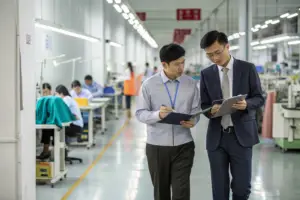
Certificates are promises on paper. The real question is whether the day-to-day operations uphold those standards. This covers everything from ethical labor practices and safe working conditions to chemical management in the dyeing and printing process. We don't just ask for certificates; we audit the practices. Our compliance team ensures that all production, whether in-house or with allied factories, meets rigorous social compliance and environmental standards. This due diligence protects your brand from reputational risk and ensures your products are welcomed in all major markets. It's a core part of responsible apparel manufacturing and export.
What is the strategic alternative for US brands seeking reliability?
For American brands, the goal isn't to find the fastest factory—it's to find the fastest, most reliable route to market. This often means partnering with an expert orchestrator rather than managing individual factory relationships.
The most successful brands we work with view us as an extension of their own team. They bring the design and market insight; we provide the manufacturing mastery and supply chain execution.

Why choose a full-package manufacturing partner?
Think of it as hiring an expert project manager for your product development and production. The brand remains the creative and marketing leader, while the manufacturing partner executes the operational plan. This eliminates the friction of coordinating between disparate entities. Your single point of contact manages the entire workflow. A client from Texas, who previously sourced fabrics from Turkey and production from Asia separately, switched to our full-package model. They reported not only a 20% reduction in total lead time but also a significant decrease in stress and administrative workload. We became their dedicated apparel production partner, handling everything from technical design to final delivery.
How does this model offer better cost and value control?
True cost includes risk. A low unit price from an unvetted factory carries the hidden risk of poor quality, missed deadlines, and logistical nightmares. Our model offers cost predictability and risk mitigation. We provide a comprehensive FOB price or DDP price upfront, with minimal surprises. Our economies of scale in fabric purchasing and production planning often result in a final landed cost that is competitive with, or even better than, a piecemeal approach, once all hidden costs are accounted for. The ultimate value we deliver at Shanghai Fumao is peace of mind and the ability for you to scale your brand confidently.
Conclusion
The fast fashion cycle, particularly for specialized segments like camouflage wear, is a complex engine requiring every part to work in sync. Factories in various regions, including Kenya, have developed certain capacities to participate in this model, often focusing on agility and cost. However, for U.S. brands, the risks associated with communication gaps, logistical hurdles, and inconsistent quality can outweigh the benefits.
The strategic path forward lies in partnership. By aligning with an experienced, full-package manufacturer, you gain a partner who navigates these global complexities daily. You secure not just a production facility, but a dedicated team invested in bringing your apparel vision to market successfully, on time, and to the highest standards.
If you are looking to build a responsive, reliable, and high-quality supply chain for your next camouflage or fast-fashion-inspired collection, let's connect. We can help you translate trends into tangible products efficiently. For a detailed discussion on how we can become your manufacturing partner, please reach out to our Business Director, Elaine, at elaine@fumaoclothing.com. Let Shanghai Fumao provide the strategic manufacturing support your brand deserves.