Are you paying premium prices for Mossy Oak accessories, watching your margins shrink because sourcing seems locked into high-cost channels? Many buyers accept quoted prices without leveraging the strategies that unlock true value in licensed manufacturing.
US buyers can secure competitive pricing for Mossy Oak accessory orders by mastering strategic order consolidation, optimizing material and design choices, engaging in direct factory partnerships with license holders, and implementing value-engineering without compromising the brand's stringent quality standards.
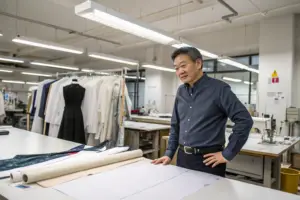
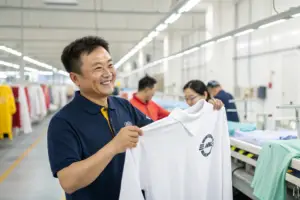
As a direct licensed manufacturer of Mossy Oak patterns, Shanghai Fumao helps American buyers implement these tactics daily. Competitive pricing isn't about finding the cheapest maker; it's about intelligent sourcing that maximizes every dollar spent on licensing, materials, and labor. Let's explore the actionable methods.
How does order consolidation and planning drive down unit costs?
The most powerful lever for cost reduction is volume. However, "volume" doesn't only mean one large SKU; it means intelligently aggregating demand across your product line and timeline to maximize factory efficiency.
This involves blending order types, leveraging forecast commitments, and understanding the cost drivers of minimum order quantities (MOQs).
What is the strategy for cross-category order bundling?
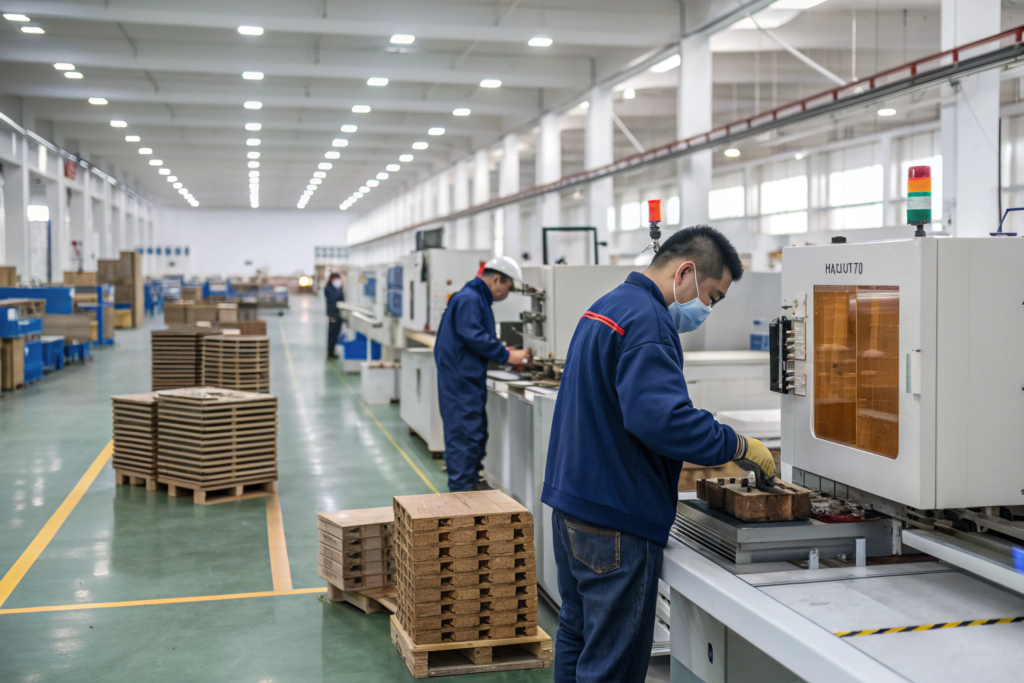
Instead of ordering 5,000 hats from one factory and 3,000 gloves from another, bundle all Mossy Oak soft accessories (hats, gloves, neck gaiters, beanies) into a single order with a manufacturer capable of producing them all. This aggregates your total order volume, allowing you to negotiate better pricing on the shared, licensed fabric and tap into economies of scale. Factories can optimize their cutting plans by nesting different product patterns together on the same roll of Mossy Oak fabric, reducing material waste by 10-15%. We executed this for a Midwestern distributor in 2023, combining their hat and glove order, which lowered the per-unit fabric cost and achieved a 12% overall reduction compared to separate POs.
How do forecast agreements and multi-season orders secure better rates?
Provide your factory with a non-binding annual forecast and commit to firm orders on a quarterly basis. This allows them to plan bulk purchases of licensed fabric and schedule production efficiently, saving them costs they can share with you. Furthermore, placing a multi-season order (e.g., Fall Hunting and Spring Turkey collections) with staggered delivery dates locks in material pricing and guards against inflation. Factories view this as a partnership and will offer more competitive rates for the guaranteed, year-round business. This planning stability is invaluable.
How can material and design choices be optimized for value?
Every component of an accessory has cost implications. Working with your factory to make informed, value-engineered choices can significantly reduce costs without perceptible quality loss.
This is a collaborative process of specifying what is essential versus what is a "nice-to-have."
Which material specifications offer the best cost-performance ratio?
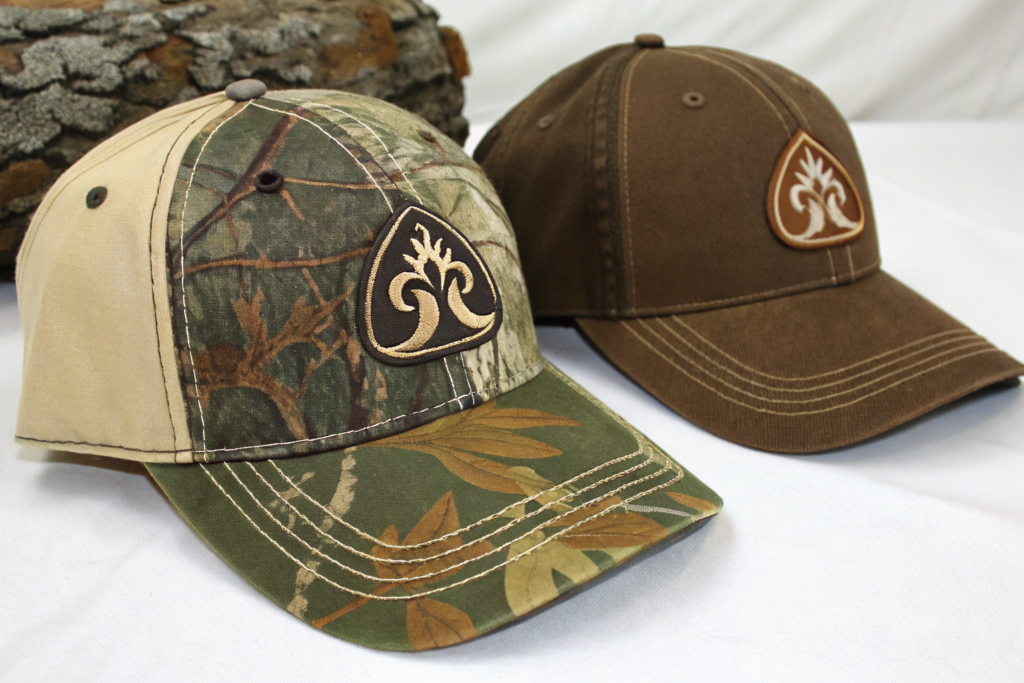
- Fabric Weight & Blend: For a Mossy Oak trucker cap, does it need a heavyweight 10oz cotton twill, or will an 8oz poly-cotton blend provide sufficient structure at a 20% lower cost while being easier to print? A good factory will provide swatches and cost breaks for different substrates.
- Embroidery vs. Printing: A fully embroidered Mossy Oak logo on a beanie is costly. A high-fidelity printed patch or a dye-sublimated pattern (for performance fabrics) can offer a 30-40% saving with excellent aesthetics. For gun cases, discuss the cost difference between 600D and 1000D polyester; the heavier fabric may be over-spec for the application.
- Trim Sourcing: Standardize zippers, buckles, and cordlocks. Using a factory's existing, bulk-purchased inventory of black pulls is cheaper than custom-dyed Mossy Oak green pulls.
How does simplifying construction reduce labor costs?
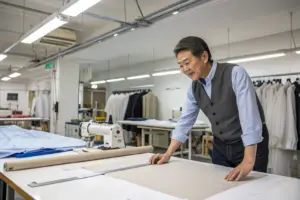
Analyze the bill of materials (BOM) and construction with your factory. Can a hat's crown be constructed with 5 panels instead of 6? Can a glove use a welded seam instead of a stitched and taped one? These small changes cumulatively reduce cutting time, sewing labor, and thread consumption. For example, we value-engineered a Mossy Oak range bag by simplifying the internal divider system, reducing the total sewing operations by 15 minutes per unit, which translated to a direct 8% labor cost saving for the buyer.
Why is partnering directly with a licensed factory crucial?
Eliminating middlemen is a classic cost-saving strategy, but in licensed goods, it's about eliminating unauthorized middlemen. Partnering with a factory that holds the Mossy Oak manufacturing license directly is the single most effective step.
This direct relationship compresses the supply chain and ensures you pay for production, not for layers of margin.

How does it eliminate redundant markups?
When you buy through a trading company or a branded wholesaler, their price includes: the factory cost + their margin + possibly a license broker's fee. By working directly with a licensed manufacturer like Shanghai Fumao, you pay: the factory cost + the embedded license royalty. You cut out all intermediate markups. This direct model typically reveals a 15-25% cost advantage for the same product. Furthermore, communication is faster and more technical, preventing costly misunderstandings.
How does it provide access to fabric and trim synergies?
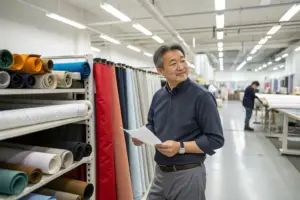
A large, licensed factory produces for multiple clients. This means they are continuously purchasing Mossy Oak fabric in vast quantities, securing the best possible price from mills. As their direct client, you benefit from these bulk purchasing synergies on the material that forms the largest portion of your accessory's cost. You also gain access to their library of already-tested and approved components (like specific insulating foams for gloves or binding tapes), avoiding your own costly sampling and testing fees.
How can logistics and payment terms be leveraged for savings?
The final cost is the landed cost. Intelligent management of shipping, duties, and financial terms can preserve the hard-won savings from production.
This requires a holistic view of the total cost of ownership.
What is the most cost-effective shipping and duty strategy?
For Mossy Oak accessories, which are typically duty-free under Harmonized Tariff Schedule (HTS) Chapter 42 or 65, the main cost is freight. Work with your factory to optimize carton dimensions and packing efficiency to maximize container load. Consider consolidated shipping with other compatible goods. Discuss DDP (Delivered Duty Paid) terms. While the DDP price may seem higher, it is a fixed, all-in landed cost that protects you from volatile spot freight rates and unexpected brokerage fees. For steady-volume buyers, this predictability is a form of savings.
How can flexible payment terms improve your cash flow?
Negotiate payment terms that align with your cash flow cycle. Instead of 30% deposit and 70% before shipment, propose 40% deposit, 60% against copy of Bill of Lading. This improves your working capital. For long-standing, trustworthy relationships, some factories may accept Letter of Credit (L/C) at sight, which provides security for both parties without tying up cash as a deposit would. Improved cash flow effectively reduces your financing costs, contributing to overall competitiveness.
Conclusion
Securing competitive pricing for Mossy Oak accessories is a multifaceted discipline that combines strategic planning, technical collaboration, and supply chain mastery. It moves beyond price haggling to value engineering, from fragmented purchasing to consolidated partnerships. The goal is to build a cost structure that is both lean and resilient, ensuring your products are competitively priced in the market while maintaining healthy margins.
Achieving this independently is complex. Partnering with a direct, licensed manufacturer who acts as your strategic sourcing ally simplifies the journey. Shanghai Fumao embodies this partner role, offering the license, the vertical integration, and the expertise to help you implement every one of these cost-optimization strategies. To transform your Mossy Oak accessory sourcing, contact our Business Director, Elaine, at: elaine@fumaoclothing.com.