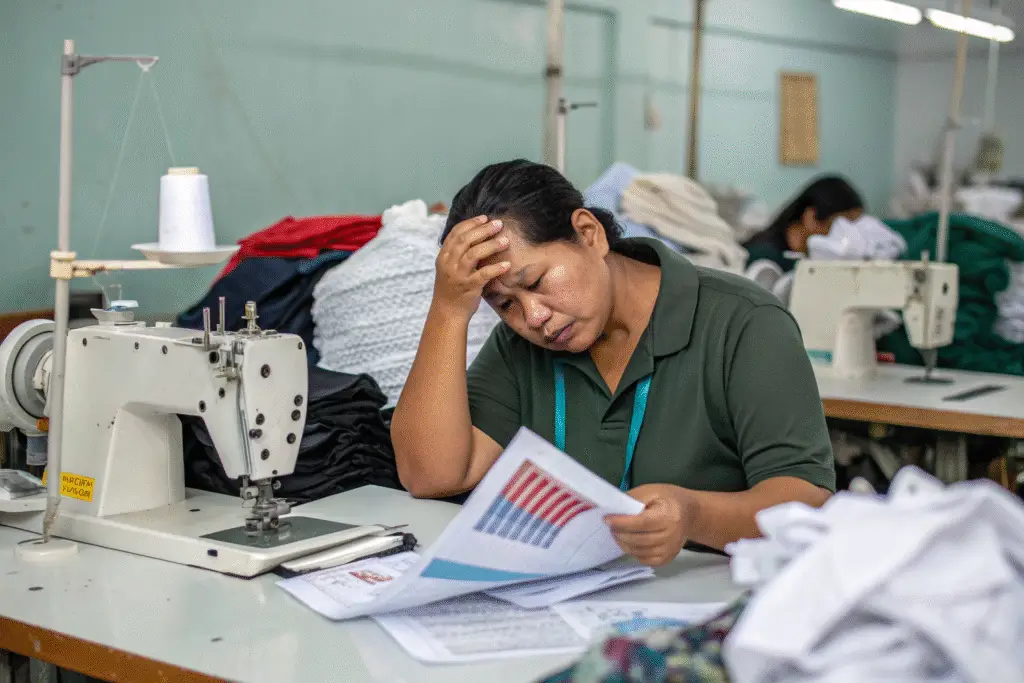
The world of garment manufacturing is changing fast—and not in favor of the little guy. In 2025, micro, small, and medium-sized garment factories (MSMEs) face a crisis unlike any before. Shrinking margins, canceled export orders, and rising tariffs are forcing even long-established units to shut their doors.
But collapse isn't inevitable. Export-reliant factories can survive this storm by pivoting to smarter sourcing models, lean operations, and direct buyer relationships.
As the owner of a medium-sized apparel factory in China, I’ve helped fellow MSMEs across Asia rethink their survival strategy. Here's a step-by-step breakdown of how small garment producers can not only survive—but stay relevant—in today’s brutal export market.
What’s Causing the Collapse of Garment MSMEs in 2025?
From Dhaka to Dongguan, small factories are being squeezed. And it’s not just one issue—it’s a web of systemic pressures.
MSME collapse is being driven by tariffs, working capital crunch, over-reliance on one buyer, and lack of tech integration.
What Are the Key Triggers?
| Factor | Impact on MSMEs |
|---|---|
| U.S./EU tariff hikes | Reduces competitiveness of FOB prices |
| Raw material price spikes | Cotton, dyes, trims cost up 10–20% YoY |
| Cancelled PO risk | Buyers are cutting orders last minute |
| Limited compliance capacity | Brands demand audits MSMEs can’t afford |
| No digital tools | Slower quoting, delayed response to buyers |
For example, under the U.S. Section 301 Tariffs, a 25% hike on synthetic knits left one of our peer factories with $8,000 in unpaid duties—on an order that had already shipped.
Are MSMEs Losing Their Big Buyers?
Yes. Many large brands now consolidate orders with multi-country vendors or sourcing platforms like Li & Fung, pushing MSMEs out of the supply chain.
The result: over 18% of small garment exporters in Asia have stopped exports in Q1 2025 (source: Apparel Resources).
How Can MSMEs Pivot to Survive the New Export Landscape?
If traditional FOB export is shrinking, MSMEs must pivot. That doesn’t mean becoming a tech company overnight. It means being smart, visible, and flexible.
The most resilient factories are shifting from bulk, buyer-led production to agile, direct partnerships and digital visibility.
What Are Practical Shifts That Work?
| Strategy | Description |
|---|---|
| DDP Offerings | Bundling duty + delivery helps attract U.S. SME buyers |
| MOQ Flexibility | Allow 300–500pcs to win private label or startup deals |
| Sample-on-demand | Offer pre-sampled styles to reduce buyer dev cost |
| B2B Listing Optimization | Leverage Alibaba, Faire, or own site |
| Fiber Transparency | Promote certified inputs like GRS or OEKO-TEX |
We shifted 20% of our production to DDP + Private Label orders in 2024—and revenue stayed stable despite losing two major retailers.
Can Technology Save MSMEs Without Heavy Investment?
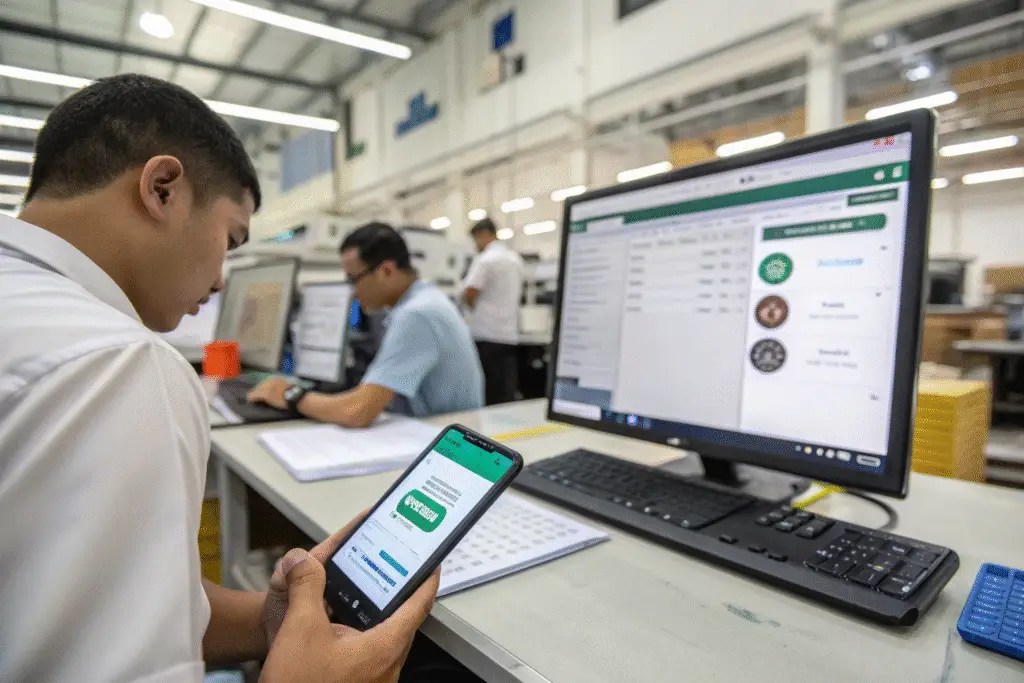
You don’t need $100K ERP systems. MSMEs can adopt lightweight, buyer-facing tech to stay agile, visible, and trustworthy.
It’s not about building software—it’s about becoming a responsive, modern partner that buyers trust.
What Are Low-Cost Tech Solutions?
| Tool | Use Case |
|---|---|
| WhatsApp Business | Real-time buyer comms, video QC checks |
| Google Sheets + Forms | Costing, spec approvals |
| Canva / Figma | Style previews, lookbooks |
| ChatGPT / AI tools | Create line sheets, respond to RFQs |
| Shopify (B2B section) | Sell to small wholesalers |
| TrusTrace Lite | Basic blockchain for traceability |
One MSME partner in Vietnam used Canva + Shopify to pitch private label loungewear directly to U.S. yoga studios—skipping sourcing agents and recovering $9,000/month in margin.
Do Buyers Value Digitally Active Suppliers?
Yes. U.S. and EU buyers now prefer factories who reply fast, can share cloud-based files, and offer digital traceability. It cuts buyer risk—and wins trust fast.
What Financial & Operational Models Work for MSME Resilience?
If you're export-dependent, liquidity is lifeblood. You must align operations to cash flow, not just order volume.
The factories that survive 2025 will master lean production, joint material sourcing, and forward payment planning.
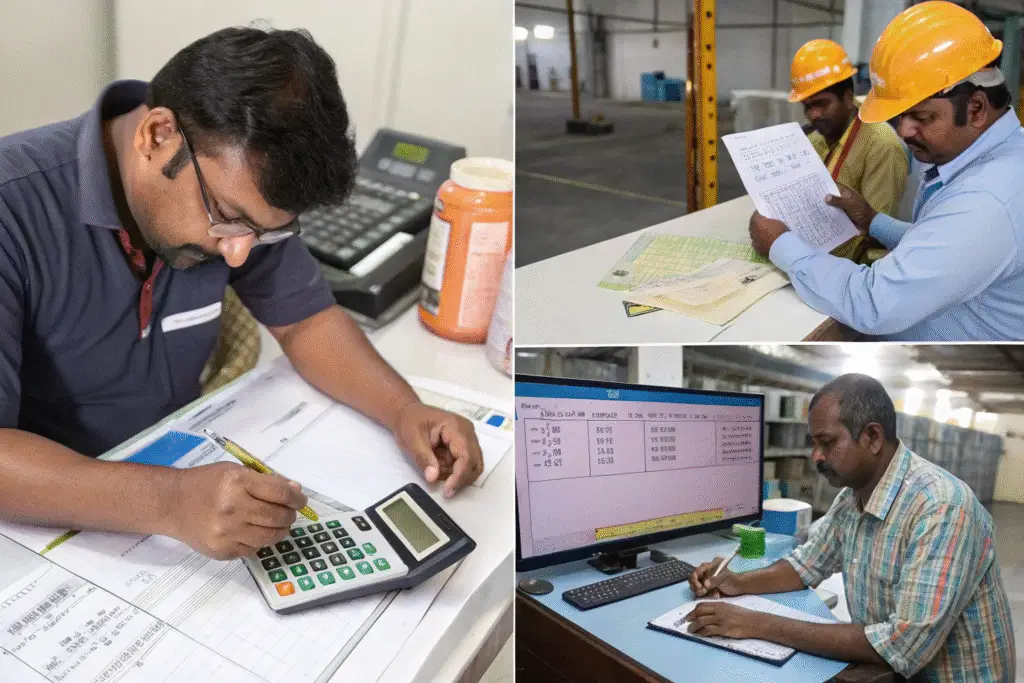
What Operational Tactics Help?
- Pre-plan capacity around confirmed orders, not max output
- Negotiate shared MOQ with other small factories for fabric
- Cut sampling waste using 3D previews or AI mockups
- Outsource embroidery/printing to reduce labor overhead
One of our peer factories shares a dyeing vendor with 3 others—allowing them to meet 800kg MOQ together and lock 2024 rates.
What Payment Terms Should MSMEs Seek?
Ask for:
- 30%–40% upfront deposits
- Progress payments at packing or pre-ship
- Escrow or Alibaba Trade Assurance
- Prepaid DDP freight to avoid customs payment delays
We structure our DDP orders in 3 milestones, freeing up 60% cash before cargo hits port.
Conclusion
Garment MSMEs are under pressure—but not powerless. If you’re export-dependent, you don’t have to go under. You must go leaner, smarter, and closer to your buyer—offering clarity, speed, and reliability where big factories can't.
At Shanghai Fumao, we’ve helped over 30 MSME partners recover by integrating DDP programs, launching shared MOQ orders, and digitally linking them to new U.S. buyers. If you need help surviving this market shift, email our Business Director Elaine at elaine@fumaoclothing.com. Let’s build a sourcing model that lasts beyond 2025.