You’re about to place a significant order for your next ski line. Your supplier assures you the fabrics are high-quality and “eco-friendly.” But when you ask for proof of OEKO-TEX certification, you get a vague promise or a single, generic certificate. How can you be sure every component in that technical ski jacket—from the outer shell to the seam tape—is truly safe? Last year, a brand discovered their supplier’s “certified fabric” claim only covered the base polyester, not the waterproof coating or the bright dyes. The resulting shipment failed a retailer's compliance audit, costing them the entire season's partnership. Let's turn that critical question from a hopeful ask into a verifiable audit.
To confirm if your skiwear supplier uses OEKO-TEX certified fabrics and dyes, you must move beyond their verbal assurance. You need to request and verify three key documents: the component certificates (or Transaction Certificates) for each specific fabric and dye batch, the finished garment certificate listing your exact product, and evidence of a factory management system that prevents contamination between certified and non-certified materials.
A "yes" is not enough. In modern sourcing, proof is the only acceptable answer. The gap between claiming certification and having a verifiable, product-specific certification system is where most risks hide. Here is how to close that gap.
1. The Component-Level Proof: Beyond the Base Fabric
A ski garment is a system. The shell fabric, the membrane laminate, the insulation, the lining, the zippers, the threads, and, critically, the dyes and chemical finishes each play a role. Certification must cover this entire system.
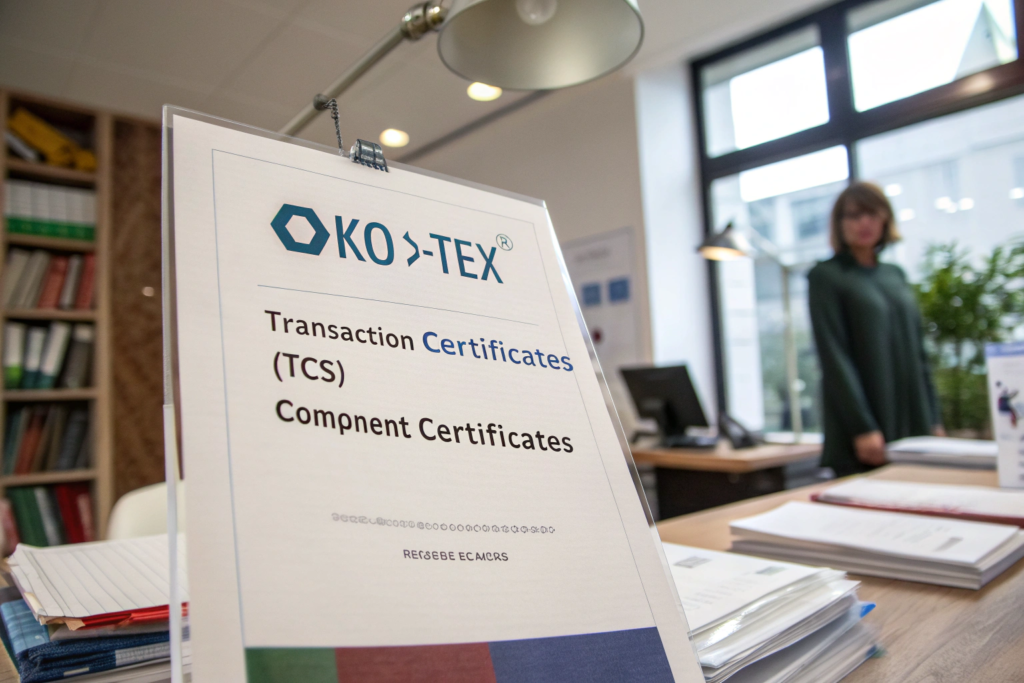
OEKO-TEX certification for fabrics and dyes is often held by the material mills and chemical suppliers. Your garment factory should provide you with Transaction Certificates (TCs) or Component Certificates from their suppliers. These documents prove that the specific batch of fabric or dye used in your order comes from a certified source and is covered under the mill's master certificate.
What Specific Questions Should You Ask Your Supplier?
- "Can you provide the OEKO-TEX Transaction Certificate for the exact batch of 20K/20K waterproof nylon we are using for the shell?"
- "Are the dyes used for this fabric line certified under OEKO-TEX STANDARD 100 or OEKO-TEX ECO PASSPORT (for chemical products)?"
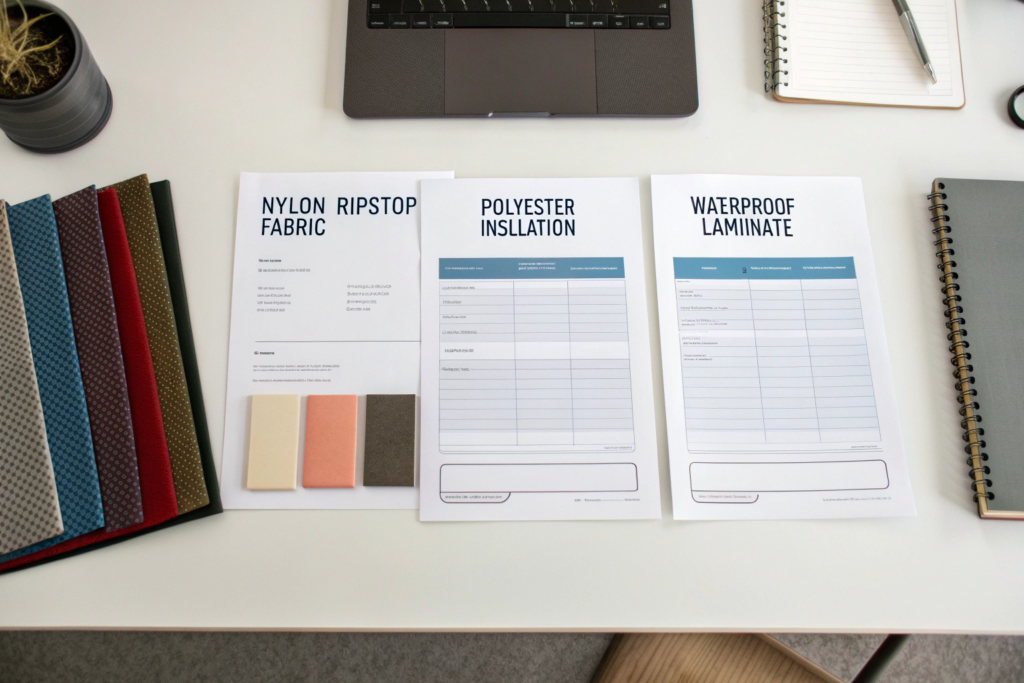
- "Please share the certificates for the insulation, lining fabric, and the DWR (Durable Water Repellent) finish."
If a supplier cannot provide these, their claim of using certified materials is unsubstantiated. At Shanghai Fumao, our procurement system is linked to certified mills, and we provide a full TC dossier for every order's Bill of Materials (BOM) upon request.
Why Are Dyes and Finishes Especially Critical?
Dyes and functional finishes (like DWR) are where the highest concentration of complex chemistry resides. A fabric made from certified fibers can be rendered non-compliant if dyed or finished with uncertified chemicals. The OEKO-TEX ECO PASSPORT certification is specifically for chemicals, dyes, and auxiliaries, ensuring they are safe for use in OEKO-TEX certified production. This is a level of detail that separates serious suppliers from the rest.
2. The Finished Garment Certificate: The Ultimate Litmus Test
Even if all components are certified, the final, assembled product must be tested and certified as a whole. This is your most important document.
The OEKO-TEX STANDARD 100 certificate for the finished garment (e.g., "Men's Insulated Ski Jacket, Style #AlpinePro") is non-negotiable. It certifies that the complete article, after all sewing, bonding, and finishing processes, meets the safety standards. This certificate number is what you will use on hangtags and for retailer verification.
How to Verify This Certificate Authentically?
- Get the Number: Obtain the unique certificate ID for your specific product article.
- Check the Database: Use the official OEKO-TEX online "Certification Check." Verify the company name matches your supplier, the product class is correct (Class II for ski wear), the article description matches, and the status is "valid."
- Scrutinize the PDF: Ensure the document is from a recognized OEKO-TEX institute (like Hohenstein or TESTEX) and lists your specific style/article code.
Beware of suppliers who show you a certificate for a similar but different product. We once audited a factory that had a valid certificate for a simple fleece jacket but was using it to imply certification for a complex 3L Gore-Tex shell—a completely different product category requiring separate testing.
What Does "Product Class II" Mean for Skiwear?
OEKO-TEX Class II is for articles with prolonged skin contact. Since ski jackets and pants often have lined collars, cuffs, and are worn over base layers, they fall into this category. This class has stricter limits for skin-irritating substances than Class III (outerwear without skin contact). Your certificate must state Class II.
3. The Factory System: Ensuring Integrity in Production
A factory can purchase certified fabrics but ruin the certification during production if they lack proper controls. Certification is a chain of custody, not just a purchase receipt.
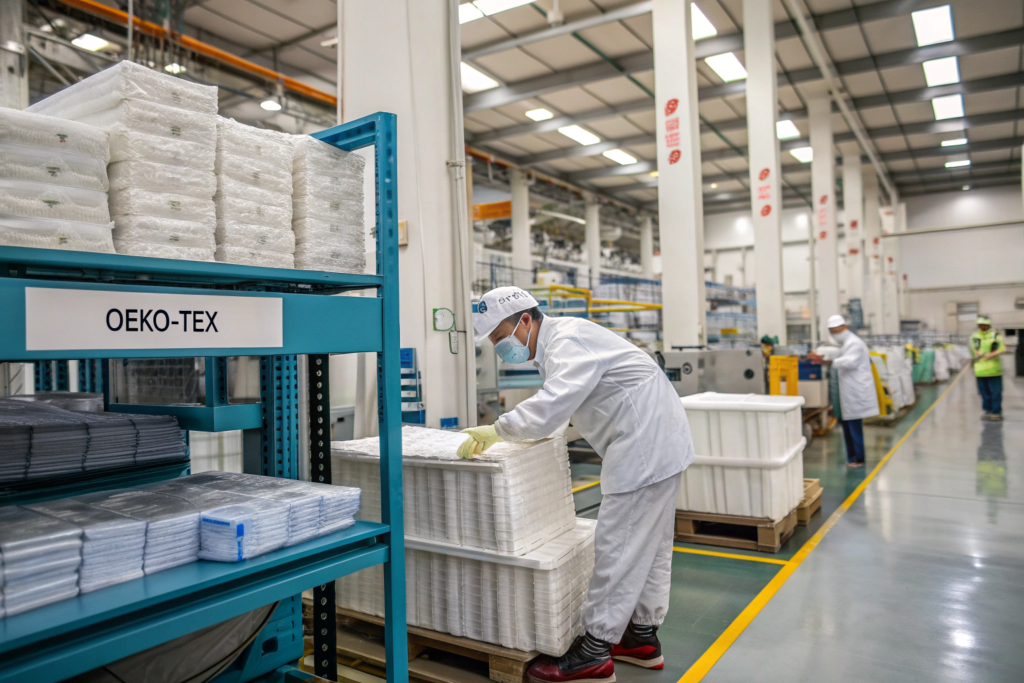
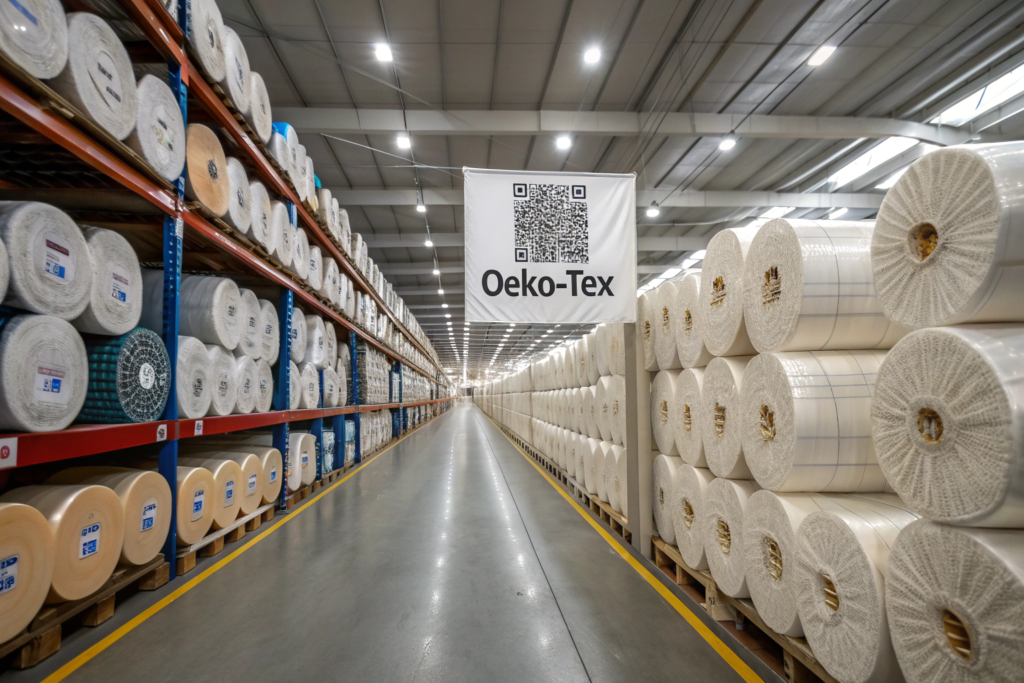
A reliable supplier must have a Quality Management System (QMS) that segregates OEKO-TEX certified materials from non-certified ones in storage and production. They should also use OEKO-TEX approved chemicals in their wet-processing (like washing or finishing) to prevent cross-contamination.
What On-Site or Virtual Audit Questions Reveal This?
- Storage: "Can you show me where you store OEKO-TEX certified fabrics? Are they clearly labeled and separated?"
- Production Flow: "Do you run certified and non-certified orders on the same production lines? If so, what cleaning procedures are in place between runs?"
- Chemical Inventory: "Can you show me the safety data sheets or OEKO-TEX ECO PASSPORT certificates for the dyes, printing inks, and DWR finishes you apply in-house?"
A factory that is serious about certification, like Fumao Clothing, will hold the OEKO-TEX STeP (Sustainable Textile Production) certification for its facility. STeP audits the entire manufacturing process for environmental performance and chemical management, providing a higher level of systemic assurance.
4. The Cost of Assumption vs. The Value of Verification
Assuming your supplier is compliant is a high-risk, low-reward strategy. The cost of verification is minimal compared to the cost of failure.
The financial and reputational risk of shipping non-compliant skiwear includes: customs holds and rejections, retailer chargebacks and lost contracts, costly product recalls, and irreversible brand damage. Investing time in upfront verification is the most effective risk management you can perform.
How to Build Verification into Your Sourcing Workflow?
Make it a formal step in your Critical Path:
- Pre-Sampling Stage: Request potential suppliers' general OEKO-TEX certificates and their policy on material sourcing.
- Development & Prototyping Stage: For your selected styles, obtain the draft list of intended materials and request the corresponding TCs from the supplier.
- Pre-Production Stage: Confirm the finished garment certificate application has been submitted for your new style.
- Pre-Shipment Stage: Verify the final shipment is covered by the valid certificate and request the specific batch test reports.
This process filters out incapable suppliers early and aligns you with professional partners.
Conclusion
The question "Does your supplier use OEKO-TEX certified fabrics and dyes?" should evolve into a qualified statement: "Our supplier provides verifiable, component-level OEKO-TEX certification for all materials and dyes, holds a valid finished garment certificate for our specific product, and manages production under an audited system that ensures integrity."
This level of assurance is not a luxury; it is the standard for responsible sourcing in today's market. It transforms certification from a marketing checkbox into a foundational element of your product's integrity and your brand's promise.
If you seek a partner who provides this level of transparent, systematic verification as a standard service, we are built for this. At Shanghai Fumao, we integrate OEKO-TEX certification at every level—from our material library to our STeP-certified production floors. We welcome your audits and provide the documentation you need to move forward with confidence. Contact our Business Director Elaine at elaine@fumaoclothing.com to receive a sample compliance dossier and start a verified partnership.