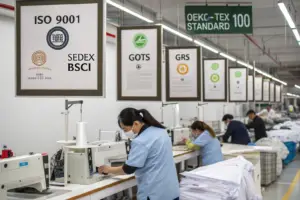
You’ve made OEKO-TEX certification a non-negotiable requirement for your ski apparel line. You’ve received a certificate from a potential supplier. But here’s the uncomfortable truth: Many factories “have” an OEKO-TEX certificate without fully “understanding” the standard. This gap between possession and comprehension is where your brand’s risk lies. A supplier with a superficial grasp can lead to failed shipments, unexpected costs, and reputational damage. So, how can you discern a truly knowledgeable partner from one who just has a piece of paper?
A supplier fully understands the OEKO-TEX standard when they can articulate and demonstrate its integration into their entire operational workflow—from chemical management and supplier vetting to production control and documentation. True understanding is evidenced by proactive systems, not reactive paperwork. It’s the difference between having a certificate and having a certification culture.
Let's define the markers of deep, operational understanding versus superficial compliance. Asking the right questions and observing the right systems will reveal the truth.
What Questions Reveal a Supplier's Depth of Knowledge?
Go beyond "Are you OEKO-TEX certified?" Ask probing questions that test their systemic understanding. Their answers will be telling.
Ask about Scope and Classification:
- "For this ski jacket, which OEKO-TEX Product Class will you apply for, and why?" (A knowledgeable supplier will know a ski shell is typically Class II or III, and a base layer is Class II. They’ll explain the rationale based on skin contact.)
- "Does the certification cover the entire garment (full article), or just the main fabric?" (They must affirm it's for the full article, including zippers, thread, labels, etc.)
Ask about Process and Changes:
- "What is your procedure if a trim supplier changes the formulation of a component you’re using in a certified product?" (The correct answer involves a formal change control process, potential re-submission to the certifying body, and client notification.)
- "How do you ensure batch-to-batch consistency for certified production runs?" (Look for answers about Approved Supplier Lists, Incoming QC checks, and traceability systems.)
Ask about Problem-Solving:
- "Can you give me an example of when a material failed a pre-screening or certification test, and how you resolved it?" (A strong supplier will have a case study, showing problem-solving and a commitment to the standard.)
At Shanghai Fumao, we welcome these questions. For instance, when asked about classification, we explain that while a ski jacket outer layer might be Class III, a lined sleeve or a high-neck collar that touches the skin may require Class II considerations for those components, and we manage this complexity in our submission. This level of detail demonstrates genuine understanding.

What are the red-flag answers?
- Vagueness: "Yes, we are certified for all products." (Certification is product-specific.)
- Confusion on Basics: Mixing up Product Classes or not knowing what a Transaction Certificate is.
- Dismissiveness: "Don't worry, we handle all that." (You must worry and verify.)
- Inability to Provide Documentation Beyond the Main Certificate: No access to test reports, supplier certs, or TCs.
If you hear these, proceed with extreme caution.
How does their understanding of related regulations factor in?
A top-tier supplier understands that OEKO-TEX is a tool for meeting broader regulations. Ask: "How does OEKO-TEX certification help ensure compliance with EU REACH or US CPSIA?" They should be able to explain the overlap and how the certificate serves as evidence. This shows they see the standard in a global context, not as an isolated task.
What Operational Systems Prove Real Understanding?
A certificate on the wall is passive. Integrated systems are active proof of understanding. During a factory audit (virtual or in-person), look for these tangible systems:
- Chemical Management System (CMS): A formal, documented system that includes a Restricted Substances List (RSL) based on OEKO-TEX and other regulations. It should govern the procurement, storage, and use of all chemicals and dyestuffs in the factory.
- Approved Supplier List (ASL) for Materials: A curated list of fabric and trim suppliers who themselves can provide OEKO-TEX component certificates or full test reports. The factory should have a process for vetting and approving new suppliers.
- Incoming Quality Control (IQC) with Testing: Does their QC lab have basic equipment (pH meter, formaldehyde test kits) to screen incoming materials? Do they actually use it to check against certified specifications before the fabric hits the cutting table?
- Material Traceability: Can they track a finished jacket back to the specific batch (lot number) of fabric, zippers, and insulation used? This is critical for issuing accurate Transaction Certificates (TCs) and for recall preparedness.
- Documented Procedures (SOPs): Written Standard Operating Procedures for key processes like "Control of OEKO-TEX Certified Production" or "Handling of Non-Conforming Materials."
A supplier that merely subcontracts certification to a third-party agent and lacks these internal systems does not truly understand or control the standard. They are vulnerable to failures.

What is the role of in-house testing capability?
As discussed in a dedicated article, a supplier with an in-house lab for pre-screening demonstrates a proactive, science-based understanding. It shows they invest in preventing failures rather than just reacting to them. It’s a powerful indicator of deep comprehension and commitment.
How do they handle training?
Ask: "Who is responsible for OEKO-TEX compliance in your factory, and how do you train your production and QC staff?" There should be a designated Chemical Compliance Officer or team, and regular training for relevant staff on the importance of the standard and their role in maintaining it (e.g., not substituting unapproved threads).
How Does Documentation and Communication Demonstrate Mastery?
The way a supplier communicates about certification and the documents they provide are a direct reflection of their understanding.
Mastery is shown through:
- Proactive Provision of TCs: They automatically provide a valid OEKO-TEX Transaction Certificate with every shipment, without you having to chase them. They understand this is the legal proof of compliance for that batch.
- Transparent Test Data: They willingly share summarized test reports from the certification body, not just the pass/fail certificate.
- Clear Communication on Validity and Renewal: They notify you well in advance of certificate expiration and manage the renewal process seamlessly.
- Ability to Explain Complexities: They can clearly explain scenarios like: "Your design uses a laminated fabric and a separate printed logo. We will need to certify the laminate from Mill A and the print paste from Supplier B as components, then submit the finished garment for full article certification."
Lack of understanding is shown through:
- Providing only a generic, company-level certificate that doesn't list your specific product.
- Hesitation or delay in providing TCs or test reports.
- Confusion about the difference between a component certificate and a finished article certificate.
At Shanghai Fumao, our documentation package is systematic. For each certified order, the client receives a digital dossier with the TC, relevant test summaries, and a compliance statement. We see this as part of the product delivery, not an add-on service.

What Are the Real-World Consequences of a Misinformed Supplier?
Partnering with a supplier who doesn't fully grasp the standard is a high-risk strategy with concrete negative outcomes:
- Certification Failures and Delays: Their lack of control over materials leads to a failed test at the official lab, setting your launch timeline back by months.
- Inconsistent or Invalid Certificates: They might ship goods that don't match the certified sample, or provide TCs that don't accurately reflect the batch, putting you in legal jeopardy with customs and retailers.
- Unexpected Costs: You bear the cost of re-testing, re-production, air freight to catch deadlines, and potential penalties for late delivery to your customers.
- Reputational Catastrophe: If non-compliant products reach the market under your brand, the fallout from a recall or negative publicity can be brand-ending.
Understanding the standard is not academic; it's a practical shield against these business threats. A supplier’s comprehension is your first line of defense.
How to Vet and Cultivate a Truly Knowledgeable Partner?
Your sourcing process must include a compliance competency assessment.
- Include Technical Questions in Your RFQ: Embed the questions from Section 1 into your initial sourcing documents.
- Request a Compliance Audit: Ask for a virtual tour focusing on their QC lab, chemical storage, and document control room. Ask to see examples of their ASL, CMS, and a sample TC.
- Check References: Speak to their other clients who require OEKO-TEX. Ask about the supplier's responsiveness, problem-solving, and reliability on certification matters.
- Start with a Pilot Project: Before committing to a full collection, run a smaller, certified order. Assess their performance on documentation, communication, and on-time delivery of compliant goods.
By taking these steps, you move from hoping your supplier understands to knowing they do.
Conclusion
In the world of certified ski apparel, your supplier’s depth of understanding of the OEKO-TEX standard is not a minor detail—it is the foundation of your product’s integrity and your brand’s credibility. A fully comprehending partner operates with integrated systems, proactive communication, and a culture of compliance that turns the certificate from a static document into a dynamic guarantee.
Don’t settle for a supplier who just has a certificate. Demand a partner who lives the standard. Your brand’s safety, timeline, and reputation depend on it.
Ensure your supply chain is built on expertise, not just paperwork. Partner with Shanghai Fumao, where OEKO-TEX understanding is engineered into every process. Contact our Business Director, Elaine, to experience partnership with a manufacturer who truly masters the standard. Reach her at elaine@fumaoclothing.com.