As a brand owner sourcing from China, you’re juggling a dozen details: fabric quality, stitching, fit, timelines. The last thing you want is another vendor to manage for packaging. You wonder: “Can my clothing factory just handle everything—labels, tags, polybags, boxes—so the goods arrive 100% ready to sell or ship to my customers?” Dealing with separate packaging suppliers adds complexity, risk, and often, hidden costs that erode your margin.
Yes, a professional full-service clothing factory in China like Shanghai Fumao absolutely handles full packaging as a core part of our service. We manage the complete process: from sourcing and producing custom labels, hangtags, and polybags to folding, tagging, and packing garments into branded or export-ready cartons. We deliver a turnkey product, eliminating the need for you to coordinate with multiple suppliers or handle repackaging.
Full packaging capability is a hallmark of a mature, brand-oriented manufacturer. It’s not an add-on; it’s integrated into the production flow to ensure efficiency, brand consistency, and cost control. Let’s detail what “full packaging” truly entails and why it’s a critical service for brands of all sizes.
What Exactly Is Included in “Full Packaging” Service?
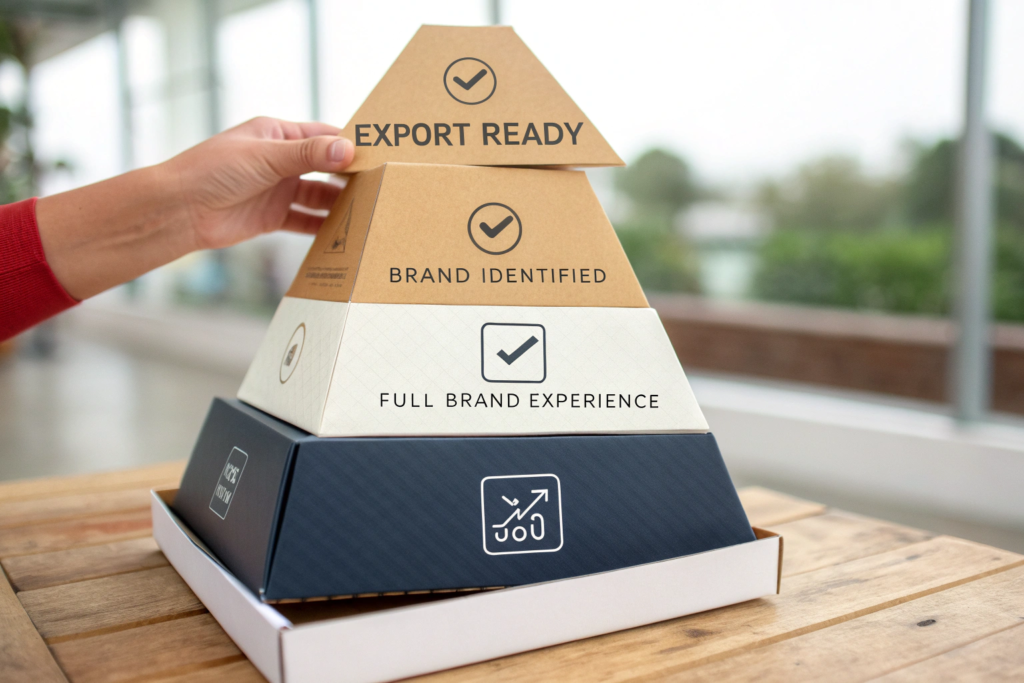
The term “full packaging” can be vague. In our operational language, it means assuming responsibility for every physical element of the product from the stitch outward. This is a tiered system, from basic export packaging to complete branded presentation.
Our full packaging service includes three integrated levels: 1) Basic Export Packaging (plain polybags, standard cartons); 2) Custom Branding (woven labels, printed care labels, hangtags); and 3) Complete Branded Packaging (custom printed polybags, tissue paper, stickers, branded shipping cartons). Clients choose the level that matches their brand stage and budget.
What is Standard in “Basic Export Packaging”?
Even at the most basic level, we ensure goods are protected for international shipping. This includes:
- Individual Polybagging: Each garment is placed in a clear LDPE/OPP polybag to guard against dust, moisture, and dirt during transit.
- Standard Cartoning: Garments are neatly folded, polybagged, and packed into strong, 5-ply corrugated export cartons. Carton size is optimized to fit the garment and maximize container space.
- Basic Labels: A legally compliant care/content label is attached (with fiber content, care instructions, origin).
This ensures your goods arrive undamaged, which is the absolute minimum requirement.
How Does Custom Branding Integration Work?
This is where we become a brand partner. You provide the artwork, and we manage the entire supply chain for:
- Woven & Printed Labels: Sourced from specialized mills, sewn in at the correct point in production.
- Hangtags: Designed and printed, attached with strings, pins, or fasteners.
- Custom Packaging Components: Sourced and produced, then fed into the packing line.
The key is synchronization. Our production planning schedules label and tag manufacturing to arrive just as the garments are ready for finishing, avoiding delays. For a recent client’s launch, we coordinated the production of 5 different custom hangtags and 3 label types across 15 styles, ensuring all elements were ready simultaneously.
How Does Integrated Full Packaging Save You Time and Money?
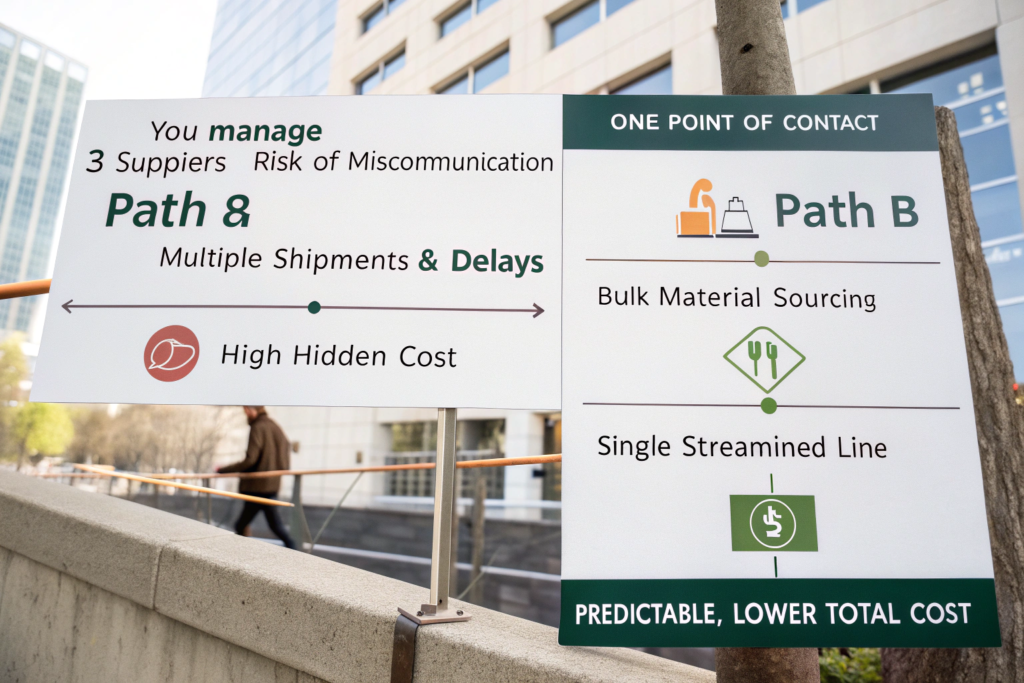
Managing packaging separately seems cheaper at first glance, but the hidden costs of time, errors, and logistical friction are substantial. Consolidating everything with your factory converts variable, unpredictable costs into a fixed, optimized line item.
Integrated full packaging saves time by eliminating weeks of coordination and multiple supplier management. It saves money by leveraging the factory’s bulk purchasing power with material suppliers, optimizing labor efficiency on a single production line, and preventing costly errors or delays from miscommunication between separate vendors.
What Are the Real Cost Savings?
- Volume Discounts: We order polybag film, cardboard, and label fabric by the ton for all our clients, passing on lower unit costs.
- Eliminated Middleman Margins: You avoid the markup a standalone packaging company would add.
- Reduced Freight Costs: Shipping labels and tags separately from another province or country incurs cost. We produce or source locally within our ecosystem.
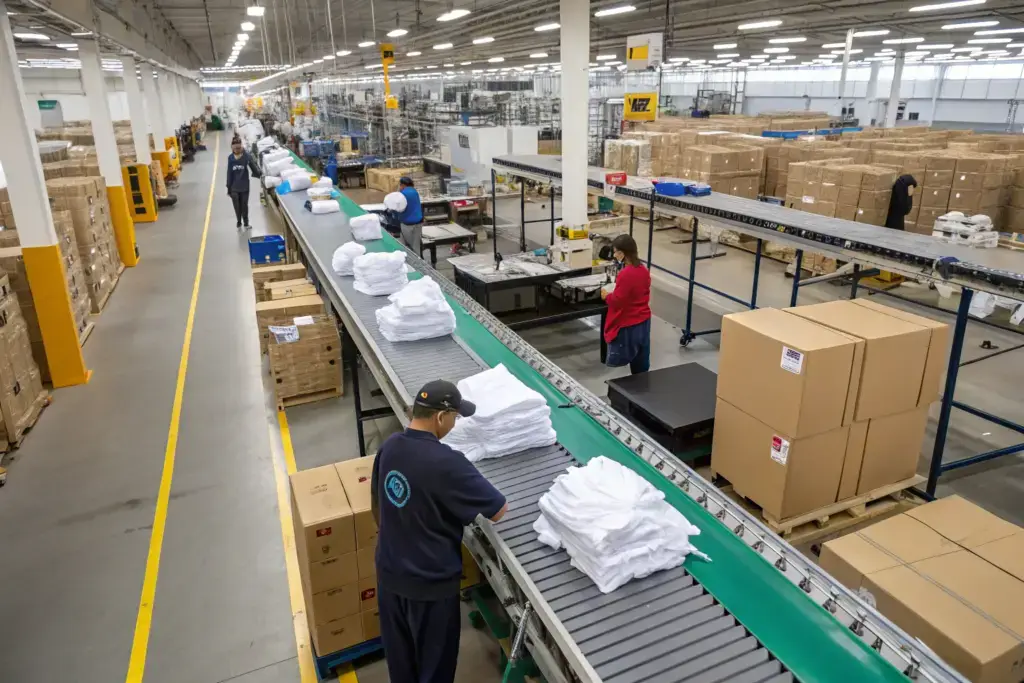
- Labor Efficiency: Attaching labels and packaging on the same line where the garment is made is exponentially faster than doing it in a separate location later.
A client previously sourced hangtags from a domestic printer and shipped them to China, paying extra for air freight and customs. By switching to our full service, their per-tag cost dropped 40%, and they gained two weeks in lead time.
How Does It Prevent Costly Errors?
When you email packaging specs to a separate supplier, a miscommunication can lead to 10,000 wrong hangtags. When the factory handles it, the specs are part of the master tech pack. Our QC checks labels and packaging against the approved prototype as part of the in-line inspection. If something is wrong, we catch it and correct it immediately, at our cost. This centralized control is invaluable.
How Does It Ensure Brand Consistency and Quality Control?
Brand consistency is about every detail matching your vision. When multiple vendors interpret your brand guidelines, inconsistencies creep in—colors that don’t match, fonts that are slightly off, logos with incorrect proportions.
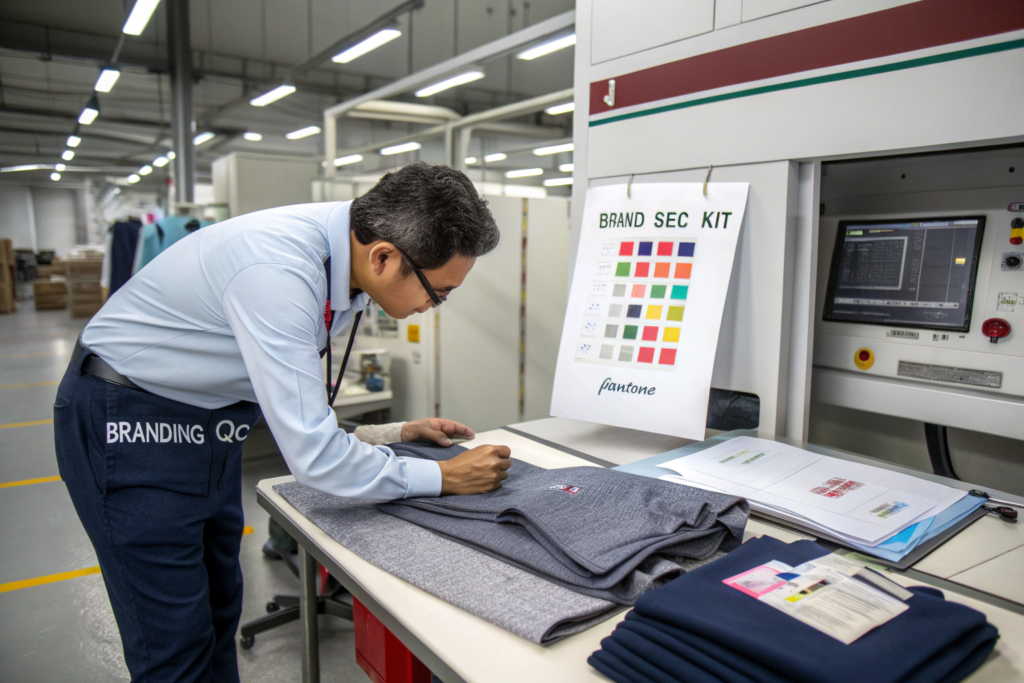
Integrated full packaging ensures brand consistency by applying one set of master artwork files (with specified Pantone colors) across all elements, under one quality management system. Our QC team inspects not just the garment, but the correctness and application of every label, tag, and package component before sealing the carton.
What is the Process for Artwork Approval?
We have a structured approval pipeline:
- Digital Proof: You approve artwork for labels and tags.
- Lab Dip/Physical Sample: For woven labels, we provide fabric-color samples. For hangtags, we provide a physical dummy.
- Pre-Production Sample (PP Sample): You receive a complete garment with all branding applied for final sign-off.
This process guarantees that what you approve is what you get in bulk. Last quarter, this process caught a subtle error where a recycled symbol icon was missing from the hangtag proof for a sustainable brand—a critical detail for their messaging.
How is Packaging Quality Assured?
We don’t just accept materials from our subsuppliers. We test carton burst strength, check polybag seal integrity, and ensure hangtags are cut cleanly. Packaging is a part of the product we deliver, and its quality reflects on us. A client in the luxury knitwear space requires specific, thick tissue paper and custom cloth bags. We source and fold these to their exact standard, ensuring the unboxing matches the product’s high value.
What Are the Logistics and Shipping Advantages?
From a logistics perspective, receiving a fully finished, packed, and cartoned product simplifies everything that happens after the goods leave the factory door.
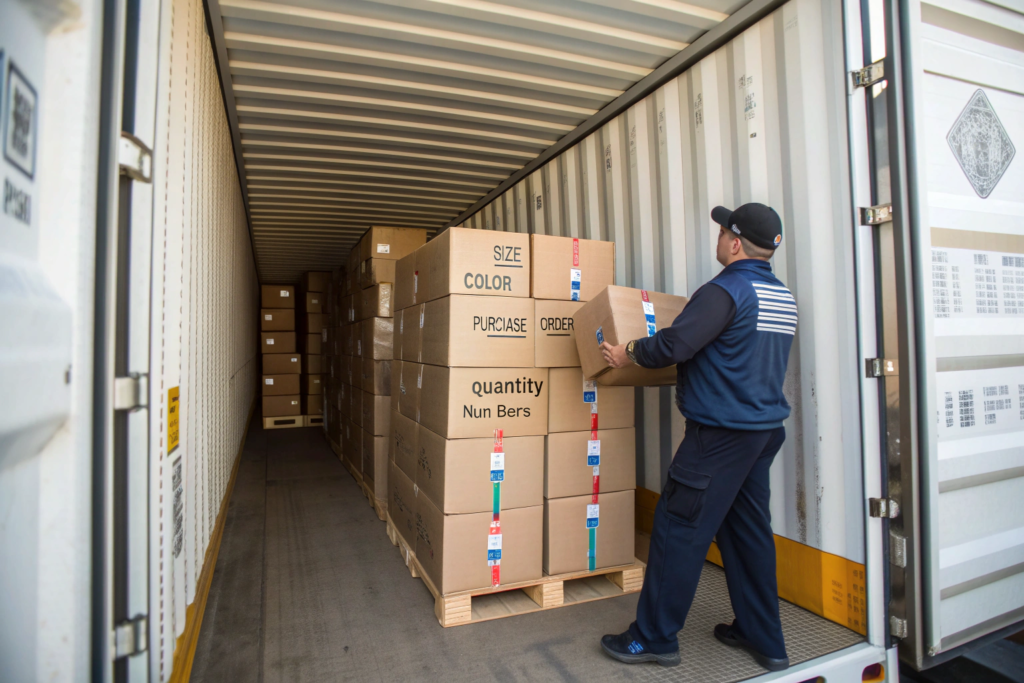
The logistics advantages are significant: standardized carton sizes and weights enable optimal container and pallet loading (reducing shipping costs), clear external carton markings (with your PO#/SKU) streamline warehouse receiving, and comprehensive responsibility up to the point of shipment (under FOB) or delivery (under DDP) reduces your management burden.
How Does It Optimize Shipping Costs?
By controlling the entire pack, we can perform cartonization optimization. We determine the most space-efficient way to fold and box each garment style, then use that data to design custom carton sizes. This minimizes wasted space (known as “air”), which reduces dimensional weight (DIM weight) charges—a major cost in shipping. For a wholesale client, we redesigned their carton for jeans, saving them over $0.15 per unit in ocean freight due to better container utilization.
How Does It Simplify Your Warehouse Operations?
When cartons arrive at your warehouse with clear, accurate exterior labeling, your team can identify and put away inventory quickly, often without opening every box. This speeds up receiving, improves inventory accuracy, and gets your products to market faster. It’s a seamless handoff from our production line to your supply chain.
Conclusion
The question isn’t just whether a China clothing factory handles full packaging, but how well they integrate it into their core service. At Shanghai Fumao, full packaging is not a side business; it’s a fundamental part of our commitment to delivering a complete, market-ready product. We eliminate the friction and risk of multi-vendor coordination, ensure unwavering brand consistency, and unlock hidden efficiencies that save you time and money.
Choosing a manufacturer with this capability means you are choosing a true partner invested in the success of your final product, not just the stitches in the seam. It’s the difference between sourcing a component and launching a brand.
If you want to streamline your supply chain and ensure your product arrives perfectly branded and ready for its journey to the customer, let’s discuss your full packaging needs. Contact our Business Director, Elaine, at elaine@fumaoclothing.com.