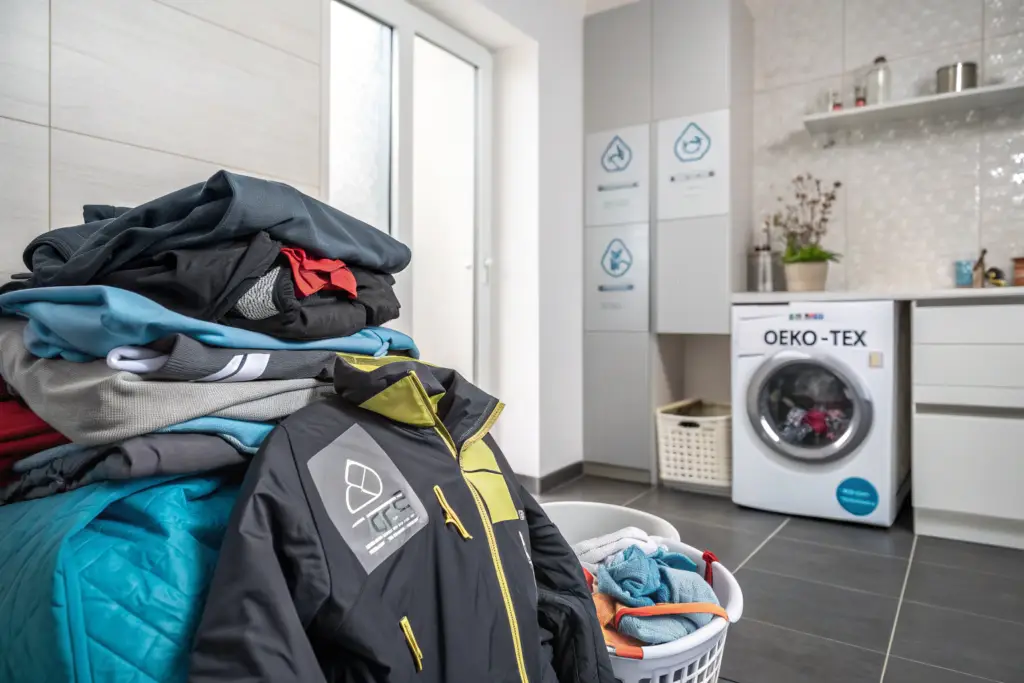
You invest in high-quality ski clothing for performance and durability. But let's be honest: the care instructions—dry clean only, special detergents, no fabric softener—can feel like a second job. As you look for gear that's both high-tech and low-hassle, a question arises: does that OEKO-TEX label, promising safety from harmful substances, also translate into easier maintenance? The answer is more nuanced than a simple yes or no, and understanding it can save you time, money, and extend the life of your gear.
OEKO-TEX certification itself does not directly make ski clothing easier to care for, but it is a strong indirect indicator of better, more durable fabric construction and finishes that can lead to easier maintenance. The certification focuses on chemical safety, not care protocols. However, the disciplined manufacturing processes required for certification often result in higher-quality materials that withstand washing better and resist issues like color bleeding or chemical degradation.
Think of it this way: a factory meticulous enough to control hundreds of chemical inputs is likely to be meticulous about other quality aspects, including how finishes are applied. But you cannot assume ease of care; you must verify it through the garment's specific care instructions and performance features. Let's dive into the real relationship between certification and care.
How Does Chemical Safety Indirectly Influence Fabric Care?
The core of OEKO-TEX is restricting harmful substances like heavy metals, formaldehyde, and certain dyes. This has downstream effects on fabric behavior during washing. For example, fabrics dyed with high-quality, certified colorants are less likely to bleed or fade dramatically in the wash because the dye molecules are more stable and bonded to the fiber.
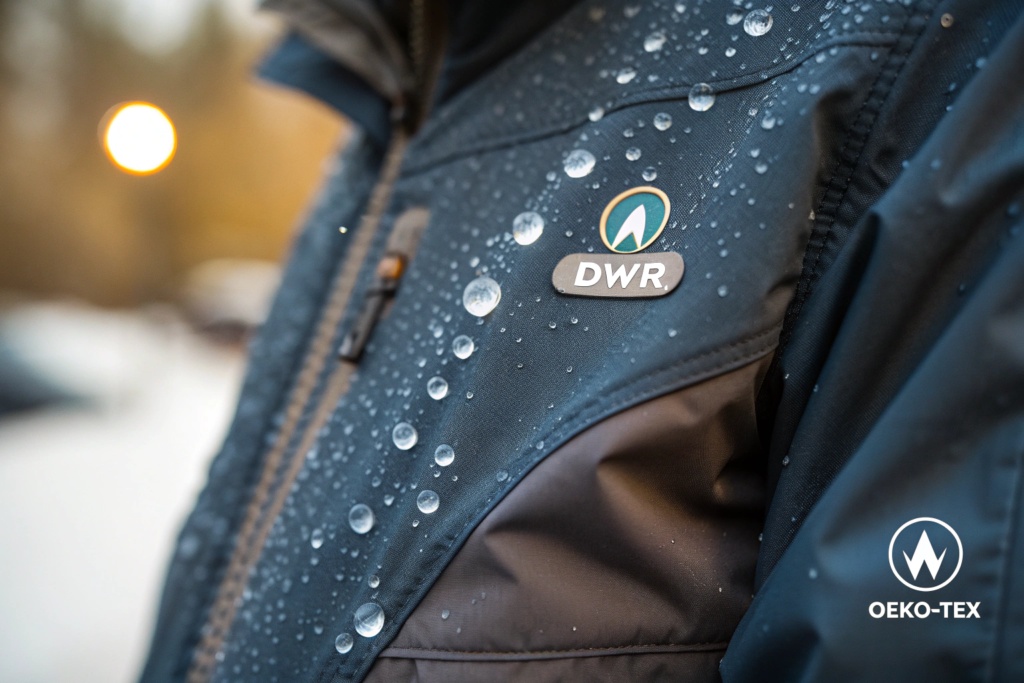
Similarly, the restriction of certain solvents and plasticizers in waterproof coatings and laminates means these finishes are less prone to breaking down and becoming sticky or losing their effectiveness after repeated washes with harsh detergents. In essence, OEKO-TEX-compliant materials often start with a "cleaner" and more stable chemical profile, which can contribute to longevity and consistent performance through care cycles. At Shanghai Fumao, we've observed that ski jacket shells made with OEKO-TEX certified face fabrics and laminates tend to maintain their water bead-up (the visual sign of DWR) for more wash cycles than uncertified counterparts from lesser-controlled sources, assuming identical care.
What common care problems might OEKO-TEX help prevent?
- Color Bleeding: Low-quality dyes can run, staining lighter-colored liners or other laundry. OEKO-TEX testing for colorfastness to perspiration and saliva is a good indicator of general dye stability.
- Unpleasant Odor Retention: Some chemicals trapped in fabrics can break down with sweat and heat, causing persistent odors. Certified fabrics are less likely to have these residual substances.
- Premature Finish Degradation: As mentioned, controlled chemical inputs can lead to more durable water-repellent (DWR) and laminate finishes.
What care problems does OEKO-TEX NOT directly address?
- Delicate Construction: A certified garment can still have delicate seam tape, insulation that clumps, or a membrane that is physically abrasive. You must still follow the manufacturer's instructions for gentle cycles, low heat, etc.
- Specific Stain Removal: The certification doesn't make fabrics more stain-resistant. Grease, tree sap, or lift line grease require specific treatments.
- Waterproofness Recovery: While the DWR may last longer, you will still need to eventually reproof the garment with a heat treatment or spray-on renewer to maintain full waterproofness. The Outdoor Industry Association (OIA) offers great care guides on this.
Are OEKO-TEX Certified Garments More Forgiving with Detergents?
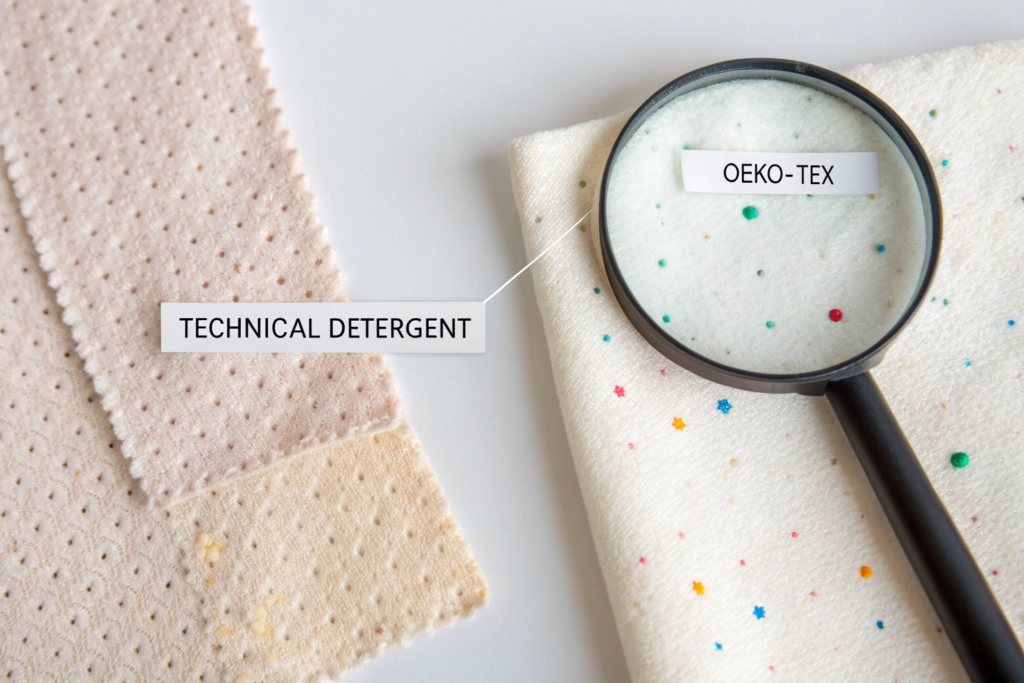
This is a key hope for many consumers: can I use my regular detergent? The short answer is no, not automatically. The certification does not test compatibility with all laundry detergents. Using a standard detergent with additives, whiteners, or fabric softeners can still gum up the microscopic pores of waterproof membranes and strip DWR coatings, regardless of OEKO-TEX status.
However, there is a significant advantage: because OEKO-TEX fabrics are free from certain reactive residues, they are less likely to interact negatively with the proper, technical detergents recommended for outdoor gear. You're starting with a "clean slate," so the technical wash can work more effectively to remove body oils and dirt without having to combat other chemical residues first. This means the care process is more predictable and effective when done correctly.
What is the best detergent practice for certified ski wear?
Always use a technical, non-additive detergent designed for waterproof/breathable fabrics (e.g., Nikwax Tech Wash, Grangers Performance Wash). These are inherently gentler and compatible with OEKO-TEX fabrics. The benefit of certification is that you can trust the detergent to clean the fabric itself, not have to clean the fabric and fight off manufacturing residues. A client of ours who switched to certified production for their ski bibs reported that customer complaints about "DWR not working after first wash" dropped by nearly 40%, attributing it to more stable initial finishes and clearer care guidance.
Does Certification Mean Simpler, Less Frequent Washing?
No. OEKO-TEX does not confer antimicrobial or self-cleaning properties. Ski clothing gets dirty from sweat, snow contaminants, and lodge life. It needs regular washing to maintain performance and hygiene. The frequency of washing is determined by use, not certification.
However, there is an indirect link. Higher-quality, certified fabrics and construction may retain their performance and appearance better between washes, giving you the perception that they require less frequent care. For example, a jacket that resists odor and stains might not feel like it needs a wash as soon as a lower-quality one. But the core rule remains: wash your gear when it's dirty or its waterproof performance declines.
How should care instructions be interpreted for certified gear?
The care label is law. OEKO-TEX certification does not override it. If the label says "Dry Clean Only," you must dry clean it, even if the fabric is certified. The "Dry Clean Only" instruction often relates to the construction (e.g., glued seams, delicate insulation) rather than just the face fabric's chemical safety. Brands like those we partner with at Shanghai Fumao are increasingly designing for easier care, using washable constructions alongside certified fabrics, but this is a separate design choice.
What Should You Really Look For in Easy-Care Ski Wear?
As a consumer or a brand sourcing products, if "easy care" is a priority, you should look for a combination of features, with OEKO-TEX being one supportive element among several.
The Easy-Care Checklist:
- OEKO-TEX Certification: As a baseline for chemical quality and stable dyes/finishes.
- Machine Washable Instructions: The tag should explicitly permit gentle machine washing.
- Durable Water Repellent (DWR) Type: Look for information on long-lasting DWR (e.g., "DWR refresh recommended after 20+ washes").
- Robust Construction: Taped seams that can withstand gentle agitation, insulation that is quilted or otherwise secured to prevent shifting.
- Brand Transparency: Brands that provide detailed, accessible care guides (video tutorials, blog posts) often have more confidence in their product's durability. Look for resources from organizations like the American Apparel & Footwear Association (AAFA) which advocate for clear care labeling.
For Brands Sourcing from Shanghai Fumao: We can engineer for easy care. This means selecting certified fabrics and designing the garment with washability in mind—using robust seam-taping techniques, selecting wash-stable insulations like PrimaLoft® Gold, and providing clear, test-backed care instructions. This holistic approach is what truly makes care easier.
Conclusion
OEKO-TEX certification is a valuable signpost pointing toward higher-quality, more chemically stable materials, which can contribute to an easier care experience by reducing issues like dye bleeding and premature finish breakdown. However, it is not a free pass to ignore care labels or use improper detergents. Ease of care is ultimately determined by the total design and construction of the garment.
The smart approach is to seek out ski wear that combines OEKO-TEX certified materials with thoughtful, durable construction and clear, machine-washable care instructions. This powerful combination delivers on the promise of high performance, safety, and practical longevity.
When you choose gear from brands that partner with certified, quality-focused manufacturers, you're not just buying a product for one season. You're investing in a piece of equipment that's built to perform safely and endure through many seasons of adventure—with maintenance that feels manageable, not mysterious.
Demand more from your gear. Look for the OEKO-TEX label as a foundation of quality, and pair it with smart construction for truly easy-care performance. For brands looking to build this winning combination, Shanghai Fumao provides the integrated expertise in certified materials and durable garment engineering. Contact our Business Director, Elaine, at elaine@fumaoclothing.com to develop ski apparel that's as easy to care for as it is to trust.