You've placed a large order for your new women's wear collection. The samples are perfect, the bulk production is complete, and everything is packed and ready to go. But then, a last-minute panic hits: "What about the hangers? Do my suppliers handle that?" This small detail can cause a huge logistical headache, delaying your store launch and frustrating your retail partners.
Yes, at Shanghai Fumao, we provide comprehensive hanger supply and integration services for all our women's wear shipments. As a full-package apparel manufacturer, we manage every detail from fabric to final presentation. This includes sourcing, coordinating, and packing garment-specific hangers with your shipments, ensuring your products arrive retail-ready.
Hangers are far from just a minor accessory. They are a critical part of the retail experience, impacting brand perception, store operations, and even garment quality during transit. Let's explore why this service is essential and how the right manufacturing partner handles it seamlessly.
What Are the Benefits of Including Hangers in Garment Shipments?
Adding hangers might seem like an extra cost and complication. However, omitting them often leads to higher hidden costs and operational chaos for brands. The benefits of including hangers directly in your shipment from the manufacturer are substantial and touch every part of your business.
Including hangers in your garment shipments from the source offers three core benefits: it preserves garment quality during transit, significantly speeds up warehouse and store processing times, and delivers a consistent, premium unboxing experience that reinforces your brand identity from the moment the box is opened.
Dive Deeper Paragraph: The advantages break down into clear operational and brand categories. Let's examine the specific impacts.
How Do Hangers Protect Garments During Long Shipping Routes?
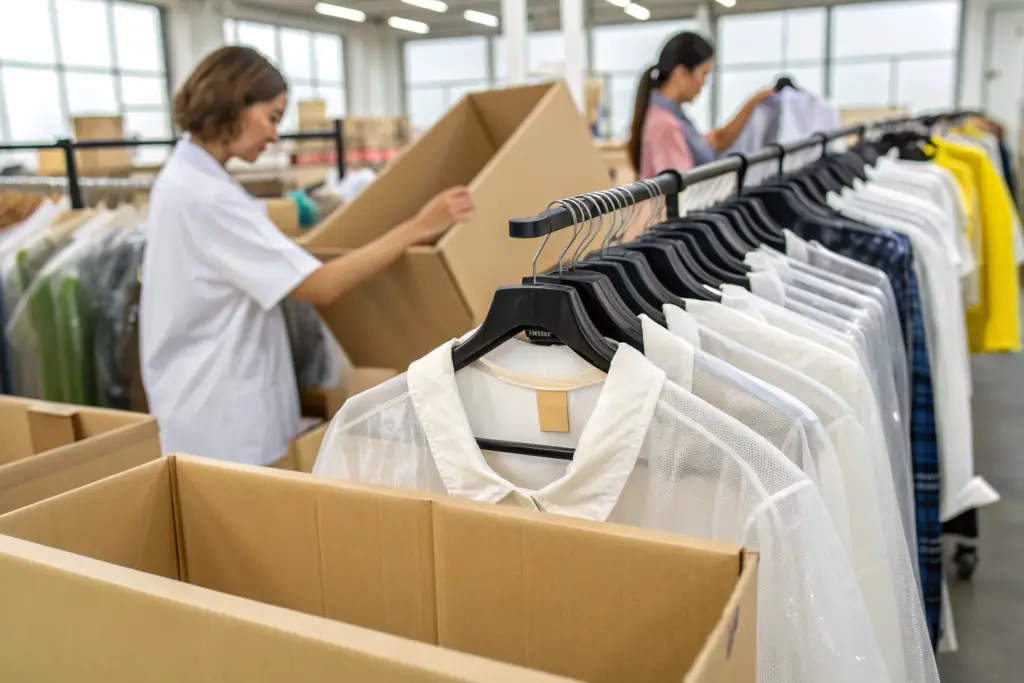
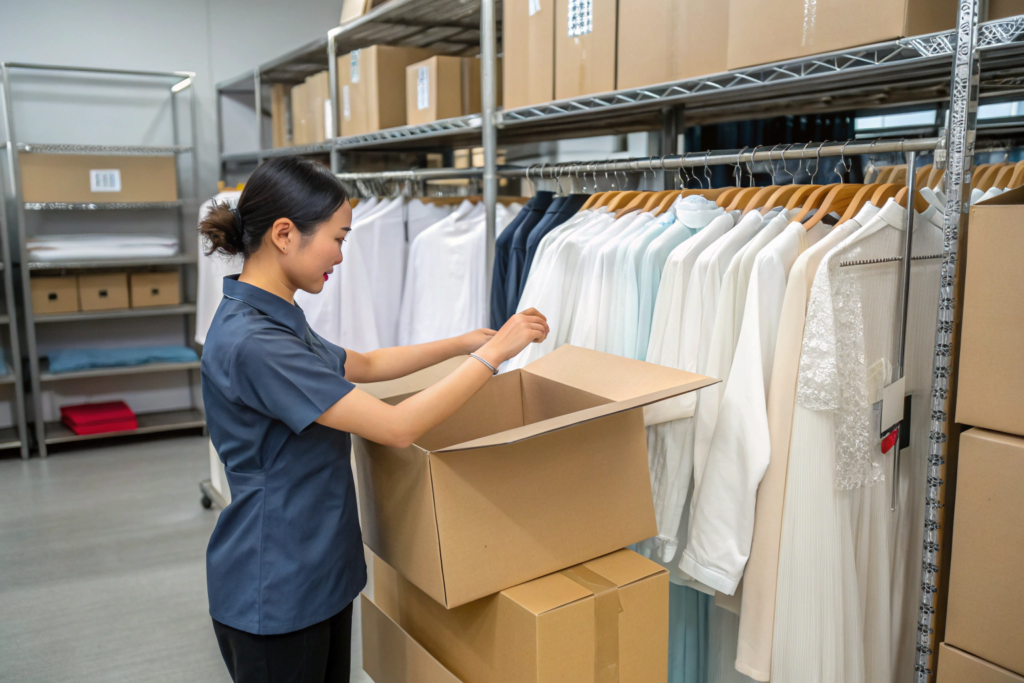
Garments packed flat are prone to deep, stubborn wrinkles. For delicate women's wear items like silk blouses or lined blazers, these wrinkles can be difficult to remove without professional steaming, adding cost. Garments on hangers, especially in wardrobe-style shipping containers, are suspended and travel with minimal compression. Last year, we shipped a collection of structured satin dresses for a Miami-based brand. By using reinforced hangers and breathable garment bags inside the container, the dresses arrived at their flagship store in pristine, ready-to-sell condition. This method eliminated the need for costly post-shipment pressing and reduced the risk of fabric distortion, a common issue noted in discussions about garment quality control.
What Is the True Cost Savings in Store Labor and Processing?
The financial math is compelling. Consider the store labor required to unbox hundreds of flat-packed garments, steam each one, find appropriate hangers in the backroom, and then hang them. This process can take 5-10 minutes per garment. If your shipment contains 500 units, that's over 80 hours of labor. When garments arrive on the correct hangers, staff can simply transfer them from the shipping box directly to the sales floor. For a mid-sized retailer, this efficiency can save thousands of dollars per shipment in labor costs, directly improving their profit margins in retail. It's a value-add that savvy brand owners immediately recognize.
How Do You Source the Right Hangers for Different Women's Wear Items?
Not all hangers are created equal. Using a flimsy, thin-wire hanger for a heavy wool coat is a recipe for disaster, just as a bulky wooden hanger can distort the shoulders of a delicate camisole. Sourcing the right type is a specialized task that requires material knowledge and an understanding of garment construction.
Sourcing the right hangers involves matching the hanger's material, shape, and strength to the specific garment type. This ensures optimal garment presentation, longevity on the rack, and safe transportation. A professional manufacturer leverages its supply chain to find the perfect match for each item in your line.
Dive Deeper Paragraph: The selection process is technical. We typically categorize hangers and match them to garments as follows:
| Garment Type | Recommended Hanger Type | Key Features & Reasons |
|---|---|---|
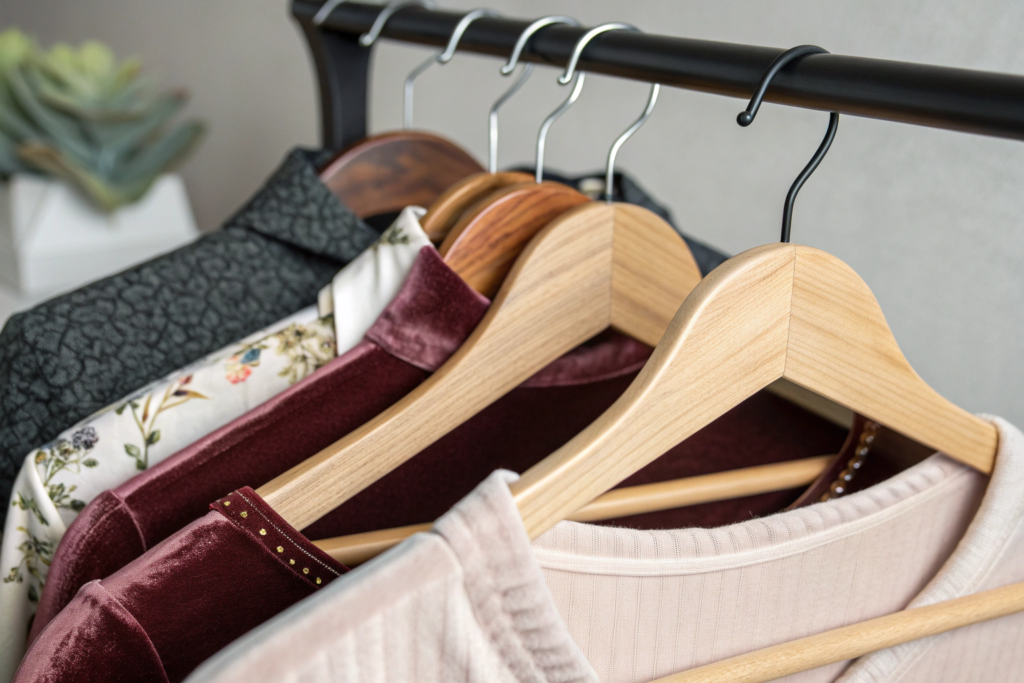
| Delicate Blouses / Silks | Padded (Velvet/Satin) Hangers | Non-slip surface, prevents shoulder bumps, premium feel. |
| Structured Blazers / Coats | Contoured Wooden Hangers | Broad, shaped shoulders maintain garment structure, sturdy. |
| Knitwear / T-shirts | Rounded Plastic Hangers | Smooth, rounded edges prevent stretching or "shoulder horns". |
| Strappy Tops / Dresses | Hangers with Clips or Notches | Secures straps, prevents garments from slipping off. |
Why Is Hanger Material Critical for Garment Integrity?
The material directly interacts with your product. Low-grade plastic can degrade and become sticky, leaving residues on light-colored fabrics. Cheap wood may have splinters or off-gassing odors. We work with certified suppliers who provide hangers made from sustainable materials like recycled plastics or FSC-certified wood. For instance, we recently sourced custom, branded recycled plastic hangers for an eco-conscious activewear line. This not only supported the brand's values but also ensured the hangers were durable and chemically inert, protecting the technical fabrics. This attention to detail is part of a holistic apparel sourcing strategy.
How Can You Customize Hangers for Branding?
Hangers are a powerful, in-store branding tool. Customization options include:
- Logo Printing/Embossing: Adding your logo directly onto the hanger.
- Custom Colors: Matching hanger color to your brand's palette.
- Shape & Thickness: Designing a unique silhouette that becomes synonymous with your brand.
We manage this entire customization process. A client from California wanted a signature lavender-colored, velvet-padded hanger with a discreetly embossed logo for their luxury loungewear. We coordinated with the hanger factory, managed sample approvals, and ensured the final products were packed with the corresponding garments, elevating their brand identity development at the point of sale.
What Logistics Are Involved in Shipping Garments with Hangers?
Simply throwing hangers into a box with garments isn't enough. Efficient and safe logistics require specific packing methods and container optimization to avoid damage and control costs. This is where a manufacturer's expertise becomes invaluable.
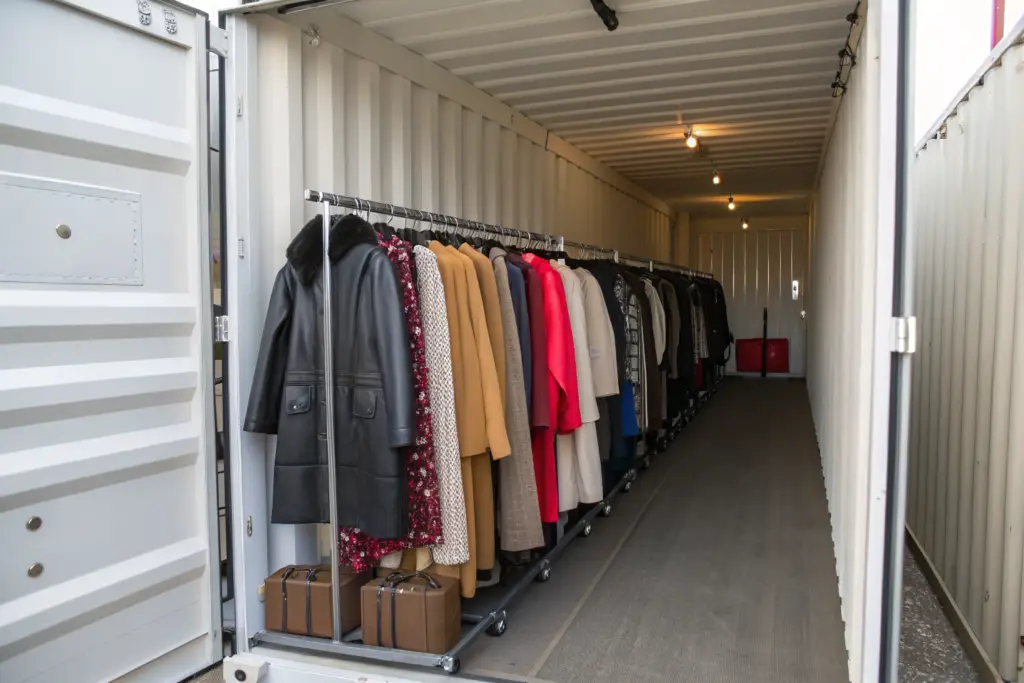
The key logistics involve specialized packing methods—primarily wardrobe (hangar) containers or specially designed cartons—and precise coordination to optimize container space and weight distribution. This ensures garments arrive securely without incurring excessive shipping costs.
Dive Deeper Paragraph: There are two main methods, each with its own considerations.
When Should You Use Wardrobe Containers Versus Boxed Hanger Packs?
The choice depends on garment value, volume, and budget.
- Wardrobe Containers (Garment-on-Hanger/GOH): Garments travel hanging on a built-in rail. This is ideal for high-value, wrinkle-prone items like suits, formal dresses, or heavy coats. It offers the highest level of protection but uses more space. We helped a bridal wear importer switch to GOH shipping for their gowns, which reduced their in-country preparation time by 70% and virtually eliminated customer complaints about creases.
- Boxed Hanger Packs: Garments are placed on hangers and then carefully laid flat in reinforced cartons. This is a cost-effective hybrid for items like knitwear, denim, and casual tops. The hangers are included and attached, but the method uses space more efficiently than GOH. Proper execution is key to preventing tangles and damage, a common logistics challenge in fashion that we have systems to overcome.
How Does This Affect Shipping Volume, Weight, and Cost?
Adding hangers increases both volume and weight, which impacts freight cost calculations. A professional factory will conduct a pre-shipment audit. We calculate the dimensional weight of cartons with hangers, optimize packing density, and provide transparent cost breakdowns. For example, we might suggest bundling certain low-priority items flat and shipping high-margin items on hangers to balance cost and benefit. Our goal at Shanghai Fumao is always to find the most efficient and effective solution, not to apply a one-size-fits-all approach that wastes your money.
How Can a Manufacturer Ensure Reliable Hanger Supply and On-Time Delivery?
The biggest fear for a brand owner isn't just cost—it's uncertainty. Will the hangers arrive with the goods? Will they be the right ones? A delayed hanger order can hold up an entire shipment, causing you to miss a crucial selling season.
A reliable manufacturer ensures on-time delivery by integrating hanger sourcing into the core production timeline, maintaining vetted supplier relationships for quality and speed, and implementing rigorous in-line packing quality checks to catch issues before the carton is sealed.
Dive Deeper Paragraph: Reliability is built on process, not promises.
Why Is Integrating Hanger Lead Time into Production Critical?
Hanger production and customization have their own lead times, often 4-6 weeks. A professional factory plans this in parallel with fabric sourcing and production. We create a unified critical path schedule where the hanger delivery date is synchronized with the finished goods packing date. This prevents the "finished goods waiting for hangers" scenario. We learned this lesson early on; a delayed logo print on hangers for a client's spring line nearly caused a shipment delay. We now build in a two-week buffer and order hangers the moment the production order is confirmed.
What Quality Checks Are Needed for Hangers and Packing?
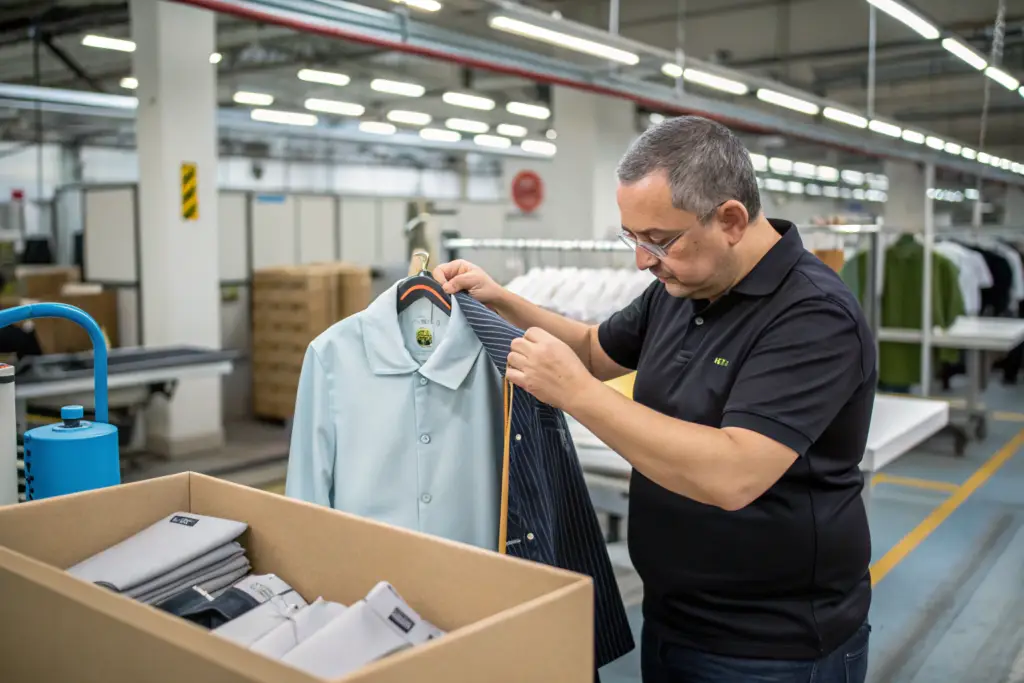
Quality control must include the accessories. Our inspectors check:
- Hanger integrity (no cracks, smooth surfaces).
- Correct style and color match to the purchase order.
- Secure attachment of the garment to the hanger (using ties or clips).
- Proper positioning inside the carton to prevent movement.
This meticulous process ensures the entire product—garment and hanger—meets the standards you expect. It’s this level of thoroughness in full-package manufacturing that builds long-term trust and prevents the certificate falsification or corner-cutting that plagues some importers.
Conclusion
Partnering with a manufacturer who understands and expertly manages the intricacies of hanger supply is a strategic advantage. It transforms a potential logistical headache into a seamless extension of your brand's quality and efficiency. From protecting your garments and saving your retail partners time and money, to enhancing your brand image on the sales floor, the right hanger service is a hallmark of a true full-package supplier.
At Shanghai Fumao, we go beyond just making great clothing. We manage the complete journey, ensuring every detail, down to the hanger, is executed flawlessly. We become your dependable manufacturing and logistics partner, dedicated to bringing your women's wear collections to market successfully and stress-free. If you're looking for a partner who pays attention to the critical details that drive retail success, let's discuss your next project. For detailed inquiries on our full-package services, please contact our Business Director, Elaine, at elaine@fumaoclothing.com. We are ready to help you deliver excellence, from our production line to your sales floor.