The email arrived with excitement and urgency: "I have these amazing sketches and detailed descriptions! Can you make my collection?" Attached were five beautifully rendered fashion illustrations and two pages of passionate descriptions about the "flowy fabric," "perfect drape," and "elegant silhouette." The designer's vision was clear, but our production team had more questions than answers. This scenario repeats weekly, and the honest answer is more complex than a simple yes or no.
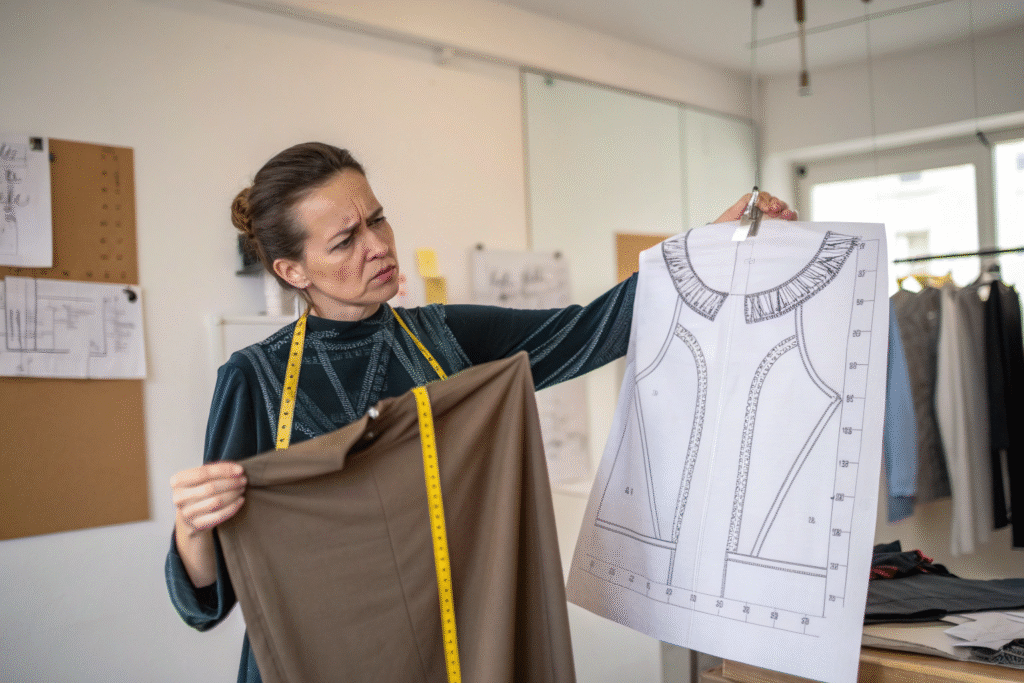
Technically, yes, we can attempt to make your clothes with just a sketch and description, but the results will almost certainly disappoint you. While sketches and descriptions communicate aesthetic vision, they lack the technical specifications, precise measurements, material details, and construction requirements necessary for consistent, high-quality manufacturing. The process becomes a costly guessing game that typically requires multiple sampling rounds and often yields garments that don't match your expectations.
Think of your sketch as showing us the destination and your description as telling us about the journey, but without a tech pack (your manufacturing GPS), we're navigating without directions. We might eventually arrive somewhere, but it's unlikely to be exactly where you envisioned. Let me explain why relying solely on these creative tools leads to manufacturing challenges and how we can bridge the gap between your vision and production reality.
What critical information is missing from sketches and descriptions?
Creative visuals and narratives excel at communicating aesthetic direction but fail to provide the technical data required for precise manufacturing.
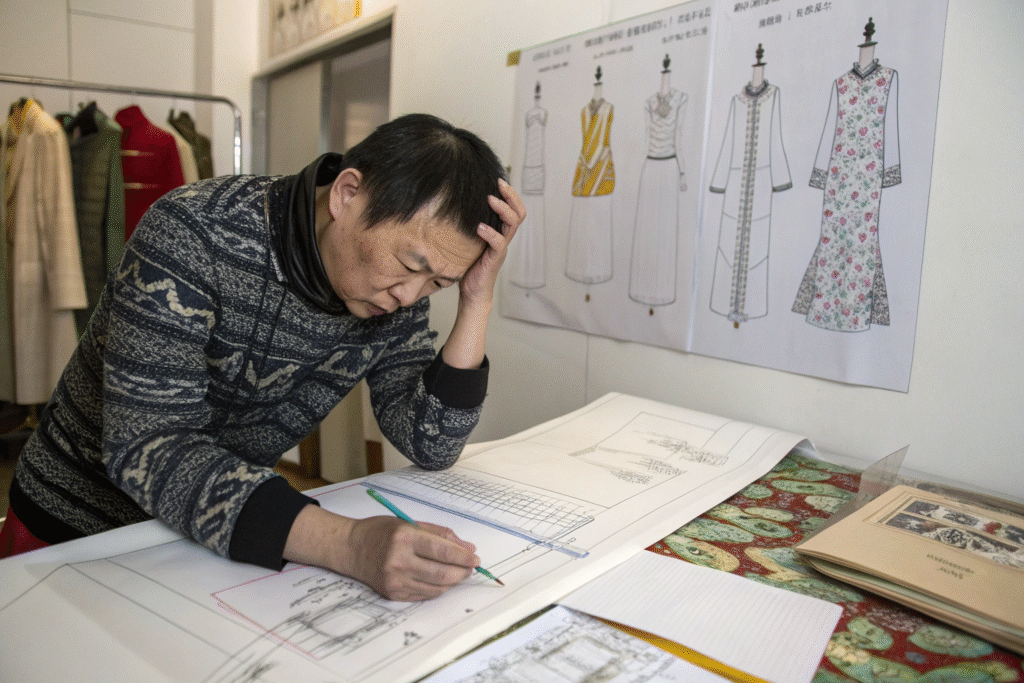
Your beautifully rendered sketch shows style and attitude, while your description conveys emotion and intention. However, manufacturing requires cold, hard facts and precise numbers. The gap between these two worlds is where most manufacturing disappointments occur. Last month, a client provided a stunning sketch of a "draped cocktail dress" with descriptions of "elegant movement" and "luxurious handfeel." The resulting three sampling rounds cost $2,800 and never captured the precise drape and structure she envisioned because we lacked technical construction details.
What manufacturing questions can't sketches answer?
Critical missing information includes:
- Exact garment measurements for each size
- Seam allowance specifications
- Stitch types and densities for different areas
- Fabric weight, composition, and performance requirements
- Construction methods and sequence
How do descriptions fail to communicate technical requirements?
Common description limitations:
- "Flowy fabric" doesn't specify weight, drape coefficient, or composition
- "Structured fit" doesn't provide measurement specifications
- "High-quality finish" doesn't define stitch density or seam treatments
- "Luxurious handfeel" doesn't indicate GSM or fiber content
- "Perfect drape" doesn't specify bias cutting or construction techniques
What are the practical consequences of working without technical specs?
The manufacturing process becomes inefficient, expensive, and unpredictable when factories must interpret rather than execute precise instructions.
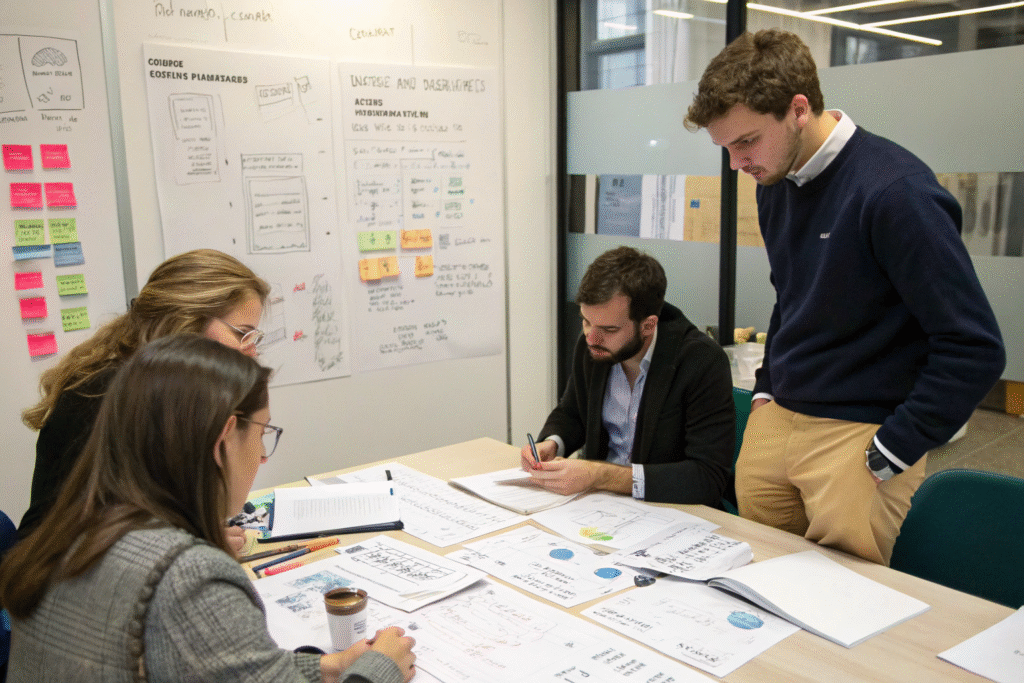
When we work from sketches and descriptions alone, every team member must make assumptions about your unspecified requirements. These assumptions accumulate throughout the production process, resulting in samples that may capture the aesthetic spirit but miss the technical execution. A startup brand recently learned this lesson when their "tailored blazer" description resulted in samples with three different interpretations of "tailored," none of which matched their vision, requiring four sampling rounds and pushing their launch back by ten weeks.
How does sampling become inefficient?
The interpretation process leads to:
- Multiple sample rounds to refine misunderstood elements
- Increasing costs with each iteration ($300-$800 per sample)
- Extended timelines (2-3 weeks per sampling cycle)
- Frustration for both designer and manufacturer
- Compromised design elements to accommodate manufacturing limitations
What quality risks emerge?
Without precise specifications:
- Different operators interpret instructions differently
- Material substitutions may compromise design intent
- Construction methods may not achieve desired results
- Sizing inconsistencies develop across production runs
- Quality standards become subjective and inconsistent
How can we bridge the gap between your vision and manufacturing reality?
Practical solutions exist to transform your sketches and descriptions into manufacturable specifications without requiring technical expertise.
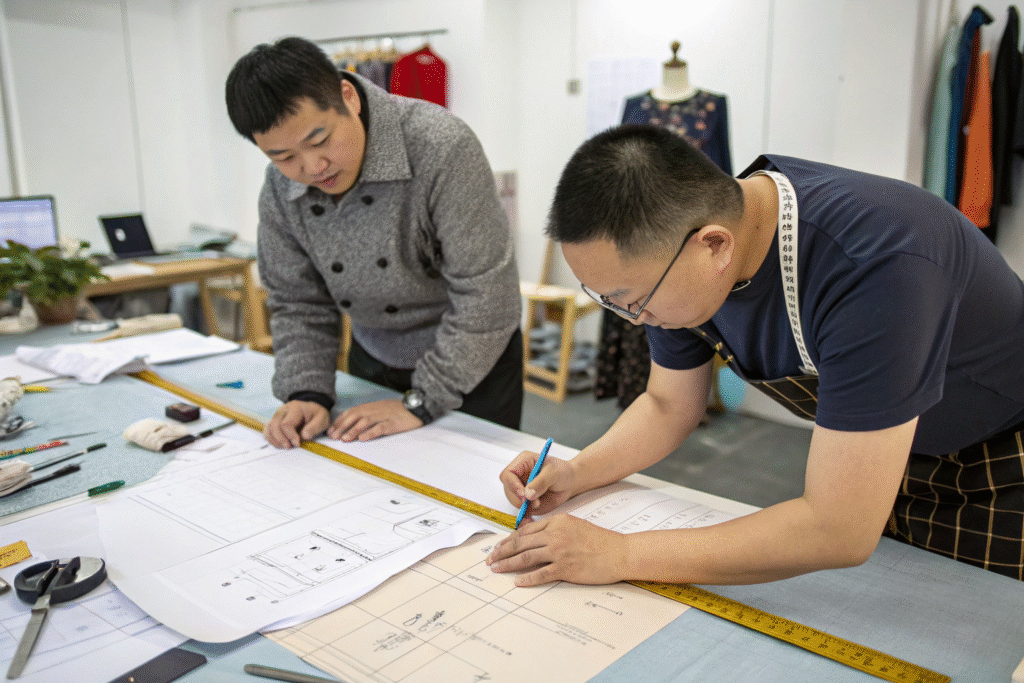
The good news is that you don't need to become a technical expert to get your designs manufactured accurately. Several approaches can help translate your creative vision into the precise language manufacturers need. We've helped hundreds of designers navigate this transition successfully, often developing their first proper specifications from initial sketches and descriptions.
What immediate steps can improve communication?
While developing full tech packs:
- Provide reference garments with similar elements
- Include photographic examples of desired details
- Specify must-have features vs. nice-to-have elements
- Identify similar commercial products as references
- Create simple measurement references for key areas
How can manufacturers help interpret your vision?
Progressive manufacturers like ours offer:
- Technical consultation to clarify ambiguous elements
- Sample development with iterative refinement
- Fabric recommendations based on your descriptions
- Pattern development from your sketches and references
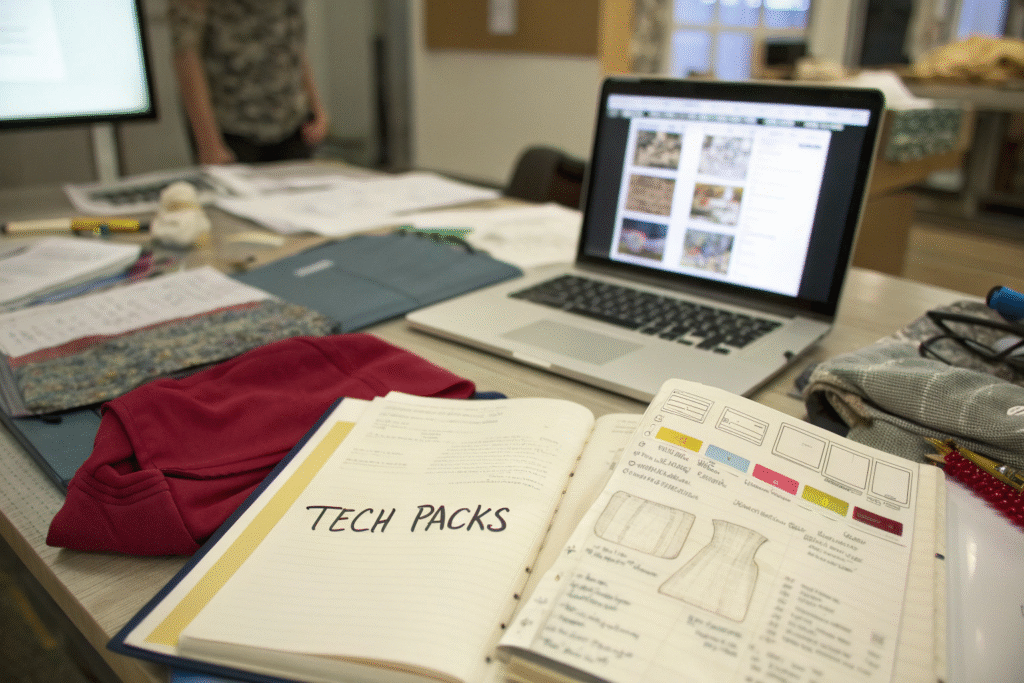
- Tech pack creation services from your initial concepts
What is the realistic timeline and cost impact?
Working from sketches and descriptions significantly extends timelines and increases costs through multiple revisions and clarifications.
The apparent time savings of skipping technical documentation disappears quickly when calculated against extended sampling cycles and production delays. What seems like a shortcut becomes a detour that costs both time and money. We recently analyzed our project data and found that designs starting with sketches alone required 3.8 sampling rounds on average, while tech-pack-supported projects averaged 1.4 rounds.
How do timelines extend without specifications?
Typical delays include:
- 2-3 weeks for initial pattern development from interpretations
- 2-3 weeks per sample round (3.8 rounds average)
- 1-2 weeks for material sourcing without precise specifications
- 1-2 weeks for clarification cycles across time zones
- 1 week for production setup without clear instructions
What are the actual cost implications?
Hidden costs accumulate through:
- Sampling costs: $300-$800 per sample × 3.8 rounds
- Material waste from incorrect assumptions
- Labor costs for rework and redevelopment
- Opportunity costs from delayed market entry
- Potential lost sales from missed seasons
| Development Phase | Sketches Only | With Tech Pack |
|---|---|---|
| Average Sampling Rounds | 3.8 rounds | 1.4 rounds |
| Development Timeline | 10-14 weeks | 4-6 weeks |
| Sampling Costs | $1,140-$3,040 | $420-$1,120 |
| First Sample Accuracy | 25-35% | 85-95% |
| Production Error Rate | 8-12% | 2-4% |
What success stories exist with sketch-based starts?
While challenging, some brands successfully transition from sketches to production through collaborative approaches and incremental improvement.
Despite the challenges, we've helped numerous brands successfully launch collections that began as sketches and descriptions. The key differentiator was their willingness to collaborate, learn, and invest in the specification development process. A sustainable activewear brand started with hand-drawn sketches and evolved to comprehensive tech packs over their first three collections, now achieving 95% first-sample accuracy.
What approaches lead to successful outcomes?
Successful strategies include:
- Starting with simpler designs to learn the process
- Investing in technical consultation early
- Being actively involved in sample review and refinement
- Developing specifications iteratively with each sample
- Building long-term relationships with manufacturing partners
How can you gradually develop technical capabilities?
Progressive learning paths:
- Begin with basic measurement specifications
- Add construction details with each sampling round
- Develop material specifications through testing
- Create technical flats from approved samples
- Build complete tech packs for reorders
What is the recommended path forward?
A balanced approach that honors your creative process while acknowledging manufacturing realities delivers the best outcomes.
The most successful designers maintain their creative vision while understanding and respecting the manufacturing process. This balanced approach produces collections that are both beautiful and producible, visionary and consistent. If you're working with sketches and descriptions, here's how to proceed effectively.
What immediate actions should you take?
To maximize success:
- Acknowledge the limitations of sketches and descriptions
- Budget for additional sampling rounds
- Plan for extended development timelines
- Engage your manufacturer's technical team early
- Document learning from each sample iteration
How can we help you transition effectively?
Our support options include:
- Technical analysis of your sketches and descriptions
- Sample development with detailed feedback
- Progressive tech pack development
- Manufacturing education and guidance
- Flexible approaches matching your development stage
Conclusion
While we can attempt to make your clothes with just a sketch and description, the results will likely involve significant extra time, cost, and frustration compared to starting with proper technical specifications. The most successful approach combines your creative vision with manufacturing reality by gradually developing the technical documentation that ensures your designs are produced accurately and consistently. Your sketches and descriptions are the perfect starting point—they just need translation into the language of manufacturing.
If you're ready to transform your sketches into producible garments, our technical team can help bridge the gap between your creative vision and manufacturing execution. Contact our Business Director Elaine to discuss a practical approach that respects your creative process while ensuring manufacturing success at elaine@fumaoclothing.com.