For emerging and niche ski brands, the dream of launching a unique, responsibly-made product line often clashes with the perceived realities of manufacturing. A common assumption is that high-level certifications like OEKO-TEX® STANDARD 100 are exclusive to large-scale, mass production runs. This belief stops many ambitious brands from even inquiring, leaving them to choose between their values and their viability. The critical question becomes: is it logistically and financially possible to produce a small, custom order that also carries this gold standard of safety certification when sourcing from China?
Yes, small-batch custom orders can absolutely be OEKO-TEX® certified from China, but success hinges on partnering with a manufacturer that has pre-certified material inventories, an integrated certification management system, and the expertise to guide you through a cost-effective pathway tailored for lower volumes. The certification applies to the product and its components, not the factory size. Therefore, a manufacturer who has already invested in building a library of certified fabrics and trims can efficiently assemble your small batch without the prohibitive cost of certifying a brand-new, unique fabric from scratch for a single, small order.
At Shanghai Fumao, we recently partnered with a startup founded by two professional ski guides to produce their first-ever line of 500-unit, custom-designed merino-blend base layers. Their core demand was OEKO-TEX® Class I certification. By guiding them to select from our existing portfolio of pre-certified performance fabrics and matching trims, we were able to produce their fully customized (color, fit, branding) order with full certification. The total per-unit cost increase for certification was under 8%, which they seamlessly folded into their premium branding. They launched with a powerful "small batch, big standards" story that directly fueled their successful crowdfunding campaign. This proves that scale is not a barrier; strategy is.
What Is the Real Cost Structure for Certifying a Small Batch?
The financial feasibility is the foremost concern. The cost of certification is not a simple flat fee added to each unit; it's a layered structure that can be optimized for small batches through smart planning.
The real cost structure for OEKO-TEX® certification in small batches breaks down into material premiums, testing fees, and potential surcharges. The dominant cost driver is the certification status of the raw materials, not the final garment testing. If every component (fabric, thread, elastic, zipper) is already certified, the final product certification is often a streamlined and less expensive process of verification and a possible audit. If you require a unique, uncertified fabric, the mill must certify it—a cost typically amortized over huge volumes, making it prohibitive for small batches.
Here’s a simplified cost breakdown model for a 500-unit order:
| Cost Component | Scenario A: Using Pre-Certified Materials | Scenario B: Requiring New Fabric Certification |
|---|---|---|
| Fabric Premium | 5-15% higher cost per meter vs. non-certified equivalent. | Very High. Mill may charge a one-time certification fee of $2,000-$5,000+ to be borne entirely by your order, plus the fabric premium. |
| Trim/Component Premium | 3-10% premium for certified threads, elastics, etc. | Same as Scenario A, if trims are new, same high fee applies. |
| Final Product Testing/Audit Fee | Relatively low. Factory's annual license may cover it, or a small per-style fee ($500-$1,500). | High. Requires full testing of the new fabric and final garment, potentially exceeding $3,000. |
| Total Impact per Unit | Moderate, manageable (e.g., $1.50 - $4.00/unit). | Prohibitive (could add $10-$20+ per unit), often doubling the garment cost. |
The clear strategy for small batches is to fall into Scenario A. This requires flexibility in fabric selection but preserves design customization in cut, color (from certified dyed lots), and branding.
How Do MOQs for Certified Fabrics Impact Small Orders?
Minimum Order Quantities (MOQs) are a reality, but they are often misunderstood.
- Mill-Level Fabric MOQ: This is the biggest hurdle. A fabric mill might have an MOQ of 1,000-5,000 meters per color/type for producing certified fabric. A small brand cannot meet this.
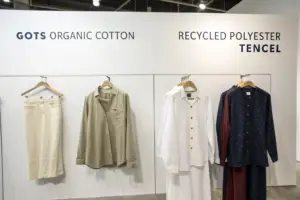
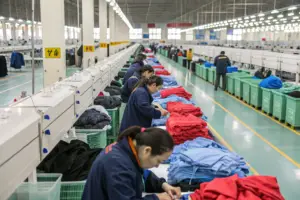
- The Manufacturer's Role: This is where the right partner is crucial. A manufacturer like Shanghai Fumao acts as a consolidator. We place large quarterly orders for staple certified fabrics (e.g., specific weights of polyester, nylon, merino blends) from our partner mills, stocking an inventory of "greige" (undyed) or standard-color certified fabrics. We then dye or finish smaller lots to a brand's custom color from this pre-certified base. This allows us to offer MOQs as low as 300-500 garments per style, using certified materials.
- Trim MOQs: Similar logic applies. We stock certified sewing threads and common elastics, eliminating MOQ issues for these components.
The key question for a brand is: "Do you have an inventory of pre-certified fabrics I can choose from for my custom design?" A yes indicates a partner structured for small-batch certified production.
While there is no formal "group buy" for OEKO-TEX® certification, the manufacturer's model described above is effectively a shared system. The mill's certification is shared among all the manufacturer's clients who use that fabric. The manufacturer's factory certification (which covers processes) is shared among all orders produced there.
However, your brand name appears on the OEKO-TEX® certificate for the final product only if you are the applicant and pay for that specific certificate. For marketing purposes, this is vital. A credible manufacturer will facilitate you obtaining your own certificate for your specific product style, even for a small batch, by including your order under their testing protocol and licensing agreement. You should receive a certificate with your company name and product description. Always request a sample certificate from a potential supplier to verify this.
How to Find a Chinese Manufacturer Equipped for Small-Batch Certification?
Not all factories are created equal. Finding the right partner requires targeting suppliers whose business model and infrastructure align with the needs of low-volume, high-standard production.
To find a Chinese manufacturer equipped for small-batch OEKO-TEX® certification, you must target suppliers who explicitly market to small/medium brands, have transparent evidence of pre-certified material stocks, and offer a guided, consultative approach rather than just transactional pricing. Avoid large mass-production factories geared toward fast-fashion giants; instead, seek out specialized, agile manufacturers in clusters known for quality, like those focused on technical sportswear.
A strategic sourcing approach involves:
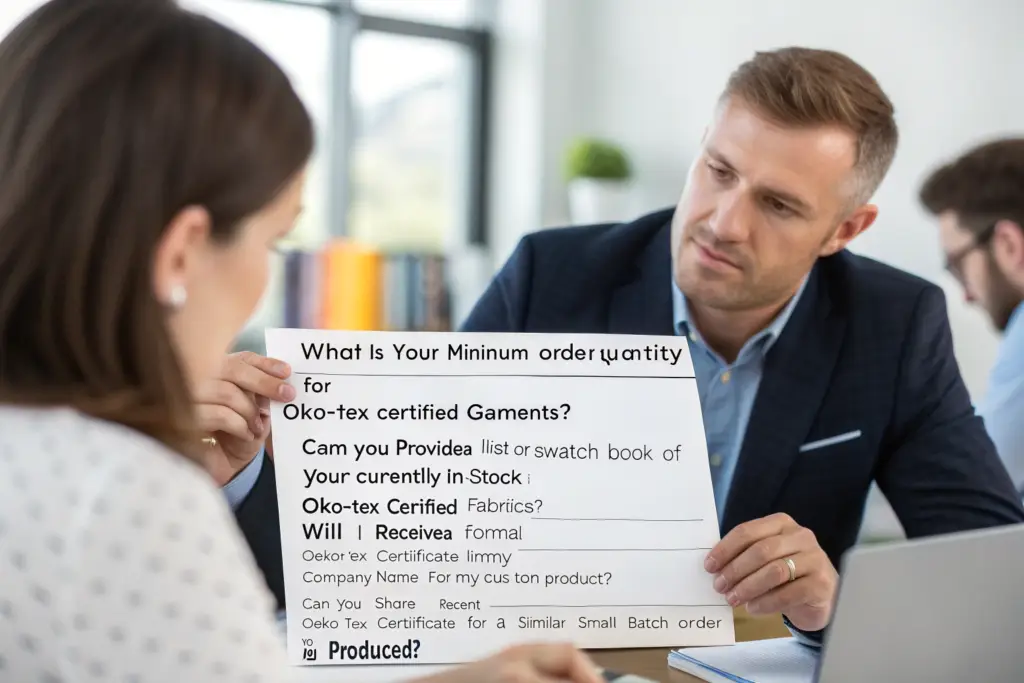
- Pre-Qualify with Specific Questions: In your first inquiry, ask:
- "What is your minimum order quantity for OEKO-TEX® certified garments?"
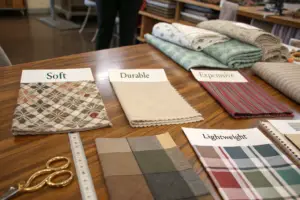
- "Can you provide a list or swatch book of your currently in-stock OEKO-TEX® certified fabrics?"
- "Will I receive a formal OEKO-TEX® certificate in my company name for my custom product?"
- "Can you share a recent OEKO-TEX® certificate for a similar small-batch order you produced?"
- Verify Authenticity: Use the OEKO-TEX® online certification database to check the validity of any certificate number they provide.
- Assess Communication: A partner good with small batches will act as a consultant. They should ask about your brand, target market, and performance needs to recommend the most suitable certified materials from their portfolio, balancing cost and function. At Shanghai Fumao, this consultative sourcing process is built into our service for emerging brands.
What Are the Key Red Flags and Green Flags in a Supplier?
Evaluating responses is critical to avoid costly mistakes.
| Green Flags | Red Flags |
|---|---|
| Quickly provides swatches with OEKO-TEX® hangtags attached. | Says "all our fabrics are OEKO-TEX®" but cannot show any certificates or tags. |
| Explains the difference between Class I, II, and III and advises which is best for your product. | Cannot explain product classes or insists you don't need a high class for base layers. |
| Offers a clear, itemized cost breakdown showing the "certification premium" separately. | Gives one lump sum price and is vague about what the certification cost covers. |
| Has a dedicated QC/Compliance manager you can speak to. | All communication is only through a sales rep with no technical backup. |
| Welcomes a pre-production audit or offers a virtual factory tour. | Is hesitant or refuses to show their facility or processes. |
What Does the Practical Process Look Like, Step-by-Step?
A transparent process minimizes surprises. Here’s what a typical successful small-batch project entails:
- Consultation & Material Selection: You choose from the manufacturer's library of certified fabrics and trims. You finalize design, fit, and color (selected from the mill's certified dye range).
- Quotation & Agreement: You receive a detailed quote including fabric, manufacturing, certification management, and testing fees. A contract is signed.
- Pre-Production Verification: The manufacturer provides lab test reports or certificate excerpts for the chosen materials. You approve.
- Sample Development: Prototypes are made using the exact certified materials. This stage is crucial for fit and function.
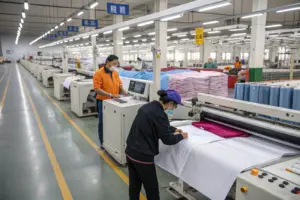
- Production & In-Process Testing: The factory cuts and sews your batch. They conduct internal quality checks aligned with certification requirements.
- Final Certification Issuance: Upon completion, and often after the independent institute conducts an annual audit of the factory’s output, you receive your OEKO-TEX® certificate for the finished goods. Your order may be shipped before you have the physical certificate, but the certification claim is valid as the materials and processes are controlled.
What Are the Marketing and Business Advantages for a Small Brand?
Achieving OEKO-TEX® certification on a small batch is more than a compliance task; it is a foundational business and branding strategy that can propel a startup ahead of established competitors.
For a small brand, OEKO-TEX® certification provides a disproportionate competitive advantage by enabling premium pricing, building immediate consumer trust that bypasses years of brand-building, creating compelling storytelling content, and satisfying the stringent vendor requirements of quality-conscious retailers. In a crowded digital marketplace, it serves as an instant signal of credibility and seriousness. It tells your customers that you care deeply about the integrity of your product, allowing you to compete on values, not just volume.
This advantage manifests in several key areas:
- Crowdfunding & Direct-to-Consumer Sales: Certification is a powerful pledge item and trust signal on platforms like Kickstarter. Backers are investing in potential, and a recognized safety standard mitigates their perceived risk.
- Wholesale Onboarding: Boutique and specialty retailers are increasingly required to vet their suppliers for product safety. Walking in with an OEKO-TEX® certified product instantly checks a major box, making you a lower-risk, more attractive vendor.
- Brand Narrative: It provides an authentic, science-backed story. You can talk about your "quest for certified materials" and "partnering with ethical manufacturers," which resonates deeply with today's conscious consumers. This directly supports a sustainable branding strategy.
- Future-Proofing: As you scale, your supply chain and quality standards are already established at the highest level, preventing painful and expensive re-engineering later.
How to Leverage This in Your Launch Marketing?
Integrate the certification into every part of your launch:
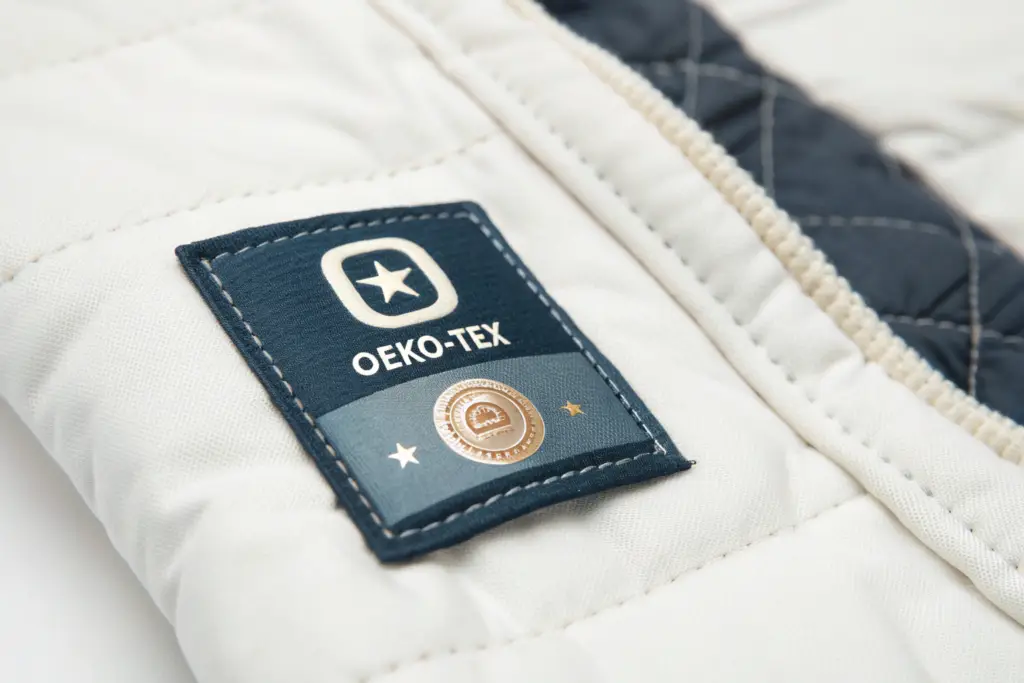
- Product Page Hero: "Small Batch. Certified Pure. Built for the Peak." Feature the OEKO-TEX® label prominently in photography.
- "Our Materials" Story: Create a dedicated page or video explaining why you went through the effort to certify a small batch, introducing your manufacturing partner’s role. This builds transparent supply chain appeal.
- Press & Influencer Kits: Include a simple fact sheet explaining the certification. It gives reviewers and influencers a credible, easy-to-talk-about feature.
- Social Proof: In early customer reviews, ask about comfort and confidence. Highlight reviews that mention "no itch" or "trust in the materials."
What Are the Common Pitfalls and How to Avoid Them?
Even with the right partner, small-batch certified production has specific challenges that require foresight.
Common pitfalls include last-minute design changes requiring non-certified materials, misunderstanding the scope of certification (e.g., forgetting trims), underestimating timeline impacts, and failing to secure proper documentation for marketing. Proactive planning and clear communication with your manufacturer are the keys to avoidance.

Pitfall 1: The "Special Button" or Unique Trim
You design a perfect garment with a custom, non-certified plastic buckle or a unique printed label. This one small component can void the ability to certify the entire garment, as every article must be certified.
- Solution: Finalize ALL components during the material selection phase. Only choose from the manufacturer's certified trim options. If you must have a unique item, start the certification process for it early, knowing it will add significant cost and time.
Pitfall 2: Assuming Timeline Equals Standard Production
Integrating certification checks adds steps. Fabric might need to be tested upon arrival at the factory if it’s a new lot, even if from a certified mill.
- Solution: Build a 10-15% time buffer into your critical path. Work with your manufacturer on a detailed timeline that includes "material verification" and "certificate issuance" as explicit milestones. A reliable partner like Shanghai Fumao will provide this transparently.
Pitfall 3: Not Getting Your Own Branded Certificate
You receive the garments and they have the OEKO-TEX® label, but you have no official document to prove it to retailers or customers.
- Solution: Make receipt of a digital OEKO-TEX® certificate in your company's name for the specific product style a contractual condition of your order before final payment. This is non-negotiable.
Conclusion
The barrier to producing OEKO-TEX® certified skiwear is not the size of your order, but the depth of your manufacturer's expertise and infrastructure. Small-batch custom orders are not only possible from China but are a growing niche served by specialized, forward-thinking factories. By strategically selecting from pre-certified material libraries and partnering with a guide who understands the certification landscape, emerging brands can launch with a level of credibility and product integrity that rivals industry giants.
This approach transforms a perceived constraint—small volume—into a powerful brand asset: exclusivity backed by impeccable standards. It proves that quality and responsibility are functions of intention and partnership, not scale.
If you are ready to produce a small-batch, OEKO-TEX® certified ski apparel collection that tells a powerful story from day one, partner with a manufacturer built for this purpose. At Shanghai Fumao, we combine an inventory of certified performance materials with small-batch agility to help ambitious brands launch with confidence. Contact our Business Director Elaine to explore your certified custom order: elaine@fumaoclothing.com.