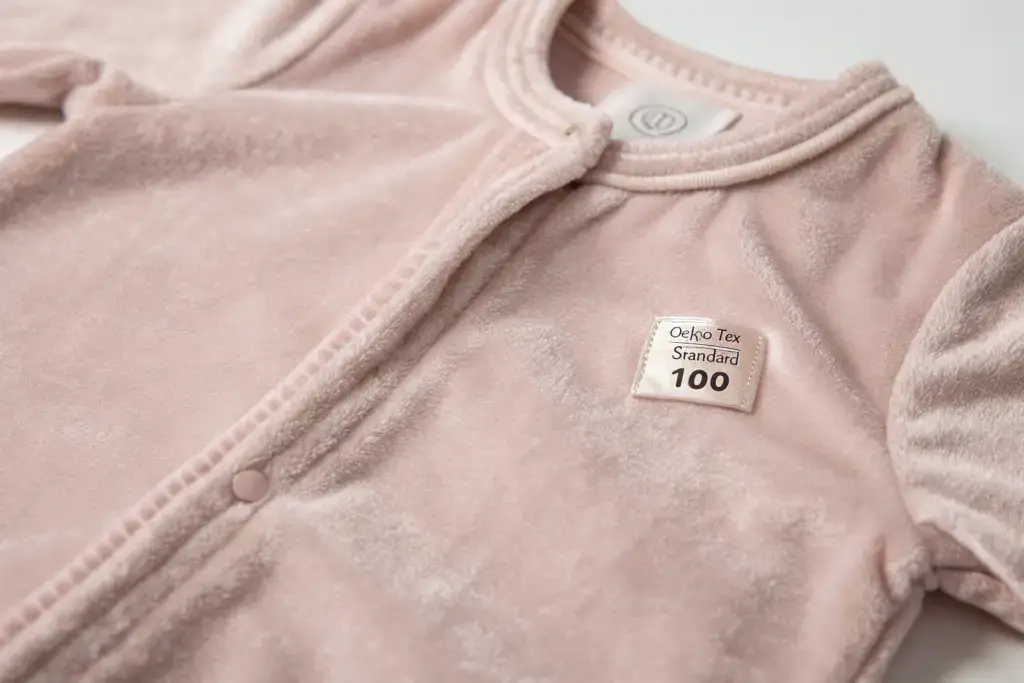
Velour rompers are a staple in kids' wear and women's loungewear. As an apparel manufacturer, I see brands constantly looking for that special edge. Many ask us about certifications. They want to know if these certificates are just marketing paperwork or if they deliver real value. The short answer is yes, but the real value comes from how you use them. Let me explain from a factory owner's perspective.
OEKO-TEX certification, particularly the STANDARD 100 label, can significantly enhance a velour romper's competitive edge. It provides a verifiable, science-backed promise of product safety that directly addresses modern consumer concerns. This trust translates into higher perceived value, reduces compliance risks for brands, and can protect profit margins by minimizing the chance of costly recalls. However, the edge comes not from the certificate itself, but from a manufacturer's deep commitment to the rigorous processes behind it.
You might think all certificates are the same. The truth is, the certification body and the factory's integrity matter immensely. A certificate is only as good as the systems behind it. We will explore how this certification impacts your product, your brand, and your bottom line.
How Does OEKO-TEX Certification Impact Product Safety and Quality?
Every brand owner I talk to is sensitive to quality. They also fear hidden dangers in fabrics. A children's wear brand from Seattle once came to us after a rival had a recall. Their competitor's velour sets had high levels of formaldehyde. This damaged their brand reputation overnight. The brand asked us for a solution that would prevent this nightmare. We suggested OEKO-TEX STANDARD 100 certification as a core part of our quality protocol.
OEKO-TEX certification impacts product safety and quality by enforcing strict, independent limits on harmful substances. It goes beyond basic legal requirements, testing for over 100 regulated and unregulated chemicals—from banned azo dyes to pesticide residues and heavy metals. For a velour romper, this means the fluffy fabric and any prints or elastics are guaranteed safe for human skin, which is crucial for sensitive baby skin or all-day loungewear.
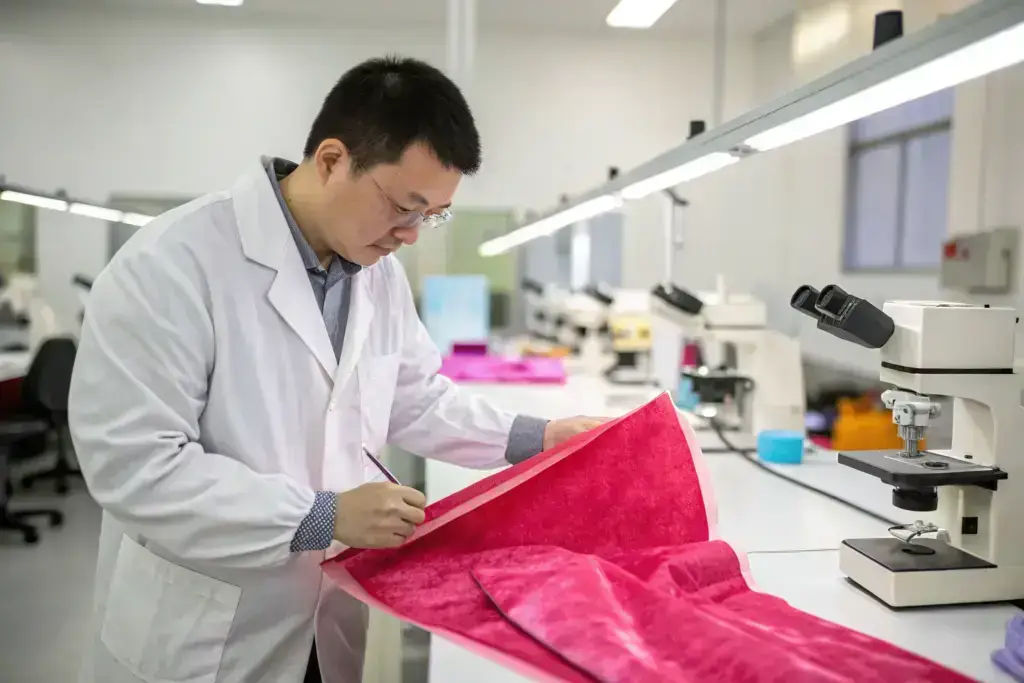
What substances does OEKO-TEX actually test for in fabrics?
Many buyers hear "certified" but don't know what it covers. It's not just one test. The STANDARD 100 standard organizes substances into several categories. For velour, which is often a synthetic knit, key tests include:
- Illegal Substances: Banned azo colorants, carcinogenic dyes.
- Legally Regulated Substances: Formaldehyde, heavy metals like cadmium and lead.
- Harmful Chemicals (even if not regulated): Allergenic dye stuffs, plasticizers (phthalates), and PFAS (perfluorinated chemicals).
- Parameters for Health Protection: Skin-friendly pH value, colorfastness.
A common misunderstanding is that certified fabric means a certified final product. Not true. At Shanghai Fumao, we certify the finished article. This is vital. A safe fabric can be contaminated by a toxic print or a cheap, non-compliant elastic waistband. Our process tests every component. Last spring, we sourced a beautiful velour that passed its initial test. However, our in-house audit found the supplier of the matching rib knit cuff had changed their dye process. We caught it before production and switched suppliers, preventing a certification failure. This level of control is what the certificate truly represents. You can learn more about the comprehensive testing criteria on the official OEKO-TEX International website.
How does certified safety translate to tangible quality for the end-user?
The translation is direct: peace of mind and physical comfort. A certified velour romper has a skin-friendly pH balance. This means it's less likely to cause irritation or eczema, a major concern for parents. The colorfastness tests ensure the rich colors of the romper won't bleed excessively during washing or onto the wearer's skin. This is a key quality marker.
Let's compare a certified vs. non-certified velour romper from a user's perspective:
| Quality Parameter | OEKO-TEX Certified Romper | Non-Certified Romper (Typical) |
|---|---|---|
| Skin Irritation Risk | Very Low. pH balanced, free from allergenic dyes. | Variable. Depends on factory's uncontrolled processes. |
| Color Safety | Assured. No use of illegal or harmful colorants. | Unknown. Risk of color bleeding or containing heavy metals. |
| Odor | Minimal. Strict limits on formaldehyde and VOCs. | Often has a distinct "chemical" smell from finishing agents. |
| Long-term Wear | Safer. Reduced exposure to hidden chronic toxins. | Potential long-term exposure to unregulated softeners or residues. |
For a brand, this tangible quality reduces customer complaints and returns. It builds loyalty. A distributor in Texas told us that after switching to our OEKO-TEX certified kids' line, their product-related customer service queries dropped by over 30%. This is the competitive edge in action—fewer headaches and happier customers. The American Apparel & Footwear Association (AAFA) often discusses how product safety is a cornerstone of brand integrity in today's market.
Can This Certification Justify a Higher Price Point for My Brand?
This is Ron's core question. He sources at low cost to sell high. Adding a certification has a cost. Can he charge more for it? Absolutely, but the strategy matters. It's about communicating value, not just adding a label. We worked with an emerging activewear brand that wanted to enter the premium maternity market. Their signature product was a velour lounge set. They partnered with Shanghai Fumao to produce OEKO-TEX certified sets. We helped them craft the narrative.
Yes, OEKO-TEX certification can justify a higher price point, but it requires clear communication. It shifts the product from a commodity to a "trust-verified" item. For your brand, this means you are not just selling a romper; you are selling safety assurance, ethical responsibility, and reduced risk. This allows you to position your brand in a premium segment and attract discerning consumers who are willing to pay for verified peace of mind.
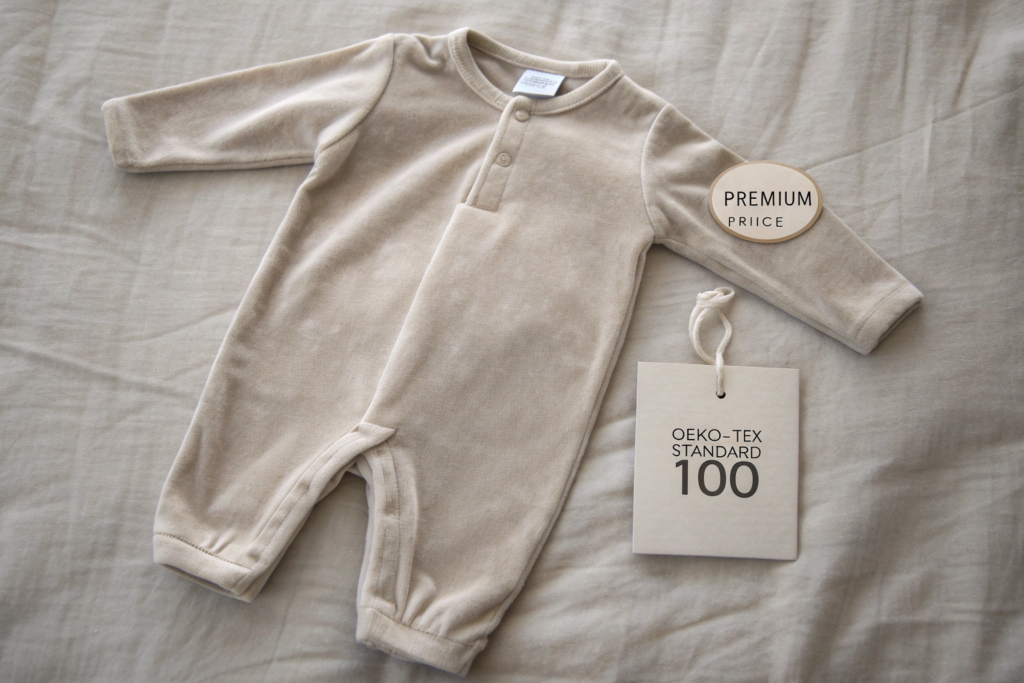
How do consumers perceive the value of safety certifications?
Today's consumers, especially millennials and Gen Z parents, are informed. They read labels. They associate certifications like OEKO-TEX with responsible brands. It's a quick, recognizable symbol that bypasses complex explanations. In a crowded marketplace like Amazon or a boutique website, that little label is a decisive trust signal. It answers the unspoken question: "Is this safe for my child or for me to wear all day?"
We observed this with our client. They featured the OEKO-TEX logo prominently on their product images and packaging. Their product descriptions didn't just say "soft velour." They said "OEKO-TEX certified velour, guaranteed free from harmful substances for ultimate comfort." They targeted their marketing towards health-conscious and eco-aware communities. The result? They achieved a 22% higher average order value compared to their non-certified basics line, while maintaining a strong margin. The certification provided the "why" behind the higher price. Research from platforms like Common Objective can provide further insights into how certifications influence buying behavior.
What is the ROI for a brand investing in certified apparel?
The Return on Investment isn't just in the immediate sales premium. It's multifaceted:
- Risk Mitigation: Avoids the catastrophic cost of a recall, which includes logistics, destruction, reputational damage, and potential legal fees. The certification acts as insurance.
- Brand Equity: Builds long-term trust. A brand known for safety can command loyalty and justify premium positioning across its entire range.
- Streamlined Compliance: Many large retailers and distributors now require such certifications for their vendors. Having it simplifies your B2B sales process. For example, a European distributor we work with mandates OEKO-TEX for all infant wear imports. Our certified clients get fast-tracked through their vetting process.
For a business owner like Ron, the calculation is clear. The added cost per unit is fixed and relatively small. The potential upside—higher margins, easier access to larger retailers, and brand protection—is significant. It transforms the certification from a cost center to a strategic business tool.
What Are the Common Pitfalls in the OEKO-TEX Certification Process?
Getting the certificate is one thing. Keeping it and ensuring its authenticity is another. This is where many buyers get burned. Ron's pain point about suppliers falsifying certificates is, unfortunately, not rare. We've had clients come to us with certificates from previous suppliers that we couldn't verify in the OEKO-TEX database. They had been misled.
Common pitfalls include relying on a fabric supplier's certificate instead of testing the final garment, working with factories that have a "certificate mill" mentality without real process integration, and not understanding that certification requires annual renewal and involves unannounced audits. The biggest pitfall is viewing it as a one-time purchase rather than an ongoing partnership with a committed manufacturer.
How can I verify the authenticity of an OEKO-TEX certificate?
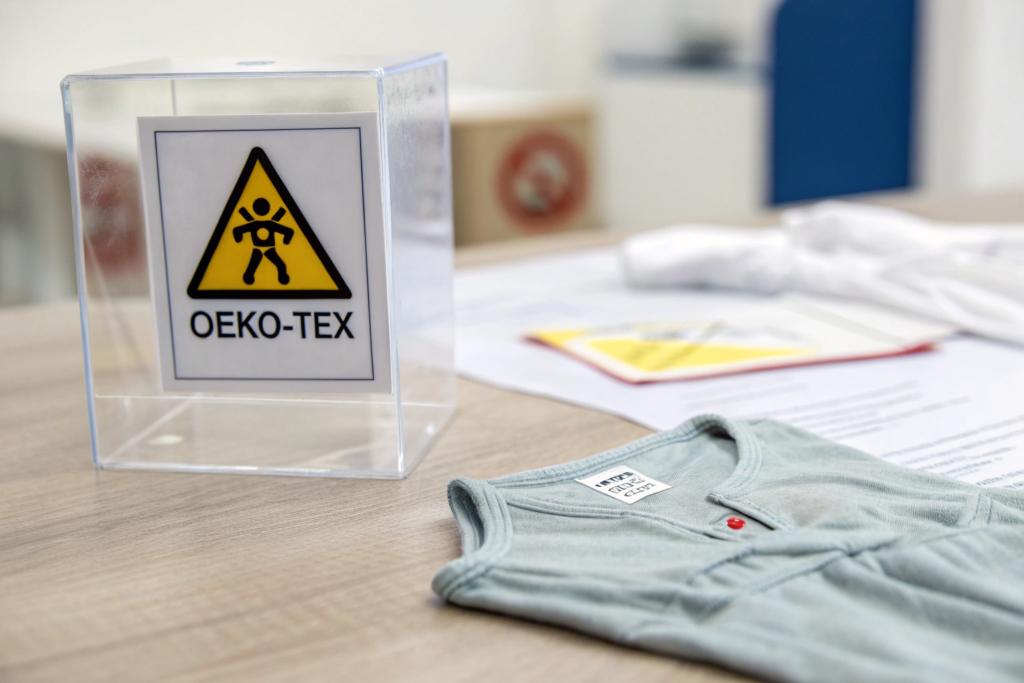
Always verify. Every genuine OEKO-TEX STANDARD 100 certificate has a unique number. You can use the free "OEKO-TEX Check" tool on their website. Enter the certificate number and the applicant's name (which should be the factory, like Shanghai Fumao Clothing Co., Ltd., not a trading company). It will confirm the validity, scope, and expiry date.
Here is a quick verification checklist:
- ✅ Check the certificate number in the official OEKO-TEX database.
- ✅ Ensure the applicant name matches your actual manufacturing partner.
- ✅ Confirm the product description (e.g., "velour romper for infants") matches your order.
- ✅ Check the issue and expiry date—it must be valid for the production period.
- ❌ Never accept a PDF alone as proof. Always cross-check online.
A large buyer from Chicago taught us a hard lesson years ago. They accepted a certificate from a middleman. When a random spot check at U.S. customs raised questions, the certificate was invalid. The entire shipment was held, missing the key holiday season. Since then, we provide all our clients with direct links to our valid certificates and encourage them to verify independently.
What ongoing responsibilities come with a certified production run?
Certification is not a "set and forget" system. The factory has major ongoing duties:
- Annual Renewal: The certificate expires every year. The factory must submit samples for re-testing and pay renewal fees.
- Unannounced Audits: OEKO-TEX auditors can visit the factory at any time to audit processes, chemical inventories, and quality control records.
- Material Control: Any change in fabric, thread, button, or dye supplier must be assessed and may require re-testing.
- Internal Training: The factory must train its staff on the importance of the standard to avoid cross-contamination.
At our factory, we treat the OEKO-TEX standard as the baseline for our own, even stricter, internal quality management system. This proactive approach is what prevents the "delayed shipments" Ron fears. Our process is streamlined and transparent because the discipline is baked in.
How to Choose a Reliable OEKO-TEX Certified Garment Manufacturer?
Choosing the right partner is the most critical step. The certificate is attached to the manufacturer, not just the product. Your supplier's commitment to the spirit of the standard—not just the paper—determines your success.
To choose a reliable OEKO-TEX certified manufacturer, look beyond the certificate. Evaluate their in-house quality control infrastructure, their transparency in the supply chain, their communication practices, and their willingness to let you verify their claims. A reliable partner will educate you on the process, not just sell you a certificate.
What questions should I ask a potential certified supplier?
Don't be shy. Ask direct questions to gauge their expertise and integrity:
- "Can you provide the OEKO-TEX certificate number for your company and for a product similar to my velour romper?"
- "Is the certification for the final finished garment (Article Certification) or just for the fabric?"
- "How do you manage and document your chemical inventory to comply with the standard?"
- "What is your process if a new fabric or component needs to be sourced mid-production?"
- "Can you share an example of how you handled a quality issue related to substance compliance?"
A trustworthy manufacturer like Shanghai Fumao will have clear, confident answers. We can show you our certification, walk you through our QC logs (with sensitive data redacted), and explain our tiered supplier approval system. We understand that Ron's profit model depends on absolute reliability. Last year, we helped a brand quickly switch to an approved alternative velour when their first-choice fabric failed a pre-production spot check we initiated. This saved their timeline because our systems were prepared.
Why is integrated manufacturing crucial for certification integrity?
The "full-package" or integrated manufacturing model is a massive advantage for certification integrity. It means we control the entire process under one roof: from sourcing pre-screened fabrics and trims to cutting, sewing, quality control, and packing. This control minimizes the risk of introducing a non-compliant element from an unverified subcontractor.
Many "factories" that offer low prices are actually coordinators who farm out steps like printing or embroidery. This fragments the chain and makes consistent compliance nearly impossible. Our 5 in-house production lines allow us to maintain this control. For you, this means one point of contact, one clear responsibility, and a seamless, auditable process from start to finish. This directly solves Ron's pain points of inefficient communication and shipment delays. Organizations like ISO (International Organization for Standardization) emphasize the importance of integrated management systems for consistent quality, a principle that applies perfectly here.
Conclusion
OEKO-TEX certification is far more than a label on a tag. It is a comprehensive system that, when implemented with integrity by a committed manufacturer, delivers a powerful competitive edge. It elevates product safety from a hope to a verifiable guarantee. It allows your brand to command a premium price by selling trust and quality. It protects your business from devastating risks. Most importantly, it turns your apparel from a simple commodity into a product with a compelling, responsible story.
The key is partnership. The certificate's value is unlocked by a manufacturer who views it as a core part of their operational philosophy, not a sales brochure item. It requires a transparent, communicative, and vertically integrated approach to ensure that every velour romper that leaves the factory is not just beautifully made, but also irreproachably safe.
If you are looking to strengthen your brand's position and build a collection that combines style, comfort, and verifiable safety, let's talk. At Shanghai Fumao, we are more than just a factory; we are your dedicated partner in navigating the complexities of certified, high-quality apparel manufacturing. Contact our Business Director Elaine to discuss how we can help you bring your next line of premium velour rompers—or any other apparel vision—to market with confidence. Reach out to Elaine at: elaine@fumaoclothing.com.