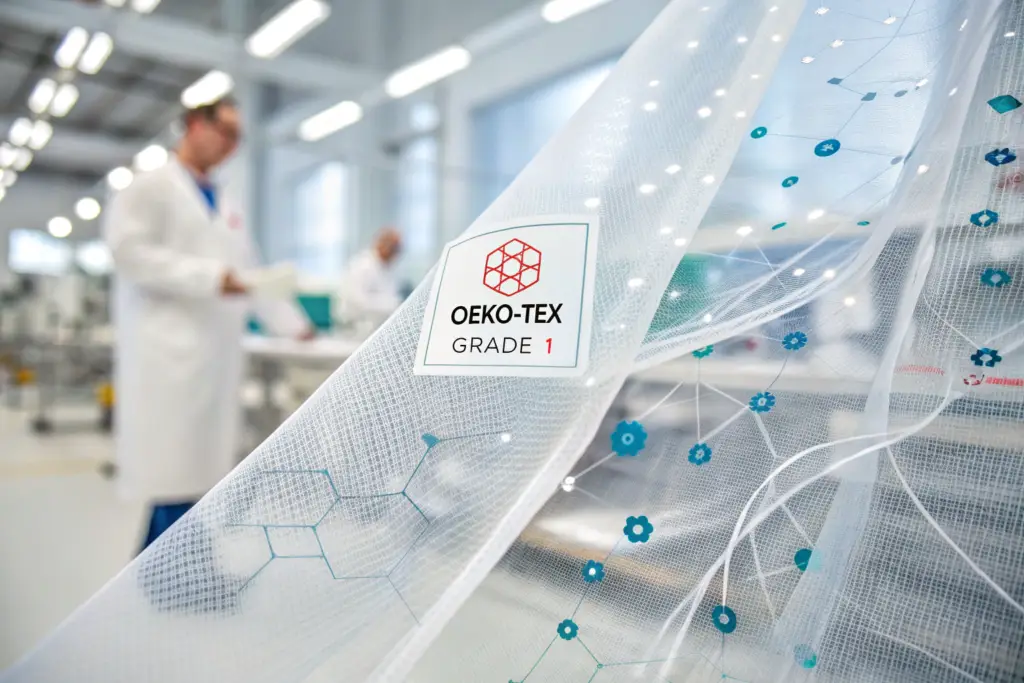
As a manufacturer on the front lines of global apparel production, I see the safety conversation evolving faster than ever. Brands aren't just asking if a fabric is safe now; they're asking if it will be safe tomorrow. With new research, shifting regulations, and heightened consumer awareness emerging constantly, can a standard created years ago still be relevant in 2025? The answer lies not in the static document, but in the dynamic, living system that OEKO-TEX STANDARD 100 Grade 1 represents. It is engineered not just to address today's concerns, but to anticipate and adapt to tomorrow's.
Yes, OEKO-TEX 100 Grade 1 is uniquely positioned to address fabric safety concerns in 2025 because it is a continuously updated, globally recognized benchmark that proactively incorporates new scientific findings and regulatory changes. Its annual revision process, unmatched stringency for baby products, and holistic "article certification" approach provide a future-proof framework that addresses both current known hazards and emerging risks, offering brands a stable solution in an unstable regulatory landscape.
It’s a compass, not a snapshot, for navigating the complex world of textile safety.
How Does the Annual Update Process Future-Proof Grade 1?
This is the core mechanism that makes Grade 1 relevant for 2025 and beyond. Many standards are static; once published, they remain unchanged for years. OEKO-TEX is fundamentally different. Every year, on January 1st, a new version of the STANDARD 100 standard is published, based on the latest international research and regulatory developments.
The annual update process future-proofs Grade 1 by mandating a systematic review and integration of new scientific data, newly regulated substances (like additions to the EU's REACH SVHC list), and advancements in testing methodology. This means a product certified in 2024 must be re-evaluated against the stricter 2025 criteria to maintain its certification, ensuring it always meets the most current safety benchmarks.

What kind of changes are typically incorporated?
The updates are substantial and reactive to global trends. For example, recent updates have included:
- Stricter Limits for Existing Substances: Further reducing allowable amounts of formaldehyde or certain heavy metals.
- Addition of New Substance Classes: Incorporating limits for per- and polyfluoroalkyl substances (PFAS), also known as "forever chemicals," which have come under intense global scrutiny.
- Inclusion of Newly Regulated Compounds: As soon as a substance is restricted under major regulations like EU REACH or California's Proposition 65, it is evaluated for inclusion in the OEKO-TEX standard.
A concrete case from our work at Shanghai Fumao illustrates this. In early 2023, we were developing a line of high-performance baby outerwear. The design included a water-resistant finish. Anticipating future regulations, we proactively sought a finish that was not only effective but also compliant with the newly introduced OEKO-TEX limits for specific PFAS compounds. When discussions around broader PFAS bans in children's products intensified later that year, our client's line was already ahead of the curve, with certification guaranteeing compliance. This proactive adaptation is the essence of future-proofing. Manufacturers and brands can monitor these updates through the official OEKO-TEX Association updates portal.
How does this benefit brands planning for 2025?
For a brand launching a product in 2025, designing with a currently certified fabric is not enough. They must partner with a manufacturer whose entire system is geared toward the next standard. When we source materials for a client, we don't just check against the current limit values; we engage with our suppliers on their roadmap for meeting anticipated stricter limits. This forward-looking sourcing strategy, enforced by the annual update requirement, protects brands from sudden obsolescence or costly mid-production material changes. It turns certification from a reactive cost into a proactive strategic asset.
What Emerging Safety Concerns Will Grade 1 Cover in 2025?
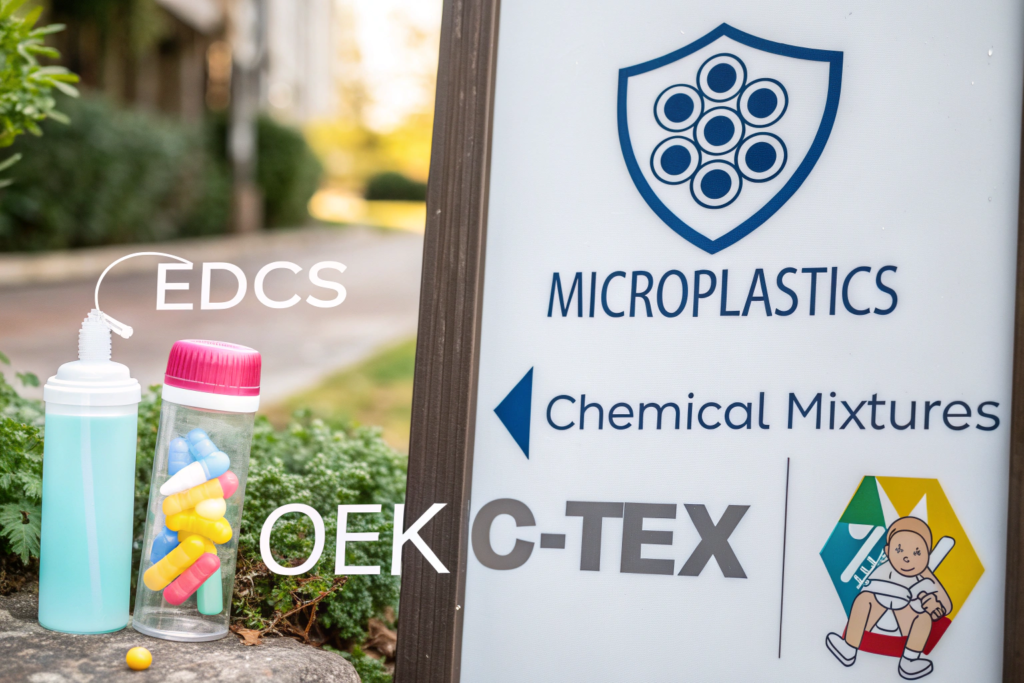
Looking ahead, the safety conversation is expanding beyond classic toxins like formaldehyde and heavy metals. Concerns are growing around "endocrine disruptors," microplastic shedding, and the cumulative "chemical cocktail" effect of low-level exposures from multiple products. While no single standard can address every conceivable concern, Grade 1's framework is already positioned to tackle the most pressing ones.
In 2025, OEKO-TEX Grade 1 is poised to address emerging concerns by expanding its lists of restricted substances to include more endocrine-disrupting chemicals (EDCs), further regulating plasticizers and UV stabilizers, and potentially incorporating criteria related to responsibly sourced materials. Its holistic "article" approach, which tests the final product, inherently assesses the combined safety of all components, indirectly evaluating the "cocktail effect" within that single item.
How is the standard adapting to endocrine disruptor concerns?
Endocrine disruptors are chemicals that can interfere with hormone systems. Certain phthalates (plasticizers) and bisphenols are well-known EDCs already strictly regulated in OEKO-TEX, especially in Grade 1 where limits are near or at the detection threshold. The annual revision process actively reviews new scientific studies on EDCs. When a substance is identified as a potential EDC with sufficient evidence, it is prioritized for inclusion in the standard.
For instance, the ongoing scientific review of certain flame retardants and alternative plasticizers is closely watched. Brands working with us can be confident that if a material we commonly use becomes classified as an EDC, our certification system will force a change. Last year, we reformulated the print inks used on a line of children's tees preemptively, based on early signals from OEKO-TEX working groups about a particular solvent. This protects our clients' products from future backlash or recalls.
Can it address microplastic and environmental concerns?
Directly, OEKO-TEX STANDARD 100 focuses on human-ecological safety (product safety for the user). It does not certify biodegradability or microplastic shedding rates. However, its influence is indirect and powerful. The strict controls on chemical finishes can eliminate certain polymer-based coatings that contribute to microplastic pollution. Furthermore, the discipline and transparency required for OEKO-TEX compliance make it easier for a manufacturer like us to track and implement more sustainable material choices that also align with safety.
For a brand, this means choosing an OEKO-TEX certified partner like Shanghai Fumao is the first step toward a more responsible supply chain—a chain that is already documented, audited, and geared toward continuous improvement. This aligns with broader consumer demand for holistic responsibility, as tracked by organizations like the Sustainable Apparel Coalition.
How Does Its Global Recognition Provide Stability Amid Regulatory Flux?
In 2025, the regulatory environment will be more fragmented and complex than ever. The US may have state-level regulations (like California's Prop 65) alongside federal CPSIA rules. The EU will continue to expand REACH. Other markets will enact their own laws. For a brand selling internationally, this is a compliance nightmare.
OEKO-TEX Grade 1 provides stability amid regulatory flux by serving as a globally accepted, harmonized compliance benchmark that often exceeds individual national regulations. Its widespread recognition by retailers and customs authorities means a single certificate can facilitate market access across dozens of countries, simplifying logistics and reducing the legal burden for brands navigating a patchwork of 2025's laws.
What is the practical advantage for import/export?
Consider a children's sleepwear brand based in the US, selling domestically and exporting to the EU and UK. Each market has different flammability rules, chemical restrictions, and labeling requirements. A Grade 1 certificate does not replace all these rules, but it provides a massive head start.
The certification covers the chemical safety part comprehensively. When presenting an OEKO-TEX certificate at EU customs or to a UK distributor, it immediately establishes a baseline of due diligence. It answers the majority of their substance-related questions with one document. This dramatically reduces the risk of shipments being held for testing, which is a major cause of the "delayed shipments" that frustrate buyers like Ron. In our experience, clients who ship OEKO-TEX certified goods face far fewer customs delays for random substance checks.
How does it future-proof against new regional laws?
Because OEKO-TEX incorporates new regulatory changes into its global standard, a product certified to the latest version is, by design, already compliant with many newly enacted regional laws. For example, if a new US state bans a specific phthalate, it's highly likely that substance is already restricted or banned under the current OEKO-TEX standard, especially for Grade 1. This gives brands a buffer period and a clear pathway to compliance: ensure your manufacturer is certified to the latest standard.
What Must Brands Do Now to Leverage Grade 1 for 2025 Success?
Awareness is not enough. To truly harness the future-proof power of OEKO-TEX Grade 1 for 2025 collections, brands must take deliberate, strategic action now. This goes beyond requesting a certificate; it requires embedding the standard's philosophy into their sourcing and partnership model.
To leverage Grade 1 for 2025 success, brands must partner with manufacturers who treat certification as an integrated management system, not a one-time test. They should design products with certified compliance in mind from the sketch stage, and build their marketing narrative around the value of proactive, science-backed safety, positioning themselves as leaders in a responsible future.
How to vet a manufacturer for true future-proof capability?
Ask these forward-looking questions:
- "How do you prepare for the annual OEKO-TEX standard update?" Look for answers about internal training, pre-emptive communication with material suppliers, and reformulation plans.
- "Can you show me your process for vetting new materials against anticipated regulatory changes?" This reveals strategic sourcing.
- "What in-house testing do you do beyond what's required for the annual audit?" This shows a culture of exceeding the minimum.
At Fumao, our clients see this in action. We hold quarterly reviews with our material suppliers to discuss regulatory trends. We have a small R&D budget to test alternative, safer finishes and dyes. When a brand partners with us, they aren't just buying today's capacity; they're buying into this proactive ecosystem. This is the kind of partnership that solves the "inefficient communication" and quality control pain points for good.
How to build a 2025-ready marketing story?
The narrative for 2025 should not be "free from harmful substances." It should be "designed for future safety.”
- Communicate the "Living Standard": Explain to consumers that the OEKO-TEX label means the product meets a standard that updates every year with the latest science.
- Highlight Proactive Choice: "We chose OEKO-TEX Grade 1, the world's strictest standard for babies, not because we have to, but because it's the only way to ensure your child's comfort is protected today and tomorrow."
- Focus on Trust, Not Fear: Position the certification as a positive, empowering choice for parents, offering peace of mind in a complex world.
A brand that can tell this story authentically will stand out in 2025, building deep loyalty with consumers who are overwhelmed by greenwashing and vague claims.
Conclusion
OEKO-TEX STANDARD 100 Grade 1 is not a relic of the past; it is a dynamic tool engineered for the future. Its annual evolution, unparalleled stringency, and global authority make it uniquely capable of addressing the fabric safety concerns of 2025. It offers brands a clear path through the coming thicket of regulations and consumer expectations, transforming safety from a compliance challenge into a core competitive advantage.
The brands that will thrive in 2025 are those that recognize this now. They will move beyond viewing certification as a cost of doing business and instead embrace it as the foundation of their product integrity and brand promise. They will partner with manufacturers who share this forward-looking vision.
If you are planning your 2025 collections and want to build them on a foundation of trust that endures, OEKO-TEX Grade 1 is the benchmark. At Shanghai Fumao, we have built our operations around not just meeting this standard, but anticipating its evolution. Contact our Business Director Elaine to discuss how we can future-proof your next children's wear line together. Start the conversation at elaine@fumaoclothing.com.