Many American apparel brand owners come to us with a simple question. They want to know if they can skip the time and cost of creating a formal tech pack and just send us a sample garment instead. This is a common situation, especially for entrepreneurs who are new to manufacturing or who are launching a new product line quickly. They have a physical sample—a favorite shirt, a well-fitting pair of pants, or a competitor's product—and they believe it contains all the information we need. It seems like a straightforward and efficient way to communicate their vision.
While using a reference garment is an excellent starting point, it is not a complete replacement for a detailed tech pack. A reference sample serves as a powerful visual and tactile guide, but a tech pack provides the precise technical instructions and specifications necessary for consistent, high-quality, and error-free mass production. Relying solely on a sample can lead to misunderstandings, production mistakes, and ultimately, costly delays that can cause you to miss your critical selling season. Think of the reference garment as the inspiration and the tech pack as the indispensable instruction manual.
This article will explore the important relationship between a reference sample and a tech pack. We will break down the roles each one plays and show you how to use them together for a smooth and successful production process with your overseas clothing manufacturer.
What is the Core Difference Between a Tech Pack and a Sample Garment?
You have a perfect sample in your hands. It feels right, it looks right, and you want your production run to be exactly like it. So why can't you just mail it to us and say, "Make 5,000 of these"? The answer lies in the difference between showing what you want and instructing how to make it. A sample shows the what; a tech pack details the how.
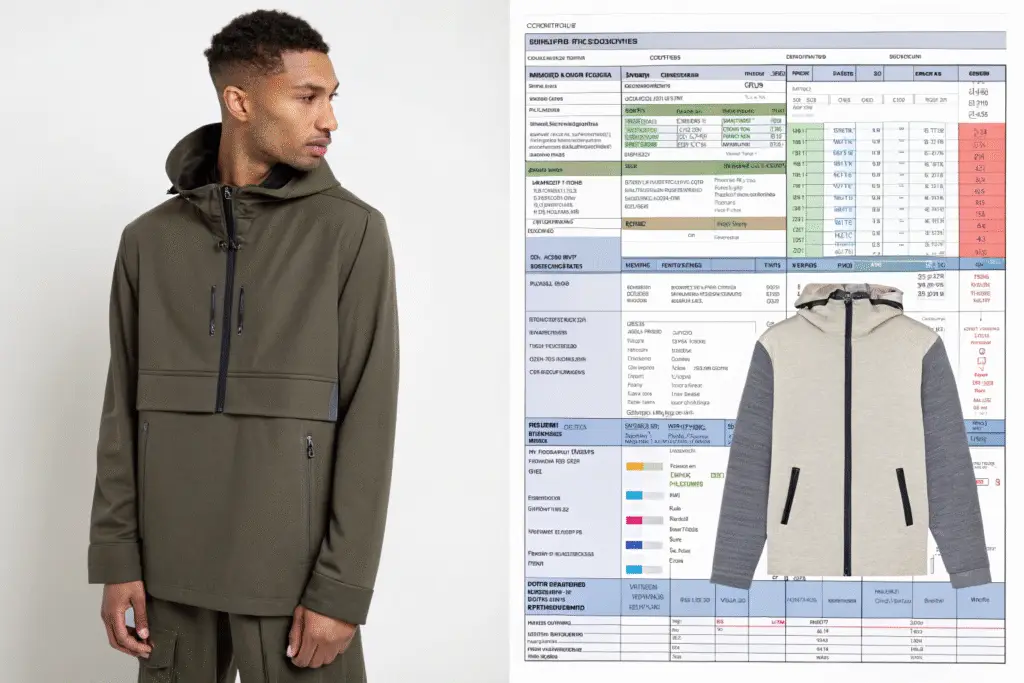
A reference garment is a physical example of a finished product. It communicates the overall look, feel, fit, and aesthetic. It's a fantastic tool for conveying style and general construction. However, it's a single data point. A tech pack, on the other hand, is a comprehensive digital document—often a set of detailed PDFs and spreadsheets—that specifies every single component and step required to recreate that garment thousands of times, identically. It translates the physical sample into measurable, unambiguous data that our production team can follow without guesswork.
What Critical Information is Missing from a Reference Garment?
A sample garment keeps its secrets. You can see the outside, but you cannot easily see the precise details that make it function. For instance, last year, a client from Texas sent us a high-end jacket sample. It looked beautiful. However, when we based production solely on the sample, the first batch had inconsistent sleeve lengths. The reason? The sample itself had slight variations in the cuff construction that were not visible to the naked eye. Without a tech pack specifying the exact sleeve measurement from the shoulder seam, our operators had to interpret, and their interpretations differed.
Here are key elements a sample cannot reliably communicate:
- Graded Spec Sheet: The sample is only one size. A tech pack provides precise measurements for every single size (S, M, L, XL, etc.), ensuring the fit is consistent across your entire size run.
- Tolerance Levels: How much deviation from the specified measurement is acceptable? A tech pack defines this, for example, stating a sleeve length of 25 inches with a ±0.25-inch tolerance.
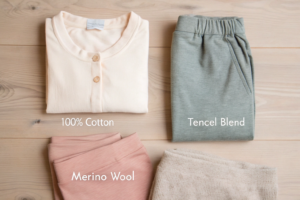
- Bill of Materials (BOM): What is the exact composition of the main fabric, thread, labels, and interlining? A sample requires us to conduct fabric testing to guess the composition, which can be inaccurate. A tech pack specifies it authoritatively.
- Construction Details: Specific stitch types (e.g., single-needle vs. overlock), stitches per inch (SPI), and seam finishes are often invisible in a finished sample.
How Does a Tech Pack Prevent Costly Production Errors?
A tech pack acts as a legal and technical contract between your brand and our factory. It eliminates ambiguity. We experienced this with a sportswear client from Florida. They provided a sample of their performance shorts but no tech pack. The sample used a specific type of moisture-wicking fabric that we had to source by feel. The fabric we found was slightly different, leading to poor performance and a complete batch rejection. The cost of remaking the entire order was significant.
With a tech pack, this wouldn't have happened. The tech pack would have specified the exact fabric supplier, product code, and performance standards. This level of detail ensures that every department—from sourcing to cutting to sewing—is aligned. It is your primary tool for quality control, guaranteeing that the final product you receive matches the sample you approved, batch after batch.
How to Effectively Use a Reference Garment in the Development Process?
So, if a sample alone isn't enough, what is its proper role? The reference garment is one of the most valuable tools in the product development cycle when used correctly. It should work in tandem with your tech pack, not replace it. Think of the sample as the "why" behind your design and the tech pack as the "how" to execute it.
The most successful clients use their reference samples as a communication springboard. They send us the sample and then have detailed discussions with our development team about what they like and, just as importantly, what they want to change. This collaborative process ensures that the final tech pack reflects the best of the sample while incorporating your unique improvements and cost-saving optimizations.

What Should You Mark Up on Your Sample for Clarity?
When you send us a reference sample, don't send it in its original, pristine state. Turn it into an annotated guide. Use colored tape, pins, and a permanent marker to provide direct feedback on the physical item. This gives our technical designers concrete points to reference when creating your tech pack.
For example:
- Use red tape to mark areas where you want a change. For instance, if you feel the collar is too tight, put red tape on the collar and write "Increase height by 0.5 inches".
- Use green tape to highlight areas you absolutely love and want to replicate exactly.
- Pin a note to the inside seam to specify a different stitch type or a requested seam finish.
- Circle hardware like buttons or zippers and indicate if you want to use a different supplier or color.
This process transforms a passive sample into an active communication tool. One of our clients from Chicago does this so well that we can create a near-perfect first draft of their tech pack just from their marked-up sample and a brief follow-up call.
How Can a Factory Reverse-Engineer a Sample into a Tech Pack?
This is a core service we offer at Fumao Clothing. Many brands, especially those without a dedicated technical designer, provide us with a sample and ask us to create the tech pack for them. Our process is thorough and involves deconstructing the garment to understand every detail.
We call this our "Garment Analysis Service." Here’s what we do:
| Step | Action | Outcome |
|---|---|---|
| 1. Visual Inspection | Examine the overall construction, stitch types, and finishes. | Initial assessment of garment complexity. |
| 2. Measure Every Part | Take dozens of precise measurements of each panel. | Creates the foundation for the spec sheet. |
| 3. Fabric & Trim Testing | Analyze fabric composition, weight, and stretch. Identify all trims. | Creates a preliminary Bill of Materials (BOM). |
| 4. Seam Deconstruction | Carefully unpick seams to analyze stitch types and SPI. | Documents exact construction methods. |
| 5. Compile Findings | Input all data into a standardized tech pack template. | Delivers a professional, brand-owned tech pack. |
By investing in this service, you gain a complete, production-ready tech pack that you own. This document becomes invaluable for future orders and for maintaining consistency if you ever need to audit a factory or work with additional manufacturing partners.
What Are the Biggest Risks of Skipping the Tech Pack?
Choosing to forgo a tech pack to save a few days and dollars is one of the most common and costly mistakes we see in apparel sourcing. The risks extend far beyond simple miscommunication. They can directly impact your profitability, brand reputation, and ability to bring products to market on time. The initial savings are always eclipsed by the downstream problems.
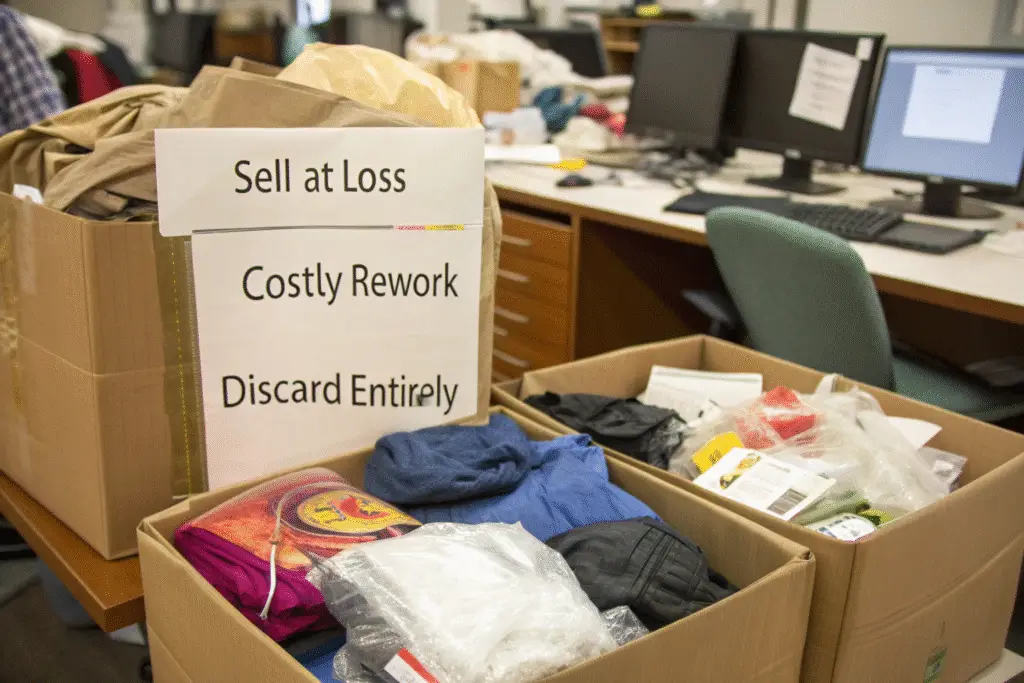
Imagine receiving a 2,000-piece order that is fundamentally wrong. The colors are off, the sizes are inconsistent, and the fabric feels cheap. You cannot sell these items. You are now faced with three bad options: sell them at a massive loss, attempt a costly and time-consuming rework, or discard them entirely and lose your entire investment. All of these outcomes are preventable with a tech pack.
How Can It Lead to Quality Inconsistency and Delays?
Without a tech pack, there is no single source of truth. This inevitably leads to quality variations. Different operators on the production line may interpret the sample slightly differently. The fabric sourcing team might choose a similar-but-different material to save cost, assuming you won't notice. The quality control team has no clear standard to inspect against.
We had a case with a client ordering woven shirts. They provided a sample but no tech pack. The first pre-production sample we sent was approved. However, during mass production, the fabric cutter used a different spreading technique, which slightly changed how the pattern aligned with the fabric's stripe. The result was shirts where the stripes didn't match at the seams. Because this specific requirement wasn't documented in a tech pack, it wasn't caught until the entire batch was finished. The delay for remaking the order caused the client to miss their key selling window for the season.
Why Does No Tech Pack Make You Vulnerable to Supplier Issues?
A detailed tech pack protects you. It gives you ownership and control over your product's design. If you do not have a tech pack and you rely entirely on your supplier's interpretation, you are locked into that supplier. What happens if that factory has a sudden capacity issue, a quality breakdown, or a price increase? Moving your production to a new, more reliable manufacturer becomes incredibly difficult and slow because the knowledge of how to make your product resides only with the original factory.
Your tech pack is your intellectual property. It empowers you to request quotes from multiple suppliers on a like-for-like basis and ensures a smooth transition if needed. It is your best defense against supply chain disruptions and gives you the flexibility to seek the best manufacturing partner for each order, ensuring you always get competitive pricing and reliable service.
What Should a Comprehensive Tech Pack Include?
A great tech pack leaves no room for imagination. It should be so detailed that any qualified factory, anywhere in the world, could pick it up and produce your garment exactly as you envisioned it. It is the DNA of your apparel product. At Fumao, we have a standardized template that we can provide, and we also work with the tech packs provided by our clients, as long as they contain the essential components.
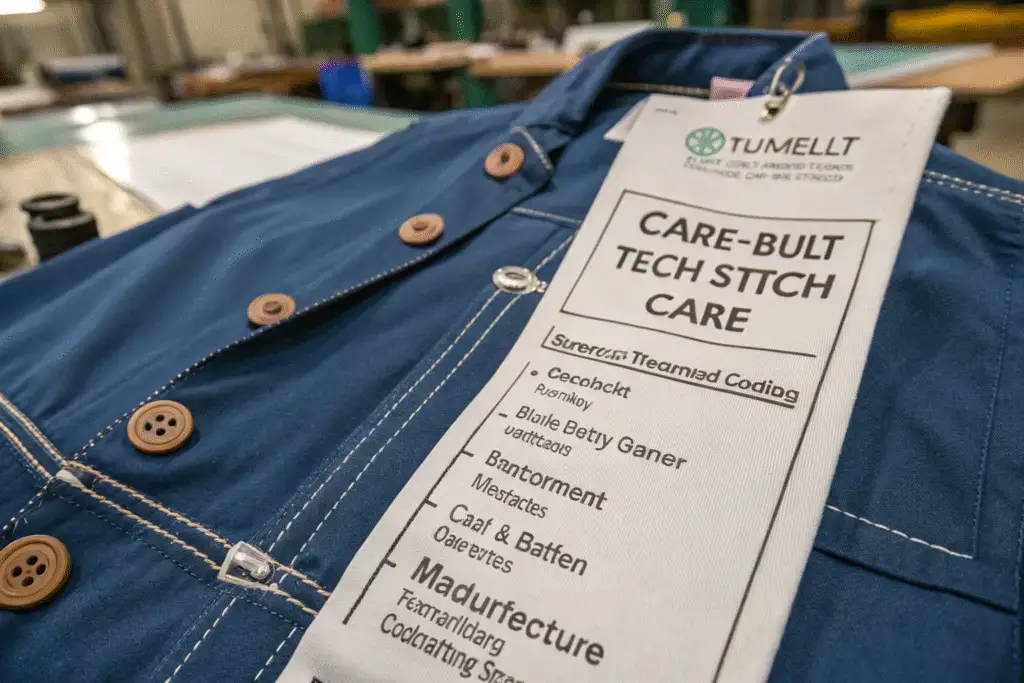
The goal is comprehensive communication. Every single aspect of the garment must be defined with words, numbers, and images. This includes everything from the overall silhouette down to the type of stitch used on the care label. A well-built tech pack streamlines the entire process, from sampling and costing to production and final inspection.
Which Technical Drawings and Measurements Are Non-Negotiable?
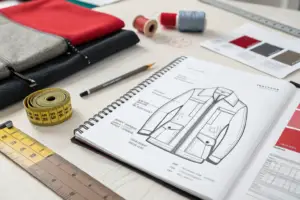
Flat sketches and a detailed measurement spec sheet are the backbone of any tech pack. The sketches show every angle of the garment (front, back, side) and call out specific construction details. The spec sheet provides the numerical data that brings those sketches to life in every size.
Essential Components:
- Flats Sketches: Clean, digital drawings of the garment. They should include close-up "callouts" for unique design features like plackets, pockets, or special seams.
- Graded Spec Sheet: A table listing every single measurement (e.g., chest width, body length, sleeve length) for the base size and all other sizes in the range.
- Points of Measurement (POM): A clear diagram that defines how and where each measurement on the spec sheet is to be taken. This eliminates measuring confusion.
Without these, achieving a consistent fit is nearly impossible. We use these documents to create the patterns for your garment, so their accuracy is paramount for a successful apparel development cycle.
How Do Materials and Construction Details Ensure Quality?
This section translates the physical properties of your sample into actionable data. It tells our sourcing team exactly what to buy and our production team exactly how to assemble it.
Key Sections to Include:
- Bill of Materials (BOM): A list of every single component. This includes main fabric, lining, interlining, threads, zippers, buttons, drawcords, labels, and hangtags. Each item should have a detailed description (e.g., "100% Cotton 20/1 Single Jersey, 180 GSM").
- Construction Comments: Step-by-step instructions on how to sew the garment. This specifies stitch types (e.g., 401 overlock, 301 single needle), seam types (e.g., superimposed, flat-fell), and stitches per inch (SPI), which is critical for durability.
- Artwork & Print Files: If your garment has logos, prints, or embroideries, this section includes the vector artwork, Pantone color codes, and placement instructions with precise measurements.
Providing this level of detail is what separates an amateur order from a professional one. It shows us that you understand production and allows us to give you an accurate cost breakdown and guarantee the quality you expect.
Conclusion
Using a reference garment as the sole basis for your production order is a high-risk strategy that often leads to miscommunication, inconsistent quality, and costly delays. While a physical sample is an invaluable tool for conveying style, fit, and feel, it cannot communicate the precise technical data needed for mass production. A comprehensive tech pack is not an optional extra; it is the essential blueprint that ensures your vision is translated perfectly into thousands of identical, high-quality garments.
The most successful brands use a hybrid approach. They leverage the power of a reference sample for visual communication and pair it with the unambiguous precision of a tech pack for production execution. This combined method minimizes errors, protects your investment, streamlines communication, and ultimately saves you time and money by getting your product right the first time. You bring the inspiration, and we provide the technical expertise to make it a reality.
If you are ready to bring your apparel visions to market with a partner who values precision and reliability, we are here to help. Let's discuss your project. For a detailed consultation on your next clothing production order, please contact our Business Director, Elaine, at elaine@fumaoclothing.com. We will help you build the perfect foundation for your brand's success.