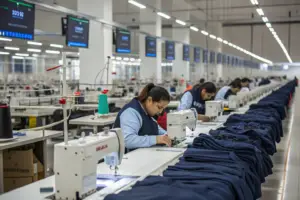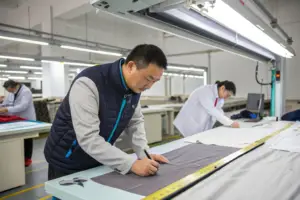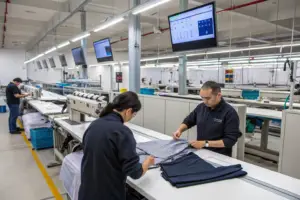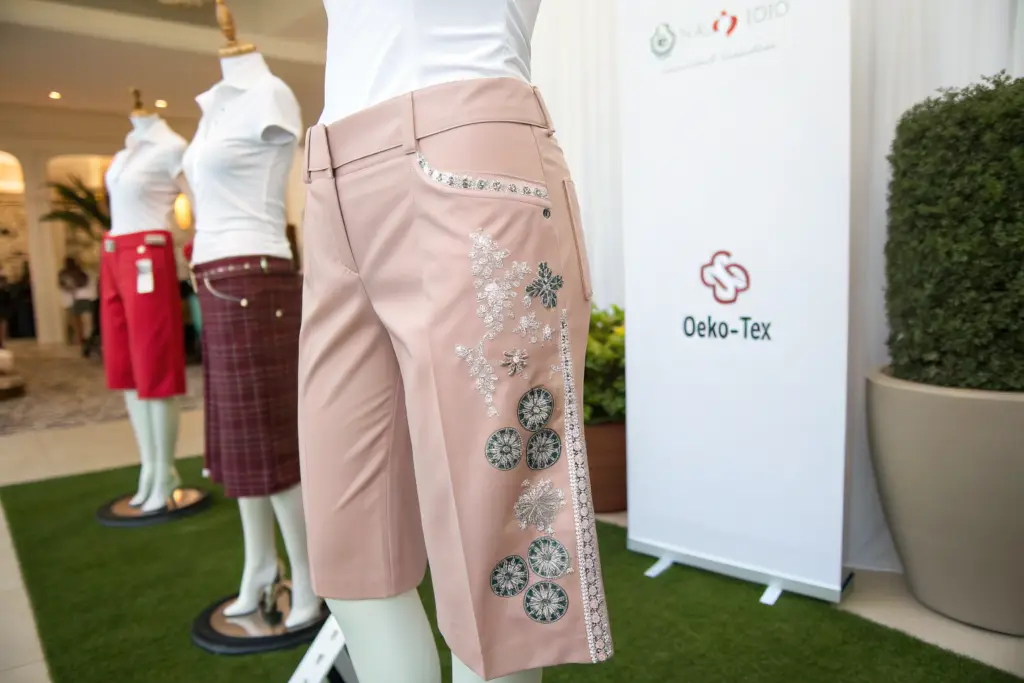
A designer approached us last season with a bold vision: a line of high-fashion golf culottes featuring bold prints, intricate pleating, and metallic trims. Her first question was, "Can I make this statement piece OEKO-TEX certified, or does the complexity force me to compromise on safety?" She had been told by another factory that "specialty fashion items" and "strict certification" were incompatible. This is a common and costly misconception. We developed her collection, and it not only achieved certification but became a bestseller for its unique combination of style and substance.
Yes, fashion-focused golf culottes can absolutely be OEKO-TEX certified. The certification assesses the chemical safety of the final product, regardless of its aesthetic complexity. The challenge is not eligibility but execution—ensuring that every diverse material and decorative process used in a fashion-forward design complies with the standard's stringent limits. This requires meticulous sourcing, technical expertise, and a manufacturer that views certification as a design parameter, not an obstacle.
The fusion of high fashion and verified safety is the next frontier in golf apparel. Let's explore how to navigate it successfully.
What Unique Certification Challenges Do Fashion Culottes Present?
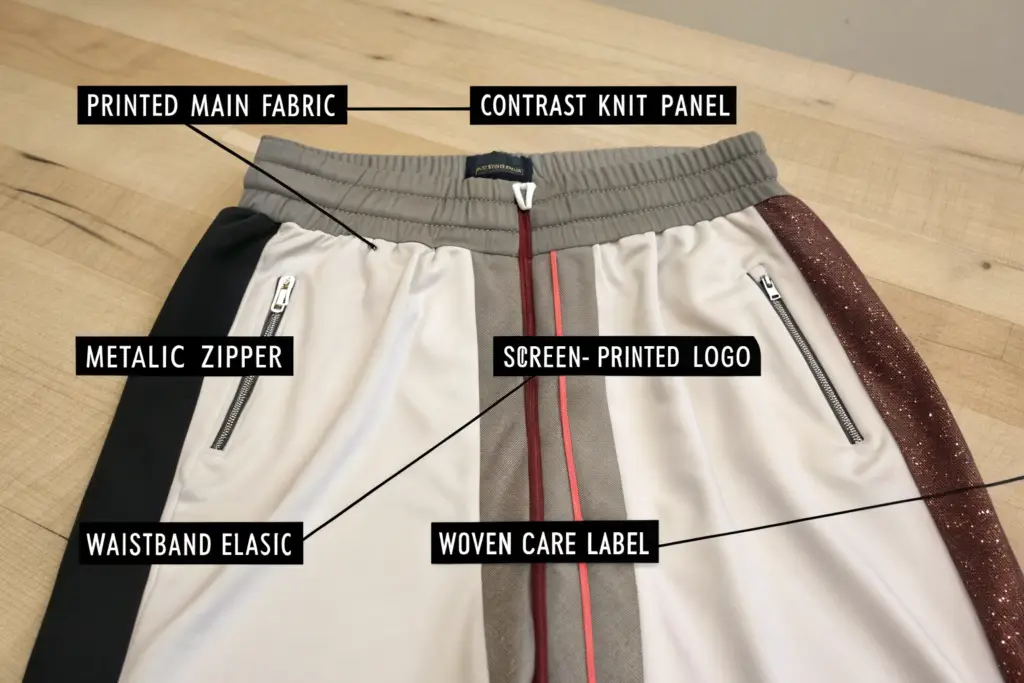
Leading paragraph: Unlike a basic polo made from a single certified fabric, fashion culottes are a material ecosystem. They may combine woven and knit panels, feature transfer or foil prints, include non-textile elements like metal grommets or plastic buttons, and use specialized dyes for vibrant colors. Each of these elements is a potential point of chemical non-compliance.
Featured paragraph: The unique challenges lie in the multi-material composition and decorative processes. Key hurdles include:
- Diverse Material Sourcing: The main fabric, lining, interfacing, waistband elastic, thread, zippers, and decorative trims must all be sourced from OEKO-TEX compliant suppliers.
- Complex Dyeing and Printing: Achieving specific, fashion-forward colors (especially deep blacks or bright neons) can sometimes involve dye chemistries that push against restricted substance limits. Metallic or plastisol prints require compliant inks and binders.
- Non-Textile Components: Metal hardware (like D-rings or buckles) must be tested for nickel and lead release.
- Wash and Finishing Effects: Special distressed washes or coatings must use compliant chemical agents.
Overcoming these challenges requires a proactive, component-level approach from the very first sketch. At Shanghai Fumao, our technical team creates a "Compliance Bill of Materials" for such complex items, mapping every single component to its required certification proof before development even begins.
How Do You Handle Multi-Material Certification?
The golden rule is: The final garment certificate covers the complete, assembled product. However, to get there, you need component-level verification. This means obtaining valid OEKO-TEX certificates or test reports for each distinct material type. For example:
- Certificate for the main printed woven fabric.
- Test report for the knit contrast panel.
- Declaration of conformity for the metal buckle from a REACH-compliant supplier.
- Test report for the printing inks used.
The certifying institute will evaluate the complete garment, but having pre-verified components dramatically increases the chance of first-pass success.
What About Experimental or Novel Materials?
For truly novel materials (e.g., a new bio-based leather alternative), the process involves early engagement with the material supplier and the certification body. Samples must be submitted for evaluation against the OEKO-TEX criteria. While this adds time to development, it also creates a powerful unique selling proposition (USP) if successful: "Featuring first-to-market OEKO-TEX certified [Material Name]."
How to Source Compliant Materials for Avant-Garde Designs?
Leading paragraph: The typical fabric market for bulk basics won't have the innovative, textured, or uniquely finished materials a fashion designer seeks—and even fewer will have them pre-certified. Sourcing becomes a hunt for partners who value both aesthetics and compliance.
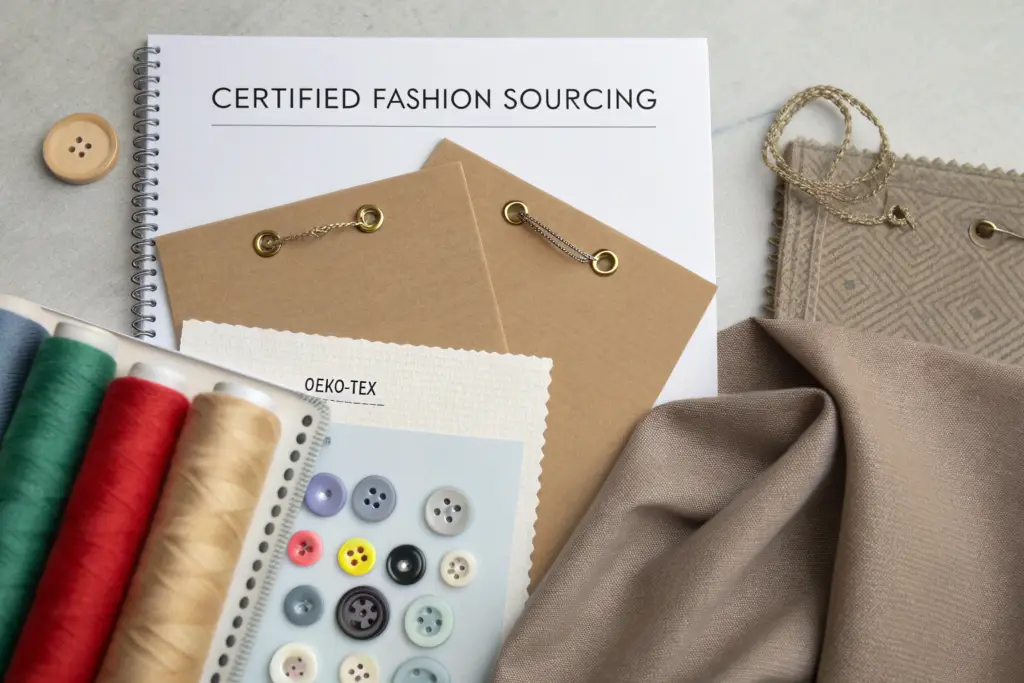
Featured paragraph: Sourcing compliant materials for avant-garde designs requires a hybrid strategy: working with specialist mills and trim suppliers who understand chemical compliance, and leveraging the manufacturer's sourcing network. A capable factory will have relationships with mills that can produce small, custom lots of certified base fabrics, which can then be custom-dyed or printed with compliant processes. For trims, it often means shifting from cheap commodity hardware to higher-quality suppliers who document their material chemistry. The key is to integrate the certification requirement into the design brief from day one, not as an afterthought. Last year, we sourced a OEKO-TEX certified crinkled seersucker and a compliant holographic transfer film for a designer's culotte line, proving that aesthetic and safety are not mutually exclusive.
Can You Custom-Dye or Print on Certified Base Fabrics?
Yes, this is often the most viable path. Start with a greige (undyed) fabric that has a blanket OEKO-TEX certificate for its base composition (e.g., "100% Polyester Woven Fabric"). Then, use a dye-house and printer that operate with OEKO-TEX compliant chemicals and processes. The final, dyed/printed fabric will be submitted as part of the finished garment certification. This allows for limitless color and design flexibility while maintaining the safety of the base material.
What is the Role of the Manufacturer as a Sourcing Partner?
A full-package manufacturer with experience in certified fashion items is invaluable. They act as a filter and facilitator. They can:
- Advise on which design ideas are most feasible within compliance boundaries.
- Use their bulk purchasing power to get small lots of specialty certified fabrics.
- Vet new trim suppliers for compliance documentation.
- Manage the submission and testing process for the complex final product.
This partnership turns a daunting task into a managed creative process.
Does Certification Limit Creative Expression in Design?
Leading paragraph: The fear that "certification means beige and boring" is outdated. The restrictions are on harmful chemical substances, not on color, texture, silhouette, or embellishment. The limitation is on how you achieve an effect, not on the effect itself.
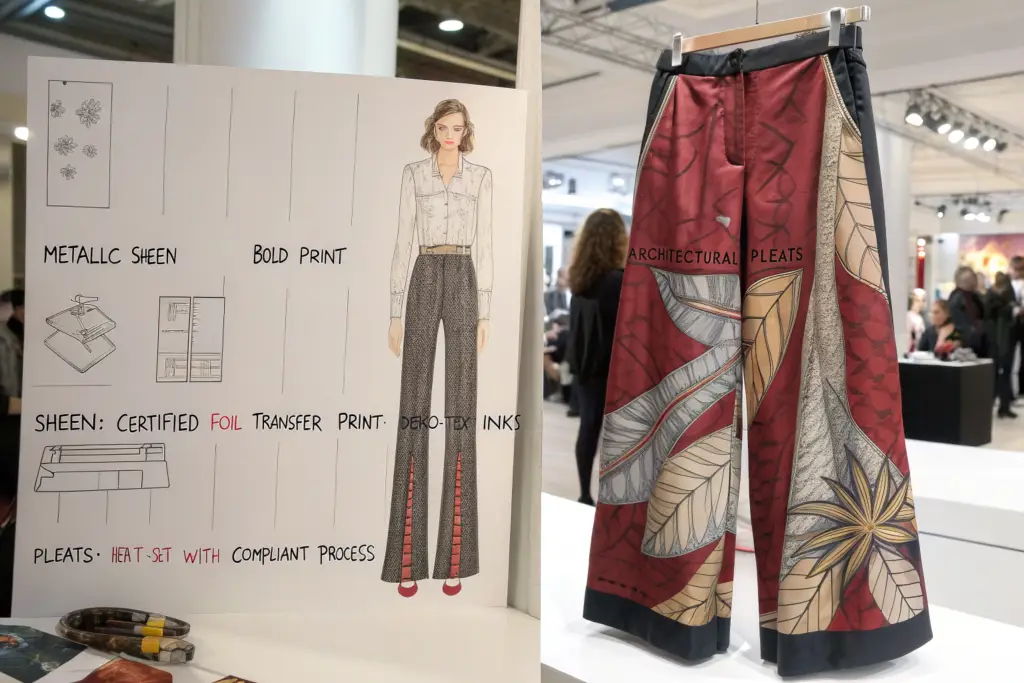
Featured paragraph: Certification does not limit creative expression; it channels it responsibly. It asks the designer and manufacturer to be more inventive with process and material selection to achieve the desired look. For example, instead of a standard plastisol print that may contain phthalates, you might use a phthalate-free plastisol or a water-based digital print. Instead of a metal buckle with nickel, you specify anodized aluminum or coated brass. This can sometimes lead to discovering superior, more durable alternatives. The creative constraint becomes a driver of innovation, resulting in a product that is both beautiful and ethically sound—a powerful combination in today's market.
Are There Any Aesthetic Effects That Are Truly Incompatible?
Very few. The primary incompatibility would be with design effects that require the use of a permanently restricted substance. For example, certain types of chlorine-based bleaching for a specific distressed look are problematic. However, most aesthetic goals can be achieved through alternative methods. The question becomes one of cost and development time, not possibility.
How Can Designers Use Certification as a Creative Inspiration?
Forward-thinking designers are using the certification as part of their brand story and visual language. They might:
- Use the OEKO-TEX label as a design element, stitching it visibly on the outside.
- Create patterns or graphics that symbolize "clean" or "safe."
- Develop a color story around "natural" or "pure" tones that the certification reinforces.
This turns a compliance feature into an integral part of the collection's identity.
What is the Marketing Advantage of Certified Fashion Golfwear?
Leading paragraph: In a segment driven by style and status, certification provides a deeper, more meaningful layer of value. It tells a story that goes beyond "looks good" to "does good and is made well." For the discerning golfer who values both aesthetics and ethics, this is a compelling proposition.
Featured paragraph: The marketing advantage is differentiation through verified integrity. In a sea of fashion claims, the OEKO-TEX label provides an objective, third-party validation of safety and quality. It allows a brand to say: "Our daring designs don't come at the cost of your well-being or the planet's." This resonates powerfully with the modern, conscious consumer—particularly women golfers, who are a key demographic for fashion-forward pieces like culottes. It justifies a premium price point, builds brand loyalty, and protects against greenwashing accusations. A brand that launched certified fashion culottes reported that over 60% of customer feedback specifically mentioned appreciation for the certification, highlighting its role in the purchase decision.

How to Communicate This in Brand Storytelling?
The narrative should weave together style and substance:
- "For the golfer who refuses to choose between bold style and peace of mind."
- "Every intricate detail is designed with intention, and verified for safety."
- "Innovation in cut, color, and chemistry."
Use high-quality visuals that showcase the design alongside close-ups of textures and the certification label.
Does This Appeal to a Wider Audience Beyond Golf?
Absolutely. Fashion-forward, certified culottes blur the lines between sportswear and lifestyle wear. They can be marketed for travel, leisure, and athleisure contexts, appealing to consumers who value versatile, high-quality, and responsibly made clothing. This expands the total addressable market for the product.
Conclusion
Fashion-focused golf culottes and OEKO-TEX certification are not just compatible; they are a potent combination for the future of the industry. The path to achieving it demands a collaborative, detail-oriented approach from design through sourcing to production, but the rewards are substantial: a product that stands out for its aesthetic innovation and its unwavering commitment to safety and quality.
This synergy represents a mature evolution in golf apparel, where self-expression and responsibility are seen as complementary, not contradictory.
Bringing a visionary, certified fashion collection to life requires a manufacturing partner with both technical precision and creative problem-solving skills. At Shanghai Fumao, we specialize in navigating this exact intersection, transforming complex designs into certified, commercial-ready realities. Contact our Business Director Elaine to start developing your standout collection: elaine@fumaoclothing.com. Let's prove that the most stylish statements are also the smartest and safest.