Last month, a client from Texas faced a critical issue. They had sourced OEKO-TEX certified polo shirts for their golf club, but after adding their custom embroidered logo, the entire batch risked losing its certification validity. This is a common and costly oversight. Many buyers believe certification applies only to the base garment, but the truth is more complex.
Yes, custom embroidery on golf wear can maintain OEKO-TEX compliance, but only if every component—the thread, backing, and any additives used in the embroidery process—is also certified and the entire finished product is tested and certified as a whole. A single non-compliant element invalidates the entire product's certification claim.
The integrity of OEKO-TEX certification lies in testing the final, ready-to-sell product. Embroidery introduces new materials and chemical treatments. Understanding how to manage this process is essential for brands that want to offer personalized, high-quality merchandise without compromising on safety or legal claims. Let's examine how to navigate this correctly.
Why Does Embroidery Threaten OEKO-TEX Certification?
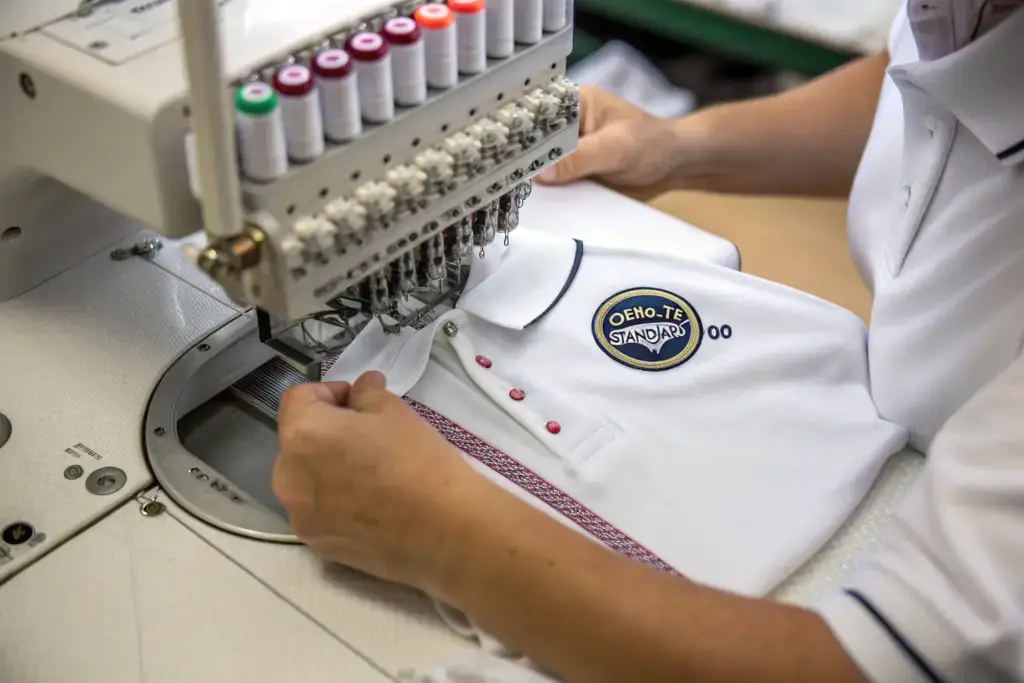
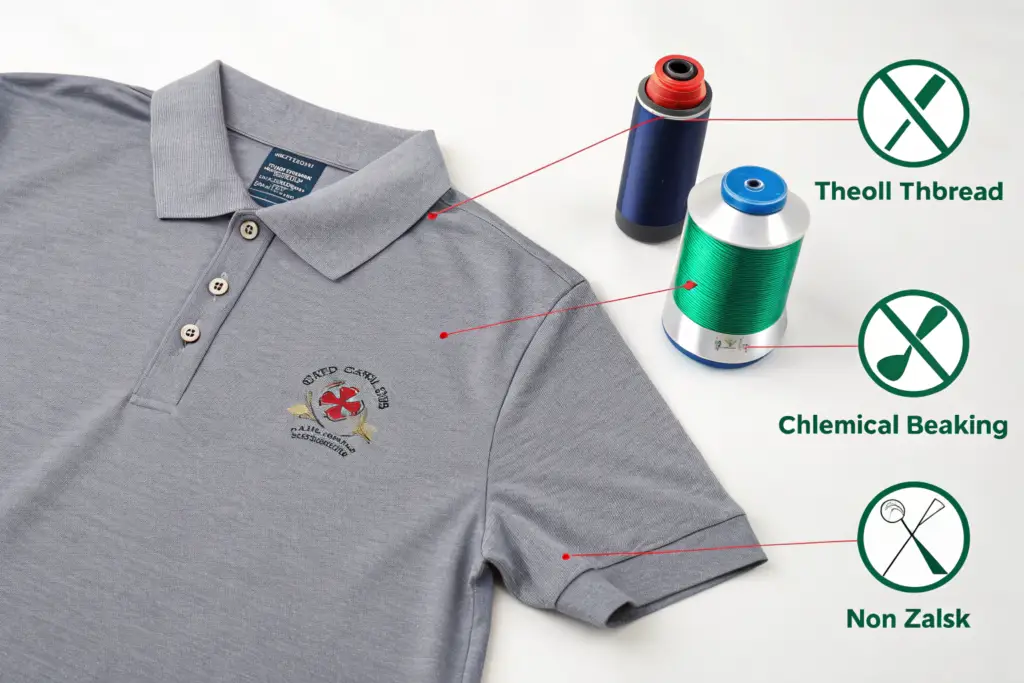
Embroidery is not just stitching; it’s the addition of new textiles and chemicals. The OEKO-TEX STANDARD 100 certification tests for harmful substances in the final product. When you embroider, you introduce embroidery thread and stabilizer (backing material). These components have their own chemical profiles.
If your supplier provides a certified base garment but uses non-certified embroidery thread containing, for example, allergenic dyes or heavy metals, the final product fails compliance. The same applies to the backing stabilizer, which often contains chemical treatments for stiffness or ease of tear-away. We audited a sub-contractor's embroidery facility last year and found they were using a common solvent to clean thread guides that left residues prohibited under OEKO-TEX. This oversight could have nullified certification for hundreds of garments.
What Specific Components in Embroidery Need Certification?
Three primary elements must be considered for compliance:
- Embroidery Thread: This is a textile product. It must be made from fibers and dyed with colors that comply with the OEKO-TEX limits. Polyester and rayon threads are common, and their dyeing processes are critical.
- Stabilizer (Backing): This is the material placed behind the fabric during embroidery to provide support. It can be cut-away or tear-away. Like any textile, it must be certified. Many standard backings contain finishes that are non-compliant.
- Process Chemicals: This includes lubricants on the thread, cleaning agents for machines, or any sprays used during the embroidery process. Their residues on the final product must not exceed OEKO-TEX limits.
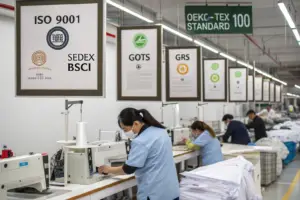
A responsible manufacturer like Shanghai Fumao manages this by sourcing pre-certified threads and stabilizers and maintaining a controlled "clean" embroidery process. We keep a documented inventory of all certified materials, which forms part of the evidence for the annual OEKO-TEX audit.
How Can Non-Compliant Embroidery Affect Your Business?
The risks are significant. Selling a product marked as OEKO-TEX certified when it is not due to embroidery can lead to:
- Legal Liability: If challenged, you cannot prove compliance, potentially violating consumer protection laws.
- Brand Reputation Damage: Being accused of "greenwashing" or false safety claims can destroy trust with your golf club members.
- Financial Loss: You may face rejected shipments, returns, or the cost of re-manufacturing an entire order.
Using certified components from the start is not a cost—it's a necessary investment in risk management. It ensures your branded apparel truly delivers on its promise.
How to Ensure Your Embroidered Golf Wear is Fully Compliant?
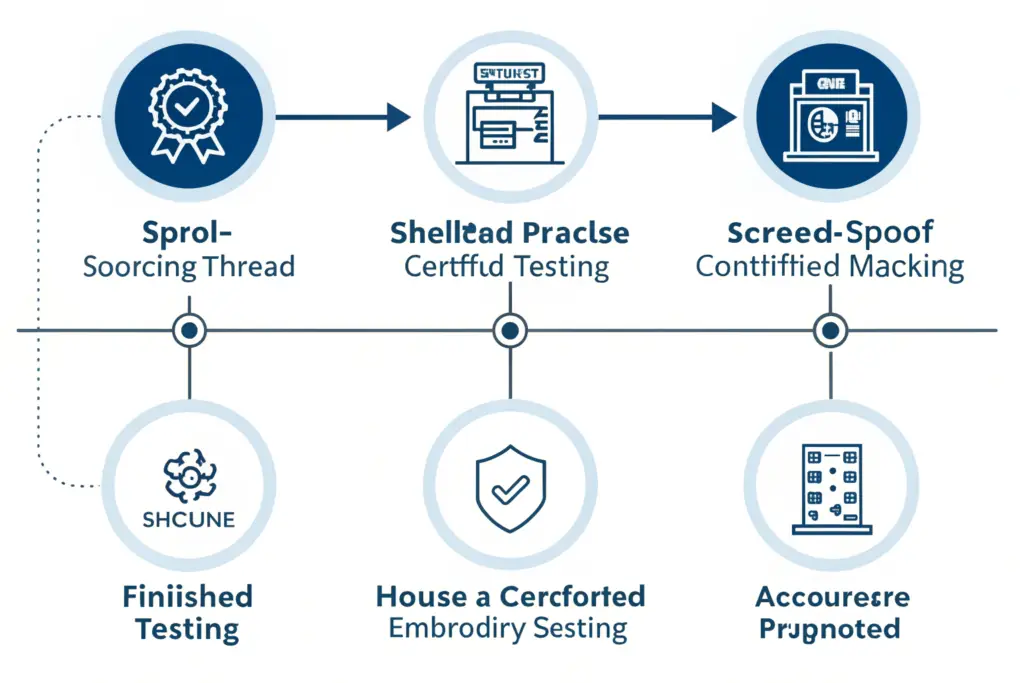
The solution is proactive supply chain management. You need a manufacturer that treats embroidery not as a separate, outsourced decoration step, but as an integral part of the certified production system. Our process for a major Arizona golf resort involves a four-step verification.
First, we only use embroidery threads and stabilizers from our OEKO-TEX certified material inventory. Second, our in-house embroidery unit operates under the same chemical management protocols as our cutting and sewing floors. Third, we submit finished, embroidered samples from each production batch for testing. Fourth, the official certificate issued lists the final product, including the embroidery, as the tested article.
Should You Insist on In-House Embroidery vs. Outsourcing?
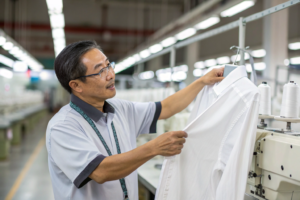
For guaranteed compliance, in-house control is superior. Outsourcing embroidery introduces variables that are difficult to monitor. When embroidery is done within a certified factory like ours, the entire process falls under the existing OEKO-TEX audit scope. The chemicals, materials, and workflows are already documented and controlled.
If outsourcing is unavoidable, you must ensure the subcontractor is also OEKO-TEX certified for their embroidery process or is willing to adhere to your manufacturer's strict material and chemical list. They must provide Material Safety Data Sheets (MSDS) for all consumables. This adds a layer of complexity and risk that often negates any perceived cost saving. For peace of mind, choosing a full-package manufacturer with integrated services is the most reliable path.
What Documentation Must You Receive from Your Supplier?
Do not settle for a certificate for the base garment alone. You must receive an OEKO-TEX STANDARD 100 certificate that includes the specific product with embroidery. The certificate should:
- Clearly describe the final product (e.g., "Men's Polo Shirt, with embroidery").
- Have a valid date (certificates expire annually).
- Show the applicable product class (II or III).
- List the certification holder (your manufacturer's legal entity).
Always verify the certificate's authenticity on the OEKO-TEX certification database using the listed number. This simple step closes the loop and gives you undeniable proof of quality assurance for your entire supply chain.
What Are the Best Practices for Design and Embroidery to Stay Compliant?
Smart design choices can make compliance easier and more cost-effective. Complex, dense embroidery covering a large area uses more thread and backing, increasing the chemical load and testing scrutiny. A tasteful, well-designed logo is both stylish and compliant.
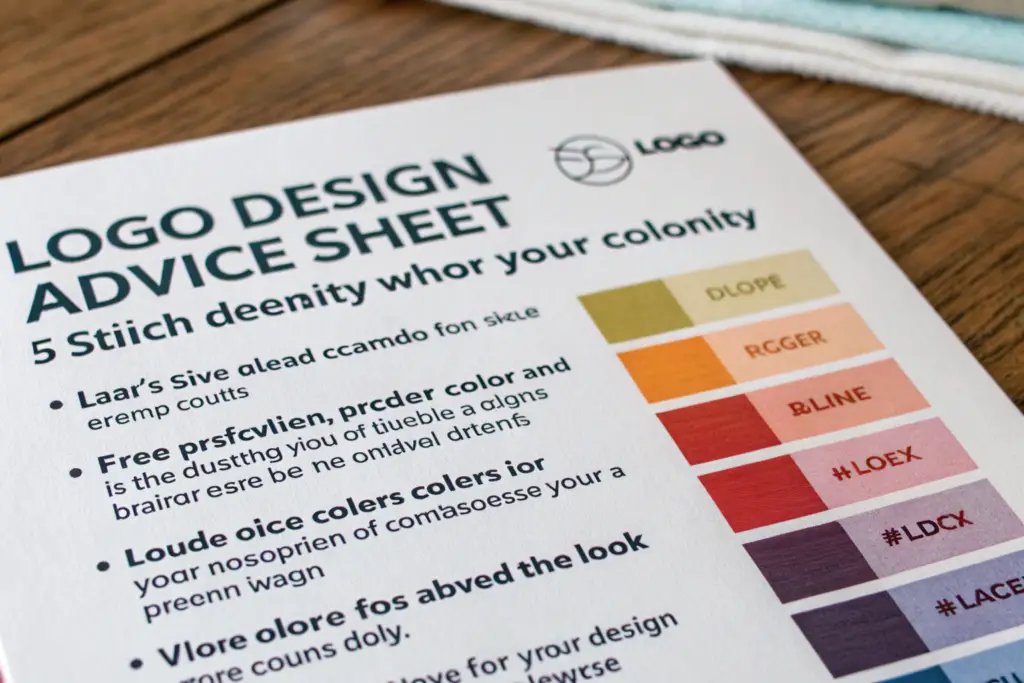
We advise clients to consider stitch density and color count. A logo with five colors requires five different dyed threads, each needing to be certified. Simplifying to three colors without losing brand identity can reduce complexity and cost. Furthermore, very dense stitching can require heavier backing and more lubricants. Opting for a clean, slightly less dense stitch pattern can achieve a premium look while being more compliant-friendly.
How Does Thread Color and Type Impact Compliance?
The dyeing process for embroidery thread is the primary source of potential harmful substances. Certain vibrant colors, especially deep reds or blacks, historically relied on dye formulations with higher risks of containing restricted chemicals. Today, certified thread suppliers have reformulated these, but they may still carry a slight premium.
Choosing common thread types like certified polyester is generally straightforward. If you desire a special effect thread (e.g., metallics, high-sheen), you must plan ahead. These threads often have special coatings and require explicit confirmation of certification from the thread supplier, which your manufacturer should obtain for you. Early collaboration on design with your manufacturer's product development team is key.
Can You Mix OEKO-TEX Certified and Non-Certified Items in a Collection?
This is a risky strategy. From a marketing and liability perspective, it creates confusion. If you promote a "golf collection" as OEKO-TEX certified, but only the solid polos are certified while the embroidered ones are not, you risk making a false overall claim. The clearest and most trustworthy approach is to make the entire collection compliant. This uniformity simplifies marketing, inventory management, and gives you a single, powerful selling point for all your golf apparel merchandise. It positions your brand as consistently responsible.
Conclusion
Custom embroidery and OEKO-TEX certification are not mutually exclusive. They can and must coexist for brands that prioritize both customization and proven safety. The key is integrated, transparent control over every material and process step, from the certified fabric to the certified thread and the final stitch.
The responsibility falls on you to ask the right questions and on your manufacturer to have the right systems in place. Don't assume—verify. Insist on seeing the certification for the exact finished product you will be selling.
At Shanghai Fumao, we bridge this gap. Our in-house design, manufacturing, and embroidery are all governed under our OEKO-TEX certified production system. We help you select compliant materials and create stunning, safe embroidered golf wear that protects your brand and delights your customers. Let us help you ensure every detail, down to the last stitch, is beyond reproach. Contact our Business Director Elaine today to discuss your next compliant collection: elaine@fumaoclothing.com.