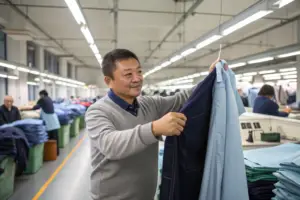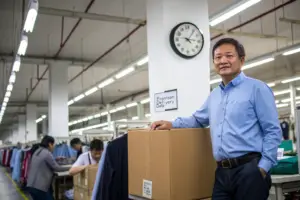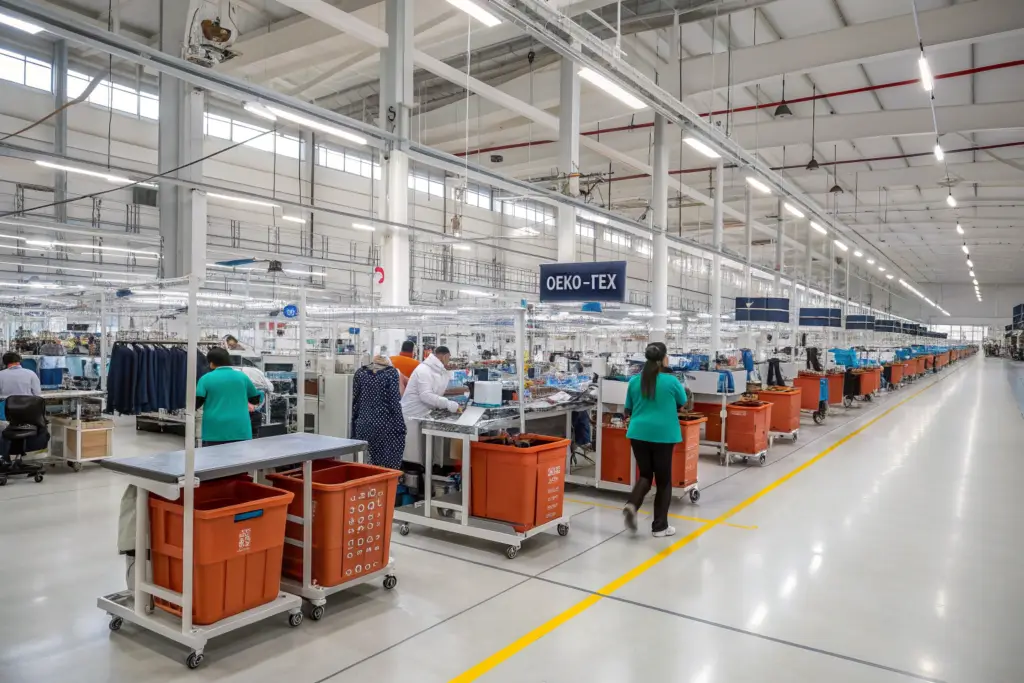
For ski apparel brands, your entire year often hinges on hitting a narrow seasonal window. Fall production must be flawless and on time to meet winter demand. But what happens when you need to scale your most complex, certified lines—those with OEKO-TEX requirements—during this peak pressure? Can a factory truly ramp up production of certified goods without sacrificing compliance, quality, or delivery dates? This is the multimillion-dollar question that keeps brand owners awake at night.
Yes, a factory can successfully scale OEKO-TEX production for seasonal peaks, but it is not a matter of simply adding more sewing machines. It requires deep, advance planning, a certified and scalable supply chain, robust internal quality systems, and a partnership approach with the brand. The factory must treat certified production as a separate, managed pipeline, not a variation of standard manufacturing.
Scaling certification is a test of a factory's fundamental organization and integrity. At Shanghai Fumao, we've navigated these peaks for over a decade. The difference between success and failure lies in specific, actionable systems implemented months before the sewing lines ever speed up.
What Advanced Planning is Non-Negotiable for Scaling Certification?
Scaling certified production starts not in the factory, but in the supply chain calendar—often 6-9 months before shipment. The core challenge is that OEKO-TEX compliant raw materials (fabrics, threads, zippers, etc.) have longer lead times and are less fungible than standard materials. You cannot easily substitute them at the last minute.
1. Raw Material Lockdown and Forward Buying:
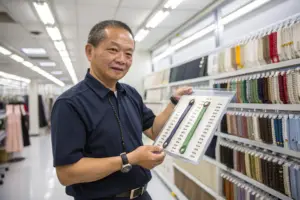
A scalable factory must forward-buy certified fabrics and components based on forecasted demand, long before receiving firm orders. This requires confidence and a shared risk model with trusted mills. We maintain strategic inventory of key OEKO-TEX certified fabrics (like popular polyester knits for base layers or shell fabrics) from our partner mills. This buffer allows us to start production immediately upon order confirmation, shaving 4-8 weeks off the typical lead time.
2. "Certified-Only" Production Blocks:
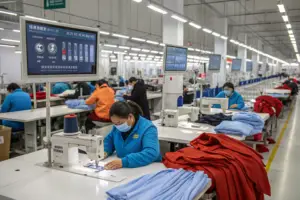
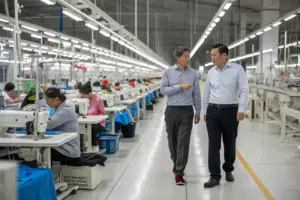
Trying to run OEKO-TEX and non-certified items interchangeably on the same line is a recipe for cross-contamination and errors. The scalable strategy is to dedicate specific production lines and time blocks exclusively to certified orders during peak season. These lines are cleared of all non-certified materials. Workers receive specialized training focused on the handling and documentation requirements. This separation is the only way to ensure purity and traceability at scale.
3. Pre-Certification of Components and Processes:
The factory should have its core printing inks, embroidery threads, and major trim suppliers pre-certified. For example, our in-house printing shop uses only OEKO-TEX certified ink systems. When a peak order comes in, we don't need to source and test new inks; we simply pull from our approved inventory. This applies to every component, down to the hangtags and polybags.

What is the Role of the Brand in This Planning?
Transparency is a two-way street. Brands must provide realistic forecasts as early as possible. The more visibility a factory has into your projected certified volume, the better they can reserve capacity and secure materials. The most successful scaling stories come from partnerships where the brand shares its seasonal buy plan in spring for a fall delivery, allowing the factory to prepare its certified pipeline proactively.
How Does a Factory Manage the OEKO-TEX Testing Bottleneck at Scale?
The single greatest operational bottleneck in scaling certified production is the laboratory testing time. Each new style, and sometimes each new colorway, requires a sample to be sent to an OEKO-TEX accredited lab for testing, which can take 3-5 weeks. You cannot mass-produce or ship without the final certificate.
A scalable factory employs several strategies to manage this:
1. Staggered and Priority Testing: Not all styles are created equal. We work with brands to identify the hero products and core colors that will make up 80% of the volume. These styles are put into the testing queue first, immediately after proto approval. Secondary colors or late-added styles follow in a staggered manner. Some labs offer priority testing services for an additional fee—a cost that is often worth it for critical path items.
2. Leveraging "Article Group" Certifications: OEKO-TEX allows for certification of an "article group" (e.g., "men's ski jackets made of polyester shell, nylon lining"). If you have a core platform style with multiple color variations, a well-prepared factory can submit a strategic testing plan to the lab to certify the group efficiently, reducing the need for a separate full test for every single SKU.
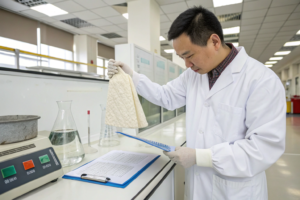
3. In-House Pre-Testing and QC Labs: While not a replacement for official certification, a sophisticated factory will have in-house labs to test for key parameters like pH value and formaldehyde. This acts as a critical filter. We test every incoming batch of certified fabric in-house before it goes to production. If a batch fails our internal check, we quarantine it and alert the mill before it's cut, preventing a massive disruption downstream. This internal vigilance is what prevents a last-minute certification failure during peak production.

What Happens When There's a Last-Minute Design Change?
This is a high-risk scenario. A change in a trim supplier or a new print color during peak season can be catastrophic if not managed. The protocol is strict: the new component must be sourced from a pre-certified supplier or undergo expedited testing. The factory must have the discipline to halt production of that style until the new compliance data is secured. This is where clear contracts and shared responsibility with the brand are essential to absorb the inevitable delay and cost.
Can Quality Control (QC) Keep Up with Accelerated Certified Production?
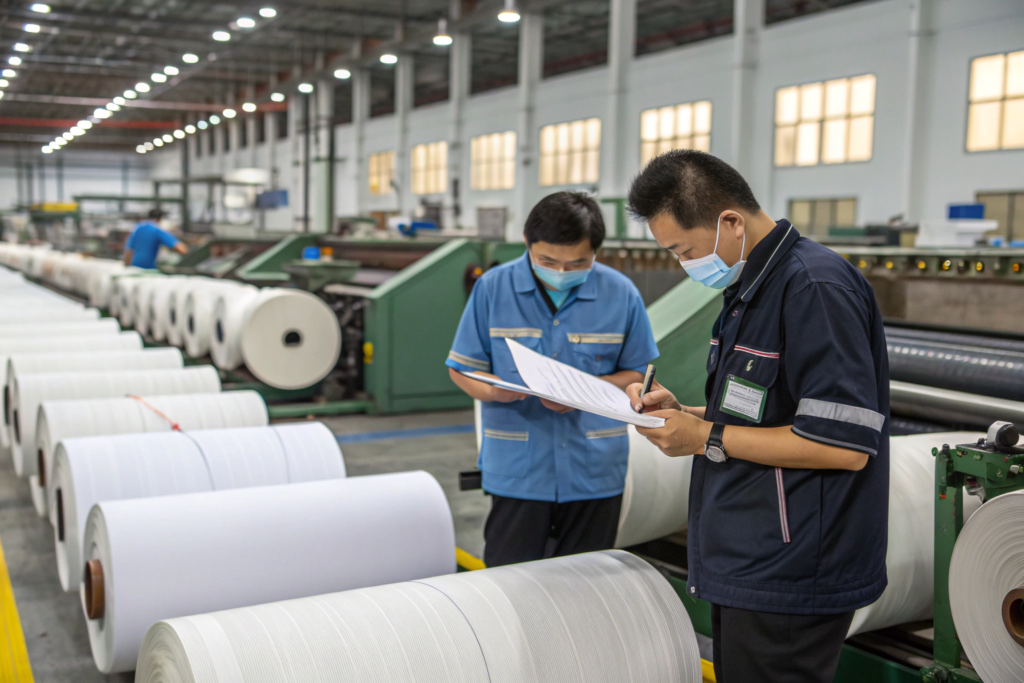
Scaling production often leads to a higher defect rate—unless QC is scaled and integrated first. For certified goods, QC isn't just about stitch quality; it's about compliance verification at every stage.
1. In-Line QC with a Compliance Focus: On dedicated OEKO-TEX lines, QC checkpoints are augmented. Inspectors don't just check seams; they verify that the correct, certified components are being used. They check that lot numbers on fabric rolls match the approved list. This is a proactive, preventative approach.
2. Final Audit with Documentation Check: Before packing, a final audit includes a physical inspection and a documentation check. The auditor ensures that the finished garment's details (style, color, composition) match the pending OEKO-TEX certificate application. A mismatch here can void the certification for the entire batch.
3. Digital Tracking Systems: Scaling is impossible with paper-based tracking. A factory must use an ERP or MES system that tracks certified materials from receipt through to finished goods. At our factory, each batch of certified fabric is assigned a unique code in our system. When cut, this code travels with the cut panels through sewing, printing, and packing. This digital thread ensures full traceability, even when producing thousands of units per day.
How Do You Handle the Surge in Skilled Labor Needs?
Peak season requires more workers. For certified lines, you cannot use temporary, untrained labor. The solution is cross-training and creating a dedicated certified production team. We identify and train a core group of line leaders, operators, and QC staff specifically for certified production during the off-season. When peak hits, this team expands slightly with pre-vetted temporary staff who are trained by the core team, ensuring knowledge transfer and consistency.
What are the Real Costs and Risks of Scaling Certified Production?
Scaling certification is more expensive and carries unique risks compared to scaling standard production. Brands must understand this to build accurate cost models and contingency plans.
Cost Factors:
- Premium for Certified Materials: Bulk buying helps, but certified fabrics and components always carry a cost premium.
- Dedicated Line Efficiency: Running separate lines can reduce overall factory efficiency, as these lines cannot be flexed for other work.
- Expedited Testing Fees: Priority lab services add cost.
- Enhanced QC Overhead: The compliance-focused QC requires more skilled personnel.
| Key Risks and Mitigations: | Risk | Mitigation Strategy |
|---|---|---|
| Material Shortage | Forward buying contracts with mills; holding strategic buffer stock. | |
| Certification Delay | Staggered testing; using article groups; clear communication with labs. | |
| Quality/Compliance Drop | Dedicated lines; enhanced in-line QC; digital tracking. | |
| Supplier Failure | Multi-sourcing for key certified components from pre-vetted suppliers. |
A real example: For a large midwestern retailer's private label, we scaled to produce 80,000 OEKO-TEX certified ski units in 12 weeks. The success relied on locking fabric in April for October production, using three pre-certified trim suppliers for redundancy, and running two dedicated lines with our trained team. We absorbed a 5% higher operational cost, but the brand avoided any delivery delays or compliance issues, securing their crucial holiday season revenue.
Conclusion
Scaling OEKO-TEX production for seasonal peaks is not only possible but is a hallmark of a mature, sophisticated, and trustworthy manufacturing partner. It is a complex orchestration of advanced supply chain management, stringent process isolation, proactive testing strategies, and scalable quality systems. It requires investment, discipline, and a true partnership where the brand provides early forecasts and the factory provides transparent capacity and risk management.
The brands that win the seasonal race are those who choose manufacturers that have already built this certified scaling capability into their operational DNA. They don't just sew clothes; they manage a compliant ecosystem.
If you are looking for a manufacturing partner capable of delivering your high-volume, OEKO-TEX certified seasonal collections with reliability and precision, your search requires a deep dive into their scaling systems. At Shanghai Fumao, we have built our facility and processes around this exact challenge. Contact our Business Director Elaine to discuss how we can plan and execute your peak-season production with confidence: elaine@fumaoclothing.com.