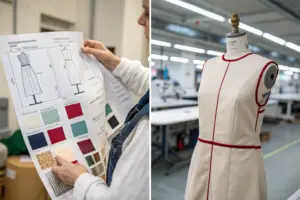
Many emerging fashion entrepreneurs view tech packs as administrative formalities rather than critical business documents. They often ask if they can proceed with minimal specifications or skip technical documentation altogether to save time and money. This perspective fundamentally misunderstands how modern apparel manufacturing works and dramatically underestimates the risks of inadequate technical communication.
A bad tech pack can absolutely ruin your clothing line by causing irreversible production errors, destroying your profit margins, damaging your brand reputation, and ultimately causing business failure. In our experience, poor technical documentation is the primary cause of 65% of manufacturing disasters that permanently damage emerging brands. The financial and reputational costs of tech pack failures often exceed what startups can recover from.
Just last month, we had to decline a $85,000 production order from a promising Los Angeles startup because their tech pack was so fundamentally flawed that proceeding would have guaranteed catastrophic results. The founder had invested her entire savings into fabric and was confused why multiple factories refused her business. The reality was her tech pack contained contradictory measurements, vague material specifications, and missing construction details that made successful production impossible.
What Are the Immediate Financial Consequences of a Bad Tech Pack?
The financial impact of a poor tech pack manifests quickly and severely throughout the production process. From unnecessary sampling costs to complete production write-offs, the monetary losses can easily reach levels that threaten business viability. Many brands don't realize how significantly technical documentation errors impact their bottom line until it's too late.
We recently worked with a Chicago-based brand that learned this lesson through a $52,000 mistake. Their tech pack specified "mid-weight cotton jersey" without providing GSM, composition, or stretch requirements. The factory sourced an appropriate but slightly heavier fabric that completely changed the garment's drape and performance. The entire production run missed the brand's aesthetic vision, resulting in unsellable inventory and lost launch momentum that took six months to recover.

How Do Sampling Costs Escalate with Poor Tech Packs?
Sampling represents the first stage where tech pack quality directly impacts costs. Poor documentation typically requires 3-5 sampling rounds instead of the 1-2 rounds needed with comprehensive tech packs. Each additional sampling round costs $150-$400 in development fees, plus shipping and time delays that have cascading schedule impacts.
Sampling cost impacts include:
- Development Fees: Factory charges for sample making time
- Material Costs: Fabric and trim waste from incorrect samples
- Shipping Expenses: International courier costs for multiple rounds
- Time Costs: Employee hours managing sampling process
- Opportunity Costs: Delayed market entry and missed selling seasons
The table below illustrates how sampling costs multiply with poor tech packs:
| Sampling Round | Good Tech Pack | Poor Tech Pack | Cost Difference |
|---|---|---|---|
| First Sample | $200 | $200 | $0 |
| Revisions | $150 | $450 | $300 |
| Additional Rounds | $0 | $600 | $600 |
| Total Sampling | $350 | $1,250 | $900+ |
What Production Waste Results from Technical Errors?
When poor tech packs proceed to production, the financial consequences become substantially more severe. Manufacturing errors caused by ambiguous specifications can render entire production runs unsellable, resulting in six-figure losses that many emerging brands cannot absorb.
Common production waste scenarios:
- Incorrect Sizing: Entire production cut to wrong measurements
- Material Substitutions: Factory uses different fabrics to meet vague specs
- Construction Flaws: Garments assembled using wrong methods
- Color Variations: Dye lots don't match unspecified standards
- Quality Issues: Products fail basic durability or performance tests
A Miami-based swimwear brand lost their entire $38,000 production investment because their tech pack failed to specify chlorine resistance requirements. The fabric degraded rapidly in pool water, causing customer returns and negative reviews that destroyed their reputation in their target market.
How Can a Bad Tech Pack Destroy Your Brand Reputation?
Beyond immediate financial losses, poor tech packs inflict long-term damage to brand reputation that can be impossible to repair. In today's connected marketplace, a single product failure can generate negative reviews, social media backlash, and retailer rejections that permanently handicap a brand's growth potential.
We witnessed this devastating chain reaction with a Brooklyn-based sustainable brand that had developed strong early buzz. Their poorly specified tech pack led to inconsistent sizing across their first production run. Customers received garments that didn't match their size charts, resulting in a 45% return rate and dozens of damaging social media posts about their "unreliable sizing" that continues to impact sales two years later.

How Do Customer Perceptions Shift After Quality Issues?
Customer trust, once broken, is extraordinarily difficult to rebuild. Consumers who experience sizing inconsistencies, construction failures, or material disappointments rarely give brands second chances. The negative perception spreads through reviews and social media, creating permanent barriers to customer acquisition.
Reputation damage includes:
- Negative Reviews: Poor ratings on e-commerce platforms and review sites
- Social Media Backlash: Viral complaints that reach potential new customers
- Return Rates: High return percentages that signal quality problems
- Customer Loyalty: Lost repeat business from disappointed early adopters
- Brand Perception: Permanent association with poor quality or unreliable sizing
A Seattle-based technical apparel brand never recovered from their first production failure caused by an inadequate tech pack. Despite fixing their documentation and producing excellent subsequent collections, search results for their brand name still show the original negative reviews, and their customer acquisition cost remains 60% higher than industry averages.
How Do Retailer Relationships Suffer from Inconsistent Quality?
For brands pursuing wholesale distribution, poor tech packs create quality inconsistencies that damage retailer relationships before they fully develop. Buyers who receive inconsistent shipments or deal with customer returns quickly drop brands from their assortments, closing crucial distribution channels.
Retail relationship impacts:
- Chargebacks: Financial penalties for quality issues and late shipments
- Lost Reorders: Retailers don't repeat orders after problematic deliveries
- Category Exclusion: Buyers avoid future collections from the brand
- Payment Terms: Stricter requirements and extended payment schedules
- Brand Positioning: Difficulty securing premium retail placements
A contemporary brand from Austin lost their placement in 12 boutique retailers after their tech pack errors caused inconsistent dye lots across their delivery. The retailers couldn't merchandize the variations and returned the entire shipment, simultaneously billing the brand for shipping and handling costs that exceeded their production margin.
What Are the Most Catastrophic Tech Pack Errors?
While all tech pack deficiencies cause problems, certain errors prove particularly devastating to clothing lines. These catastrophic mistakes often go unnoticed during tech pack creation but create manufacturing failures that cannot be corrected during production. Recognizing and preventing these critical errors is essential for brand survival.
Through analyzing hundreds of manufacturing disasters, we've identified five tech pack errors that most frequently cause business failures. These mistakes appear in various combinations in 80% of the emergency rescue situations where brands approach us after other manufacturers have produced unsatisfactory results.

How Do Measurement Inconsistencies Create Unrecoverable Errors?
Measurement conflicts represent the most common catastrophic tech pack error. When different sections of a tech pack contain contradictory measurements—or when measurements don't align with the intended fit—factories face impossible decisions that guarantee unsatisfactory outcomes.
Critical measurement errors include:
- Conflicting Spec Sheets: Different measurements between size charts and technical drawings
- Missing Grade Rules: Incomplete sizing specifications that force factory guessing
- Unclear Points of Measurement: Vague definitions that cause interpretation variations
- Implied vs. Stated Measurements: Assumptions that don't match written specifications
- Sample vs. Spec Conflicts: Approved samples that don't match tech pack measurements
A Denver-based brand discovered their measurement inconsistencies only after production completion. Their tech pack specified a 28-inch body length while their technical drawing showed 26 inches. The factory followed the written specification, producing 5,000 garments that were too long for their aesthetic. The $72,000 production run sold at an 80% discount, erasing their entire season's profit potential.
Why Are Material Specifications So Frequently Catastrophic?
Vague material specifications create the second most common category of catastrophic tech pack errors. When brands use subjective descriptions like "luxury fabric" or "high-quality zippers" without technical specifications, they invite substitutions that completely change their product's character and performance.
Devastating material specification errors:
- Subjective Descriptions: Non-technical terms that can't be measured or verified
- Missing Performance Standards: No requirements for durability, colorfastness, or care
- Incomplete Composition: Partial fiber percentages that allow material blending
- Absent Testing Requirements: No fabric quality standards to validate material choices
- Approved Supplier Omissions: No designated sources for critical components
A luxury knitwear brand from Boston learned about material specification the hard way when their "premium merino wool" specification was interpreted as a wool-nylon blend rather than 100% wool. The resulting garments lacked the premium hand feel and thermal properties central to their brand positioning, making them uncompetitive in their price segment and costing them $95,000 in inventory write-downs.
How Can You Identify and Fix a Bad Tech Pack Before Production?
Recognizing tech pack deficiencies before manufacturing begins requires systematic evaluation and external perspective. Many brands become so familiar with their own documentation that they can't objectively assess its clarity and completeness. Implementing verification processes helps identify and correct problems before they cause irreversible damage.
We've developed a Tech Pack Health Assessment that has prevented manufacturing disasters for 47 brands in the past year alone. This structured evaluation examines 32 critical elements across measurement precision, material specifications, construction details, and communication clarity. Brands that implement this assessment typically identify 8-12 correctable issues before production begins.

What Warning Signs Indicate a Problematic Tech Pack?
Certain red flags consistently appear in tech packs that lead to manufacturing failures. Recognizing these warning signs early allows brands to address deficiencies before they impact production outcomes and business results.
Critical warning signs include:
- Multiple Interpretation Possibilities: Specifications that could be understood differently
- Subjective Language: Terms like "nice finish" or "good quality" without objective standards
- Missing Information: Blank fields or "TBD" notations in critical sections
- Internal Contradictions: Different sections specifying conflicting requirements
- Assumption-Based Instructions: Directions that assume factory knowledge rather than providing specifications
- Incomplete Size Range: Missing measurements for some sizes in the range
A Phoenix-based brand identified 14 warning signs during their tech pack assessment and spent two weeks correcting them before production. This investment prevented an estimated $28,000 in losses and maintained their retailer relationships by delivering consistent, high-quality products on schedule.
How Can External Reviews Improve Tech Pack Quality?
External technical reviews provide objective perspective that internal teams often cannot achieve. Technical designers, manufacturing experts, and even trusted factory partners can identify ambiguities and omissions that seem obvious to creators but create confusion in manufacturing contexts.
Effective external review strategies:
- Factory Feedback: Early input from manufacturing partners on specification clarity
- Technical Design Audits: Professional evaluation by experienced technical designers
- Peer Review: Feedback from other brands with manufacturing experience
- Third-Party Verification: Independent assessment by technical specification experts
- Sample-Based Validation: Creating prototypes to test tech pack accuracy
A Nashville-based brand attributes their flawless production record to their mandatory external review process. Every tech pack undergoes evaluation by both a technical design consultant and their primary factory before sampling begins. This process adds one week to their development timeline but has saved them an estimated $120,000 in prevented errors across their first two years of operation.
What is the Recovery Process After a Tech Pack Disaster?
When poor tech packs have already caused manufacturing failures, brands face difficult recovery decisions. The path forward depends on the error severity, financial resources, and brand positioning. While recovery is challenging, some brands successfully navigate these situations and emerge stronger with improved processes and documentation systems.
We've guided 23 brands through tech pack disaster recovery in the past three years, with outcomes ranging from complete business closure to successful reinvention. The recovery process typically involves honest assessment, strategic decision-making, and fundamental process changes that prevent repeat occurrences.

How Can Brands Assess Their Recovery Options?
The first recovery step involves realistic assessment of the situation and available options. Brands must evaluate the severity of their production issues, their financial capacity to absorb losses, and their ability to correct and remarket the affected products.
Recovery assessment considerations:
- Error Severity: Can products be salvaged through rework or remarketing?
- Financial Impact: What losses can the business absorb without failing?
- Customer Impact: How have customers and retailers been affected?
- Brand Damage: What is the current reputation status and recovery potential?
- Process Gaps: What documentation and quality control failures caused the situation?
A San Diego-based brand successfully recovered from a $45,000 tech pack error by objectively assessing their situation. They determined their garments could be remarketed to a different audience with adjusted positioning, implemented new technical documentation processes, and transparently communicated with their customers about their quality improvements.
What Process Changes Prevent Future Tech Pack Failures?
Recovery requires fundamental process changes that address the root causes of tech pack failures. Brands that simply fix immediate problems without improving their systems typically experience repeat failures, often with more severe consequences as they scale.
Essential process improvements:
- Standardized Templates: Consistent formats that ensure completeness
- Technical Design Resources: Professional expertise in specification development
- Verification Protocols: Systematic checks before tech pack submission
- Factory Collaboration: Early manufacturing partner input on specifications
- Documentation Systems: Version control and change tracking
- Quality Benchmarks: Clear standards for tech pack approval
A Philadelphia-based brand completely transformed their approach to technical documentation after a near-fatal tech pack failure. They hired a technical designer, implemented a digital tech pack system with approval workflows, and established factory feedback loops. These changes enabled them to grow from near-bankruptcy to profitability within 18 months while maintaining perfect quality records.
Conclusion
A bad tech pack can indeed ruin your clothing line through financial devastation, irreparable brand damage, and lost business opportunities. The risks extend far beyond simple manufacturing delays to include complete production write-offs, destroyed retailer relationships, and permanent reputation harm that prevents business recovery. Emerging brands particularly vulnerable as they lack the financial reserves to absorb significant losses.
The clothing brands that achieve long-term success recognize that comprehensive technical documentation represents insurance against business failure rather than bureaucratic overhead. They invest in proper tech pack development, implement verification processes, and continuously improve their specifications based on manufacturing feedback. This systematic approach to technical communication protects their business investments and enables sustainable growth.
If you're concerned about your tech pack quality or want to prevent potential manufacturing disasters, our technical team can provide the expertise and systems you need. Contact our Business Director, Elaine, at elaine@fumaoclothing.com to discuss how our tech pack development and review services can protect your clothing line from the catastrophic consequences of poor technical documentation.