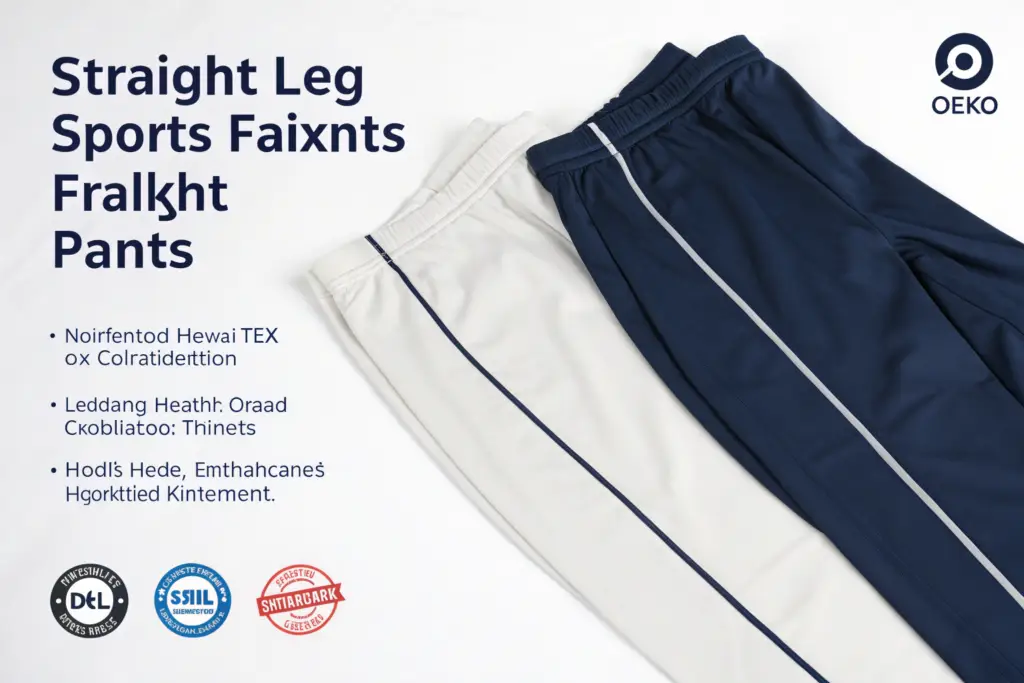
You're sourcing the next staple for your golf and activewear line: straight-leg sports pants. They promise a modern fit, freedom of movement, and versatile style. But as you evaluate samples and compare prices, a crucial question must be asked directly to your manufacturer: "Are these pants OEKO-TEX Grade 1 certified?" This isn't just a detail; it's the defining line between a product that merely looks good and one that is fundamentally safe for all-day wear. In the high-friction, high-sweat environment of sport, the chemical safety of the fabric touching the skin from waist to ankle is non-negotiable.
If your straight-leg sports pants are not OEKO-TEX Grade 1 (Standard 100, Class 1) certified, they have not been independently verified as safe for prolonged skin contact. This certification is essential for sports pants because it guarantees the fabric and all components are free from harmful levels of over 100 substances like allergenic dyes, formaldehyde, and heavy metals—substances that can cause irritation, especially under conditions of sweat and friction during physical activity. For a brand, selling uncertified pants is a significant liability and a missed opportunity to build trust.
A client recently shared a cautionary tale. They launched a popular straight-leg pant style made from a sleek, technical fabric. Initial sales were strong, but they soon faced a wave of returns citing "skin itching" and "unpleasant odor after sweating." The issue was traced to the fabric mill's use of non-compliant auxiliaries and dye fixatives—chemicals that a basic OEKO-TEX test would have flagged. The cost of the recall and lost customer trust far exceeded the minimal extra cost of certified fabric. This is why at Shanghai Fumao, our default position for any woven garment like sports pants is OEKO-TEX Class 1 certified sourcing. We provide the certificate upfront, so this question never needs to be asked with uncertainty.
1. Why Straight-Leg Sports Pants Demand the Highest Safety Standard
The design and use case of straight-leg sports pants make them a high-priority item for chemical safety verification. Unlike loose-fitting casual trousers, they are worn for activity, often directly against the skin, and are subject to unique stressors.
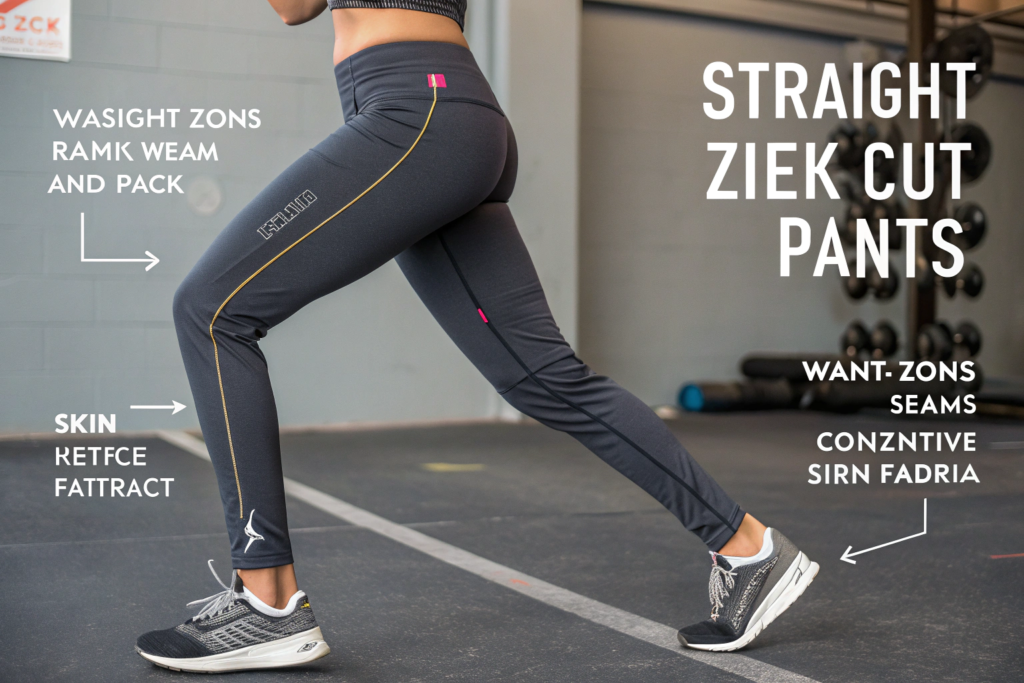
The straight-leg cut, combined with athletic use, creates specific risk zones—the waistband, inner seams, and entire leg area—where fabric is in constant, often sweaty, contact with skin. OEKO-TEX Grade 1 certification is designed for this exact scenario: prolonged, intimate contact under dynamic conditions.
The High-Risk Zones in Sports Pants
- The Waistband & Drawstring: This area is under constant pressure and traps sweat. An uncertified waistband may contain elastic treated with skin-sensitizing MBT or adhesives with formaldehyde.
- The Gusset & Inner Seam Area: Critical for mobility, this area experiences the most friction. Non-colorfast dyes can migrate with sweat, and chemical softeners can break down, causing irritation.
- The Full-Length Leg: The entire pant leg fabric is in contact with skin. Residual pesticides from raw cotton, heavy metals from dyes, or PFAS from water-repellent finishes (if present) pose a full-length exposure risk.
OEKO-TEX testing doesn't just check the fabric; it tests the finished article's extractable substances under simulated sweat conditions. This means the certification covers the chemical safety of the entire garment as it will be used. Our quality assurance process for pants includes verifying that every component, from the main fabric to the thread and drawstring cord, is sourced from OEKO-TEX compliant suppliers.
2. The Direct Impact on Performance and Consumer Experience
Certification is not just about avoiding harm; it's about ensuring positive performance. Chemical residues in fabric can directly undermine the technical features you're marketing.
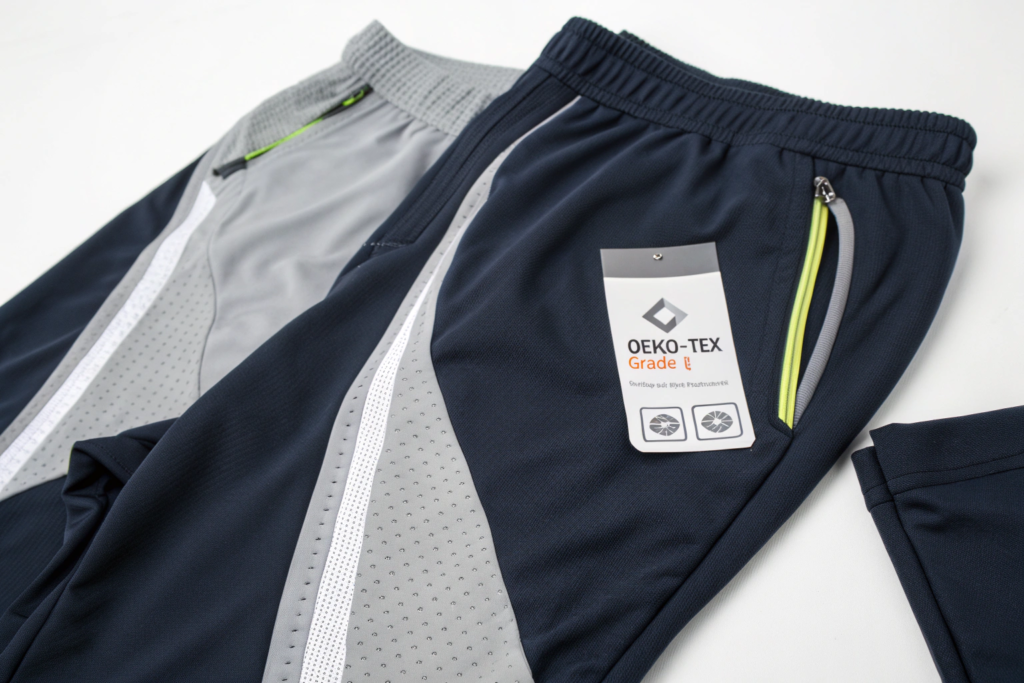
OEKO-TEX Grade 1 certification supports the performance promise of your sports pants by ensuring that the chemicals enabling stretch, moisture-wicking, or wrinkle resistance are safe and stable, leading to better durability, odor control, and overall wearer comfort.
How Certification Preserves Functionality
- Maintains Breathability: Harsh chemical residues can clog the micro-pores of technical fabrics, reducing their breathability and moisture-wicking capabilities over time.
- Ensures Colorfastness: Certified fabrics undergo colorfastness to perspiration and rubbing tests. This means the color of your pants won't bleed or fade unevenly with sweat and wash, preserving their aesthetic appeal.
- Promotes Odor Control: By restricting certain chemicals and ensuring cleaner fabric, certified pants are less likely to develop a persistent chemical or "locked-in sweat" odor.
We validated this with a line of straight-leg golf pants we produced. The client wanted a fabric with natural stretch and a soft hand-feel. By selecting an OEKO-TEX Class 1 certified fabric from the start, the pants not only passed all safety audits but also outperformed a non-certified sample in third-party wash tests for pilling and color retention after 30 cycles. The certification was a proxy for superior product development and material integrity.
3. How to Get a Straight Answer from Your Supplier
Asking "Are these certified?" is not enough. You must ask specific, verifiable questions to get past vague assurances and obtain proof.
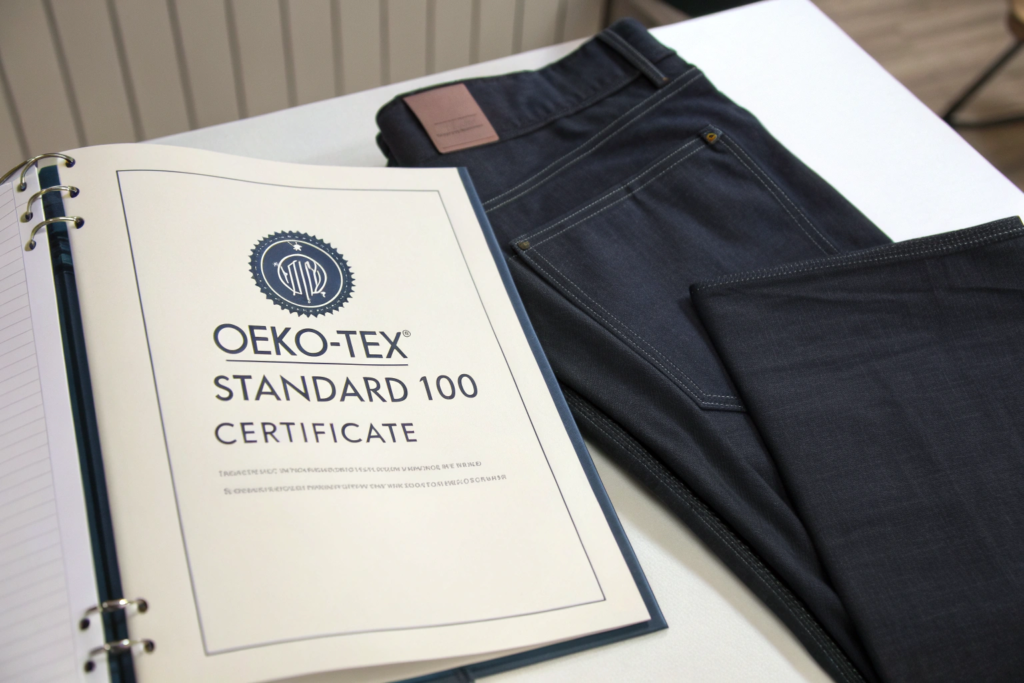
To get a definitive answer, you must request the actual OEKO-TEX Standard 100 certificate for the specific fabric used in the pants and then independently verify it. A trustworthy manufacturer will provide this documentation willingly and immediately.
Your Verification Checklist
- Request the Certificate: Email your supplier: "Please provide the original OEKO-TEX Standard 100 certificate for the exact fabric used in your straight-leg sports pants model [Model Code/Name]. We need to see the certificate number, validity dates, and confirm it is for Product Class I."
- Conduct a Live Database Check: Upon receiving the certificate, use the unique number to check it in the official OEKO-TEX online database. Better yet, request a video call with the supplier to do this verification together in real-time.
- Ask About Scope: Ask, "Does this certificate cover the finished garment, or just the fabric? Are the thread, elastic, and labels also certified?" The ideal is a Finished Product Certificate.
A manufacturer that hesitates, provides a blurry document, or cannot facilitate a live check is presenting a major red flag. At Shanghai Fumao, we streamline this for our clients. We include relevant certificates in our initial proposal and are always prepared for a live verification session. This transparency is a cornerstone of our B2B partnership model.
Conclusion
For straight-leg sports pants, OEKO-TEX Grade 1 certification is the benchmark that separates basic apparel from credible performance wear. It is the objective standard that assures you, your retail partners, and the end-consumer that the product is safe for its intended, active use.
It mitigates business risk, enhances product performance, and provides a powerful, verifiable marketing asset. In a market where consumers are making more informed choices, this certification is increasingly becoming the price of entry for serious brands.
Don't leave the answer to chance. Partner with a manufacturer who builds certification into their core product offering. At Shanghai Fumao, every pair of straight-leg sports pants we produce starts with OEKO-TEX Class 1 certified materials as a standard. Let us provide you with the certified quality and peace of mind your brand deserves. Contact our Business Director, Elaine, to request samples and certificates for our sports pants range: elaine@fumaoclothing.com.