More golf brands are turning to recycled polyester (rPET) to meet consumer demand for sustainability. But using materials from post-consumer plastic bottles introduces a critical question: does this eco-friendly choice still guarantee the chemical safety expected from premium apparel? You need to be certain that your sustainable line isn't carrying hidden risks that could damage your brand.
Yes, recycled polyester fabrics used in golf wear are fully covered by OEKO-TEX® certification, but with specific, stringent due diligence requirements. The STANDARD 100 by OEKO-TEX® standard tests the final fabric or garment for harmful substances regardless of the material's origin, holding recycled materials to the same strict limits as virgin ones. However, additional evidence of supply chain traceability and contaminant screening is now essential for compliance.
This means your recycled golf polo or jacket can be both sustainable and safe, but only if your manufacturer follows a rigorous process. Let’s explore how OEKO-TEX certification ensures the safety of recycled polyester and what you must verify with your supplier.
How Does OEKO-TEX Testing Apply to Recycled Materials?
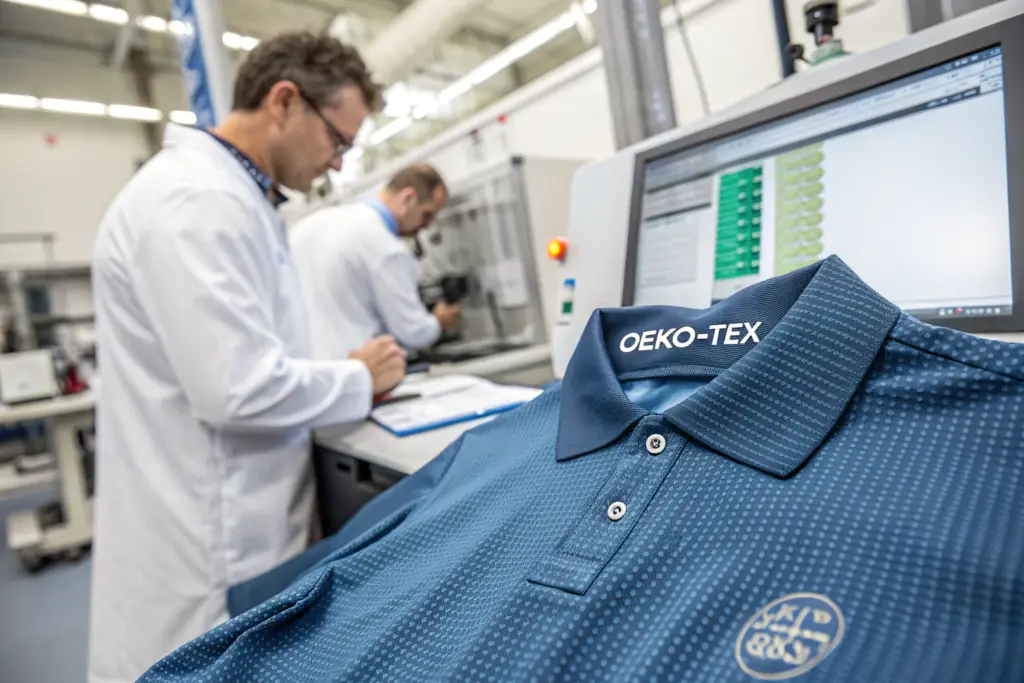
The core principle of OEKO-TEX STANDARD 100 is product safety. It tests the final, ready-for-sale article for a defined list of harmful substances. This test is blind to whether a polyester fiber is virgin or recycled; the same laboratory methods and limit values apply. If a recycled polyester fabric contains heavy metals, allergenic dyes, or PFAS above the allowed limits, it will fail certification.
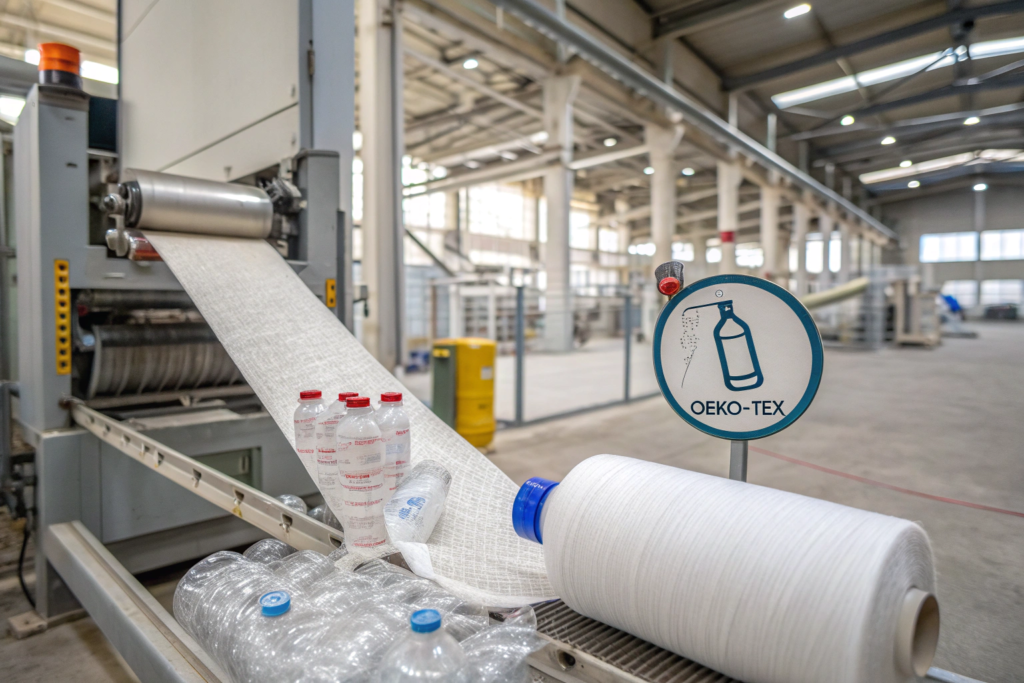
The challenge with rPET is the risk of contaminated input streams. Post-consumer plastic bottles might have contained chemicals that are not fully removed during the recycling process. Therefore, OEKO-TEX certification for recycled content goes beyond testing just the final fabric. It requires the manufacturer to demonstrate responsible sourcing and provide documentation tracing the recycled content. This due diligence is a key part of the 2025 updates, ensuring that the “green” claim is backed by a “clean” and safe product.
What Specific Contaminants Are Screened For in rPET?
The testing specifically looks for substances that could be introduced or concentrated during recycling:
- Heavy Metals: Such as antimony (a common catalyst in PET production) and lead, which might be present in bottle pigments or labels.
- Residual Adhesives and Additives: From bottle labels or caps.
- Unintended Chemical Mixtures: From cross-contamination in the recycling stream.
For a golf shirt manufacturer like Shanghai Fumao, this means we must source our rPET yarn from certified, audited suppliers who can provide their own evidence of clean input and processing. We then conduct our own pre-tests on the finished fabric before submitting for official OEKO-TEX certification.
Why is Supply Chain Traceability Now Mandatory?
To prevent greenwashing and ensure safety, OEKO-TEX requires a documented chain of custody. As a buyer, you should ask your supplier for evidence that traces the material from the recycler to the yarn spinner to the fabric mill. This is not just best practice; it's becoming a formal part of the certification framework. This requirement directly addresses a major buyer pain point: the risk of suppliers falsifying claims. A verifiable paper trail is your assurance.
What Must Brands Verify with Their Recycled Fabric Supplier?
You cannot assume that a “recycled” claim equals a “safe” product. Proactive verification is your responsibility as a brand owner. When sourcing golf wear made from rPET, your due diligence checklist must expand.
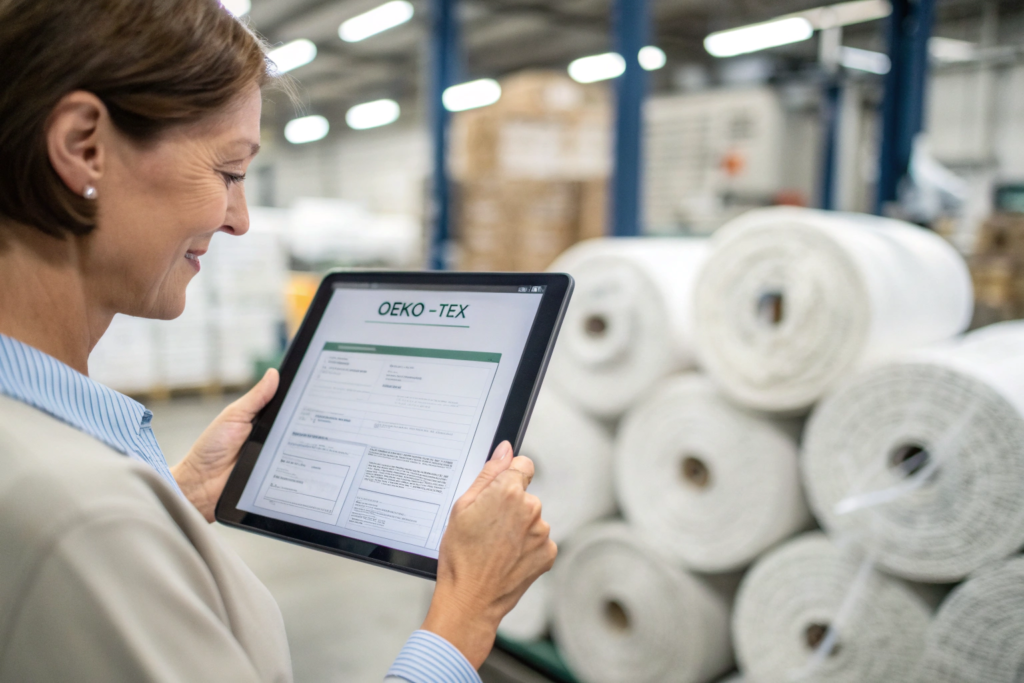
First, request the valid OEKO-TEX STANDARD 100 certificate for the exact fabric article you are purchasing. Verify the certificate number in the official OEKO-TEX database. Second, ask for supporting documentation on the recycled content. This typically includes a Supplier’s Declaration of Conformity (SDoC) specifying the percentage of post-consumer or post-industrial recycled content. Reputable manufacturers will provide this readily.
What Key Documents Constitute a Traceability Dossier?
A reliable supplier should be able to provide:
- Recycled Material Certificate: From the yarn supplier (e.g., statements from Global Recycled Standard or Recycled Claim Standard).
- Transaction Certificates: For each step in the supply chain.
- Technical Data Sheet & Test Reports: From the fabric mill, showing compliance with OEKO-TEX limits.
We compile this dossier for all our sustainable projects at Fumao Clothing. For instance, for a recent line of golf shorts for a Colorado-based brand, we provided a complete packet that allowed our client to confidently market both the sustainability and safety of their product.
How Can Brands Mitigate the Risk of Contamination?
Partner with manufacturers who conduct pre-emptive batch testing. Before committing to bulk production of your golf apparel, they should test a fabric sample from the specific batch of rPET material you will use. This “pre-test” screens for the contaminants mentioned earlier. It’s an upfront cost that prevents the massive risk of a failed final inspection or, worse, a product recall. This practice is central to our quality assurance protocol and is a non-negotiable step for responsible production.
Does OEKO-TEX Certification Enhance the Market Value of Recycled Golf Wear?
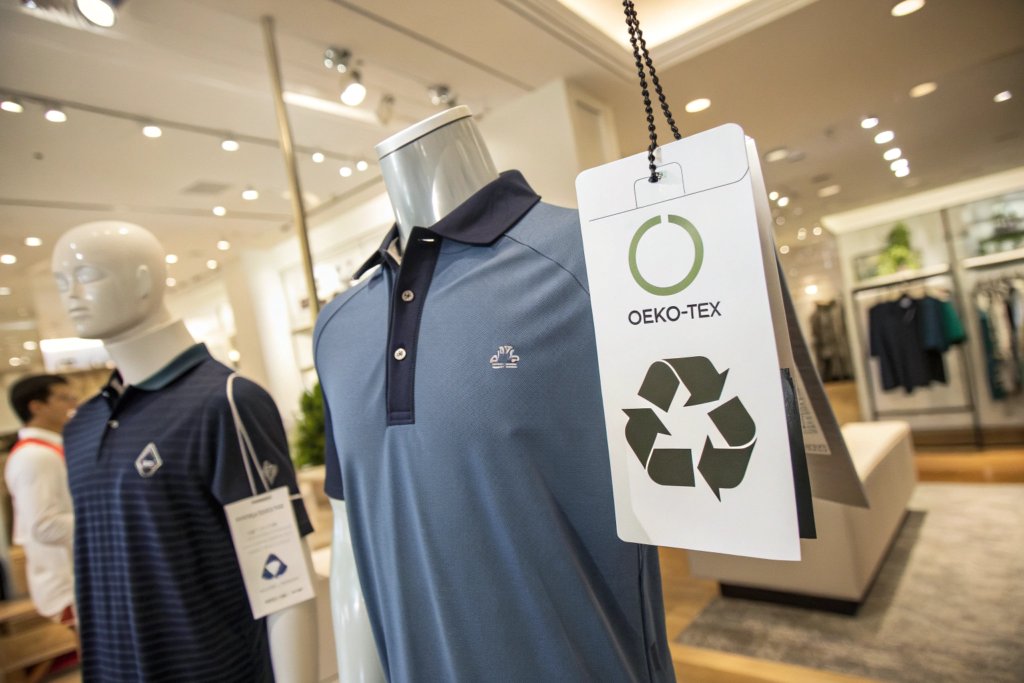
Absolutely. Certification transforms a potential liability (safety concerns about recycled materials) into a powerful, verifiable marketing asset. It provides a third-party, scientific endorsement that your product is both eco-conscious and consumer-safe.
In the competitive golf apparel market, this dual claim is potent. Retailers and end-consumers are increasingly savvy. They want sustainability, but not at the expense of performance or safety. An OEKO-TEX certified recycled garment answers all concerns. It allows you to communicate a compelling brand story backed by credible proof, which can justify a premium position and strengthen brand loyalty.
How Does This Streamline Retailer Onboarding?
Large retailers have complex compliance manuals. OEKO-TEX certification is widely recognized and often accepted as satisfying a major portion of their chemical safety requirements. By providing your OEKO-TEX certificate, you simplify their vendor approval process. This can significantly accelerate your time-to-shelf, helping you avoid missed selling seasons due to lengthy compliance reviews.
Can It Justify a Higher Price Point?
Yes, but it must be communicated effectively. The value proposition is: “You are investing in a high-performance garment that is proven safe for your skin and better for the planet.” The certification provides the “proven safe” part, lifting your product above generic “eco-friendly” claims. It adds a layer of tangible quality that discerning golfers are willing to pay for, protecting your profit model.
What Are the Practical Steps for Sourcing Certified Recycled Apparel?
Turning this knowledge into action requires a structured approach to your sourcing strategy. Your goal is to find a manufacturing partner that views certification and traceability as integral to their service, not an add-on.
Start by making OEKO-TEX certification for recycled materials a mandatory requirement in your initial Request for Quotation (RFQ). This will immediately filter out suppliers who cannot meet this standard. Then, during sample development, insist on seeing the documentation dossier and the results of pre-testing. Finally, ensure the certification is listed correctly on your commercial invoice for smooth customs clearance, as part of a DDP shipping model.
What Questions Should You Ask a Potential Manufacturer?
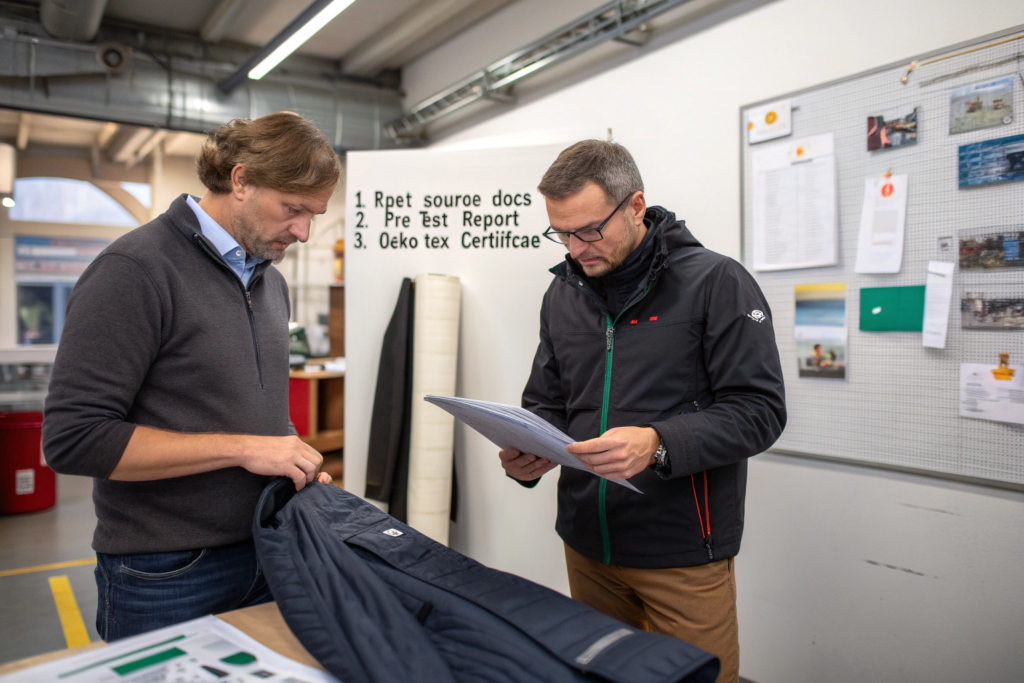
Go beyond price and MOQ. Ask these specific questions:
- “Can you show me the OEKO-TEX certificate for a similar recycled fabric you’ve produced in the last 6 months?”
- “What traceability documentation do you provide for the recycled content?”
- “Do you conduct pre-shipment lab testing on recycled fabric batches, and can I see a sample report?”
- “How do you manage the certification process to ensure it stays valid throughout production?”
The answers will separate true partners from basic commodity suppliers. A factory like ours, Shanghai Fumao, has systems in place to answer all these questions seamlessly, turning a complex process into a reliable, streamlined service for you.
Why is a Full-Package Manufacturer Advantageous for This?
Managing recycled material certification across multiple suppliers (fabric mill, dye house, factory) is complex and risky. A full-package manufacturer like us manages this entire chain internally or through vetted partners. We assume the responsibility for ensuring the rPET fabric, the dyes, the trims, and the final garment all comply. This single-point accountability is the most effective way to ensure reliable delivery of a product that is both sustainable and certified safe.
Conclusion
Recycled polyester fabrics in golf wear are not only covered by OEKO-TEX certification but are subject to its most rigorous scrutiny, including enhanced traceability requirements. This certification is the essential bridge between sustainability and safety, providing the verifiable proof that brands need and consumers trust. By partnering with a certified and knowledgeable manufacturer, you can confidently offer golf apparel that excels on performance, ethics, and market appeal.
Navigating the specifics of certified recycled materials is our expertise. At Shanghai Fumao, we specialize in producing high-quality, OEKO-TEX certified apparel, including advanced lines made from verified recycled polyester. Let us help you build a sustainable collection that stands up to scrutiny. Contact our Business Director Elaine at elaine@fumaoclothing.com to start your next certified golf wear project.