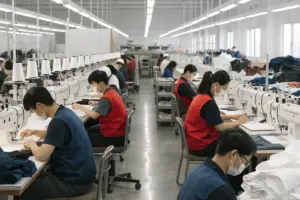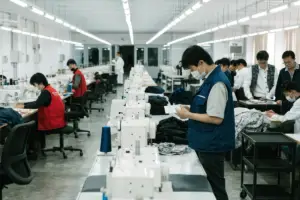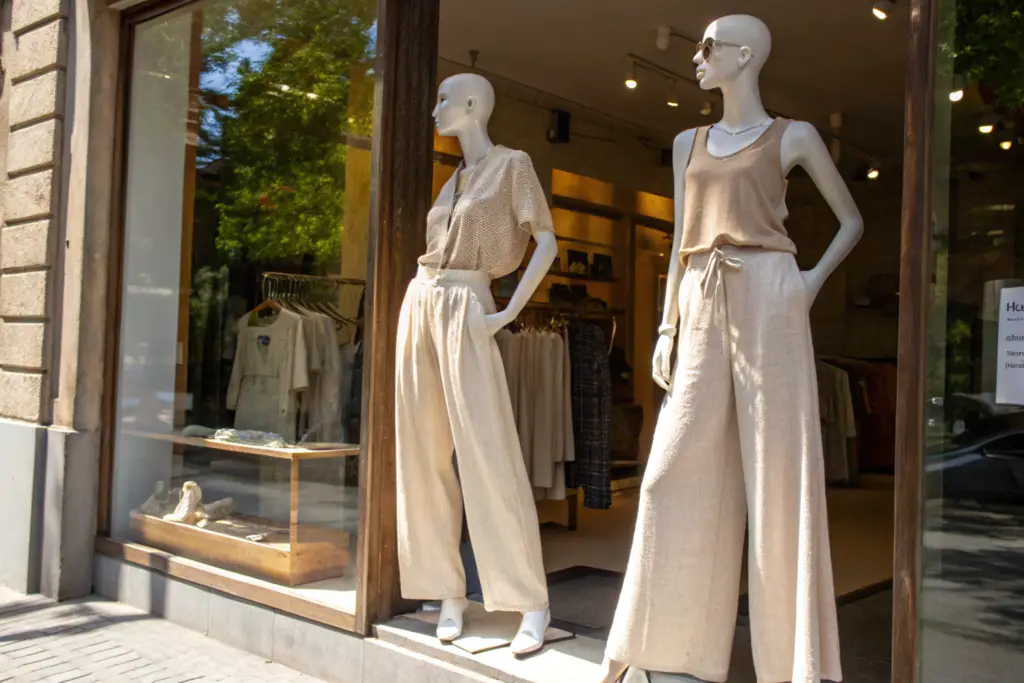
Three years ago, a brand owner from Los Angeles came to me with a problem. He had launched a women’s linen wide-leg pant. It sold out in two weeks. Men started emailing him. "Do you make this in my size?" "Why is this only for women?" He had never considered men as customers for a wide-leg linen pant. The silhouette felt feminine to him. The market was telling him something different. He added a men’s version the following season. It outsold the women’s version. He told me, "I almost left half my revenue on the table because of my own assumptions about who wears wide-leg pants."
Yes, linen wide-leg pants are suitable and increasingly profitable for both men’s and women’s wear wholesale. The unisex silhouette trend has dissolved the traditional gender boundary in relaxed tailoring. Men are adopting wide-leg linen pants for comfort, breathability, and a modern resort aesthetic. Women continue to buy them as a warm-weather staple. A single gender-neutral design, with adjusted sizing and subtle fit modifications, can serve both markets from one production run.
The question is not whether the pant works for both. The question is how to design and market it correctly for each segment. I have manufactured unisex linen collections for several brands. I know the fit differences. I know the marketing angles. Let me show you how to sell one pant to two customers.
What Are the Fit Differences Between Men’s and Women’s Linen Wide-Leg Pants?
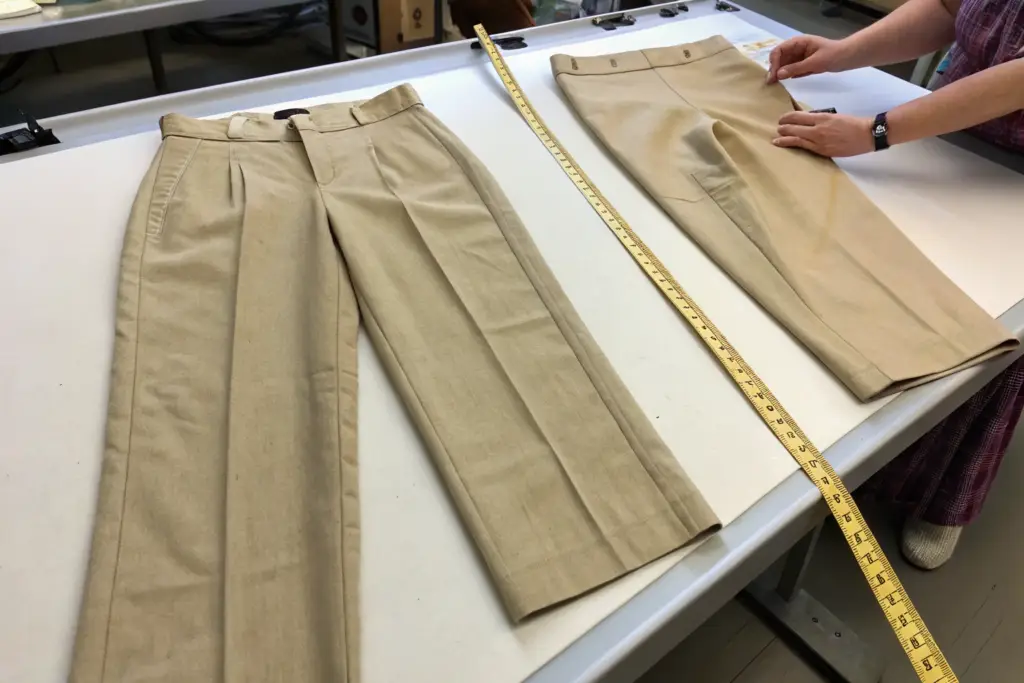
The wide-leg silhouette looks similar on a man and a woman from a distance. The drape is loose. The hem is full. But the body inside the pant is different. The hip-to-waist ratio is different. The crotch curve is different. The rise length is different. If you take a women’s size Medium and simply relabel it as a men’s size Small, the fit will be wrong. The pant will pull in the wrong places. It will gap in the wrong places. The customer will return it.
The key fit differences are in the hip-to-waist ratio, the front rise length, and the crotch curve shape. Women’s pants typically have a larger hip measurement relative to the waist, a shorter front rise, and a more curved crotch seam. Men’s pants have a smaller hip-to-waist differential, a longer front rise, and a straighter crotch curve. A true unisex design requires a graded size chart that accounts for these anthropometric differences across the size range.
I have developed unisex grading rules with my pattern maker. Let me share the specific differences.
How Does the Hip-to-Waist Ratio Change the Pattern?
A standard women’s size Medium pant has a waist measurement of 29 inches and a hip measurement of 39 inches. That is a 10-inch difference. The pattern has shaped side seams that curve in at the waist and out at the hip. Darts or pleats manage the excess fabric at the waistband.
A standard men’s size Medium pant has a waist measurement of 32 inches and a hip measurement of 38 inches. That is only a 6-inch difference. The pattern has straighter side seams. Darts are usually unnecessary because the hip-to-waist differential is smaller. The waistband is often higher, sitting closer to the natural waist or slightly below.
If you use a women’s pattern block for men, the hip will be too tight and the waist will be too loose. If you use a men’s block for women, the hip will be baggy and the waist will be tight. The solution is a unisex block designed with an intermediate hip-to-waist ratio, around an 8-inch differential. This is close enough for both bodies to be comfortable, especially in a loose-fitting wide-leg silhouette. The ease in a wide-leg pant is generous. The forgiving fit absorbs the small remaining differential. This is why linen wide-leg pants are easier to make unisex than slim-fit pants. The extra fabric hides the differences.
Why Does the Front Rise and Crotch Curve Matter More?
The front rise is the distance from the crotch seam to the top of the waistband. Men typically need a longer front rise than women, even for the same hip size. This is due to differences in pelvic structure and the external anatomy. A front rise that is too short for a man creates discomfort and an unflattering fit. A front rise that is too long for a woman creates excess fabric bunching at the lower abdomen.
The crotch curve is the shape of the seam that connects the two legs. On a women’s pattern, the curve extends further forward and is more deeply scooped. On a men’s pattern, the curve is shallower and extends further back to accommodate the different anatomy. A unisex pattern uses a modified crotch curve that is a compromise between the two. It is slightly deeper than a men’s curve and slightly shallower than a women’s curve.
In a wide-leg pant, the crotch curve is less critical than in a slim-fit pant because the loose fit provides room. But it still matters for comfort. My pattern maker at Shanghai Fumao has perfected a unisex crotch curve over years of development. We tested it on male and female fit models. We adjusted the curve until both reported comfortable all-day wear. The compromise works because linen is a forgiving fabric and the wide-leg cut is inherently spacious.
Can One Unisex Design Serve Both Markets Effectively?
The dream is simple. One design. One production run. One inventory pool. Sell it to men and women. The reality is more nuanced. A truly unisex garment that fits both bodies perfectly is rare. But a unisex garment that fits both bodies “well enough” is very achievable, especially in the relaxed linen category. The question is whether the compromise in fit is acceptable to your target customer. For some brands, yes. For others, no.
A single unisex design works well if you use a unisex grading scale, avoid gender-coded design details, and market the pant as a “relaxed, oversized fit” for women and a “modern, straight fit” for men. The same garment can be described differently to each audience. The key is to manage customer expectations through your size chart and your product photography. Show the same pant on a male model and a female model. Let the customer see themselves in the garment.
I have seen this strategy work brilliantly. I have also seen it fail when the fit compromise was too great. Let me give you the honest assessment from the production side.
What Design Details Make a Pant Unisex-Friendly?
Some design details push a pant toward one gender. A tie waist with a bow reads feminine. A cargo pocket reads masculine. A true unisex pant avoids these codes. It uses neutral design elements that neither gender rejects.
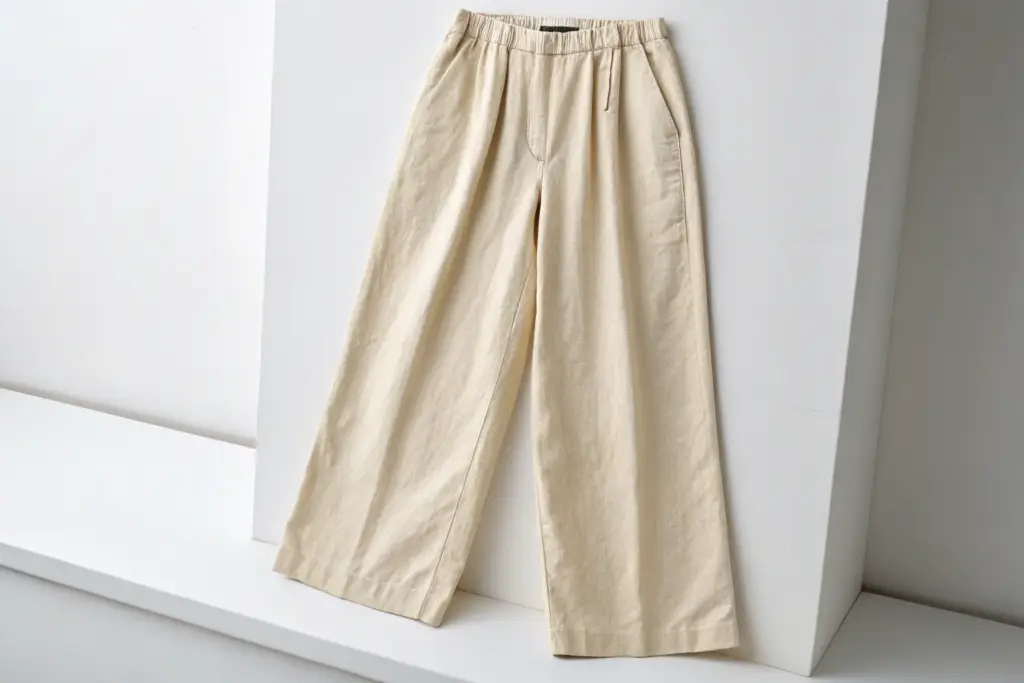
The most successful unisex linen wide-leg pant I produce has these features: an elastic-back waistband with a flat front, slash pockets, a straight leg with a wide hem, and no external drawcord. The elastic waist provides comfort for both body types. The flat front keeps it looking tailored, not pajama-like. The slash pockets are functional without adding bulk. The wide hem creates movement and drape that photographs beautifully on any body.
Avoid large visible logos. Avoid embroidered motifs. Avoid decorative stitching that could be perceived as feminine. Keep the design calm, clean, and architectural. The color palette should also be neutral. Natural flax, white, black, charcoal, and muted earth tones work for both markets. A soft sage green is unisex. A floral print is not. A terracotta is borderline but has been trending in menswear recently. Know your audience. A brand in Austin sells a unisex linen pant in natural, black, and a dusty blue. The blue is the bestseller for men. The natural is the bestseller for women. The pant is identical.
How Do You Size and Market a Single Pant to Two Audiences?
You need two size charts on one product page. A men’s size chart and a women’s size chart. The measurements are the same physical pant. The size labels are different. A unisex size Medium, which has a 30-inch waist, is labeled as “Men’s Small” and “Women’s Medium.” The customer selects their usual size based on the gendered chart. The pant they receive is the same pant.
The marketing language shifts. For the women’s product description, use words like “relaxed,” “flowing,” “effortless,” and “resort-ready.” Show a female model wearing the pant with a tucked-in tank top and sandals. For the men’s product description, use words like “modern,” “tailored comfort,” “vacation staple,” and “breathable.” Show a male model wearing the same pant with a linen button-down and loafers. The pant is the same. The story is different.
A client of mine in Portland does this perfectly. Her website has a “Unisex Linen Pant” product page. The product photos show a male model and a female model walking together, both wearing the natural wide-leg pant. The size chart has two columns. The reviews section includes comments from both men and women. “I’m 5’9″, 160lbs, usually a women’s 8. The Medium fits perfectly.” “I’m 6’1″, 180lbs, men’s small. Great fit, not too baggy.” The dual reviews create social proof for both audiences. A male shopper sees other men buying the pant. He doesn’t feel like he is shopping in the women’s section.
What Are the Pros and Cons of Separate Gender-Specific Production?
The unisex approach has compromises. For some brands, those compromises are unacceptable. They want a perfect fit for each gender. They want distinct design details. They want different colors. This means two separate production runs. Two patterns. Two size charts. Two inventory pools. The cost is higher. The reward is a more targeted product.
The main advantage of separate gender-specific production is perfect fit and targeted design. A men’s pant can have a longer rise and a straighter hip. A women’s pant can have a shaped waistband and a softer color palette. The disadvantage is higher inventory risk, larger minimum order quantities, and more complex logistics. You need to order enough of each gender to meet the MOQ, which ties up more capital.
Most of my clients start with a unisex design. They test the market. If both men and women buy, they scale. If one gender dominates, they double down on that gender for the next season. This is the lean approach.
When Does It Make Sense to Produce Two Separate Lines?
It makes sense when your brand is clearly gendered. If your brand is “Modern Menswear” or “Feminine Resort Wear,” a unisex pant dilutes your brand identity. Your customer expects a product designed specifically for them. A men’s brand adding a “women’s version” of a pant signals an afterthought unless it is done with authentic design intent.
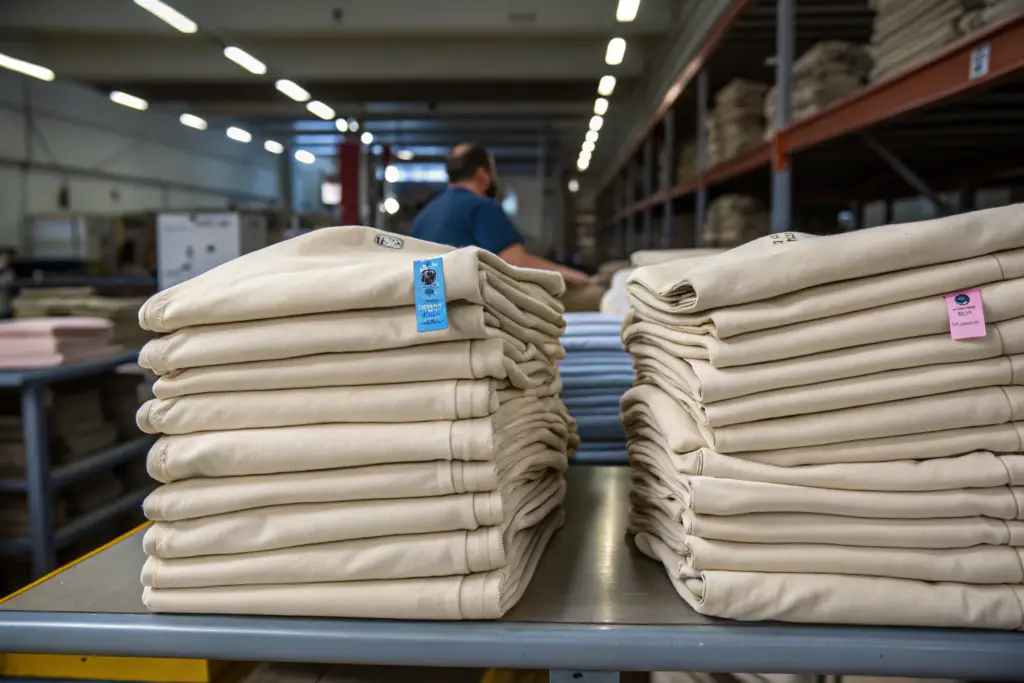
It also makes sense when the volume justifies the inventory split. If you are ordering 5,000 units, you can easily split into 2,500 men’s and 2,500 women’s. Both batches meet the standard MOQ of 300 units per color. The production cost is similar. The advantage is a better fit and stronger marketing story for each audience.
A brand in New York does this well. They have a men’s linen wide-leg pant and a women’s linen wide-leg pant. The men’s pant has a slightly longer rise, a button fly, and comes in charcoal, navy, and natural. The women’s pant has a paper-bag waist with a self-tie belt, a zip fly, and comes in natural, terracotta, and soft pink. The designs share the same base fabric. The production runs are separate. The brand identity is clear. The customer knows immediately which pant is for them. The inventory is segregated. The sell-through is predictable.
How Do MOQs Work for a Split Gender Order?
The MOQ at Shanghai Fumao is 300 units per style per color. If you want a men’s pant and a women’s pant, each in three colors, the math works like this.
| Production Approach | Styles | Colors per Style | Total Combinations | MOQ per Combination | Total Units |
|---|---|---|---|---|---|
| Unisex | 1 | 3 | 3 | 300 | 900 |
| Gender-Split | 2 | 3 | 6 | 300 | 1,800 |
The gender-split order doubles the total units. It doubles the inventory investment. It doubles the warehouse space. It doubles the photoshoot cost. This is why I advise new brands to start unisex. Test the market with 900 units. Identify which gender is buying. Season two, double down. If men are 70% of sales, make the second season a men’s-focused pant with a women’s option in fewer colors. Let the data guide the production split.
How Do You Market Linen Wide-Leg Pants to Both Genders Successfully?
The product is made. Now you must sell it. The marketing for a dual-gender linen pant is about showing, not telling. You don’t need a headline that says “These pants are for everyone.” That feels forced. You show a man and a woman wearing the pant in their own authentic context. The customer projects themselves into the image.
The most effective marketing strategy is dual-model photography, separate product descriptions, and combined social proof. Use a male model and a female model in the same campaign. Write a unisex product title with gendered fit notes in the description. Collect and display reviews from both genders. The marketing should make the pant feel like a natural choice for any wardrobe, not a political statement about gender.
The best unisex brands make the gender question disappear. The pant is just a pant.
What Photography and Styling Works Best for Dual-Gender Marketing?
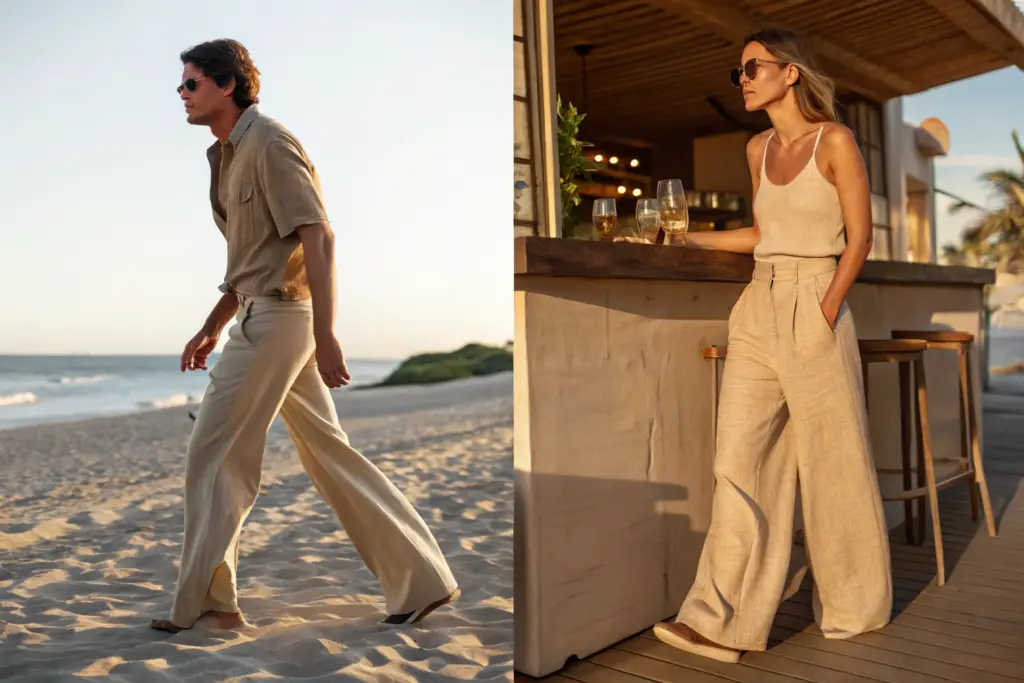
Use a real couple if possible. A man and a woman walking on a beach, both in linen wide-leg pants. The image tells a story of shared experience. The product links them visually. The customer thinks, “I want that lifestyle.”
If you use separate models, shoot them in similar settings with similar lighting and mood. The campaign should feel cohesive, not like two different photoshoots stitched together. Styling should be authentic to each gender’s typical aesthetic, but the pant should be the hero piece in every shot.
Show the pant in motion. A wide-leg pant comes alive when the wearer walks. The fabric flows. The drape is visible. A static flat lay does not sell the garment. A short video of a man and a woman walking side by side, shot from behind, is incredibly effective. You can’t see their faces. You only see the movement of the linen. The viewer projects their own identity onto the anonymous figures. This is the most inclusive and highest-converting creative I have seen.
How Should You Write Product Descriptions for a Unisex Linen Pant?
The product title should be gender-neutral: “The Wide-Leg Linen Pant.” The subtitle can be inclusive: “A relaxed, unisex silhouette in 100% European flax linen.” The body copy should describe the fabric, the fit, and the feel without using gendered pronouns.
Use “you” instead of “him” or “her.” “You will feel the softness of the washed linen on your skin. The wide leg moves with you. The elastic waist offers all-day comfort.” This language works for any reader. The fit notes section below the description addresses gender specifics. “Men: take your usual size for a relaxed fit. Size down for a tailored look. Women: this pant is designed with an oversized fit. Size down if you prefer a closer silhouette.” These notes manage expectations without breaking the unisex brand voice.
A brand I work with in San Diego writes exceptional unisex product copy. Their linen pant page reads: “The Linen Wide-Leg. Zero restrictions. Maximum flow. Woven from 100% European flax. Washed for a soft, lived-in hand.” The language is about sensation, not identity. The pant sells equally to both genders. Their reviews are a mix of male and female names, all praising the comfort and drape. The copy created the space for both audiences to feel welcome.
Conclusion
Linen wide-leg pants are one of the few garment categories that naturally bridge the gender divide. The relaxed silhouette, the natural fabric, and the functional comfort appeal to universal human desires: to feel cool, to move freely, to look effortless. The fit differences between men’s and women’s bodies are manageable with a unisex pattern and a clear size chart. The marketing differences are a matter of photography and language, not product design.
A unisex approach reduces inventory risk, simplifies production, and opens a wider customer base. A gender-specific approach provides a more precise fit and a sharper brand identity. Both strategies work. The right choice depends on your brand, your volume, and your data. Start unisex. Listen to your customers. Let the market tell you whether to stay unisex or split.
If you are considering adding linen wide-leg pants to your collection and you want to explore a unisex design, I am ready to help. Our Business Director, Elaine, can send you our unisex linen pant spec sheet with the size chart, the grade rules, and the fit notes. Email her at elaine@fumaoclothing.com. Tell her your brand concept and your target customer. She will provide a recommendation on the best approach for your first production run. The market for unisex linen is growing fast. Let’s design a pant that everyone wants to wear.