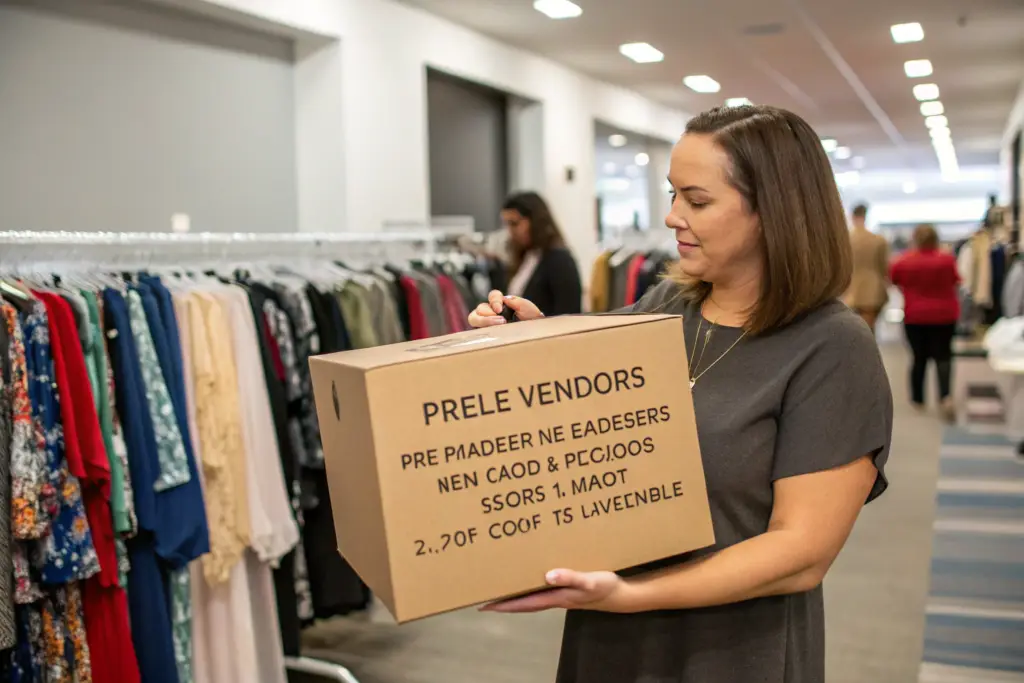
A wholesale buyer from a chain of fifteen boutiques across the Southeast once told me she had a simple rule for new vendors. If the brand offered pre-packed size assortments, she would place a trial order. If the brand required her to build her own size breakdown, she would pass, no matter how beautiful the coat. She explained that her store managers were not inventory analysts. They were salespeople. When they received a carton with a pre-packed size run, two smalls, four mediums, three larges, and one extra-large, they could put the coats on the floor in five minutes. When they received a carton with twelve mediums because someone at the warehouse had misread the purchase order, they spent the next three weeks trying to transfer the excess mediums to other stores while losing large and extra-large sales. The pre-pack was not just a convenience. It was a profit protection tool. It ensured that every store had the right sizes on the floor on day one.
Multi-size packs are essential for wholesale summer coat success because they solve three operational problems that directly impact sell-through and retailer satisfaction. First, they ensure that every retail location receives a balanced size assortment that reflects the actual demand curve, eliminating the stockout-on-popular-sizes and overstock-on-slow-sizes problem that plagues individual size ordering. Second, they dramatically reduce the receiving and floor-ready processing time at the retail store. A pre-packed assortment can move from the receiving dock to the sales floor in under thirty minutes. A carton of mixed individual sizes requires sorting, counting, and tagging that can consume hours of labor. Third, they reduce the brand's inventory risk by distributing sizes across the retail network according to a proven formula, rather than allowing individual stores to over-order their bias sizes, typically medium and large, and under-order the extremes. At Shanghai Fumao, we pack our wholesale clients' orders in pre-configured size packs according to their specified ratios. We label the cartons clearly with the pack configuration, and we ship them ready for the retailer's floor.
The multi-size pack is not a new concept. It has been a standard practice in the footwear and basics apparel industries for decades. It is less common in the outerwear market, which means the brand that adopts it has a competitive advantage over brands that ship individual sizes. The retailer's operational experience with the brand is smoother, the sell-through is higher, and the reorder rate is stronger. Let me walk through exactly how size packs work, how to configure them for summer coats, and how they transform the wholesale relationship.
What Is A Pre-Pack Size Assortment And How Does It Work?
A pre-pack size assortment, often called a size pack or a ratio pack, is a pre-configured carton that contains a specific quantity of coats distributed across a specific size range according to a predetermined ratio. The retailer orders the style and the color, and the brand ships the pre-pack. The retailer does not order individual sizes. The size pack ensures that every store that receives the coat receives a balanced size offering that matches the expected customer demand.
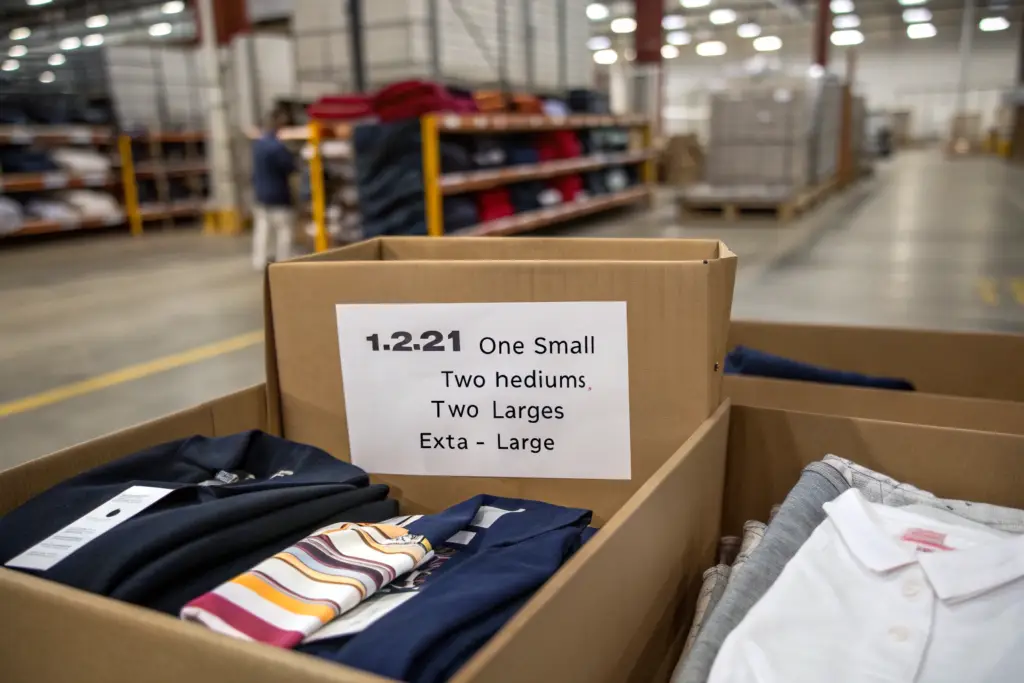
A pre-pack size assortment for a summer coat typically contains six to twelve units distributed across four to six sizes. A common pre-pack configuration for a women's summer blazer is 1-2-2-1, meaning one small, two mediums, two larges, and one extra-large, for a total of six coats per pack. A retailer ordering 36 coats in a given color would receive six pre-packs, each containing the 1-2-2-1 assortment. The retailer does not need to calculate the size breakdown. The brand has done the calculation based on historical sell-through data and the known size curve for the product category. At Shanghai Fumao, we work with our wholesale clients to determine the optimal pre-pack configuration for each style based on their sell-through history and the target retailer's customer demographics. We pack the coats in the pre-pack configuration at our factory, label the cartons with the pack contents, and ship them ready for the retailer's floor.
The pre-pack model transfers the size allocation responsibility from the retailer to the brand. The brand, which has access to aggregate sell-through data across all retail accounts, is better positioned to determine the optimal size curve. The retailer benefits from a simplified ordering process and a guaranteed balanced assortment.
What Are The Most Common Pre-Pack Ratios For Women's Summer Outerwear?
The pre-pack ratio is the mathematical distribution of sizes within the pack. The ratio is not arbitrary. It is based on the size curve of the target customer demographic. The size curve for a contemporary brand selling to women aged 25 to 45 is different from the size curve for a junior brand selling to women aged 18 to 25, which is different from the size curve for a brand with a strong plus-size following. The pre-pack ratio must be calibrated to the specific brand's customer base.
The most common pre-pack ratios for women's summer outerwear in the standard size range are the 1-2-2-1 ratio, which is one XS or S, two M, two L, and one XL, for a six-unit pack. This ratio peaks at medium and large, reflecting the center of the US women's size distribution. The 1-2-3-2-1 ratio, for a nine-unit pack that includes XXS and XXL at the tails and peaks at large. The 1-1-2-2-1-1 ratio, for an eight-unit pack that provides a more even distribution across six sizes. The 2-3-3-2 ratio, for a ten-unit pack that provides deeper stock on the core medium and large sizes for higher-volume stores. For plus-size packs, a common configuration is 1-2-2-1 for sizes 1X, 2X, and 3X, with two 1X, two 2X, and one 3X in a five-unit pack. For petite packs, the same ratios apply but with the petite size designations. The size pack configuration for apparel wholesale should be reviewed and adjusted each season based on the previous season's sell-through data by size. The brand that optimizes its pre-pack ratio over multiple seasons converges on a configuration that maximizes full-price sell-through and minimizes end-of-season size imbalances.
How Do Pre-Packs Simplify The Retailer's Inventory Management?
The retailer's inventory management task for a new season is complex. The buyer must allocate open-to-buy dollars across categories, vendors, styles, and sizes. The size allocation is the most granular and the most error-prone level of the decision. The buyer who orders 60 units of a summer coat must decide how many of each size to order. If the decision is wrong, the retailer loses sales on the sizes that sell out and loses margin on the sizes that must be marked down. The buyer knows this, and the cognitive burden of getting the size allocation right across dozens of styles from dozens of vendors is significant.
The pre-pack removes this cognitive burden. The buyer orders the coat in units of the pack quantity, six packs, not 36 individual units. The brand has determined the size allocation within the pack. The buyer trusts the brand's allocation, or the buyer does not buy the brand. The pre-pack also simplifies the replenishment process. When a store sells through its initial allocation, the reorder is a simple multiple of the pack. The store manager does not need to count the remaining inventory by size and calculate which sizes to reorder. The manager orders another pack. The pack arrives with the balanced assortment, and the floor is restocked. The inventory management simplification through pre-packs is a significant operational advantage for the brand in the wholesale relationship. The brand that makes the retailer's inventory management easier is the brand that gets reordered.
Why Do Retail Buyers Prefer Vendors Who Offer Pre-Packed Size Runs?
The retail buyer's preference for pre-packed vendors is not a personal preference. It is an economic preference driven by the buyer's performance metrics. The buyer is measured on sell-through percentage, gross margin return on inventory investment, or GMROI, and inventory turnover. A pre-pack that is correctly configured improves every one of these metrics. A buyer who sources from pre-pack vendors outperforms a buyer who sources from individual-size vendors, all else being equal. The performance difference is measurable and significant.
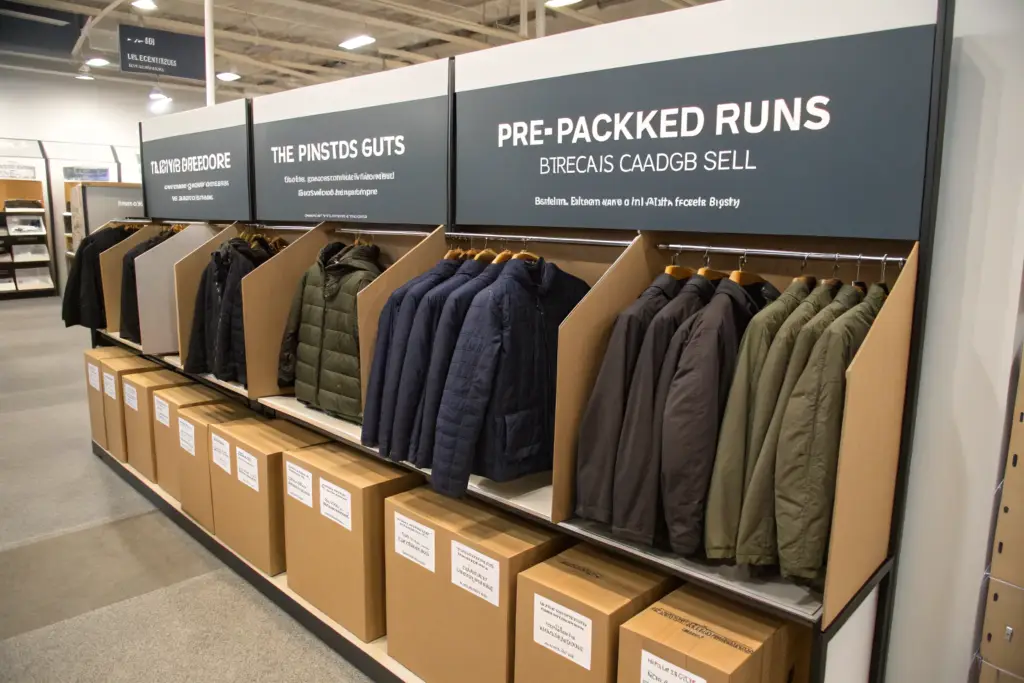
Retail buyers prefer vendors who offer pre-packed size runs because the pre-pack improves the store's initial presentation, accelerates the time from receiving to floor-ready, balances the inventory across the store network, reduces the administrative burden of size-level ordering, and provides a consistent customer experience across store locations. The cumulative effect of these improvements is a 5% to 10% higher full-price sell-through and a corresponding reduction in end-of-season markdowns. For a buyer managing a multi-million dollar open-to-buy budget, that improvement is career-defining. At Shanghai Fumao, we support our wholesale clients' pre-pack programs by packing the coats in the specified configurations at origin. The retailer receives the carton, opens it, and the assortment is ready. No sorting. No re-tagging. No warehouse labor.
The buyer's preference for pre-packs is a rational response to the incentives of the retail environment. The brand that aligns its packing and shipping practices with the buyer's incentives wins more orders and builds stronger relationships.
How Does A Pre-Pack Reduce The Time From Receiving To Sales Floor?
The journey of a coat from the retailer's receiving dock to the sales floor involves multiple steps: unloading the carton, opening the carton, verifying the contents against the packing list, sorting the units by size, attaching the retailer's price tickets and security tags, steaming or pressing the coats, and placing them on the sales floor. Each step consumes labor, and labor is the retailer's second-largest operating expense after rent.
A pre-packed carton eliminates several of these steps. The carton is marked with the pack configuration, so the receiving team knows immediately that the carton contains a 1-2-2-1 assortment of six coats. The coats inside the carton are already sorted by size, with the smallest size on top and the largest on the bottom, or with each size banded together. The receiving team does not need to sort. The retailer can pre-print the price tickets and security tags based on the pack configuration, so the tickets can be applied without counting and verifying each unit. The coats can move from the receiving dock to the steaming station to the sales floor in a continuous flow. The total processing time for a pre-packed carton of six coats is typically 15 to 20 minutes. The same six coats received as individual units in a mixed carton can take 45 to 60 minutes to process. The retail receiving and floor-ready processing efficiency is a critical operational metric. The brand that reduces the retailer's processing time earns the retailer's preference.
How Do Pre-Packs Prevent The "Broken Size Run" Problem On The Retail Floor?
A broken size run is a retail floor display that is missing one or more sizes. The customer sees the coat, likes it, and looks for her size. The size small and extra-large are available, but the medium, her size, is sold out. She does not buy the small or the extra-large. She leaves the store or buys a different brand. The sale is lost. The broken size run is a visual signal of poor inventory management. It makes the brand look picked-over and unpopular, even if the coat is selling well.
Pre-packs prevent the broken size run by ensuring that the replenishment always restores the full size assortment. When the store sells the last medium from the initial pack, the remaining inventory is a broken run: a small, a large, and an extra-large, but no medium. The store reorders one pre-pack. The pack arrives with one small, two mediums, two larges, and one extra-large. The store now has two smalls, two mediums, three larges, and two extra-larges. The medium is back in stock. The size run is complete. The visual presentation on the floor is restored. The customer who walks in looking for a medium finds her size and makes the purchase. The retail size run integrity and its impact on sell-through is a well-documented phenomenon. A complete size run sells through faster than a broken size run, even if the total inventory quantity is the same. The pre-pack is the mechanism that maintains size run integrity across the selling season.
How Should You Configure Your Pre-Pack Ratios For Summer Coat Wholesale?
Configuring the pre-pack ratio is a data-driven exercise, not a guess. The optimal ratio is the ratio that maximizes full-price sell-through and minimizes the end-of-season size imbalance. A ratio that is too heavy on the middle sizes leaves the tails, the XS and XL, unsold at the end of the season. A ratio that is too evenly distributed leaves the middle sizes understocked and the sales opportunity lost. The ratio must be calibrated to the brand's specific customer size curve.
You configure your pre-pack ratios for summer coat wholesale by analyzing your brand's sell-through data by size for the previous two to three seasons, adjusting for any shifts in the customer demographic, and testing the new ratio with a small group of retail accounts before rolling it out across the entire wholesale network. The sell-through analysis should calculate the percentage of total units sold for each size, and the sell-through rate, the units sold divided by the units received, for each size. A size that consistently sells through at 95% or higher is under-ordered and should receive a larger allocation in the pre-pack. A size that consistently sells through below 70% is over-ordered and should receive a smaller allocation. At Shanghai Fumao, we provide our wholesale clients with the production data they need to analyze their size curves. We can produce custom pre-pack configurations for different retail accounts if the brand's data shows that different regions or different store types have different size curves.
The pre-pack configuration is not a set-it-and-forget-it decision. It should be reviewed seasonally and adjusted based on the latest sell-through data. A brand that optimizes its pre-pack ratio over time extracts more revenue from the same inventory investment.

How Do You Analyze Your Sell-Through Data To Optimize Size Ratios?
The sell-through data analysis for size ratio optimization is a systematic process that requires access to accurate sell-through data by size, by style, and by retail location. The brand that does not have this data, either because its wholesale accounts do not share it or because its systems do not capture it, is flying blind on size allocation. The brand that has the data and analyzes it systematically gains a competitive advantage.
The analysis process is as follows. Step one: aggregate the sell-through data for the summer coat category across all wholesale accounts for the previous season. Calculate the total units sold and the sell-through percentage for each size. Step two: identify the sizes that sold through at a rate significantly above the category average. These are the under-supplied sizes. Increase their allocation in the next season's pre-pack. Step three: identify the sizes that sold through at a rate significantly below the category average. These are the over-supplied sizes. Decrease their allocation. Step four: apply the adjusted ratio to the planned order quantities for the upcoming season. Step five: communicate the new pre-pack ratio to the wholesale accounts and explain the rationale. The accounts will appreciate that the brand is managing the size allocation actively rather than passively. Step six: monitor the sell-through data during the season. If a particular size is selling out faster than expected, adjust the pre-pack ratio for the in-season reorder. The size curve analysis for apparel inventory optimization is an ongoing process, not a one-time calculation.
Should You Offer Different Pre-Pack Configurations For Different Retail Partners?
A one-size-fits-all pre-pack configuration is simple to manage but suboptimal for sell-through. A boutique in Miami and a boutique in Minneapolis serve different customer demographics with different body type distributions. The Miami store might have a higher proportion of petite and smaller-framed customers. The Minneapolis store might have a higher proportion of larger-framed customers. A single pre-pack ratio that serves both stores will be suboptimal for both.
Offering different pre-pack configurations for different retail partners is a value-added service that sophisticated brands provide to their best wholesale accounts. The brand works with the account to analyze the account's specific sell-through data and develops a custom pre-pack ratio for that account. The custom ratio is documented in the brand's order management system. When the account places a reorder, the system automatically applies the custom pre-pack configuration. The operational complexity of managing multiple pre-pack configurations is real. The factory must be able to pack different configurations for different accounts, and the packing accuracy must be maintained across all configurations. The investment in the operational capability is justified by the improvement in sell-through and the strengthening of the wholesale relationship. The customized pre-pack configurations for key retail accounts is a strategy for brands that are ready to compete on service as well as product. The brand that offers custom pre-packs signals to the retailer that it is a true partner, not just a vendor.
How Does Fumao Execute Pre-Pack Packing And Labeling For Wholesale Orders?
Executing a pre-pack program at the factory level requires precision in the packing process. A pre-pack that is packed incorrectly, with the wrong size distribution or the wrong labeling, is worse than no pre-pack at all. The retailer opens the carton expecting a 1-2-2-1 assortment and finds a different distribution. The retailer's trust in the brand is damaged. The brand's credibility with the buyer is undermined. The packing accuracy must be 100%.
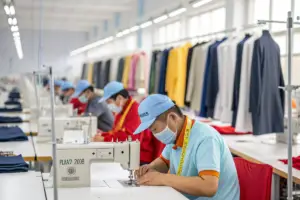
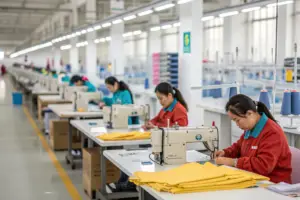
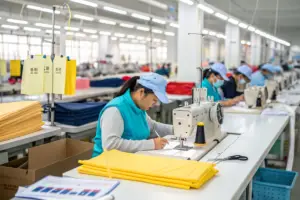
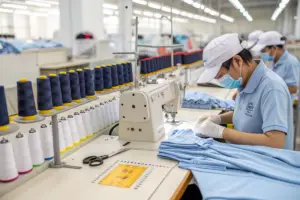
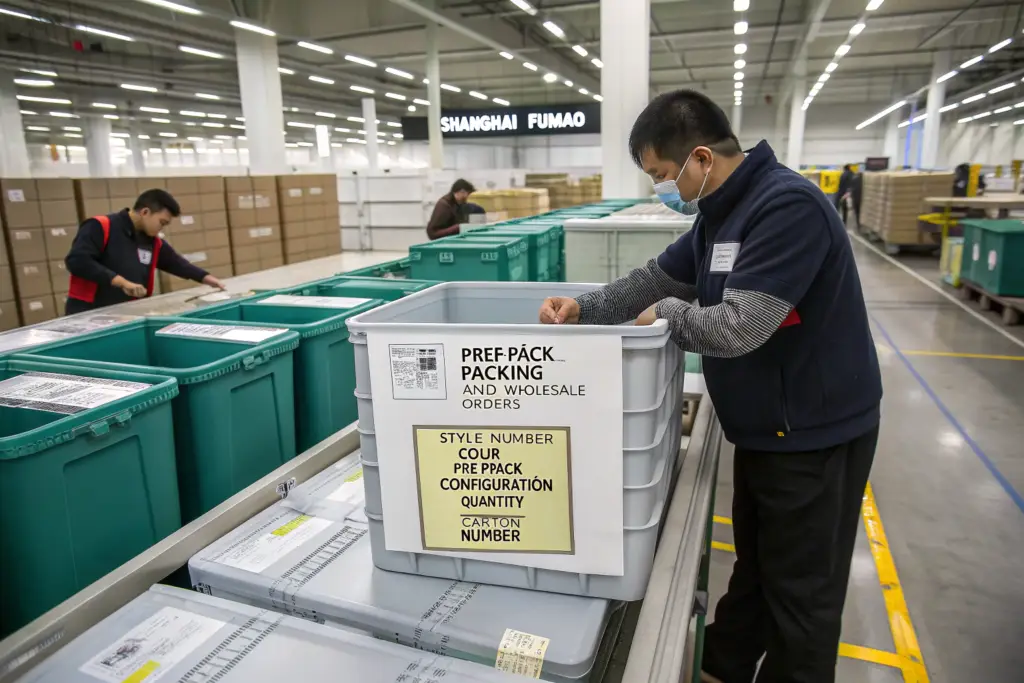
Fumao executes pre-pack packing and labeling for wholesale orders through a dedicated packing station with a documented pack configuration checklist. The packing station is set up with bins for each size in the pre-pack. The packer takes one unit from each bin according to the configuration, places the units in the carton in size order, and checks the configuration against the checklist. The carton is then sealed and labeled with a pre-printed label that states the style number, the color, the pre-pack configuration, the quantity, and the carton number. A QC inspector audits a random sample of packed cartons before they are loaded for shipment. The inspector opens the carton, verifies the contents against the label, and signs off on the lot. At Shanghai Fumao, we treat pre-pack accuracy as a quality metric with the same importance as stitching quality or fabric shade matching. A packing error is a quality defect, and it is managed through the same quality control system.
The pre-pack execution capability is a factory-level competency that not every factory possesses. The factory that can execute pre-packs accurately and consistently provides a service that the brand can sell to its wholesale accounts with confidence.
What Packing Quality Checks Ensure The Correct Assortment In Every Carton?
The packing quality check is the final verification before the carton is sealed and shipped. It is the last opportunity to catch a size assortment error before the error reaches the retailer's receiving dock. The check must be systematic, documented, and performed on a statistically valid sample of cartons.
Our packing quality check process for pre-pack orders proceeds as follows. The packer assembles the carton according to the configuration checklist. Before sealing the carton, the packer verifies the size of each coat by checking the size label and comparing it to the checklist. The packer initials the checklist and places it inside the carton. The carton is sealed and labeled. A QC inspector, who is not the packer, selects a random sample of cartons from the production run. The sample size is determined by the AQL level specified in the brand's quality manual, typically AQL 2.5 for packing accuracy. The inspector opens the sampled cartons and verifies the contents against the carton label and the master packing list. The inspector records the results on a packing inspection report. If any carton in the sample contains an incorrect assortment, the inspector increases the sample size. If the defect rate exceeds the AQL limit, the entire lot is re-inspected and re-packed as necessary. The carton packing quality control for apparel shipments is an essential control point for pre-pack programs. The brand that audits its factory's packing process periodically maintains the confidence of its wholesale accounts.
How Do Carton Markings Communicate The Pack Contents To The Retailer?
The carton markings are the communication link between the factory's packing floor and the retailer's receiving dock. The markings tell the receiving team exactly what is in the carton without opening it. Clear, accurate, standardized markings enable the receiving team to process the carton quickly and route it to the correct location.
The carton markings for a pre-pack shipment must include the purchase order number, the style number and style name, the color code and color name, the pre-pack configuration expressed in a standard format, the total quantity of units in the carton, the carton number and the total number of cartons in the shipment, the country of origin, and the gross weight and dimensions. The pre-pack configuration should be expressed in a format that the retailer's receiving team can read at a glance. For a 1-2-2-1 pack of sizes S, M, L, and XL, the marking might read "PACK: S1-M2-L2-XL1" or "SIZE ASSORTMENT: 1S/2M/2L/1XL." The format should be consistent across all cartons and all shipments. The carton marking standards for retail logistics provide a framework for standardized marking. The brand should agree on the marking format with its retail partners and document it in the vendor compliance manual.
Conclusion
Multi-size packs are not a minor operational detail. They are a strategic tool that transforms the wholesale relationship between the brand and the retailer. The pre-pack simplifies the retailer's ordering process, accelerates the time from receiving to sales floor, ensures a balanced size presentation that maximizes full-price sell-through, and prevents the broken size run that costs sales. The retailer that receives pre-packed assortments from a brand has a better operational experience, a higher sell-through, and a stronger incentive to reorder.
The pre-pack also benefits the brand. It transfers the size allocation responsibility to the brand, which has better data and more incentive to optimize the size curve. It reduces the brand's end-of-season size imbalances by distributing the full size range to every store from day one. It reduces the administrative complexity of size-level order processing. It positions the brand as a sophisticated, retailer-centric vendor, which opens doors to larger wholesale accounts.
At Shanghai Fumao, we support our wholesale clients' pre-pack programs with accurate packing, clear labeling, and rigorous quality control at the packing station. We work with our clients to configure the pre-pack ratios based on their sell-through data. We pack and ship the pre-packs ready for the retailer's floor. We do this because we understand that the brand's success in the wholesale channel depends on the retailer's operational experience, and the pre-pack is the foundation of a smooth operational experience.
If you are a wholesale brand looking to implement or optimize a pre-pack program for your summer coat line, contact our Business Director, Elaine, at elaine@fumaoclothing.com. Send her your sell-through data by size and your target pre-pack configurations. She will work with our packing team to ensure your pre-packs are packed, labeled, and shipped exactly to your specifications. Because a well-packed carton is a silent salesperson that works for your brand from the moment it arrives at the retailer's dock.