Three years ago, I sat in a meeting with a young brand owner from Austin, Texas. He had built his entire label around a promise of radical sustainability. He had the branding perfect, the website was beautiful, and his Kickstarter had raised $80,000 in pre-orders for a pair of classic shorts made from recycled ocean plastic. Then reality hit. When we sourced the fabric, the hand feel was rough, the color consistency was poor, and the minimum order quantity was five times what he needed. He looked at me and said, "I sold a story I don't know how to manufacture." That moment crystallized a truth I see repeated constantly in the apparel industry. Sustainability is an easy word to put on a hangtag, but it is a very difficult promise to keep on a factory cutting table. The gap between the marketing narrative and the manufacturing reality is where most sustainable brands quietly fail.
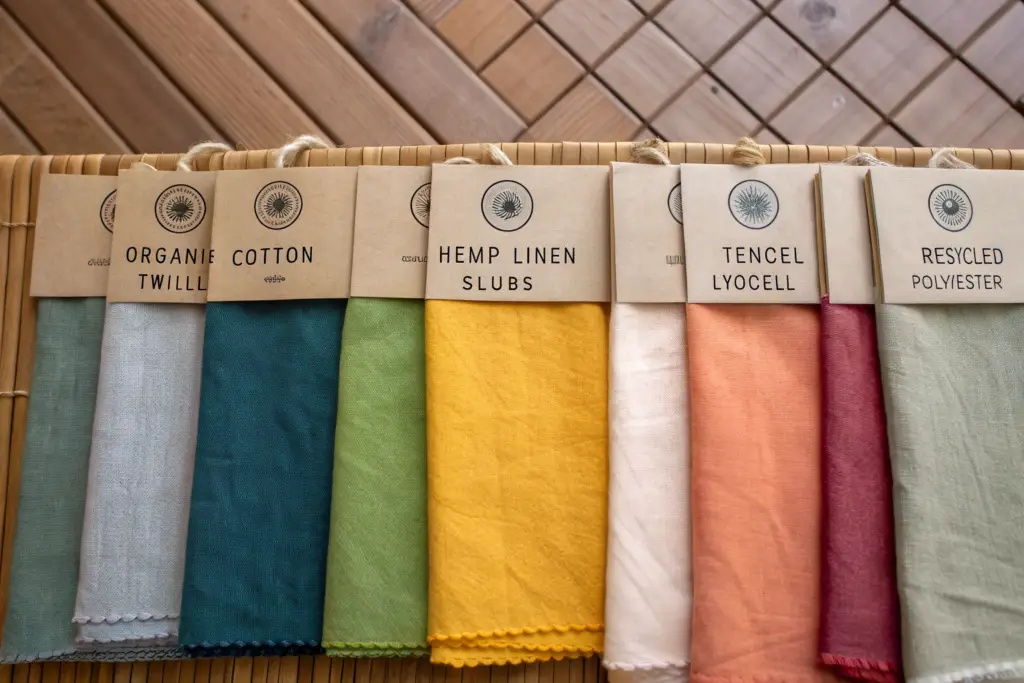
The top sustainable fabrics for manufacturing classic shorts in China—organic cotton, hemp, Tencel lyocell, and recycled polyester—each present a unique balance of ecological integrity, functional performance, and supply chain maturity, but the choice between them must be driven by a clear understanding of their specific fiber properties, certification availability, and the hidden processing chemistry that can either preserve or completely undermine their environmental promise.
At Shanghai Fumao, we have cut and sewn classic shorts from every major sustainable fabric category. I have seen what works on the production floor, what survives a wash test, and what genuinely delivers on the eco-story that brands sell to their customers. Choosing a sustainable fabric is not just about picking the one with the best green marketing. It is about understanding the tensile strength of the fiber, the dye absorption rate, the pilling resistance after twenty washes, and the real carbon footprint of shipping the raw material to our factory in China. Let me walk you through the four fibers that actually perform.
What Makes Organic Cotton a Core Sustainable Shorts Fabric?
Organic cotton is the entry point for most brands into the sustainable shorts market, and for good reason. It is the most recognizable eco-claim in the apparel world. The consumer already understands it. When a customer sees "100% Organic Cotton" on a hangtag, they do not need a paragraph of explanation. They assign a positive value immediately. But from a manufacturing perspective, organic cotton is a complicated animal. It is not simply cotton without pesticides. It is a completely different agricultural and supply chain system, and those differences show up on our cutting table in ways that affect your final product cost and quality.
Organic cotton distinguishes itself from conventional cotton through its non-GMO seed sourcing, its reliance on rain-fed irrigation and natural pest management that eliminates synthetic pesticides, and its segregated supply chain that requires GOTS certification to track the fiber from the farm gate to the finished short, though it typically comes with a 15% to 25% price premium and a slightly more irregular fiber length that can affect spinning consistency.

How Does the GOTS Certification Protect Your Brand's Organic Claim?
I have seen too many brands print the word "organic" on their shorts without any legal standing to do so. A supplier tells them the cotton is organic, they see a vague certificate, and they run with it. This is a lawsuit waiting to happen. In the United States, the Federal Trade Commission has specific guidelines for organic textile labeling, and a brand can be fined for making false claims. The only genuine shield against this liability is the Global Organic Textile Standard.
GOTS is not a piece of paper. It is a complete chain-of-custody certification that tracks the organic fiber from the farm through every processing stage—ginning, spinning, knitting or weaving, dyeing, and finally cutting and sewing. Any factory that handles the fiber, including our factory, must pass an annual GOTS audit covering both environmental management and social compliance. When we manufacture a GOTS-certified short, we use only approved low-impact dyes and chemicals. Our waste water treatment system must meet specific thresholds. Our workers' rights must be documented. This comprehensive organic textile certification means that when you sell a GOTS-certified short, your claim is legally and ethically defensible. A brand partner in San Diego once told me that their buyers at a major department store specifically required the GOTS transaction certificate for every purchase order. Without that document, the entire wholesale deal would have collapsed. The certification is not a marketing accessory; it is a market access key for the mid-to-high-end retail channel. You can verify a supplier's GOTS certification status directly on their public database.
What Are the Real Manufacturing Differences with Organic Cotton?
Organic cotton does not behave identically to conventional cotton on a high-speed production line, and if you do not understand these differences, you will end up with quality issues that customers will notice. The core manufacturing difference lies in the fiber itself. Conventional cotton has been genetically optimized for long, uniform fiber length and high tensile strength, which makes it easy to spin into fine, consistent yarns. Organic cotton, grown from non-GMO seeds without synthetic growth regulators, often has slightly shorter and more irregular fiber lengths.
This irregularity means that organic cotton yarns can have a bit more slub and texture. For a classic twill short, this can actually be a beautiful aesthetic advantage, giving the fabric a natural, artisanal hand feel. But it also means we must adjust our knitting and weaving machine tensions to prevent yarn breakage. We typically run organic cotton at about 5% slower machine speed to maintain consistency. The fiber absorbency is also different. Organic cotton, because it has not been treated with chemical desiccants, absorbs dye more deeply and vibrantly, which is a positive. However, it can also shrink slightly more during the first wash. We compensate for this by adjusting our cutting patterns to account for an additional 2% shrinkage allowance during the garment wash process. This is a detail that most factories overlook, and it is why some organic cotton garments end up fitting differently after the first wash. At Shanghai Fumao, we have developed specific standard operating procedures for organic cotton that ensure the final short you receive matches the fit sample you approved, regardless of how the raw fiber behaved when it first arrived.
Why Is Hemp Considered a Superior Eco-Friendly Option?
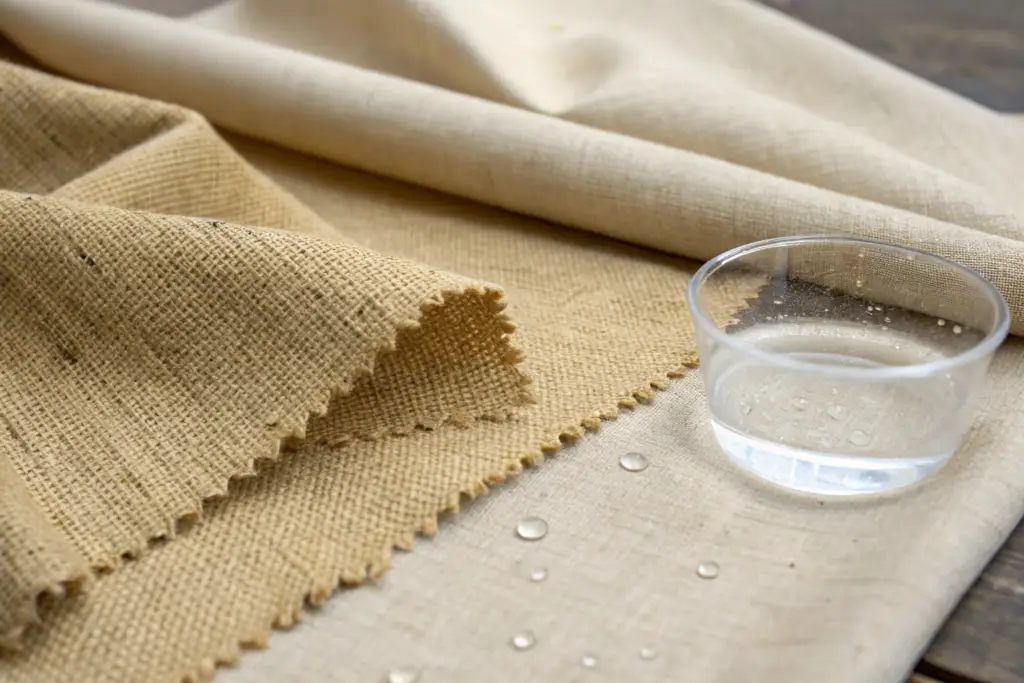
Hemp has an image problem that it does not deserve. When American buyers hear the word "hemp," they often picture a coarse, brown, scratchy fabric that smells like a health food store and looks like a burlap sack. This stereotype is about twenty years out of date. Modern hemp processing has advanced dramatically. Today, we can mechanically and enzymatically soften hemp fibers to the point where a 100% hemp short feels closer to a well-worn linen than a piece of industrial rope. The environmental case for hemp is so strong that I believe it will become the defining sustainable fabric of the next decade for classic shorts.
Hemp outperforms cotton ecologically by requiring zero pesticides and roughly half the water during cultivation, regenerating soil quality through deep root systems rather than depleting it, and producing a fiber that is naturally UV-resistant, antimicrobial, and three times stronger in tensile strength than cotton, making hemp shorts exceptionally durable, though the fiber's low elasticity requires careful pattern engineering to prevent bagging at the knee.
How Do Hemp's Agricultural Benefits Translate to Brand Value?
The story of hemp begins long before the factory. Hemp is one of the most efficient plants on the planet at converting sunlight into biomass. It grows in almost any soil type, it outcompetes weeds so effectively that herbicides are unnecessary, and it matures in about 120 days, making it a fast rotational crop for farmers. This agricultural efficiency is a powerful marketing narrative that resonates deeply with environmentally conscious American consumers.
The data backs up the story. Research on the environmental benefits of hemp consistently shows that hemp cultivation requires significantly less water than cotton. One study indicated that hemp needs approximately 50% less water per hectare than conventionally grown cotton. Furthermore, hemp's deep taproot system aerates the soil and can even remediate land contaminated with heavy metals, a process called phytoremediation. For a brand selling shorts, this is pure storytelling gold. You can legitimately tell your customer: "The fabric in these shorts came from a crop that healed the soil it grew in." This is not empty greenwashing. It is a specific, verifiable ecological benefit. When a brand owner presents these facts to a retail buyer, the shorts stop being a commodity item and become an environmental contribution. The sustainability of hemp fiber is a documented competitive advantage that justifies a premium price point far more effectively than a generic "eco-friendly" label ever could.
What Manufacturing Challenges Does Hemp Present for Shorts?
The very properties that make hemp strong and durable also make it a demanding material on the factory floor. Hemp fibers have very low elasticity. They do not stretch and recover the way cotton or spandex blends do. For a classic short, this characteristic presents a specific problem around high-stress areas like the knee and the seat. If the pattern is not engineered for a rigid fiber, the shorts will develop permanent bagging after the wearer sits down a few times.
Our solution at Shanghai Fumao involves two technical adjustments. First, we often blend hemp with a small percentage of organic cotton or Tencel, typically around 20% to 30%, to introduce a natural elasticity without synthetic fibers. This maintains the hemp aesthetic and ecological profile while dramatically improving the shape retention. Second, for 100% hemp shorts, we alter the pattern itself. We add a slight dart at the back knee area and adjust the crotch curve to accommodate the rigid drape. These are subtle changes invisible to the consumer but essential for real-world wearability. We also pre-wash the hemp fabric before cutting. Unlike cotton, hemp does not just shrink; it can undergo a fundamental softening transformation during the first wash. If we cut the pattern before washing, the finished short will fit differently than the pre-wash sample. This hemp textile processing step adds a few days to the production timeline but is non-negotiable for quality. One of our European clients specifically chose us because we understood this pre-wash requirement, something their previous supplier had skipped, resulting in a return rate of nearly 20% due to fit complaints.
How Does Tencel Lyocell Balance Performance and Ecology?
If organic cotton is the familiar entry point to sustainable fashion, Tencel lyocell is the high-performance upgrade. Many brands I speak with do not fully understand what this fiber actually is. They think it is just another type of rayon, and that understanding is dangerously incomplete. Conventional viscose rayon has a terrible environmental reputation. Its production involves toxic carbon disulfide, and many rayon mills discharge untreated chemical waste directly into rivers. Tencel lyocell is a fundamentally different material produced through a fundamentally different chemical process, and the distinction matters enormously for a brand making ecological claims.
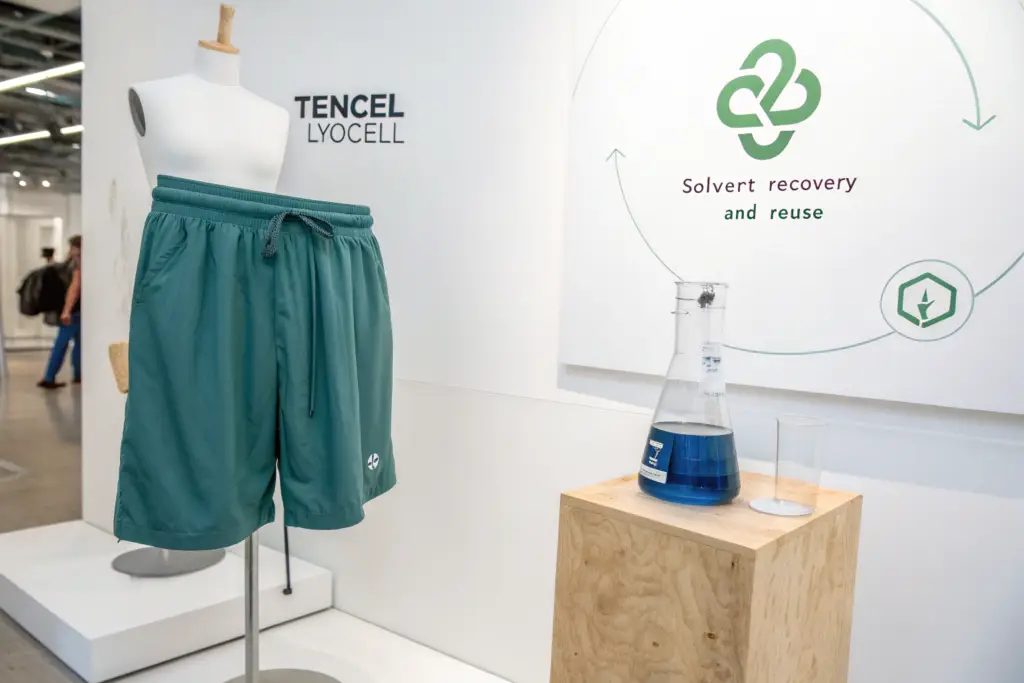
Tencel lyocell, produced by Lenzing AG from sustainably harvested eucalyptus wood pulp, uses a closed-loop solvent system that recovers 99% of the non-toxic amine oxide solvent, consumes significantly less water than cotton processing, and produces a fiber with superior moisture management, bacterial growth inhibition, and a smooth, silk-like hand feel that drapes more fluidly than cotton, making it ideal for a premium relaxed-fit short.
What Makes the Closed-Loop Lyocell Process Different?
The term "closed-loop" is thrown around loosely in green marketing, but in the context of lyocell production, it has a specific technical meaning that changes the entire environmental calculus. In conventional viscose production, the carbon disulfide used to dissolve the wood pulp is largely released into the environment or must be scrubbed from exhaust at great cost and often imperfectly. In the lyocell process, the solvent is N-methylmorpholine N-oxide, commonly called amine oxide. This solvent is non-toxic, biodegradable, and can be captured and reused almost entirely.
The lyocell manufacturing process at Lenzing achieves a solvent recovery rate of over 99%. This means the same solvent is used again and again, dramatically reducing chemical input and eliminating toxic discharge. The raw material is also a significant differentiator. Tencel specifically uses eucalyptus wood, which grows quickly on marginal land not suitable for food crops, without the need for irrigation or pesticides. The fiber itself has unique physical properties that directly benefit shorts manufacturing. Tencel is naturally hydrophilic, meaning it absorbs moisture away from the skin more efficiently than cotton. This makes it an exceptional fabric for a summer short in humid climates. It also has a natural fibrillation characteristic, tiny microscopic hairs on the fiber surface, that can be manipulated during finishing to create a soft, peachy hand feel without chemical softeners. Many brands find that Tencel fabric properties allow them to offer a genuinely premium product that commands a significantly higher retail price than an equivalent cotton short.
Why Is Tencel an Excellent Blending Partner for Shorts?
Pure Tencel shorts have a specific aesthetic and drape. They are soft, fluid, and slightly lustrous, almost like a heavy silk. This look is perfect for a relaxed, resort-style short but may not suit a brand whose identity is built on structure and crisp tailoring. This is where Tencel's performance as a blending fiber becomes incredibly valuable. It is one of the most versatile sustainable blending partners available.
When we blend Tencel with organic cotton, typically in a 30/70 or 50/50 ratio, we get a fabric that combines the crispness and familiarity of cotton with the drape and moisture management of Tencel. The fabric wrinkles less than pure cotton, feels cooler against the skin, and has a subtle sheen that looks expensive. When blended with hemp, Tencel acts as a softening agent, taming hemp's natural rigidity and adding the elasticity that hemp lacks, without introducing synthetics. This allows us to create a 100% natural fiber short that still holds its shape. We have also experimented with Tencel-linen blends for a premium warm-weather short that combines the texture of linen with the softness of Tencel. The reaction from buyers has been remarkable. A client in Miami launched a Tencel blend fabric short last summer at a $98 retail price point. The fabric story—sustainably harvested eucalyptus, closed-loop processing, blended with organic cotton—was so compelling that they sold out their initial production run in three weeks. The material itself did the marketing. At Shanghai Fumao, we have developed a library of pre-tested Tencel blend fabrics specifically for shorts, allowing brands to start their development with a proven fabric rather than investing weeks in custom development from scratch.
Can Recycled Polyester Deliver True Sustainability for Active Shorts?
Recycled polyester, commonly labeled as rPET, is simultaneously the most commercially successful and the most controversially debated sustainable fabric in the apparel industry. On one hand, it directly addresses the plastic waste crisis by diverting bottles from landfills and oceans. On the other hand, it remains a synthetic fiber that sheds microplastics with every wash. I have had heated discussions with brand owners on both sides of this argument. Some refuse to use any synthetics. Others believe that avoiding recycled polyester is itself an irresponsible waste of an existing resource. My position, developed from actually manufacturing with the material, is pragmatic. Recycled polyester has a specific, valid, and important place in the sustainable shorts market, particularly for active and performance categories.
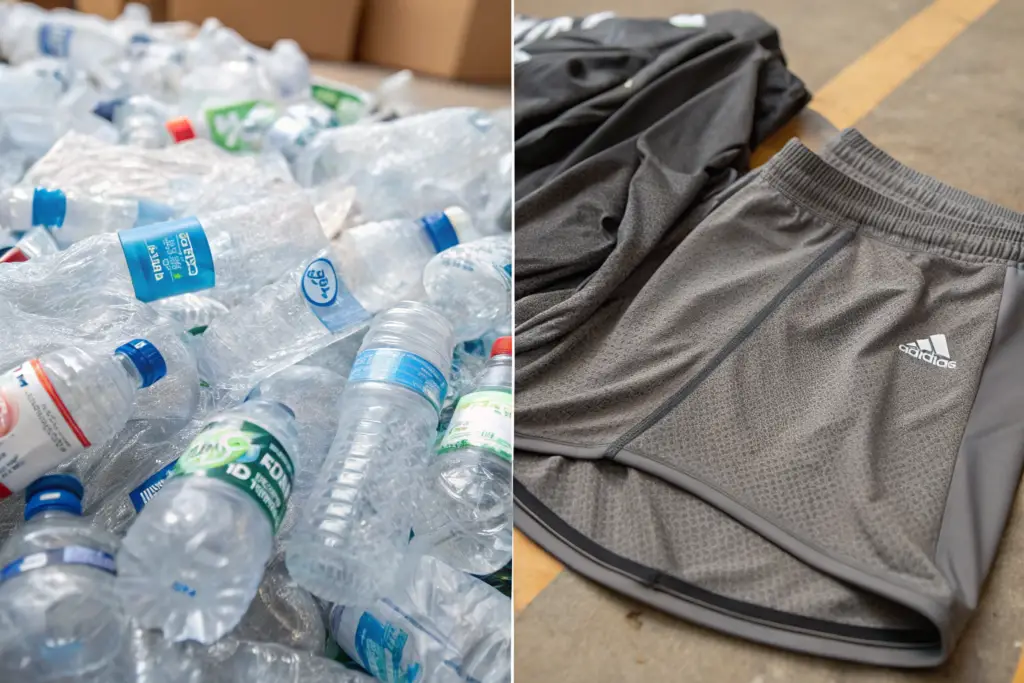
Recycled polyester diverts post-consumer PET bottles from waste streams, requires 59% less energy to produce than virgin polyester, and delivers the mechanical stretch, moisture wicking, and colorfastness that natural fibers cannot achieve for active shorts, but its sustainability credibility depends entirely on the brand openly acknowledging the microplastic shedding problem and educating customers on responsible garment care practices like using a washing bag filter.
What Are the Verifiable Benefits of GRS-Certified Recycled Polyester?
The Global Recycled Standard is to recycled polyester what GOTS is to organic cotton. It is the certification that separates genuine post-consumer recycled content from vague, unverifiable claims. A GRS-certified fabric has been tracked through the entire supply chain, from the collection of the post-consumer bottles to the extrusion of the recycled yarn, the weaving or knitting of the fabric, and the final garment assembly.
The environmental data supporting recycled polyester is strong and specific. According to life cycle assessment data, producing recycled polyester consumes 59% less energy and reduces CO2 emissions by approximately 32% compared to virgin polyester derived from petroleum. For a brand, these specific numbers are powerful marketing ammunition. You can state, "This short diverted 12 plastic bottles from the ocean," and that claim can be traced and verified through the GRS certification system. The performance properties are also unmatched by natural fibers for certain applications. A recycled polyester active short can deliver four-way mechanical stretch, complete moisture wicking, and vibrant color retention after dozens of washes. For a gym or running short, there is currently no natural fiber alternative that can match this performance package. The recycled polyester benefits are real, measurable, and valuable for the specific activewear segment. However, the GRS certificate itself must be verified. We always provide the transaction certificate number and the direct portal link so the buyer can independently confirm the certified supply chain.
How Should Brands Address the Microplastic Shedding Concern?
This is the uncomfortable conversation that responsible suppliers must initiate. Recycled polyester shorts shed microplastic fibers during washing. These tiny plastic particles pass through wastewater treatment plants and enter rivers and oceans. The evidence for this is scientifically well-established. A brand that sells recycled polyester shorts without acknowledging this issue is hiding a material fact from their customers, and that silence is ethically indistinguishable from greenwashing.
The solution is not to abandon recycled polyester entirely. The solution is radical transparency coupled with practical mitigation. When a brand purchases recycled polyester shorts from us, we advise them to include a specific care instruction on the hangtag and product page: "Wash in a Guppyfriend bag or install a microfiber filter on your washing machine to capture microfibers." A microfiber pollution study demonstrated that using a washing bag can reduce fiber shedding by over 80%. This turns a negative into a positive brand interaction. You are educating your customer and selling them a solution, not just a product. We also encourage brands to explore the next generation of recycled polyesters that are engineered to shed less, and to invest in end-of-life take-back programs where customers can return worn-out shorts for responsible recycling. This circular economy approach is the only credible long-term framework for synthetic activewear. Brands that lead with this honest, solution-oriented messaging on microplastic solutions are rewarded with customer loyalty and differentiation from the sea of generic activewear brands that ignore the problem entirely.
Conclusion
Choosing a sustainable fabric for classic shorts is not a simple moral equation. It is a complex engineering and marketing decision that must balance ecological truth, manufacturing practicality, and consumer communication. Organic cotton offers the most familiar, widely recognized eco-claim, supported by the rigorous GOTS certification framework, but demands careful attention to fiber irregularity and shrinkage on the production line. Hemp delivers an extraordinary agricultural story of soil regeneration and water efficiency, creating an exceptionally durable short, though its low elasticity demands sophisticated pattern engineering and strategic blending. Tencel lyocell represents the high-tech frontier of sustainability, a closed-loop fiber with a silky hand feel and superior moisture management that can elevate a simple short into a premium product, especially when blended with other natural fibers. Recycled polyester fills an essential performance niche for active shorts, diverting plastic waste and delivering mechanical stretch that nature cannot match, provided brands have the courage to openly address the microplastic challenge and guide their customers toward responsible care.
The common thread across all four fabrics is that sustainability is not an attribute that can be claimed with a single certificate. It must be verified at every stage, from the farm or recycling facility to the dye house and the cutting table.
At Shanghai Fumao, we have invested years in building a sustainable fabric supply chain that actually delivers on its promises. Our library of certified organic cotton, hemp, Tencel, and recycled polyester fabrics is pre-tested and production-ready. If you are ready to develop a classic short that stands on a foundation of genuine environmental integrity, not marketing rhetoric, we invite you to begin that conversation. Contact our Business Director, Elaine, at elaine@fumaoclothing.com. Let's manufacture something that feels good, performs beautifully, and tells an honest story to the customer who wears it.