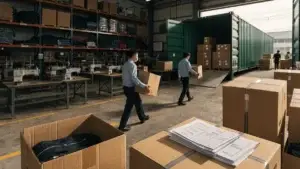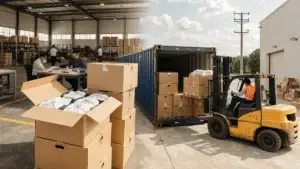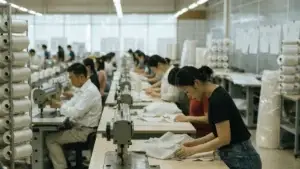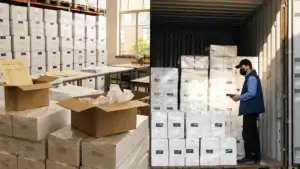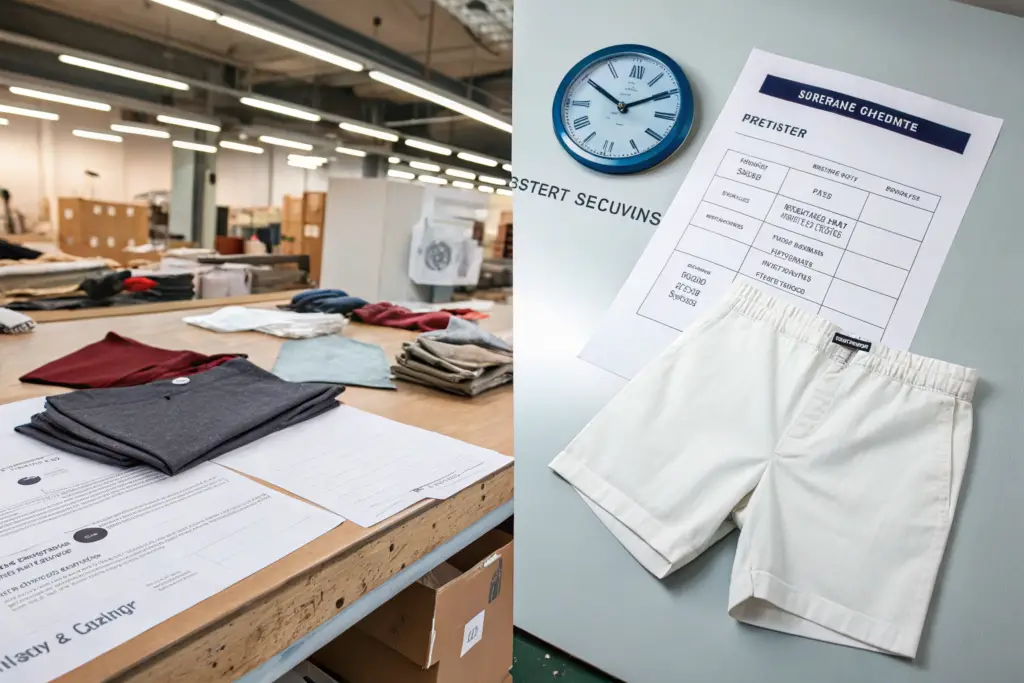
I have sat on both sides of the sourcing table. Before I ran Shanghai Fumao, I worked in export trading, and I have seen the exact moment when a buyer loses faith. It is not dramatic. It is a quiet, exhausted sigh. Maybe you know this sigh. It happens when you open an email at 11 PM, expecting a simple shipping confirmation, and instead you find a blurry photo of a pair of shorts with a crooked side seam and a message saying, "Small quality issue, can you accept?" It happens when you have spent four months developing a sample, your retail launch date is locked in, and the factory suddenly goes silent for two weeks. In the apparel industry, frustration is not caused by one catastrophic failure. It is caused by a thousand tiny betrayals of trust that accumulate until you start to believe that all overseas suppliers are unreliable.
The core frustrations buyers experience with apparel suppliers center on three systemic failures: inefficient sales communication loops that delay decision-making by days, shipment delays that cause catastrophic missed selling seasons, and the quiet deception of falsified compliance certificates, all of which Shanghai Fumao counteracts through a single-point English-fluent contact system, a publicly shared live production tracker, and a strictly enforced third-party audit-only certification policy.
We built our factory specifically to solve these pains because I personally experienced every single one of them as a young trader. I remember losing a $200,000 order from a California brand because my supplier at the time had faked an Oeko-Tex certificate, and the buyer discovered it during a random port inspection. That humiliation became the foundation of how we operate today. Let me walk you through the three deepest frustrations that poison buyer-supplier relationships, and exactly how we have engineered our shorts production line to eliminate them.
Why Does Inefficient Communication Kill Sourcing Deals?
Communication friction is the hidden tax that most brands do not know they are paying. You send a detailed technical question about the pocket construction of a chino short. You wait 24 hours because of the time zone difference. The reply arrives, and it is a single sentence: "Yes, can do." You ask for a photo of the revised sample. Three days pass. You follow up. The sales rep says, "I will check with production and reply tomorrow." Tomorrow comes, and the reply is, "Production says next week." This is not a language barrier problem. This is a structural communication failure where the salesperson does not have direct access to the cutting floor and is acting as a slow, inaccurate relay.
Inefficient communication is the primary deal-killer in apparel sourcing because the industry operates on thin seasonal margins where a three-day delay in answering a technical clarification can push a production slot back by three weeks, and most factories route all communication through a single overloaded salesperson who has never touched a sewing machine and cannot confirm anything without a physical walk to the production manager's office.
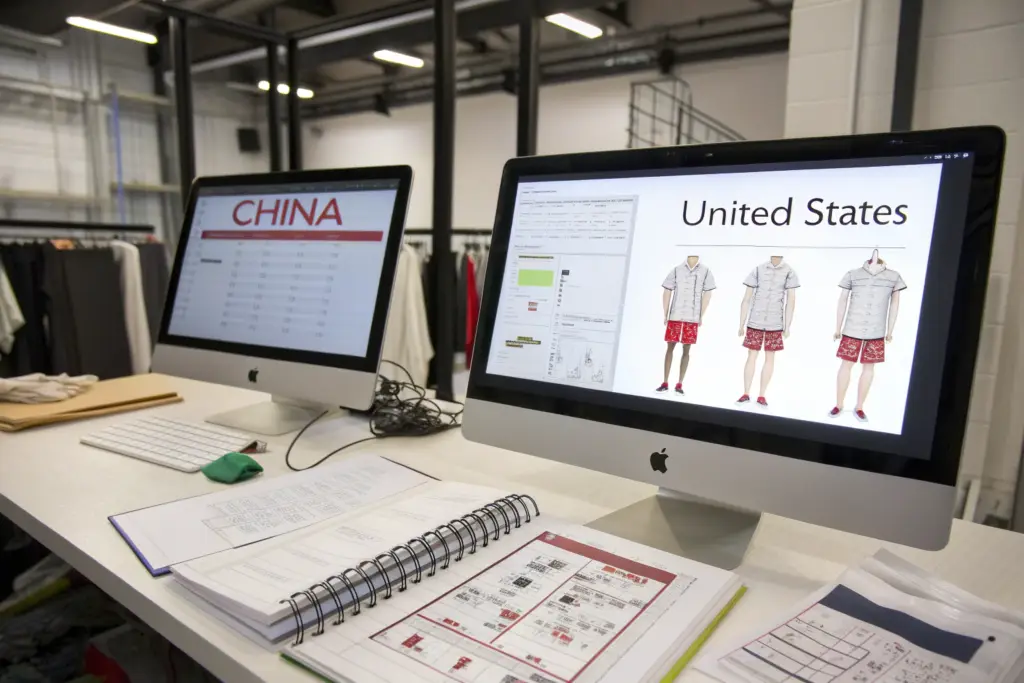
How Does the "Single Contact Relay" Model Fail Buyers?
The standard factory sales model is broken by design. A typical Chinese garment factory assigns you one sales representative, often a young graduate with good English skills but zero production floor experience. When you ask her if the front rise measurement on the shorts can be adjusted by half an inch, she does not know the answer. She cannot look at the pattern and tell you. She must stand up from her desk, walk into the sampling room, find the pattern master who is busy, interrupt him, translate your English question into Chinese, translate his Chinese technical answer back into English, walk back to her desk, and type the email. This process takes a minimum of six hours, and that is if nobody is in a meeting.
This relay system introduces two fatal risks. First, translation error. A technical term like "crotch point" or "bar tack" is easily mistranslated, and the sample comes back wrong. Second, the salesperson becomes a bottleneck. During peak season, she is managing twenty clients simultaneously. Your urgent question about the shorts is competing with everyone else's urgent question. The result is that you, the buyer, feel ignored and deprioritized. You cannot afford this feeling. According to research on supply chain communication, poor information flow is consistently cited as a top reason for sourcing relationship failure. When a brand owner in New York sends a question at 9 AM his time, which is 9 PM in China, and waits until the next evening for a vague answer, the entire development timeline slips.
What Is Fumao's Direct Technical Communication Solution?
We completely dismantled the relay system. At Shanghai Fumao, when you develop a classic shorts program with us, you are not assigned a salesperson. You are assigned a project pod. This pod consists of exactly three people: a bilingual merchandiser who understands garment construction, the pattern maker who will actually cut your pattern, and a quality control supervisor who will inspect your finished shorts. All three are copied on every email. All three can reply. The merchandiser handles the commercial flow. But if you ask a technical question about stitch density or pocket bag fabric, the pattern maker replies directly to you in simple, functional English.
This works because we invested in training our technical staff to communicate basic English relevant to their trade. They may not discuss politics or weather with you, but they can discuss seam allowance and zipper tape widths. This direct line to the garment technician eliminates the six-hour translation relay. The quality supervisor also sees all communication, which means when the shorts hit the finishing line, he already knows that you specifically flagged the side seam straightness as a critical inspection point. We have seen this Shanghai Fumao pod system reduce the average technical query resolution time from two days to under four hours. One of our Los Angeles clients told me last month that this single change was the reason he moved his entire shorts production from a cheaper factory in Bangladesh to us. The 20-cent higher FOB was irrelevant compared to the thousands of dollars of administrative time saved and the certainty that the sample would be right the first time.
How Do Shipment Delays Destroy Seasonal Shorts Businesses?
A pair of classic shorts has a very specific commercial lifespan. A linen short designed for the summer season begins selling in March, peaks in May, and is on the clearance rack by August. That window is about 20 weeks long. If your shipment arrives four weeks late, you have lost 20% of your selling window. If it arrives eight weeks late, you have missed the season entirely, and your inventory becomes next year's problem. I have watched this destroy promising brands. The consumer demand was real, the marketing was perfect, the product was beautiful, but the shorts were sitting in a container at the port while the temperature outside dropped.
Shipment delays are existential threats in the seasonal shorts market because the product has zero value outside its intended weather window, and these delays are rarely caused by a single catastrophic event but by a cascade of small, unreported factory slippages—a fabric mill delivering late, a cutting machine breaking down, a subcontractor not being monitored—that the buyer only learns about when the ship has already sailed.
Why Is a Production Black Hole So Dangerous for Buyers?
The period between placing the purchase order and receiving the shipping notification is what I call the production black hole. For most factories, this is a zone of zero visibility. You send the deposit, you receive a generic production schedule, and then you hear nothing for six weeks. You email for an update, and the reply is always, "On schedule, no problem." You have no way to verify this. You cannot see inside the factory. You just have to trust, and trust is a fragile commodity in global trade.
The black hole is dangerous because problems are hidden until they are unsolvable. A fabric mill delivers the greige fabric five days late. The factory does not tell you because they think they can catch up in cutting. Then the cutting machine breaks. They lose another three days. Still, no communication. Then a larger, more important client demands a rush order, and your production line is bumped. Now they are two weeks behind, and they still have not told you. When they finally admit the delay, the only shipping option left is the expensive express vessel, which costs $2,000 more, and the factory expects you to split the cost. This broken production tracking process is the norm in much of the industry. A survey on supply chain visibility consistently shows that over 60% of companies lack full visibility into their upstream production. For a small to mid-size brand buying classic shorts, this lack of visibility is a gamble that you cannot afford to lose on a seasonal product.
How Does Fumao's Live Production Tracker Provide Certainty?
We decided that the only way to eliminate the black hole was to turn on the lights. Every single production order for shorts at our factory is tracked on a shared live spreadsheet that the buyer can access at any time from their phone or laptop. This is not a manually updated PDF that we email once a week. It is a living document. When the fabric rolls arrive at our receiving bay, the warehouse team scans them in, and the status cell on the tracker changes to "Fabric Received, Inspection Passed." When the cutting table begins work, the tracker updates. You can see the exact number of pieces cut. When the sewing lines start, the daily output is logged.
The tracker also shows the critical path. It highlights the planned versus actual dates. If the cutting stage slips by one day, the tracker turns that row yellow. If it slips by three days, it turns red. As the buyer, you see the yellow flag the same moment I do. This transparency changes the relationship dynamic entirely. You are not an adversary demanding explanations; you are a partner observing a shared reality. We built this system using simple cloud-based project management tools because we wanted it to be robust, not fancy. This Shanghai Fumao live tracker has become one of our strongest selling points. A Boston-based brand owner told me that knowing he could check the real-time status of his 5,000-unit chino short order during his morning coffee, rather than composing yet another anxious email, was worth a premium of 5% on the unit price. The peace of mind is the product.
Why Do Falsified Certificates Undermine Brand Integrity?
In 2019, a mid-sized boutique chain in the Midwest placed a $150,000 order for organic cotton shorts with a supplier they had found on Alibaba. The supplier provided an organic certification document. The shorts arrived, sold well, and ended up in stores. Three months later, a consumer advocacy group randomly tested the fabric. The cotton was conventional, not organic. The certification was a digital fabrication. The boutique chain was publicly shamed, fined for false advertising, and their customers felt deceived. The supplier in China simply changed their company name and continued operating. The brand suffered permanent damage to their reputation. This story is not unique. It replays every year across the industry.
Falsified compliance certificates represent the most toxic trust violation in apparel sourcing because the deception targets the buyer's deepest vulnerability—their brand promise to their own end customer—and a single exposed fake certificate can trigger legal liability, retail delisting, and irreversible reputational damage that no discount on FOB price can ever compensate for.
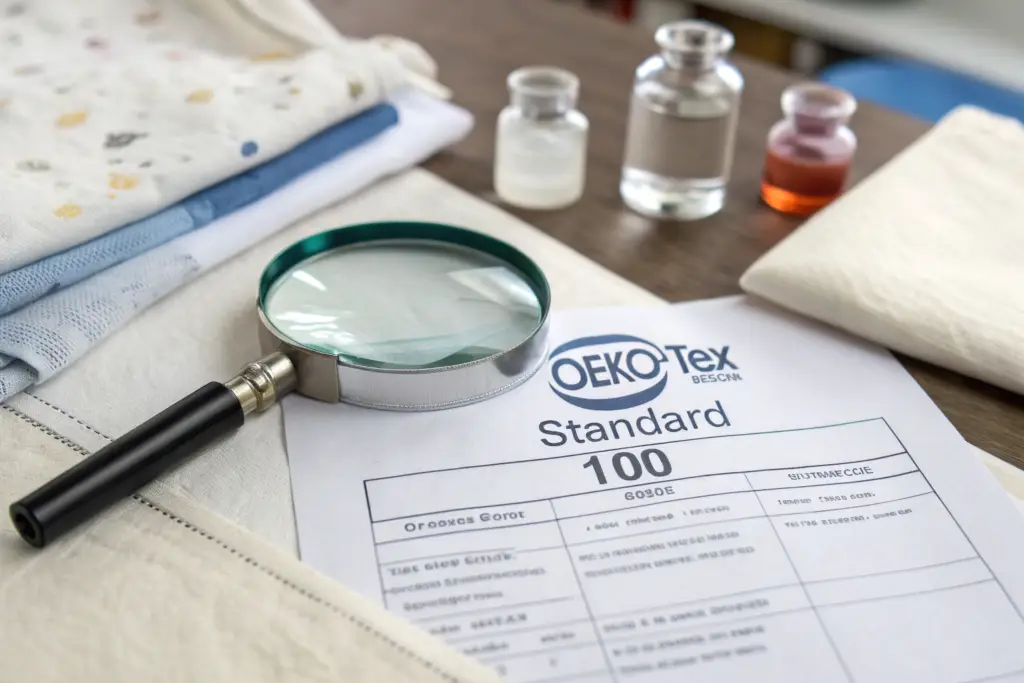
How Common Is Certificate Fraud in the Apparel Industry?
The scale of certificate fraud is uncomfortable to discuss, but buyers must understand the landscape. The demand for sustainable, ethical, and safe clothing has exploded. Consumers actively seek out organic cotton, recycled polyester, and fair labor guarantees. Brands have responded by making these attributes central to their marketing. This creates enormous pressure on the supply chain to produce compliant goods. Some factories respond to this pressure not by becoming compliant, but by purchasing fake documents.
A report by the OECD on garment supply chain due diligence highlights that document fraud remains a persistent challenge in global sourcing. The most common fakes are Oeko-Tex Standard 100 certificates for chemical safety and GOTS certificates for organic fiber content. A factory can buy a high-quality digital forgery of these documents for a few hundred dollars on the black market. The forgery will have matching logo graphics, plausible certificate numbers, and a fake signature. Unless the buyer takes the time to verify the certificate number directly on the certifier's public database, the fake looks completely real. In the rush to book orders and meet launch deadlines, many buyers skip this verification step. They trust the PDF attachment. That trust is exactly what the fraudulent suppliers exploit. For a brand whose entire identity is built on ethical production, a single fake certificate can destroy years of consumer goodwill.
What Is Fumao's Third-Party-Only Audit Verification Policy?
At Shanghai Fumao, we do not provide a single certificate that has not been issued directly by an accredited third-party body, and we give every buyer the tools to verify this themselves within seconds. We have a strict internal rule: no self-declarations, no in-house lab reports passed off as certifications. Every compliance document for our shorts—from the fabric mill's Oeko-Tex certificate to our factory's social compliance audit—comes from an independent organization.
When you develop a shorts program with us, you receive a compliance package that includes not just the PDF certificate, but also the direct URL to the certifier's online verification portal and the unique certificate number. You click the link, type the number, and see the certificate live on the BSCI or Oeko-Tex website. This takes thirty seconds. There is no room for forgery because you are not relying on our document; you are checking the certifier's own database. For fabric-specific claims like organic content, we go one step further. We allow buyers to appoint their own nominated third-party testing lab, such as SGS or Intertek, to pull random samples directly from our cutting table and test them for fiber composition. We cover the sampling cost; the buyer pays the lab directly. This separation of payment ensures the lab works for the buyer, not for us. This commitment to third-party verification is not a marketing tactic. It is a structural safeguard. We implemented it because I never want a client of ours to stand in front of their customers and defend a certificate they cannot verify. One of our longest-standing partners, a sustainable menswear brand in Portland, told me that our transparent audit policy was the deciding factor in their decision to commit to a three-year rolling contract with Shanghai Fumao. They knew they could sleep at night.
Conclusion
Buyer frustration with apparel suppliers is not born from unrealistic expectations. It is born from three specific, solvable failures that have been tolerated by the industry for far too long. The first is communication that treats the buyer as an outsider, routing every technical question through a slow, inexpert relay. The second is the production black hole, a deliberate or negligent silence that steals weeks from a seasonal selling window until the shorts arrive too late to matter. The third, and most corrosive, is the quiet crime of certificate fraud that weaponizes a brand's ethical promise against itself. Each of these frustrations is preventable. None of them require advanced technology. They require a factory leadership that respects the buyer enough to give them direct access, real-time visibility, and independently verifiable truth.
At Shanghai Fumao, we have rebuilt our shorts production operations around these three principles. Our project pod system connects you directly to the people cutting and inspecting your garments. Our live production tracker turns the factory floor into a transparent operation you can monitor from anywhere. Our third-party-only certification policy ensures that every claim we make can be verified not by us, but by the independent bodies whose job it is to protect consumers.
If you have been burned by a supplier, or if you are simply tired of the exhausting, low-trust status quo, we invite you to experience a different kind of manufacturing relationship. One built on direct access, radical transparency, and verifiable integrity. For a confidential conversation about moving your classic shorts production to a factory that measures its success by your peace of mind, contact our Business Director, Elaine, at elaine@fumaoclothing.com. Let's build something honest together.