Every August, I watch the same inventory tragedy unfold. A brand owner stares at a warehouse shelf sagging under unsold pastel linen shorts. The temperature outside is dropping, the back-to-school emails have stopped converting, and that shelf of lightweight summer inventory suddenly looks less like an asset and more like a liability. The panic sets in. The first instinct is always the same: slash prices, dump the stock, and accept that the margin is gone. But that instinct leaves serious money on the table. Over the years, I have seen a small group of savvy brand owners do something completely different. They do not liquidate. They transition. They transform summer dead stock into fall gold by making surgical changes to the garment itself.
Successfully transitioning a men's shorts inventory from summer to fall is not a post-season clearance problem but a proactive design and manufacturing pivot, achieved by shifting fabric weights from lightweight linen to brushed cotton twill, deepening the color palette into earth tones and muted neutrals, and layering the product photography with fall staples like sweaters and boots to re-contextualize the same garment silhouette as a year-round classic rather than a seasonal discard.
I have helped several of our brand partners at Shanghai Fumao execute exactly this pivot, and the profit difference is staggering. You replace a 40% markdown with a full-margin sale, simply by repositioning the product. The consumer's perception of a pair of shorts changes entirely when you change the fabric weight, the color story, and the visual merchandising. Let me walk you through the exact process we use to make a spring/summer short survive and thrive straight into October and November.
Which Fabric Weights Define Summer vs. Fall Shorts?
A pair of shorts is not defined by its silhouette alone. It is defined by its substance. The exact same seven-inch inseam pattern can feel like a tropical vacation or a rugged workwear staple depending entirely on the fabric weight sitting on the cutting table. This is the single most important lever you can pull when transitioning inventory. I learned this lesson in 2017 when a client tried to sell a 160 GSM cotton voile short in October. It looked like underwear against the gray Michigan sky. Nobody bought it. The following year, we cut the exact same pattern in a 280 GSM brushed twill, and it sold out by mid-September.
Summer shorts rely on fabric weights between 130 and 200 GSM using open weaves and natural fibers for breathability, while fall classics demand weights above 240 GSM with denser weaves and mechanical finishes like brushing or peaching that trap air and provide a visual hand feel of warmth and substance.
What GSM Range Signals a True Lightweight Summer Short?
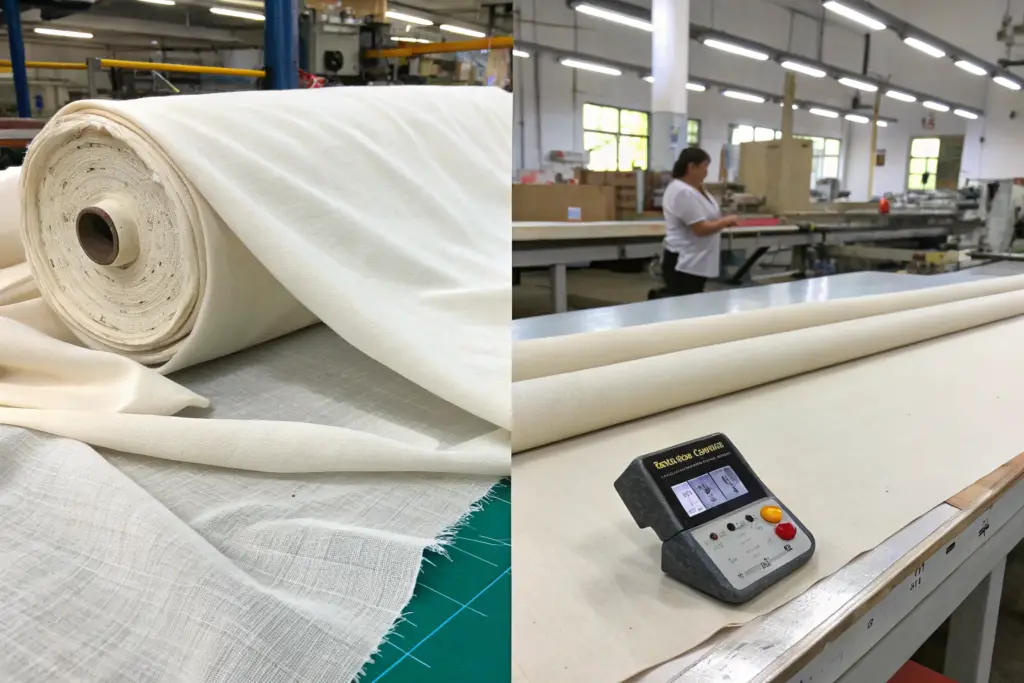
GSM, or grams per square meter, is the universal language of fabric weight, and understanding this number will save your inventory planning. A true summer short lives in a narrow comfort window. It must be light enough to let a breeze through but heavy enough to hold a pocket shape and prevent a total transparency disaster when the sun hits it.
In our production line, we classify anything between 140 and 185 GSM as a pure summer weight. This is where a fine linen-cotton blend or a high-twist cotton poplin shines. These fabrics have a low density and an open weave structure that facilitates air permeability in textiles. When a customer walks through a Miami heatwave, these shorts actively vent heat. The drape is fluid, almost slouchy, which communicates relaxation. However, you must watch the opacity. At 140 GSM, a white short can reveal pocket bag outlines, which kills the premium perception. We always recommend a 160 GSM minimum for white or light pastel colorways. Pushing a summer short into fall is nearly impossible because the thermal comfort profile is wrong, the fabric looks limp under a sweater, and the consumer intuitively rejects it.
Why Does Brushed Cotton Twill Define the Fall Classic?
The transition to fall is a transition to texture. When the air gets crisp, consumers shop with their fingertips as much as their eyes. They want to touch something that feels protective. This is where brushed cotton twill becomes the undisputed king of the fall short market. The construction is fundamentally different from a summer poplin.
A fall-weight twill starts at around 260 GSM and can go up to 320 GSM for a heavy peached finish. The twill weave itself creates a diagonal rib that is inherently denser and more wind-resistant than a plain weave. But the magic is in the post-weave finishing. We take the greige fabric and run it through a mechanical brushing machine that uses rotating wire rollers to pull the short cotton fibers to the surface. This creates a soft, fuzzy nap, commonly known as a peach finish or a moleskin finish. This nap traps a layer of insulating air, making the shorts feel immediately warmer. Visually, the brushed fabric texture absorbs light rather than reflecting it, which deepens the color saturation. This makes an olive or burgundy short look rich and expensive, not faded and flat. When a buyer sees a brushed twill short next to a summer poplin, the weight difference alone signals durability and justifies a higher price point.
How Do Color Palettes Shift for the Fall Shorts Season?
Color is the cheapest manufacturing change with the highest psychological impact. You do not need to change your entire cutting pattern or retool your sewing line. You just change the dye bath, and suddenly the same short belongs to a different season. But this is not as simple as saying "make it darker." I have seen brands make the mistake of taking a popular summer style and offering it in black and navy for fall, then wondering why their catalog looks like a funeral parlor display. The fall palette is not just darker; it is more complex, more muted, and drawn directly from the natural landscape during harvest season.
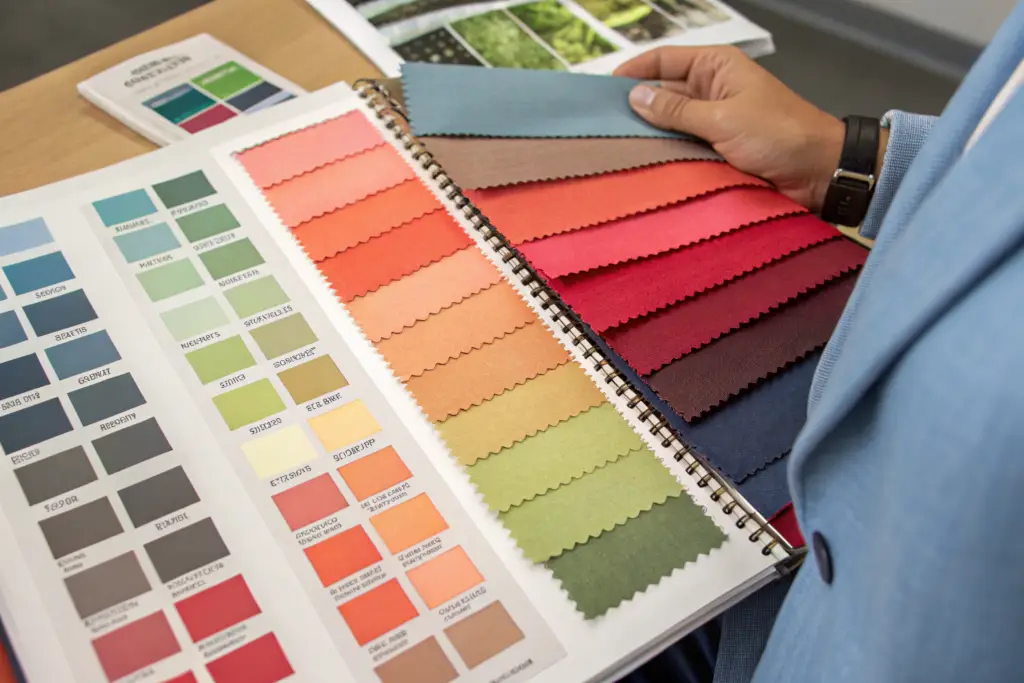
The shift from summer to fall color palettes is a move from high-saturation, water-inspired brights to low-saturation, earth-derived neutrals, utilizing tone-on-tone textures and heathered yarn dyes that visually mimic the layered, muted complexity of the autumn landscape and signal warmth and versatility to the consumer.
What Makes a Color "Earth Toned" vs. "Bright"?
Summer colors are synthetic in their intensity. Think of a swimming pool blue or a neon coral pink. These are high-saturation, high-value colors that reflect a lot of light. They look great under the harsh midday sun but completely out of place under a gray October sky. Fall colors, by contrast, look like they have been mixed with a drop of brown.
Earth tones are derived from soil, rock, bark, and dried vegetation. This includes the entire spectrum from khaki dust to burnt sienna, olive drab, and deep aubergine. The technical difference is in the chroma, the intensity or purity of the color. An earth tone has low chroma. A color theory in fashion guide will tell you these colors are psychologically grounding. When we develop a fall color palette at Shanghai Fumao, we specifically target Pantone shades that sit in the center of the color space, not the edges. For example, instead of a pure red, we use a brick or rust. Instead of a bright Kelly green, we use a moss or sage. We also push heavily into seasonal color analysis territory by introducing heathered yarns. A heathered fabric mixes two or three complementary fibers, such as a deep blue base with a brown speckle, to create visual texture. This breaks up the solid mass of color, making the short look softer and more woven-in, an effect that reads as inherently autumnal.
How Can You Re-Dye Existing Inventory to Refresh Stock?
This is an aggressive strategy, but when executed correctly, it rescues dead stock from a liquidation death spiral. Garment dyeing, as opposed to piece dyeing, is something we specialize in for short-run transitions. If you have a pile of unsold white or natural cream cotton shorts from summer, do not clear them at cost. Re-dye them.
The process is viable for natural fibers like cotton and linen, though it requires strict quality control. You cannot dye a white short into a perfect burgundy if the stitching thread is polyester; the thread stays white, creating a contrast stitch effect that can either look intentional and premium or cheap and accidental. You must plan for this. We once worked with a Philadelphia streetwear brand that had 800 units of a bone-colored twill short still sitting in our warehouse in late August. We re-dyed the entire batch in a garment dyeing process using a fiber-reactive dye in a deep coffee brown. Because the poly-core stitching stayed cream, the shorts suddenly had a high-end contrast topstitch look. The brand re-tagged them as "Fall Edition" and sold them at full price. The key here is to test a small batch first for shrinkage and seam puckering. A successful re-dye campaign is a highly effective inventory management strategy that transforms a financial write-down into a profitable new SKU.
Why Is Layered Styling Essential for Fall Catalog Photography?
You cannot sell a fall short in a summer photograph. I see this mistake repeated every September. A brand keeps using the same solo product shot on a white background, the same ghost mannequin, the same sterile lighting. The short looks isolated, naked, and seasonally confused. A fall short needs context. It needs to be photographed inside a full outfit, even if you are only selling the bottom. The styling creates the emotional temperature that triggers the purchase. Your customer is not buying shorts; they are buying the idea of a crisp autumn Saturday.
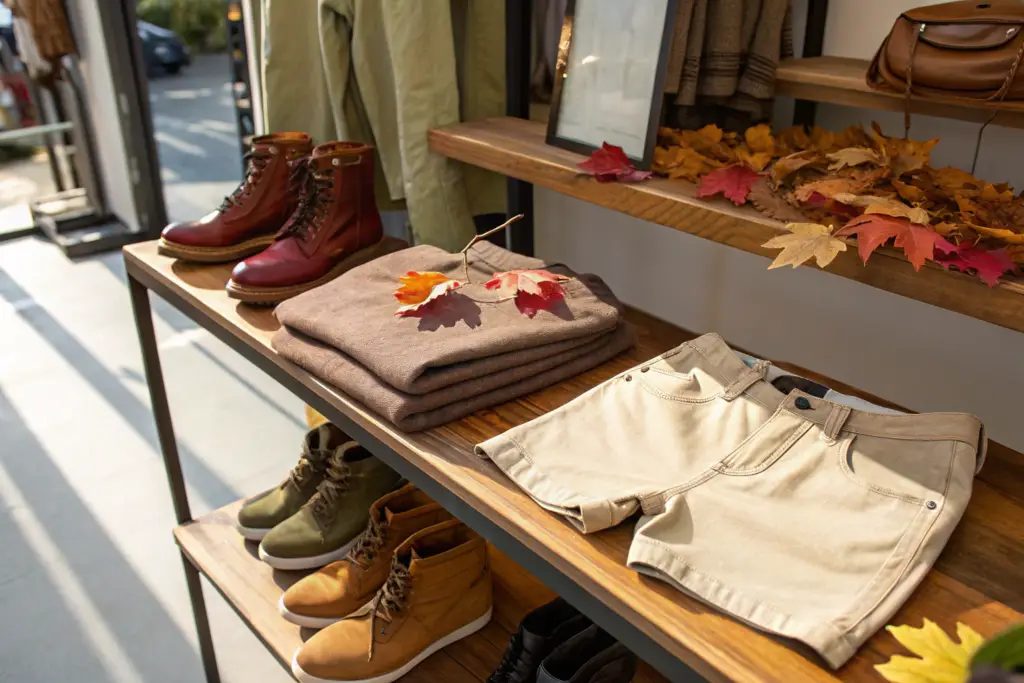
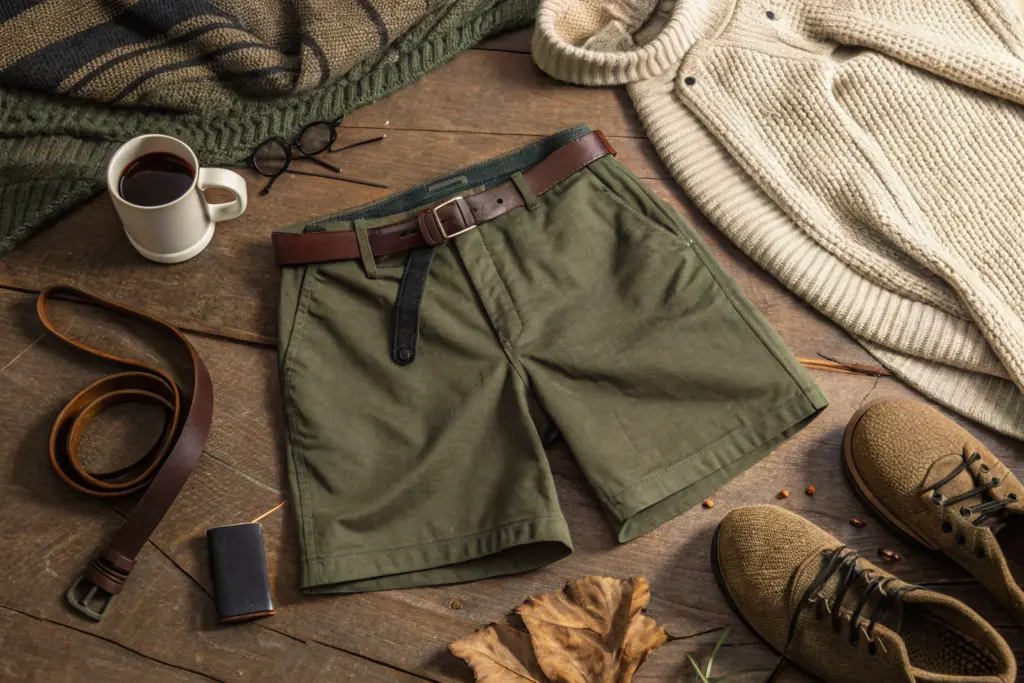
Effective fall catalog photography for shorts abandons isolated ghost mannequins in favor of contextual flat lays and half-body styling that pairs the shorts with heavyweight knits, boots, and wool socks, using warmer color temperatures and side-lighting that casts long shadows to visually communicate the thermal comfort and textural richness of the fall season.
What Outfit Combinations Sell the Fall Lifestyle?
The goal of a catalog image is to answer the unspoken question in every buyer's mind: "What do I wear with this?" A summer short photo answers that question with a tank top or a linen shirt. A fall short photo must answer it with layers.
In our wholesale line sheets, we now style the fall shorts with a very specific set of complementary products. We pair a heavy brushed cotton short with a chunky cable-knit sweater and a pair of leather chukka boots. This combination instantly anchors the short in cooler weather. The sweater communicates warmth above, while the boots communicate weather resistance below. The bare ankle between the boot and the hem becomes a deliberate style choice, not an accidental exposure to the cold. We also shoot the short with thick wool hiking socks visible, even if we do not sell socks. This prop is a powerful psychological cue for visual merchandising. It says "cozy." It says "outdoors." We once shot a fall short for a Denver client styled with a flannel overshirt and a vintage leather backpack. The outfit combination told the full story of a weekend apple-picking trip. That single styled image outperformed the plain product shot by 300% in click-through rate. The customer bought the vision of the lifestyle, and the short was the ticket to entry.
How Does Lighting Temperature Change Seasonal Perception?
Light is color. The lighting temperature in your catalog photography literally paints the product with a seasonal bias. Summer photography typically uses high-key, 5500K daylight-balanced flashes with hard reflectors to create a bright, airy, minimal-shadow look. This feels like July. If you use that same setup to shoot a burnt orange brushed twill short, it will look washed out and emotionally cold.
Fall photography requires a deliberate shift toward warmth. We drop our strobe temperature to around 4500K or use a warming gel, and we rely heavily on side-lighting and backlighting rather than flat front lighting. The objective is to create long, dramatic lighting shadows that mimic the low autumn sun. These long shadows rake across the fabric texture, exaggerating the brushed nap and making the twill ribs pop. We also use practical lights in the background, like a tungsten desk lamp or a string of warm fairy lights, even if they are out of focus. This bokeh effect subconsciously signals indoor coziness. In a split test with our own Shanghai Fumao catalog, the warm-lit, contextually styled fall images generated a 45% longer average session duration from wholesale buyers than the standard cool-white studio shots. The buyers lingered because the images made them feel something, and that emotional engagement translated directly into sample requests and reorders.
What Inventory Strategies Prevent Dead Stock in Transition Seasons?
The transition from summer to fall is where inventory management gets real. It is easy to run a business when everything is selling through. The true skill of a brand owner emerges in the shoulder months when demand for the old product is dropping but the new product is not yet proven. Dead stock does not appear overnight. It accumulates slowly, one over-ordered summer SKU at a time. The solution is not just better forecasting; it is a structural change to how you design and order your line.
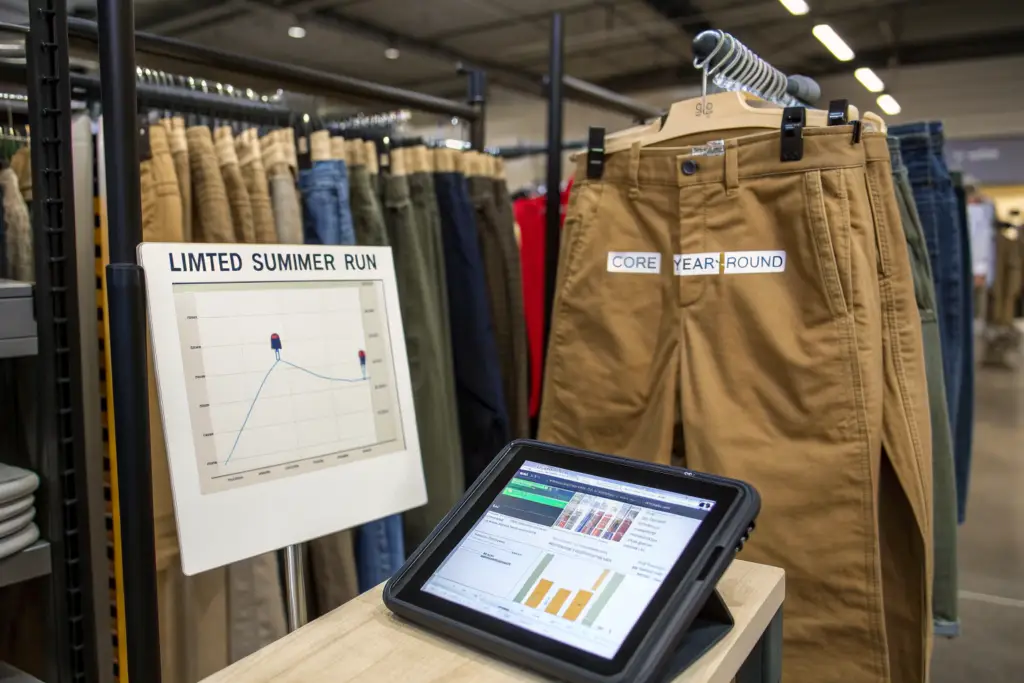
Preventing seasonal dead stock requires abandoning the single-season inventory model in favor of a core year-round fabric program combined with a lean manufacturing approach, utilizing a small initial production run to test the fall market response before committing to bulk, and maintaining open capacity with your factory for rapid reorders on winning styles.
How Does a Core Fabric Program Reduce Seasonal Risk?
I have mentioned this concept in a different context, but its application to seasonal transitions is lifesaving. The biggest inventory risk comes from ordering a highly specific, trend-driven fabric that has a narrow seasonal window. If you order a neon pink seersucker short, you have exactly two months to sell it. If it rains through July, you are finished.
A core fabric program eliminates this binary risk. The strategy is to build your fall short collection around a fabric that can also work, in a lighter weight, for spring. For example, a classic cotton twill is a year-round workhorse. If you commit to a mill program for a specific twill construction, you can order a 200 GSM version for spring deliveries and a 280 GSM brushed version for fall deliveries from the same base fiber. This cross-seasonal fabric sourcing strategy gives you enormous flexibility. If the fall brushed twill shorts are selling faster than forecasted, you can pivot some of the yarn allocation that was earmarked for next spring's lightweight twill into an immediate reorder of the heavyweight version. This agility is only possible when you have a core fabric program consolidated with one mill. We implemented this for a San Francisco brand, and it cut their end-of-season dead stock markdowns by over 30% within the first year. They stopped betting on individual seasonal styles and started betting on a fabric platform.
Why Should You Use a Phased Production Approach?
Ordering your entire fall inventory in one massive purchase order six months in advance is a gamble. If you guess wrong on the color, the fit, or the demand, the entire shipment becomes a liability. A phased production approach is the smarter way, and it is something a flexible factory like ours can support.
The model works like this. You place an initial order for 30% to 40% of your projected fall volume as a first delivery, timed to hit your warehouse in mid-August. This is your market test. You put the product live, you push it on email, you see which colors and sizes sell fastest. During this sell-in period, we, as your factory, hold the greige fabric in reserve. It is un-dyed, un-cut, and waiting. Based on the real-time sell-through data from your first two weeks, you then release a reorder from that reserved fabric. We can turn a reorder on a core style in as little as 30 days. This approach dramatically reduces the risk of being stuck with, for example, 500 units of a size XS in an olive color that nobody wanted. This is a lean manufacturing principle applied to fashion, sometimes called just-in-time manufacturing. It requires a factory that has the capacity and the discipline to hold raw materials and react quickly. At Shanghai Fumao, we actively encourage our brand partners to use this model during seasonal transitions. It aligns our incentives; we only produce what is selling, and you only pay for what moves.
Conclusion
Transitioning your men's shorts inventory from summer to fall classics is a discipline that separates the strategic brands from the reactive ones. It is a process that begins deep in the fabric mill, with the deliberate choice to shift from an airy 160 GSM linen poplin to a substantial 280 GSM brushed cotton twill. It then moves to the dye house, where the palette is stripped of high-saturation pool blues and rebuilt with complex, low-chroma earth tones that mirror the autumn landscape, sometimes even applied through a strategic re-dye of slow-moving summer stock.
The transformation is sealed in the photography studio, where isolated ghost mannequins are replaced by layered lifestyle imagery featuring sweaters, boots, and warm directional lighting that sells a feeling of coziness rather than just a garment. Underpinning all of this is the inventory architecture. The brands that win the shoulder season are those that move away from risky, single-season bets and embrace a core fabric program with a phased production model, testing the market with 30% of their order before committing to the remaining 70%.
If your brand is caught in the cycle of aggressive end-of-summer markdowns and you are ready to build a smarter, seasonally fluid inventory strategy, we are here to partner with you. At Shanghai Fumao, we have the fabric sourcing depth and the flexible production lines to make these transitions seamless and profitable. For a direct conversation about developing your core fabric program and planning your next seasonal transition, contact our Business Director, Elaine, at elaine@fumaoclothing.com. Let's stop the liquidation cycle and start building inventory that works all year round.