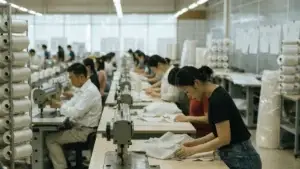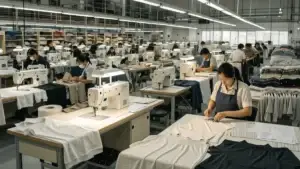
Three years ago, a distributor in Atlanta called me with a strange problem. His classic cotton twill shorts were selling well, but the return rate was suddenly spiking. Customers complained the fabric felt "plasticky" and trapped heat in a way the original samples never did. He sent me a pair from his bulk shipment. I touched it and knew immediately. The fabric was not the 100% premium cotton we had sampled. The supplier had quietly swapped in a high-percentage polyester blend to save $0.30 per yard. He had been defrauded. He just did not know how to prove it.
Authentic cotton can be distinguished from counterfeit blends through systematic fiber inspection, standardized burn tests, lab certification verification, and precise fabric weight measurement against the approved spec sheet.
Counterfeit fabric is not a rare horror story. It is a daily risk in bulk manufacturing. When you order 5,000 pairs of "100% Cotton Classic Shorts," you are trusting a complex chain of yarn spinners, weavers, and dyers. One unethical link in that chain can ruin your brand's reputation. At Shanghai Fumao, we build our quality assurance around independent verification, not blind trust. You need to learn these verification methods too. They are your financial shield.
Why Do Some Suppliers Substitute Cotton with Synthetic Blends in Bulk Orders?
You need to understand the economics of a scam. A supplier does not wake up and decide to cheat because they are evil. They cheat because they are squeezed. You negotiate hard. You demand the lowest price. But you also want the premium cotton handfeel. The fabric mill faces rising raw cotton costs. A yard of 100% compact-spun cotton might cost them $2.80. A yard of a 60-40 cotton-poly blend that looks very similar after finishing might cost them $2.10. The math is simple. The temptation is high.
Fabric substitution happens because synthetic fibers cost 30-50% less than premium cotton, and modern finishing techniques can temporarily mask the difference well enough to fool a visual inspection.
I once traced a suspicious shipment back to a subcontractor. Our client had approved a beautiful 100% cotton swatch. But the subcontractor had treated a cheap poly-blend with a heavy cationic softener. Out of the box, it felt like a cloud. After three washes, the softener washed out, and the "plasticky" truth emerged. The short was dead. The brand was damaged. You can get the latest global fiber price indices from Fibre2Fashion, which tracks exactly these market pressures that drive unethical substitutions. Price pressure is the root cause.
How Do Fabric Finishing Agents Temporarily Mask the Synthetic Feel?
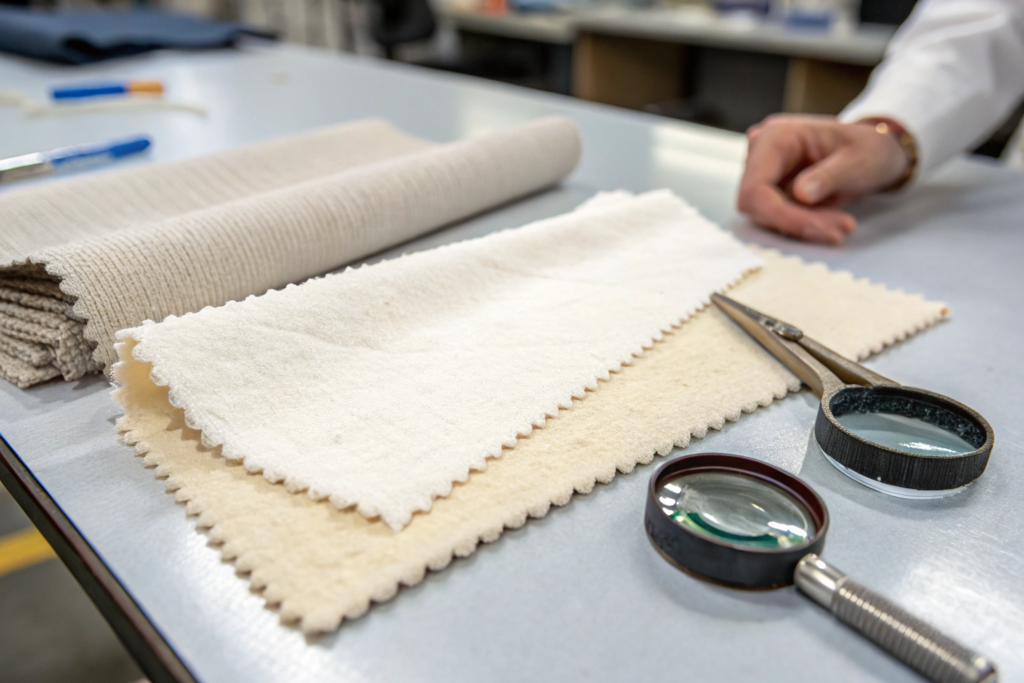
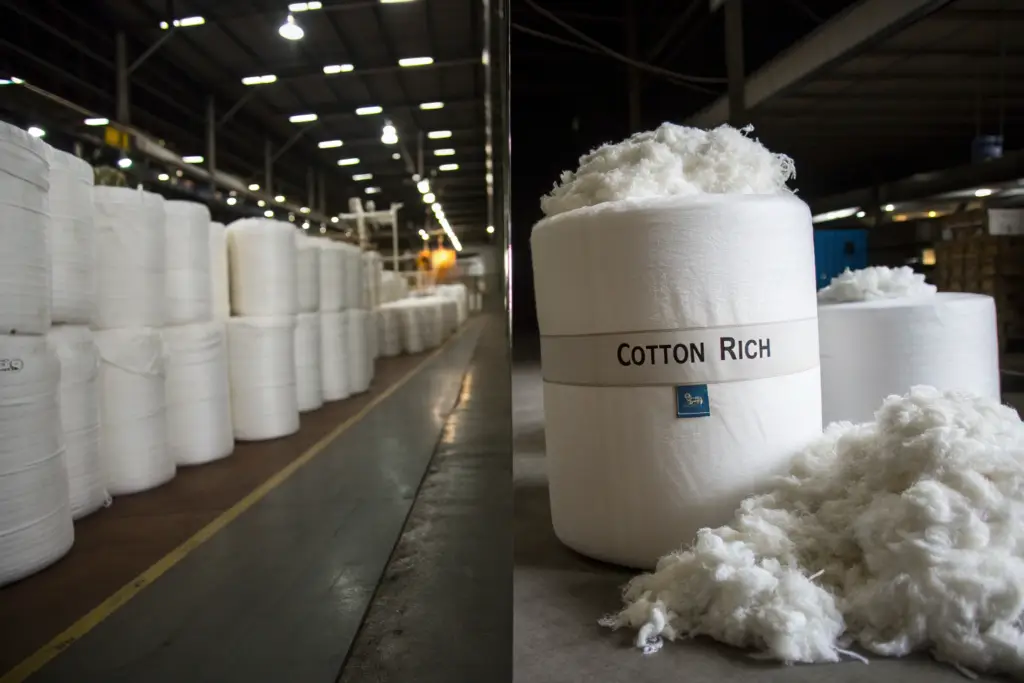
This is the chemical deception game. A generic poly-cotton blend feels rough and shiny. But if you apply a silicone-based softener and run it through a sueding machine, it feels incredibly soft and matte. The problem is the wash durability. Finishes are a temporary mask. Authentic cotton is soft because of its natural fiber structure, not a chemical coating. The only way to detect this before the wash is to look at the fiber ends under a scope. Synthetics are solid, extruded rods. Cotton fibers are twisted, hollow ribbons. That hollow core is what makes cotton breathe. For a deep scientific dive into fiber morphology, the Textile Research Journal publishes peer-reviewed papers on how these microscopic structures dictate performance. A finish can hide the feel, but it cannot hide the structure.
| Test Method | What Authentic Cotton Shows | What Fake Blend Shows |
|---|---|---|
| Visual Inspection | Irregular slubs, matte finish, soft luster | Uniform texture, overly shiny or unnaturally dull |
| Microscope View | Flat, twisted ribbon shape | Smooth, rigid rod shape |
| Burn Behavior | Burns steady, smells like paper, leaves fine ash | Shrinks from flame, smells like plastic, leaves hard bead |
| Post-Wash Feel | Softens further, breathes | Turns rough or "plasticky," traps heat |
Can Price Alone Indicate a Fabric Authenticity Problem?
Not always, but it is a screaming red flag. If you get a quote for "100% Supima Cotton Shorts" that is 20% lower than three other factories, you are not getting Supima. You are getting scammed. There is no magic factory that breaks the laws of commodity pricing. Premium raw cotton is a globally traded commodity with transparent pricing. The Cotton Outlook publishes a daily A Index. Factories buy greige at similar base costs. A significantly lower price means they are cutting something: labor standards, compliance, or fiber content. At Shanghai Fumao, we always provide a cost breakdown sheet upon request. If a supplier refuses to show you the BOM (Bill of Materials) breakdown, walk away. You can follow the raw cotton futures on Investing.com to understand the baseline material cost you should be paying.
How Can You Perform a Reliable Burn Test on Your Shorts Sample?
The burn test is the oldest, fastest, and most definitive spot-check you can do without a lab. It takes ten seconds. It reveals everything. I have trained dozens of my overseas partners on this exact method. You do not need a chemistry degree. You just need a pair of tweezers, a ceramic plate, a lighter, and a small square of fabric from the waistband or pocket inside seam. Do not test the outside fabric only. Sometimes the shell is cotton but the pocketing is pure poly. You need to know the whole garment.
The burn test reliably identifies fiber content by observing the flame behavior, smoke color and smell, and the resulting ash texture immediately after the fabric stops burning.
I was on a video call with a brand owner in London last month. He was skeptical about his new shipment. I watched him do the burn test live on his phone camera. The fabric melted into a hard, black plastic bead. He cursed. I was not surprised. He had proof. He sent the video to his supplier and got a full refund. This is the power of knowing the technique. Let's break down exactly what to look for.
What Does the Behavior of the Flame Tell You About Fiber Content?
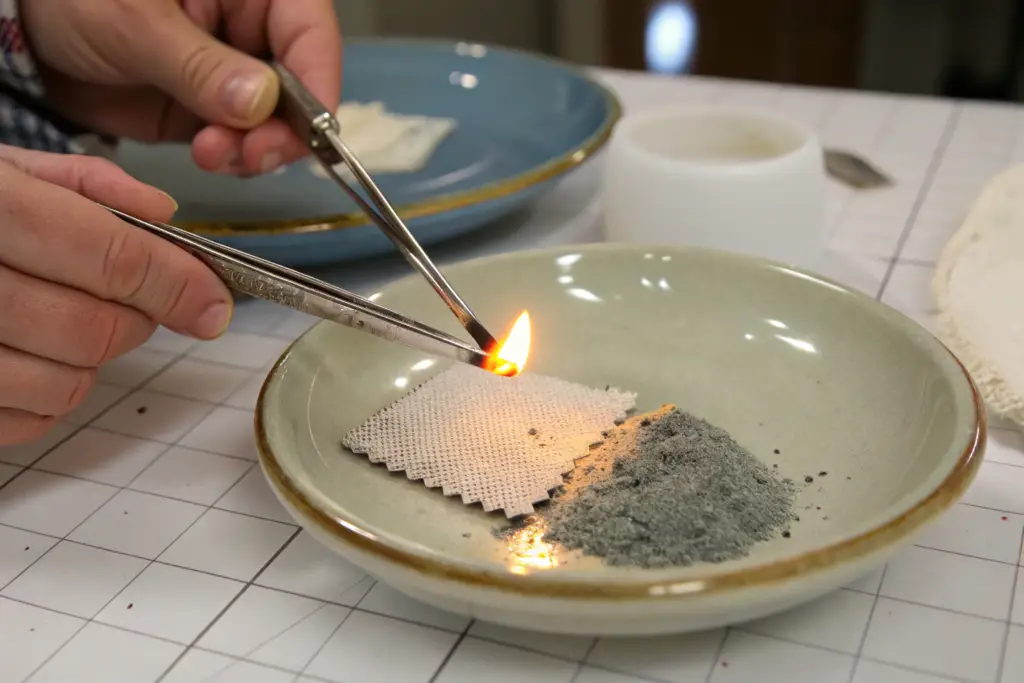
Watch the flame, not the smoke. Cotton catches fire easily and burns steadily with a yellow flame. It does not shrink away from the match. If the fabric curls up and melts away from the flame like a scared shrimp, it is synthetic. That "shrink-away" reflex is the thermoplastic polymer recoiling from the heat. This is the fastest indicator. I tell my clients: if it melts, it is not pure cotton. Also, watch the burning speed. Cotton burns continuously like paper. A blend might sputter, flare up, then die out as the natural fiber burns away and the synthetic melts. This uneven combustion is a telltale sign of a blend.
How Do You Interpret the Ash Residue After the Flame Dies?
The residue is the smoking gun. Pure cotton leaves a fine, soft, greyish-white ash that crumbles to powder the moment you touch it. It disintegrates completely. There is no hard skeleton left behind. A polyester blend leaves a hard, dark, plastic bead. You cannot crush it between your fingers. It is a solid remnant of the melted polymer. If you see a combination—some soft ash with a hard black bead trapped in the middle—you have a cotton-polyester blend. The size of the bead roughly corresponds to the percentage of synthetic fiber. For official testing standards on this, you can reference the procedures outlined by ASTM International, specifically their textile flammability and fiber identification standards. The ash never lies.
What Role Do Lab Certifications Play in Verifying 100% Cotton Shipments?
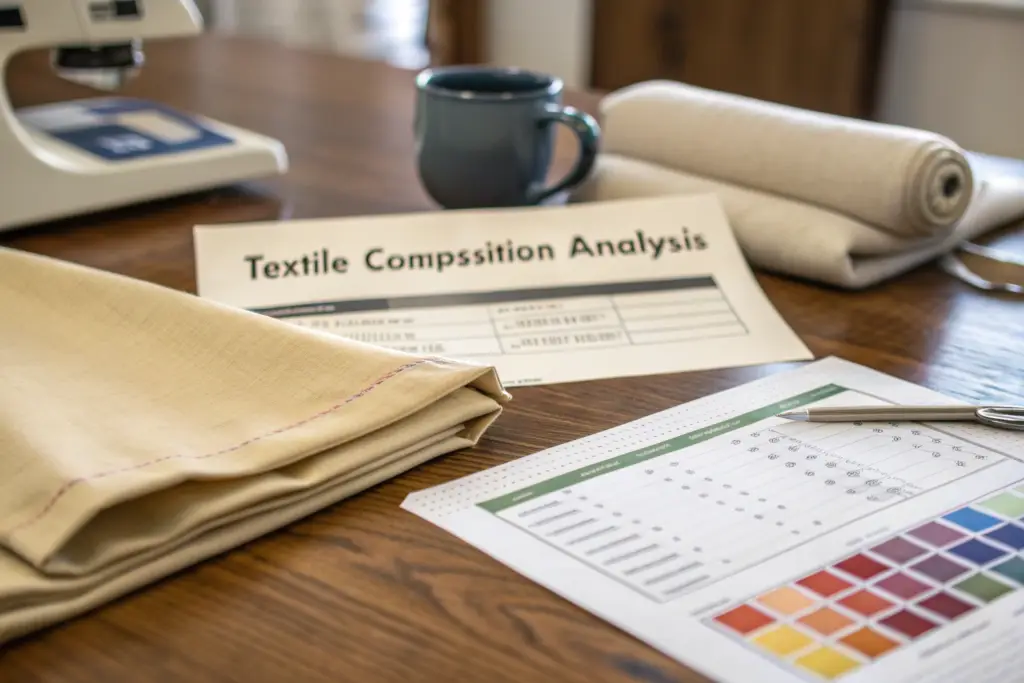
A burn test is your personal gut check. A lab certification is your legal shield. When you have a dispute with a supplier, you cannot send them a video of you burning fabric and expect a court to care. You need an ISO-certified third-party test report that quantifies the fiber composition to within a 1% margin. This is the document that triggers chargebacks and refunds.
Third-party lab certifications like SGS, Intertek, or Bureau Veritas provide quantitative, legally-binding verification of fiber content percentage that overrides any supplier claim or hangtag statement.
I learned the value of this paper trail five years ago. A European buyer tried to claim our organic cotton shorts were contaminated with GMO cotton. We had shipped 8,000 units. Our standard practice at Shanghai Fumao was to retain a shipment sample and send it to an independent lab for a full composition analysis. We had the certificate from SGS showing 100% organic cotton. The buyer's "in-house test" was a visual inspection. Our document trumped their opinion. The shipment was accepted, and the relationship was saved. You need to demand these certificates before you pay the balance.
How Should You Authenticate an OEKO-TEX or GOTS Certificate?
Do not just accept a PDF. Counterfeiters fake certificates now. They photoshop a logo onto a blank template. You need to verify the certificate number on the issuer's official database. Go to the OEKO-TEX website. Enter the certificate number printed on your supplier's document. Does it match the factory name? Does it match the product category? Is it expired? I once caught a supplier whose OEKO-TEX had expired six months prior. They were still shipping with the old label. That is illegal in most major markets. A valid certificate means the fabric has been tested for harmful substances. It does not strictly verify fiber content, but it proves a chain of custody that is harder to fake.
What Testing Standard Specifically Defines Fiber Composition?
The global standard is the ISO 1833 series, or the AATCC Test Method 20 for the US market. These standards describe how to chemically dissolve one fiber to isolate the other. For example, to test a cotton-poly blend, the lab dissolves the cotton with 75% sulfuric acid. The polyester remains. They weigh the residue. The math tells you the exact blend ratio. This is a destructive test, but it is absolute. When we ship a high-volume order of classic shorts, we pull a random sample from the middle of the production run—not a pre-selected swatch from the supplier—and send it for AATCC 20 testing. You can find a directory of accredited labs on the A2LA website. Always insist the sampling is performed randomly from your bulk order, not from a "golden sample" provided weeks ago.
How Does a Quick GSM Check on Site Prevent Long-Term Quality Issues?
A lab report gives you the chemical truth. A GSM check gives you the physical truth. GSM stands for Grams per Square Meter. It measures the fabric weight. If you approved a sample that was 260 GSM—a nice, sturdy classic short—and the shipment feels flimsy and thin, check the GSM. A shady supplier might use a cheaper, lighter yarn to save money. The garment looks identical on a hanger. It falls apart on the body. It loses shape after two washes. You cannot hide a missing 20 grams from a scale.
A GSM check is an instant, non-destructive field test that confirms whether the fabric weight in your bulk shipment matches your approved development sample, directly detecting the common fraud of "lightweighting."
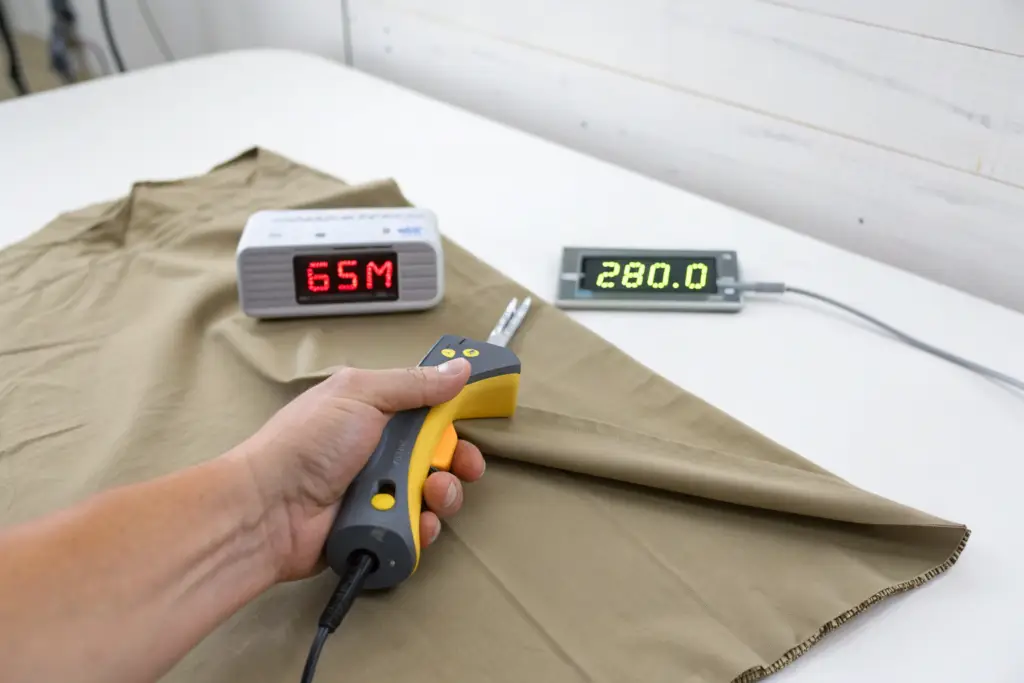
I have a policy with my partners. I tell them: buy a $15 GSM cutter and a $20 digital scale. Keep them in your office. When the shipment lands, open a random carton. Pick a random pair of shorts. Cut a circle from the inside of the pocket flap where no one will see the damage. Weigh it. Do not wait for returns. Do not wait for complaints. Check it the day it arrives.
What Are the Practical Steps for Cutting and Weighing Fabric?
The tool is a GSM cutter. It is a circular die that cuts exactly a 100 square centimeter disc of fabric. You place the fabric on a plastic mat. You press the cutter down and twist. It takes one second. The resulting fabric disc has an area that is exactly 1/100th of a square meter. You drop that disc onto a digital scale that reads to 0.1 grams. Multiply the reading by 100. That is your GSM.
Example: The disc weighs 2.40 grams. The fabric is 240 GSM. If your spec sheet says 260 GSM, you are 20 GSM underweight. That is a major deviation. It means the yarn is thinner. The shorts will be flimsy. In a 10,000-unit order, that missing weight also means the factory stole about 50 kilograms of raw cotton from you. For a step-by-step video guide on this, the textile section of Techpacker has excellent visual tutorials for non-technical founders. This test puts the power back in your hands.
Why Does Fabric Weight Discrepancy Signal a Bigger Production Problem?
Lightweight fabric is a symptom of a systemic issue. If they skimped on yarn thickness, what else did they skimp on? Did they also lower the stitch density? Use cheaper, uncertified dyes? Skip the anti-pilling treatment? A low GSM reading is a red flag that invites a full audit of the shipment.
I had a client who ignored a 15 GSM drop. Three months later, the shorts developed holes along the seat seam because the lighter fabric could not handle the stress of the lockstitch. The entire batch was ruined. A simple weight check on arrival would have saved his season. You can learn more about how fabric weight correlates to seam strength from the American Association of Textile Chemists and Colorists. Always consider GSM the canary in the coal mine.
Conclusion
Finding out you received fake cotton shorts feels like a betrayal. It is. But it is a betrayal you can prevent with cold, hard process. You do not need to be a textile engineer. You just need to stop relying on hope and start relying on evidence. The burn test tells you in ten seconds if plastic is in your fabric. The microscope tells you why the fabric does not breathe. The lab certificate gives you the legal standing to reject a shipment. And the simple GSM cutter ensures no one is secretly watering down your product.
Authenticity in the apparel business is not just about a logo. It is about the integrity of the raw material touching your customer's skin. If you sell a "100% Cotton" short, it had better be 100% cotton. Your customer might not own a GSM cutter, but they know what sweat feels like in polyester. They will silently blame your brand and never return.
At Shanghai Fumao, we have built our factory on the principle that transparency is faster than inspection. We encourage every partner to third-party test our shipments randomly. We keep our lab dip records, fabric mill certificates, and real-time QC reports open to our clients. If you want a production partner who treats your fabric spec like a legal contract, not a suggestion, let's talk. Contact our Business Director, Elaine, at elaine@fumaoclothing.com and request our fabric sourcing protocol. We will show you exactly how we lock the fiber supply chain before we cut the first piece of your classic shorts.