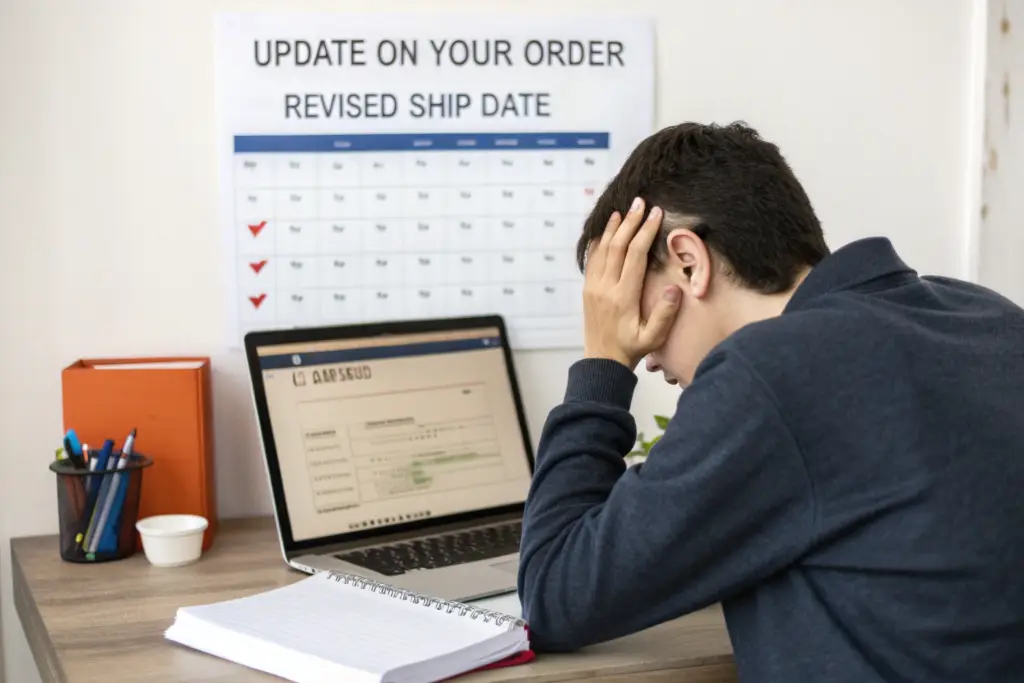
You check your email on Monday morning. The subject line hits you in the stomach. "Update on Your Order – Revised Ship Date." You open it. The ship date has moved. Not by a few days. By three weeks. Your mind races through the consequences. The Memorial Day floor set is missed. The marketing emails are already scheduled. Your retail accounts are calling, asking where their allocation is. You will have to air freight a portion, eating into your margin. The rest will arrive late. You will mark it down. The season feels ruined. You feel helpless. You are thousands of miles from the factory. You cannot walk onto the production floor and fix the problem. You are dependent on a supplier who has just let you down. You want to know why this happened and what you can do right now to fix it, and how to prevent it from ever happening again.
Wholesale shorts orders are most commonly delayed by five root causes: late fabric delivery from the mill, mid-production design changes requested by the buyer, underestimated production lead time, freight booking issues and port congestion, and quality control failures requiring rework. Each of these causes is preventable with the right planning, communication, and contractual safeguards. A delayed order does not have to mean a lost season. There are specific recovery actions, air freight for part of the order, split shipments, renegotiated delivery dates with retail accounts, that can minimize the damage. The long-term solution is a systematic approach to production scheduling, milestone tracking, and supplier accountability.
At Shanghai Fumao, I have managed thousands of production orders. I have seen orders ship early, on time, and late. The difference is never luck. The difference is process. When an order is delayed, there is a specific reason. That reason can be identified and fixed. When an order ships on time, there is a system that made it happen. This article explains the five most common causes of delays, the immediate actions you can take when a delay occurs, and the systems you can put in place to prevent delays on future orders. It is a practical crisis management and prevention guide.
What Are the Five Most Common Causes of Wholesale Shorts Delays?
Delays do not happen randomly. They have specific, identifiable causes. In my experience managing production at Shanghai Fumao, five root causes account for over 90% of all wholesale shorts order delays. Understanding these causes empowers you to prevent them. It also helps you diagnose the real reason for a delay when the factory gives you a vague excuse. A factory might say "unexpected production issue." You can now ask, "Is it a fabric delay, a QC rework, or a freight issue?" A specific question gets a specific answer.
I track the reasons for every delayed shipment in our factory. Over the past two years, fabric delivery delays from the mill accounted for 35% of late shipments. Mid-production design changes requested by the buyer accounted for 25%. Underestimated production lead time, where the original schedule was unrealistic, accounted for 20%. Freight booking issues and port congestion accounted for 15%. QC failures requiring rework accounted for 5%. The garment production delay analysis guide shows similar patterns across the industry. The data is clear. Most delays are caused by material supply and specification changes. Both are controllable.
Each delay cause has a signature. A delay announced early in the production cycle, before the cut date, is usually fabric. A delay announced mid-production is often a design change. A delay announced at the shipping stage is freight or QC. Knowing the timing helps you diagnose the cause. Let's examine each cause in detail.
Why Is Late Fabric Delivery the Number One Culprit?
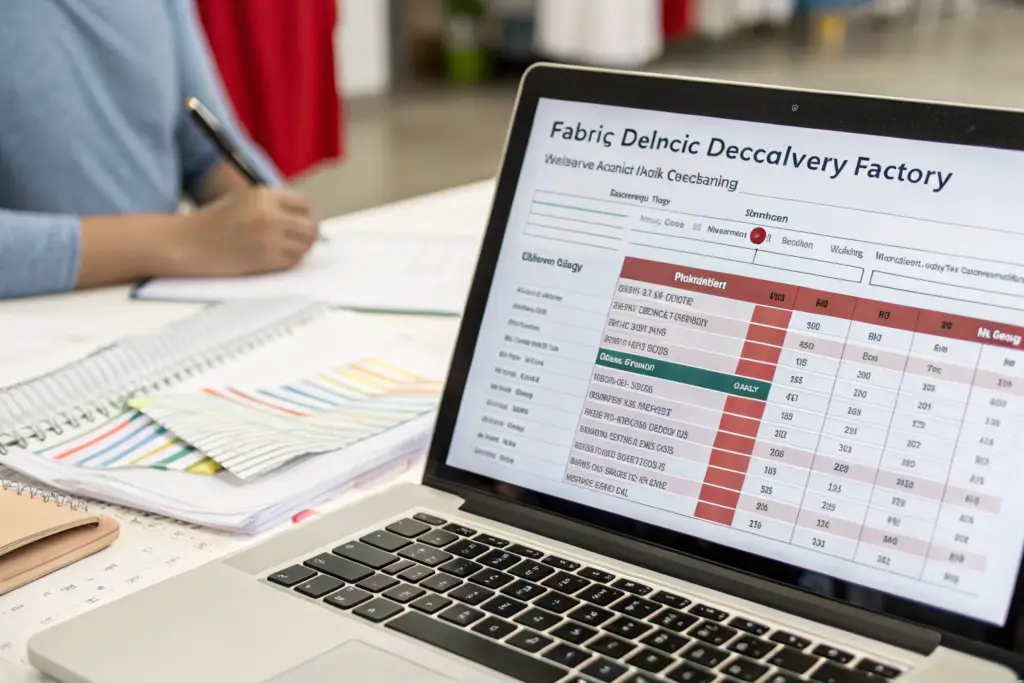
Fabric is the longest lead time item in the production process. A woven cotton twill can take 20 to 30 days to weave, dye, and finish. If the factory orders the fabric only after receiving your deposit, and the mill is busy, the fabric might arrive a week or two later than planned. That delay cascades through the entire production schedule. Cutting is delayed. Sewing is delayed. Finishing is delayed. Shipping is delayed.
The root cause is often that the factory did not have the fabric in stock and did not communicate the realistic mill lead time at the order confirmation stage. Or the mill had a production backlog that the factory was not aware of. The fabric sourcing lead time management guide explains how to manage this risk. The solution is a core fabric program where the factory stocks greige fabric, or an early fabric order placed immediately upon deposit. A buyer should always ask, "Is the fabric in stock, or does it need to be woven and dyed? What is the mill's confirmed delivery date?"
How Do Buyer-Requested Changes Mid-Production Cause Month-Long Setbacks?
A buyer sees the first pre-production sample. She decides the pocket should be 2 centimeters wider. She emails the change request. The change takes her 30 seconds to write. It takes the factory 2 to 4 weeks to execute. The fabric panels already cut for the original pocket are wasted. New fabric must be cut. The sewing line folder attachments must be adjusted. The QC checklist must be updated. The production schedule is disrupted. The ship date moves.
This is the most frustrating cause of delay because it is entirely within the buyer's control. The factory is executing the buyer's request. The delay is a direct consequence of the change. The solution is to freeze the design before cutting begins. If a change is absolutely necessary, the buyer must understand and accept the revised ship date. The impact of design changes on production timeline analysis shows the true cost in time and money.
What Happens When a Factory Underestimates Production Lead Time?
A factory wants to win the order. The buyer asks, "Can you deliver by May 1st?" The factory knows the realistic date is May 15th. But the factory says, "Yes, we can do May 1st," to secure the order. The order is placed. Production begins. The schedule is tight from the start. Any small hiccup, a machine breakdown, an operator absence, a fabric inspection delay, pushes the date past May 1st. The "unexpected delay" was actually a predictable consequence of an unrealistic initial commitment.
This is a factory accountability issue. The buyer can protect against it by asking for a detailed production schedule with milestone dates. "Show me the cut date, the sewing start date, the finishing date, the pack date. Explain how each date is achievable given your current production load." A factory that can provide a realistic, detailed schedule is probably telling the truth. A factory that gives a single ship date with no supporting detail is probably guessing or lying. The negotiating realistic production lead times guide provides tactics for this conversation.
What Can You Do Immediately When Your Order Is Delayed?
You have just received the delay notification. The emotional reaction is frustration and panic. That is normal. But after the initial reaction, you need to shift into problem-solving mode. A delay is a problem with solutions. The solutions are not perfect, but they can salvage a season. The worst thing you can do is accept the delay passively and do nothing. The best thing you can do is negotiate a recovery plan with the factory and communicate proactively with your retail accounts.
I have helped many clients navigate delays. The most successful ones react quickly, negotiate hard on recovery, and communicate transparently with their customers. They turn a potential disaster into a manageable setback. The ones who do nothing, who just wait for the new ship date, suffer the full consequences. The supply chain disruption recovery strategies guide outlines the tactical options. Let's walk through the immediate actions to take.

How Can Air Freight or a Split Shipment Save Your Season?
The most effective recovery action is to split the shipment. The factory sends a portion of the order, the quantity needed to cover the critical sales window or the most important retail accounts, by air freight. The remaining balance ships by ocean. Air freight is expensive. It can cost $3 to $6 per unit for shorts. But it delivers in 7 to 10 days instead of 25 to 35 days. The cost is justified if it saves key wholesale relationships or captures the peak selling weeks.
The buyer should negotiate who pays for the air freight. If the delay was caused by the factory, for example, late fabric delivery or a QC rework, the factory should absorb the air freight cost. If the delay was caused by the buyer, for example, a mid-production design change, the buyer should pay. The negotiation should happen immediately upon delay notification. The air freight versus ocean freight for apparel guide compares costs and transit times. Air freight is the emergency brake. It is not a long-term strategy, but it is the best available tool for delay recovery.
What Should You Communicate to Your Retail Accounts About the Delay?
Communicate early and honestly. The moment you have a confirmed revised delivery date, contact your retail accounts. Do not wait until they email you asking where their order is. Proactive communication preserves trust. Explain the situation briefly, without excessive detail or blame. Give them the new delivery date. Offer them options. They can accept the new date. They can receive a partial shipment earlier. They can cancel the order if the new date does not work for them.
Most retailers will accept a reasonable delay if they are informed early and given options. They lose trust when they are ignored or surprised. The retailer communication during supply chain disruptions guide provides email templates. A delay is a test of the supplier-retailer relationship. Transparent communication passes the test. Silence fails it.
How Can You Prevent Delays on Your Next Wholesale Shorts Order?
The best delay is the one that never happens. Prevention is a system, not a wish. It is a set of practices built into the sourcing process. A buyer who implements these practices will experience fewer delays and will catch potential delays earlier when they are easier to mitigate. Prevention requires effort upfront. It pays back in reduced stress, stronger retail relationships, and better margins.
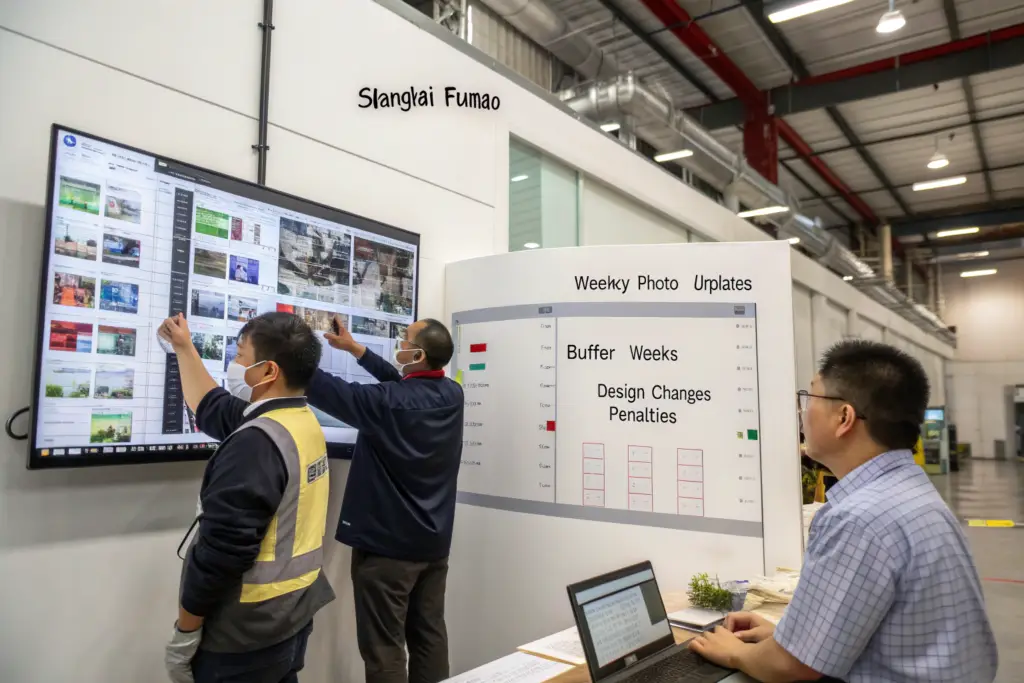
I have built our production planning system at Shanghai Fumao around prevention. We use a shared production calendar. We send weekly photo updates. We build buffer weeks into the schedule. We have clear policies on design changes and penalties. These systems work. Our on-time delivery rate is above 95%. The supplier relationship management for on-time delivery guide explains the best practices. Let's examine the most effective prevention measures.
Why Does a Detailed Production Schedule with Milestones Prevent Surprises?
A detailed production schedule is the shared source of truth. It breaks the lead time into specific milestones. Fabric ordered date. Fabric received date. Cutting start and end dates. Sewing start and end dates. Finishing and packing dates. Pre-shipment inspection date. Container loading date. Estimated sailing date. Estimated arrival date. Each milestone has a responsible party and a deadline.
The buyer and the factory review this schedule weekly. If a milestone is missed, the problem is visible immediately. The factory explains the reason and provides a recovery plan. The delay does not compound silently for weeks and then explode at the ship date. The production milestone tracking guide provides a template. A buyer should demand a milestone schedule at the order confirmation stage and track it actively throughout production.
How Do Weekly Photo Updates and Buffer Weeks Keep Production on Track?
Weekly photo updates from the factory are a simple, powerful accountability tool. Every Friday, the factory sends photos of the production progress. The fabric in the warehouse. The cut panels on the cutting table. The shorts on the sewing line. The finished goods being packed. The photos are proof that the milestones are being met. They are not just words in an email. They are visual evidence.
Buffer weeks are built into the schedule. The factory and the buyer agree on a ship date that includes one to two weeks of buffer. The buffer absorbs the small, inevitable hiccups, the machine repair, the operator illness, the fabric inspection delay. The buffer is not an excuse for poor planning. It is a realistic acknowledgment that production is a human process, not a machine. The communication and buffer management for production guide explains how to implement these practices. A buyer who demands a schedule without a buffer is setting the factory up for failure. A buyer who demands a schedule with a realistic buffer is setting the factory up for success.
What Contractual Penalties and Incentives Align the Factory with On-Time Delivery?
The purchase order should include a clear clause on delivery. A penalty for late delivery, for example, a 2% discount per week of delay, up to a maximum of 10%, creates a financial consequence for lateness. An incentive for early or on-time delivery, for example, a promise of a larger next order or a slightly higher price on the current order, creates a financial reward for punctuality.
The penalty and incentive structure aligns the factory's financial interest with the buyer's need for on-time delivery. It makes the delivery date a contractual obligation, not a hopeful estimate. The contractual terms for garment manufacturing guide provides sample clauses. A buyer should discuss these terms upfront, at the order confirmation stage. A factory that refuses any penalty clause is signaling that they are not confident in their ability to deliver on time.
Conclusion
Wholesale shorts order delays are caused by specific, preventable failures. Late fabric delivery. Mid-production design changes. Unrealistic lead time promises. Freight and port disruptions. QC failures. The buyer who understands these causes can prevent them. The buyer who has a recovery plan can mitigate the damage when a delay occurs. The immediate actions are to negotiate a split air freight shipment to cover the critical window, and to communicate proactively with retail accounts. The long-term prevention is a detailed milestone schedule, weekly photo updates, buffer weeks, and contractual penalties and incentives.
A delayed order does not have to be a season-ending disaster. It is a problem to be solved. The brands that solve it well, with speed, transparency, and fair negotiation, preserve their retail relationships and their margins. The brands that ignore it or passively accept it suffer the full consequences. The choice is not whether delays will happen. In global manufacturing, some delays are inevitable. The choice is whether you have a system to catch them early, recover from them quickly, and prevent them from repeating.
At Shanghai Fumao, we are not perfect. No factory is. But we are systematic. We provide a detailed production schedule with milestones at order confirmation. We send weekly photo updates. We build buffer weeks into our lead times. We have clear policies on design changes and delay penalties. We communicate problems early, with proposed recovery plans. If you have been burned by delays with other suppliers, I invite you to experience a different approach. Contact our Business Director, Elaine, at elaine@fumaoclothing.com. She will provide a sample production schedule and explain our on-time delivery process. Let us show you that a factory can be a reliable partner, not a source of constant anxiety.