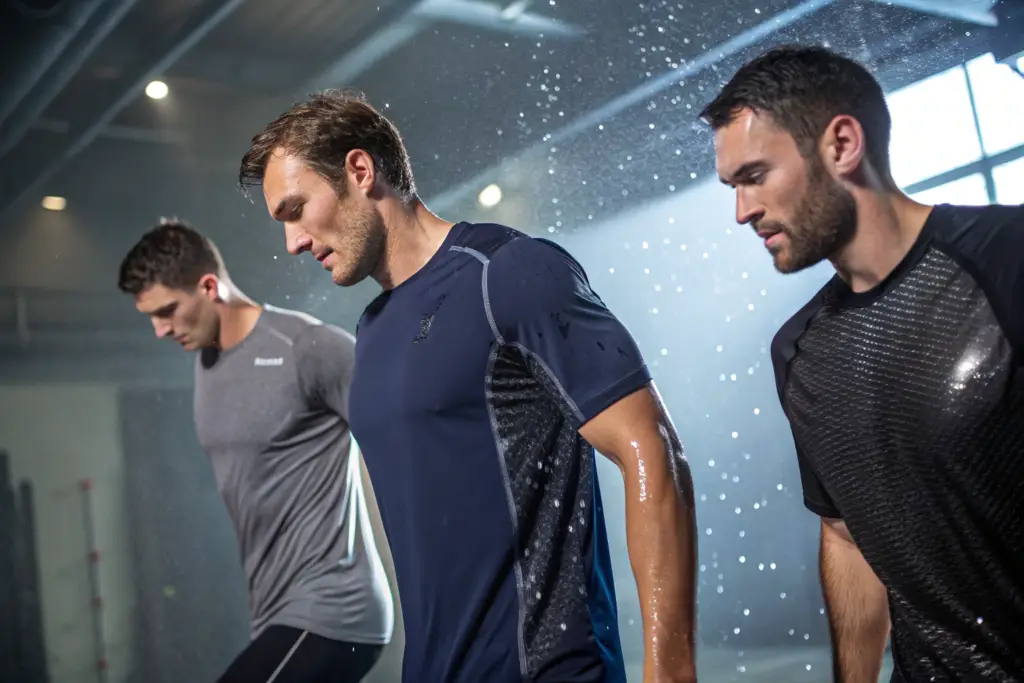
Last summer, a distributor from Denver visited our showroom with a problem that perfectly captured the shift happening in menswear. He had built his business on premium Pima cotton t-shirts and polos. They sold well for years. But his last two seasons of customer feedback were brutal. "Shrinks after one wash." "Feels heavy when I sweat." "I wore it to the gym once and it was a wet towel for the rest of the day." His return rate on cotton activewear had crept up to 12%. His competitors, selling synthetic and blended performance tops, had return rates under 3%. He looked at me and said, "I think I need to stop selling cotton. What do I sell instead?"
Traditional cotton is being replaced in men's activewear lines by a new generation of performance fabrics that solve cotton's fundamental weaknesses. Tencel and bamboo blends provide superior moisture management and a cool, dry hand feel that cotton cannot match, even when wet. Recycled polyester and nylon offer four-way stretch, shape retention, and durability that survive hundreds of workouts. Merino wool blends provide natural odor resistance and thermoregulation for the premium segment. Cotton is not disappearing, but it is no longer the default. It is now a choice made for specific casual applications, not for any garment marketed as "active."
The modern man wearing an activewear garment expects it to perform across multiple contexts. He wears it to the gym, to the grocery store, to a casual lunch. He wants it to wick sweat during a workout, resist odor after the workout, and look sharp enough for the rest of his day. Cotton fails this multi-context test. It absorbs moisture and holds it. It wrinkles. It loses its shape. It pills. The new performance fabrics pass the test. They are engineered for the modern, active lifestyle. At Shanghai Fumao, our activewear fabric library has shifted dramatically in the last three years. Let me walk you through the specific fabrics driving this change and what they mean for your product line.
Why Is Moisture-Wicking Technology a Baseline Requirement Now?
Moisture management is no longer a premium feature in men's activewear. It is the entry ticket. A garment that does not actively move sweat away from the skin is not considered activewear by the modern consumer. It is considered a cotton t-shirt that someone might wear to the gym if they forgot their real gym shirt. The market has redefined the category. Moisture wicking is the baseline.
Moisture-wicking technology is a baseline requirement because the modern male consumer evaluates activewear based on how it performs at peak exertion. He does not want to feel wet. He does not want the garment to become heavy. He does not want visible sweat marks. A fabric that traps moisture against the skin fails all three of these consumer tests. Moisture-wicking fabrics, by contrast, use capillary action to pull sweat away from the skin and spread it across the fabric's surface where it evaporates quickly. The garment stays light, the skin stays dry, and the wearer stays comfortable.
The technology is not a chemical coating that washes out. In quality performance fabrics, it is a structural property of the fiber or the knit construction. Synthetic fibers like polyester are naturally hydrophobic. They do not absorb water. Moisture is moved through the spaces between the fibers. Modified cellulosic fibers like Tencel are naturally hydrophilic but structured to release moisture rapidly. The wicking is permanent. It lasts the life of the garment.
How Does Fabric Weight Interact with Wicking Performance in Humid Climates?
Fabric weight, measured in GSM, grams per square meter, has a counterintuitive relationship with wicking performance in humid conditions. A consumer's instinct is to choose the lightest possible fabric for hot, humid weather. This instinct is often wrong. An ultra-lightweight fabric, 100 GSM or less, can become clingy and transparent when saturated with sweat. It lacks the mass to hold its structure and drape.
A mid-weight performance fabric, 140 to 180 GSM, performs better in high humidity. The slightly greater mass provides more surface area for evaporation. It provides enough structure to keep the fabric off the skin, allowing airflow. It prevents the "wet t-shirt contest" look that ultra-light fabrics can create. It also provides better UPF sun protection, which is a secondary performance benefit for outdoor activewear.
The knit structure is as important as the weight. A pique knit, the texture found in classic polo shirts, has a naturally open structure that promotes airflow. A jersey knit is smoother but can cling. A jacquard mesh, with engineered ventilation zones, provides targeted breathability in high-sweat areas like the back and underarms. The best humid-climate activewear combines a mid-weight fabric with an open, breathable knit structure.
A client in Singapore, where humidity averages 85%, tested our 150 GSM Tencel-polyester pique against a 110 GSM basic polyester jersey for his men's training tops. The consumer preference was overwhelmingly for the heavier pique. The testers reported it felt drier, looked better, and did not cling during high-intensity workouts. The 40 extra GSM provided a structural advantage that more than compensated for the slightly heavier weight. The client now uses the heavier pique for all his humid-climate activewear.
What Are the Differences Between Hydrophilic and Hydrophobic Wicking Fibers?
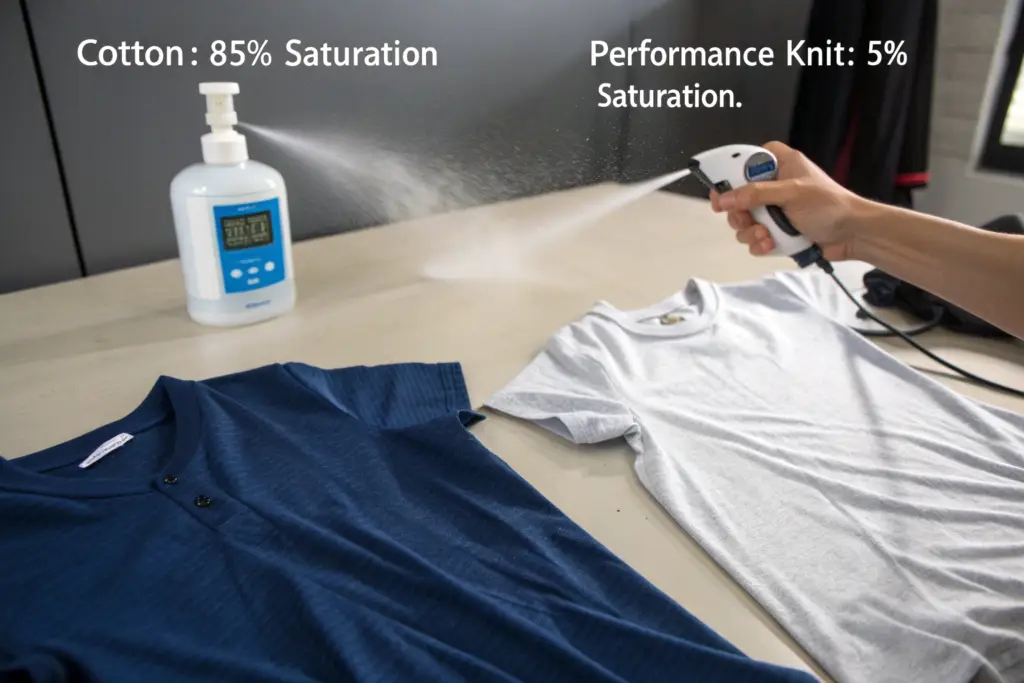
Hydrophilic fibers love water. They absorb moisture into the fiber itself. Cotton is the classic hydrophilic fiber. It can absorb up to 25 times its own weight in water. This is why a cotton t-shirt becomes a heavy, wet, cold rag during exercise. The water is inside the fiber, not moving, not evaporating. The garment stays wet for a long time.
Hydrophobic fibers hate water. They repel it. Polyester and polypropylene are hydrophobic. Water cannot enter the fiber. It is pushed through the capillary spaces between the fibers to the fabric surface. The fiber itself stays dry. The fabric feels dry against the skin even when the wearer is sweating. The water evaporates quickly from the surface because it is not trapped inside the fiber.
Modified hydrophilic fibers offer a middle ground. Tencel lyocell, for example, is naturally hydrophilic, but its nano-fibril structure manages moisture differently than cotton. It absorbs moisture quickly but also releases it quickly. It does not hold water the way cotton does. The result is a fabric that feels dry and cool, with the soft hand feel of a natural fiber, but with wicking performance closer to a synthetic.
The best activewear fabrics often combine hydrophilic and hydrophobic fibers. A polyester-Tencel blend uses the polyester for wicking speed and durability, and the Tencel for softness, drape, and a more natural hand feel. The blend balances the performance benefits of both fiber types.
A men's training top we developed uses a 65% recycled polyester, 35% Tencel blend. The polyester provides the wicking backbone. The Tencel provides a soft, cotton-like hand feel that the consumer prefers against the skin. The blend outperforms 100% polyester on comfort and 100% cotton on moisture management. It is a "best of both worlds" solution that is gaining market share rapidly.
How Are Recycled Synthetics and Tencel Blends Creating the "New Cotton" Hand Feel?
The historical objection to synthetic activewear was the hand feel. Polyester felt cheap, shiny, and plastic. It clung unpleasantly. It made a swishing sound when you moved. It looked like a discount sports uniform, not a premium lifestyle garment. This objection is dissolving. A new generation of synthetic and blended fabrics has achieved a hand feel that rivals or exceeds cotton in softness, drape, and tactile luxury.
Recycled polyester and Tencel blends are creating the "new cotton" hand feel by using mechanically brushed finishing techniques, micro-denier fiber technologies, and the inherent softness of lyocell fibers. A brushed recycled polyester fleece can feel as soft as cashmere. A Tencel-polyester single jersey can drape like a high-end cotton modal but with moisture-wicking performance. The consumer who touches these fabrics in a store cannot distinguish them from premium natural fibers, but they experience the performance benefits that natural fibers cannot provide.
The "new cotton" is a marketing phrase, but it captures a real material transformation. The fabrics do not just look like cotton. They feel like the best version of cotton the consumer has ever experienced, with none of cotton's functional limitations. The consumer gets the sensory experience they want, the softness, the drape, the breathability, and the performance they need, the moisture wicking, the stretch, the shape retention. They no longer have to choose between comfort and function.
What Is Mechanical Brushing and How Does It Transform Synthetic Hand Feel?
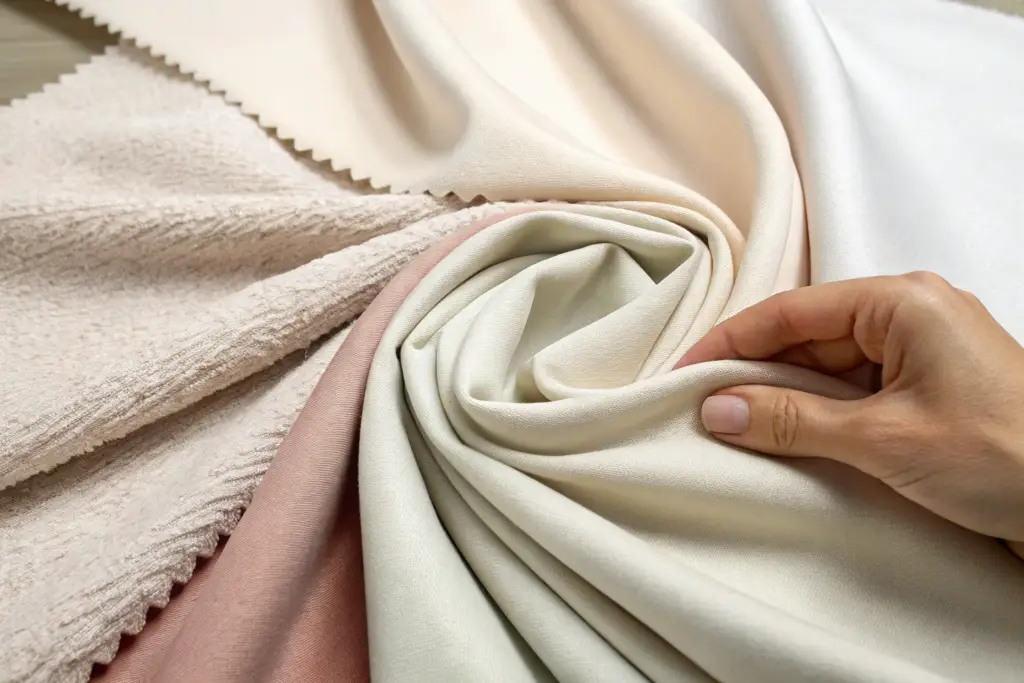
Mechanical brushing is a finishing process that physically abrades the surface of a fabric to raise a soft, fuzzy nap. The fabric is passed over rotating cylinders covered with fine wire brushes. The brushes pull the cut fiber ends to the surface, creating a pile of tiny, soft fibers. The process is similar to the brushing that creates a flannel finish on cotton, but applied to synthetic and blended fabrics.
A standard polyester jersey has a flat, smooth, slightly slick hand feel. A brushed polyester jersey has a velvety, peach-skin hand feel. The brushing process transforms the sensory experience of the fabric completely. The consumer touches the brushed fabric and perceives softness, warmth, and luxury. They do not perceive "polyester."
Brushing is applied to the inside face of performance tops for a soft, cozy feel against the skin. It is applied to the outside face for a visual matte finish that eliminates the cheap synthetic shine. Double-brushed fabrics are brushed on both sides for maximum softness, used in premium loungewear and lifestyle activewear.
A men's performance hoodie we produce uses a double-brushed recycled polyester-spandex fleece. The hand feel is astonishingly soft. In a blind touch test, consumers consistently rate it as softer than a comparable cotton fleece. The fabric wicks moisture, stretches in four directions, and retains its shape after washing. The brushing created the sensory experience. The synthetic fiber provided the performance. The combination is a product that outperforms cotton on both comfort and function.
Why Are Micro-Denier Fibers Closing the Gap with Natural Softness?
Denier is a unit of measurement for the linear mass density of fibers. A micro-denier fiber is extremely fine, less than one denier per filament. To put that in perspective, a human hair is approximately 20 denier. A micro-denier polyester filament is a fraction of the thickness of a human hair.
A fabric made from micro-denier fibers has a fundamentally different hand feel than a fabric made from standard denier fibers. The individual fibers are so fine that they bend easily under the slightest pressure. The fabric feels soft, fluid, and silky, not stiff or plastic. The micro-denier construction also creates a fabric with a much higher density of fibers per square centimeter, which improves moisture wicking and breathability because there are more capillary channels between the fibers.
Micro-denier polyester is the technology behind the "new cotton" hand feel. A t-shirt made from micro-denier polyester can feel as soft as a high-end Supima cotton t-shirt, but it will wick moisture, resist wrinkles, and dry in minutes. The consumer gets the sensory experience of luxury cotton with the performance of advanced synthetics.
A distributor I work with switched his men's polo shirt program from 100% cotton pique to a micro-denier recycled polyester pique. He was terrified his customers would reject the "polyester" feel. He sent samples to his top twenty retail accounts with a blind comparison, the cotton polo and the new polo, without identifying the fiber content. Eighteen of the twenty buyers preferred the hand feel of the micro-denier polyester. The two who preferred the cotton did so because they were philosophically opposed to synthetics, not because of the tactile experience. The program switched. The return rate dropped from 8% to 2%, driven primarily by the elimination of shrinkage and color fading complaints.
What Role Does Anti-Odor and Thermoregulation Tech Play in Longevity?
An activewear garment that fails after one season is a disposable product. A garment that performs for multiple seasons is a sustainable investment. The difference, in many cases, is the presence of anti-odor and thermoregulation technologies. These technologies do not just improve the wearing experience. They extend the functional life of the garment. A shirt that does not smell stays in the rotation. A jacket that adapts to temperature gets worn across multiple seasons. The garment's longevity is a function of its continued performance.
Anti-odor technology, whether achieved through natural fiber properties like merino wool or through applied treatments like silver ion or mineral-based finishes, prevents the bacterial growth that causes persistent odors in synthetic activewear. Thermoregulation technology, using phase-change materials or adaptive fiber structures, helps the garment respond to changes in the wearer's body temperature and the external environment. These technologies keep the garment functional and wearable for longer, reducing the frequency of replacement and increasing the consumer's perceived value.
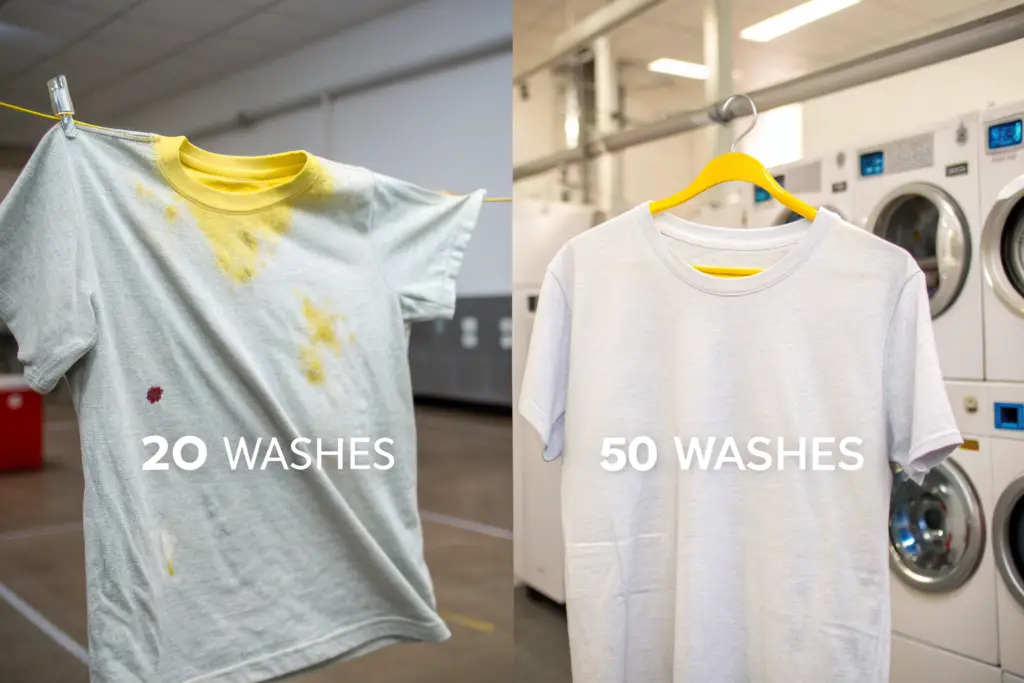
Odor is the primary reason consumers discard activewear. A synthetic shirt that develops a permanent "gym smell" that does not wash out is a shirt that gets thrown away, regardless of its physical condition. The anti-odor technology prevents that smell from developing. The garment stays fresh over dozens of washes. It stays in the consumer's wardrobe. The initial higher cost is amortized over a longer wearing life.
How Do Merino Wool Blends Naturally Combat Odor Over Multiple Wears?
Merino wool is the gold standard of natural odor resistance. The fiber has a complex surface structure that traps odor-causing bacteria and prevents them from multiplying. The bacteria are physically trapped on the fiber scales. They do not have the moisture and warmth they need to grow and produce odor. When the garment is washed, the bacteria are released and washed away. The anti-odor property is a physical characteristic of the fiber, not a chemical treatment. It never washes out.
A 100% merino wool activewear t-shirt can be worn multiple times between washes without developing odor. This is a genuine performance advantage for travelers, hikers, and anyone who wants to pack light. The limitation of 100% merino is durability and cost. Merino is a relatively delicate fiber. It can develop holes with heavy use. It is expensive compared to synthetics or cotton.
Merino blends address the durability and cost issues. A 50% merino, 50% recycled polyester blend retains much of the natural odor resistance of the merino while adding the durability, moisture wicking, and shape retention of the polyester. The blended garment costs less, lasts longer, and still provides a significant odor resistance advantage over a pure synthetic.
A men's travel activewear line we produce uses a 55% merino, 45% Tencel blend jersey. The merino provides the odor resistance and thermoregulation. The Tencel provides softness, drape, and moisture management. The blend feels like a luxury t-shirt. It can be worn for three to four days of light activity without washing. The target customer is a business traveler who packs a single workout shirt for a week-long trip. The garment's performance justifies its premium price. The brand's customer reviews frequently mention the "no smell after multiple wears" feature as the primary reason for repurchase.
What Are the Latest Silver Ion and Mineral-Based Anti-Odor Treatments?
For brands that prefer to use synthetic fabrics for cost or performance reasons, anti-odor function is achieved through applied treatments. The most effective and durable of these treatments use silver ions or mineral compounds.
Silver ion treatment, often branded as Polygiene or Silvadur, embeds silver chloride particles into the fabric. Silver ions are naturally antimicrobial. They disrupt the cellular function of odor-causing bacteria, preventing them from multiplying. The silver particles are permanently bonded to the fabric. The treatment is designed to last the lifetime of the garment, not wash out after a few cycles.
Mineral-based treatments, such as those using zinc oxide or volcanic ash-derived minerals, work on a similar principle. The mineral particles create an environment that is inhospitable to odor-causing bacteria. These treatments are often marketed as "natural" alternatives to silver, appealing to brands with a clean-label positioning.
The key distinction is between a durable treatment and a topical spray. A topical anti-odor spray applied after manufacturing will wash out quickly. A durable treatment applied at the fiber or fabric finishing stage is permanent. The brand should verify the treatment's durability claims. A reputable treatment supplier will provide test data showing odor control performance after 50 or more home launderings.
A men's performance polo we produce uses a recycled polyester pique with a Polygiene silver ion treatment. The brand tested the polo against an untreated polyester polo from a competitor. After 30 washes, the treated polo showed significantly lower odor-causing bacteria levels in a laboratory sniff test. The consumer feedback confirmed the lab results. The treated polo received ratings of "stays fresh" that were 40% higher than the competitor product.
How Do Four-Way Stretch Fabrics Improve Fit and Recovery Without Bagging?
The failure mode of cotton activewear is not just moisture. It is mechanical. Cotton knit fabrics lack elasticity. They stretch out during wear and do not recover. The knees of cotton sweatpants bag. The elbows of cotton hoodies sag. The neck of a cotton t-shirt stretches into a "bacon collar" after a few wears. The garment loses its shape. It looks tired and sloppy. The consumer stops wearing it, even if the fabric is still intact.
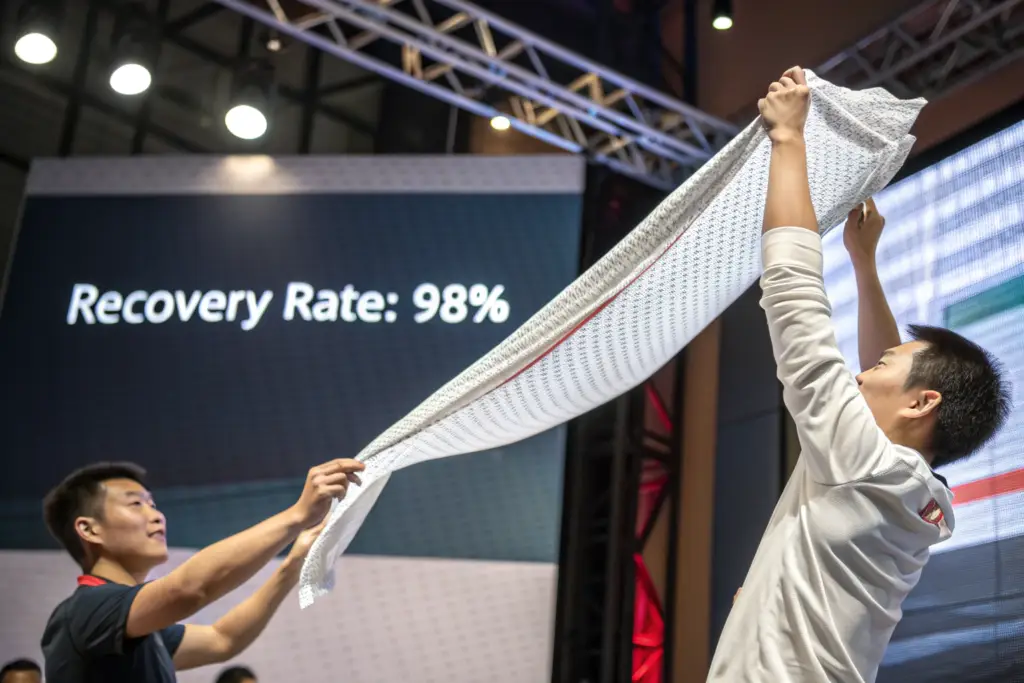
Four-way stretch fabrics, typically incorporating elastane or mechanically textured polyester, provide stretch and recovery in both the lengthwise and crosswise directions. The elastane fiber acts like a rubber band, stretching under tension and snapping back to its original length when the tension is released. The recovery rate is measured as a percentage of original dimensions regained after stretching. A quality four-way stretch fabric has a recovery rate of 95% or higher, meaning it returns almost perfectly to its original shape after every stretch cycle. The result is a garment that moves with the body, maintains its silhouette, and looks sharp wear after wear.
The stretch is not just about athletic performance. It is about daily comfort and appearance. A man wearing a four-way stretch chino to the office can bend, sit, and move without the fabric pulling or binding. The pants look tailored but feel like activewear. This "commuter" category, garments that bridge office and gym, is one of the fastest-growing segments in menswear.
What Is the Difference Between Mechanical Stretch and Elastane Stretch?
Mechanical stretch is achieved through the knit or weave structure, without the use of an elastic fiber. The fabric yarns are looped or woven in a way that allows the structure to extend under tension and contract when the tension is released. A pique knit has a natural mechanical stretch. A woven fabric with a high-twist yarn can have a subtle mechanical stretch. The stretch is limited, typically 10% to 20% elongation, but it is permanent. It does not degrade over time because there is no elastic fiber to fatigue.
Elastane stretch, using fibers like Lycra, Spandex, or Elastane, provides significantly greater elongation, typically 50% to 100% or more. The elastane fiber is blended with the main fiber, usually polyester or nylon, at a low percentage, commonly 5% to 15%. The elastane provides the stretch and recovery. The main fiber provides the structure, hand feel, and durability.
The trade-off is durability. Elastane fibers degrade over time with exposure to heat, chlorine, and body oils. The recovery rate decreases with age. A garment with elastane will eventually bag and lose its shape, though this process takes much longer than cotton bagging. Mechanical stretch does not degrade in the same way. The stretch is structural, not fiber-based.
For activewear, elastane stretch is standard because the elongation requirements are high. A man doing a deep squat needs significant fabric extension. For lifestyle garments, mechanical stretch is sometimes preferred for its permanence and its ability to be recycled more easily, elastane complicates the recycling process.
A men's commuter pant we developed uses a 92% recycled nylon, 8% elastane woven twill. The elastane content provides the four-way stretch required for cycling to the office. The recovery rate after a standardized stretch test is 97%, meaning the knees do not bag after a day of sitting and moving. The garment looks like a tailored chino but moves like a training pant. This hybrid performance is the defining characteristic of the modern men's activewear market.
How Should You Test Stretch Recovery During a Factory Audit?
Stretch recovery testing is a physical verification that the fabric meets its specification. It is not a test that should be accepted from a mill certificate alone. The factory should demonstrate the recovery performance on a sample of the bulk fabric.
A simple manual test can be performed during a factory visit or a video call. Cut a 10cm by 10cm square of the fabric. Stretch it firmly in both directions for 30 seconds. Release it. Measure the dimensions immediately and after 30 minutes of relaxation. The fabric should return to within 5% of its original dimensions immediately, and within 2% after relaxation. If the fabric remains visibly distorted, the recovery rate is too low.
A more rigorous test uses a fabric stretch and recovery tester, a piece of laboratory equipment that applies a controlled, repeatable stretch cycle and measures the recovery precisely. This test should be performed by an accredited laboratory and the results documented. A reputable factory will have these test results available for each fabric lot.
Elastane degradation can be tested with an accelerated aging test. The fabric is subjected to repeated wash and dry cycles at elevated temperatures. The stretch and recovery are measured after a specified number of cycles, typically 20 or 50. The recovery rate should not drop by more than a few percentage points. A significant drop indicates the elastane is degrading prematurely and the garment will bag in the consumer's care.
A brand owner auditing our factory for a men's activewear program asked to see our stretch recovery test results. We provided the lab reports for the current fabric lot, showing a 98% immediate recovery and a 96% recovery after 50 wash cycles. The results exceeded his brand's standard. The audit passed without a finding. The documentation demonstrated that our quality control system was measuring and managing the stretch recovery parameter systematically.
Conclusion
The men's activewear market has crossed a threshold. Performance is no longer defined by the absence of cotton. It is defined by the presence of specific, engineered properties that cotton structurally cannot provide. Moisture wicking that keeps the skin dry during peak exertion. Hand feel technologies that make synthetics as soft as the finest natural fibers. Anti-odor treatments that keep the garment fresh through multiple wears and washes. Four-way stretch that moves with the body and recovers perfectly. Thermoregulation that adapts to temperature changes.
Cotton is not dead. It still has a place in casual, low-exertion garments where its comfort and familiarity are valued. But in any garment marketed with the word "active," "performance," "training," "commuter," or "travel," cotton is being replaced by a sophisticated arsenal of engineered fabrics. The consumer is not asking for the fiber specification. They are asking for the experience, stay dry, stay comfortable, stay fresh, stay sharp. The new fabrics deliver that experience.
At Shanghai Fumao, our activewear fabric library has been completely rebuilt around these performance requirements. We stock Tencel blends for their moisture management and sustainability profile. We stock recycled polyester and nylon for their durability and eco-credentials. We stock merino blends for the premium odor-resistance segment. We offer mechanical brushing, anti-odor treatments, and four-way stretch constructions as standard options, not premium upgrades.
If you are developing a men's activewear line and you are ready to move beyond cotton, I invite you to contact our Business Director, Elaine. She can send you a performance fabric swatch pack, share technical data sheets with moisture wicking, stretch recovery, and anti-odor test results, and discuss which fabric is right for your specific product category and target customer. Reach Elaine at elaine@fumaoclothing.com. Let's build activewear that performs as good as it looks.