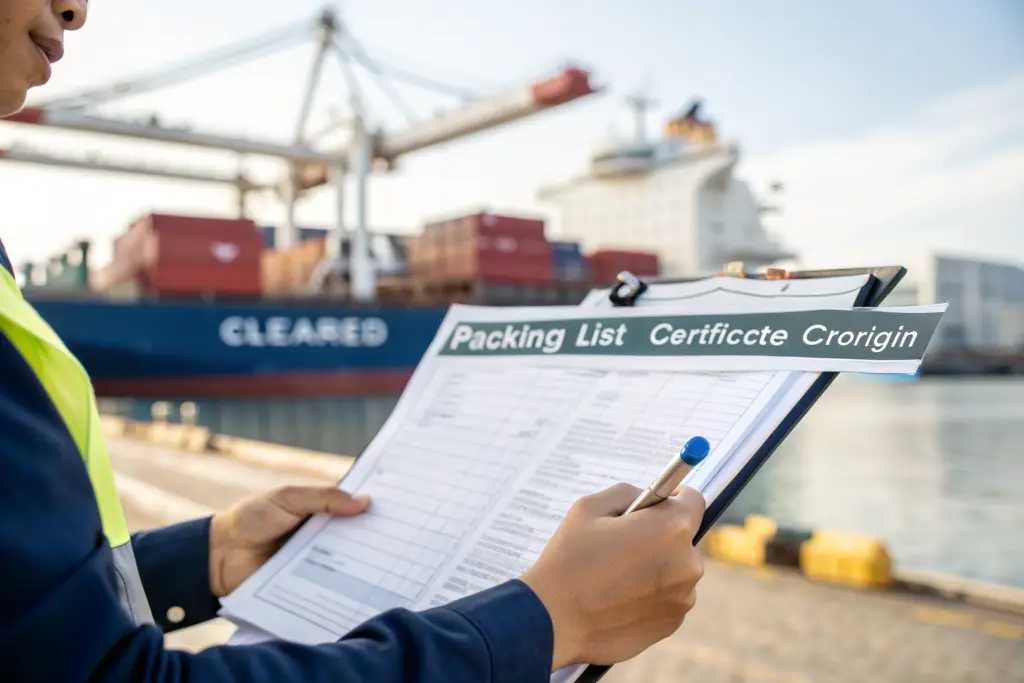
A distributor from Manchester called me in a cold sweat last October. His container of 2,000 men's wool overcoats had been held at Felixstowe port for eleven days. The coats were destined for a major department store's winter floor set. The selling window was closing by the hour. The port authority was demanding a document he had never heard of, a formal certificate of origin, not just the declaration on the commercial invoice. His previous supplier had always handled the paperwork, and he had never checked what was needed. The coats were eventually released after a frantic scramble, but they missed the floor set by four days. The retailer canceled 40% of the order. The lost revenue was enormous. The cause was not a quality defect. It was not a shipping delay. It was a missing piece of paper.
The logistics documents absolutely essential to avoid hold-ups at European ports are the Commercial Invoice with complete HS codes and an EORI number, the Packing List with carton-level detail, the Bill of Lading or Air Waybill, the Certificate of Origin, and, depending on the product and destination, an EUR1 Movement Certificate or a Supplier's Declaration for preferential tariff treatment. Missing or incorrectly completed documents are the single largest cause of port delays for garment shipments entering the European Union.
Customs authorities do not care about your selling season. They do not care about your retailer's markdown calendar. They care about one thing: is the paperwork complete, accurate, and compliant with EU regulations? If the answer is no, the container sits. The storage fees accumulate. The buyer panics. The entire supply chain suffers. At Shanghai Fumao, our shipping department treats documentation with the same rigor that our production department treats stitching. Every document is checked against a master compliance checklist before it leaves our office. Let me walk you through exactly what you need, why you need it, and how to ensure it is right every time.
What Must a Commercial Invoice Include for Smooth EU Customs Clearance?
The Commercial Invoice is the most important document in international trade. It is not just a bill. It is the foundation of the customs declaration. The customs officer uses the Commercial Invoice to determine the value of the goods, the applicable duty rate, and the origin for trade policy purposes. An error on the Commercial Invoice triggers an immediate hold. The goods are not released until the error is corrected, often requiring a formal amendment that takes days and costs money.
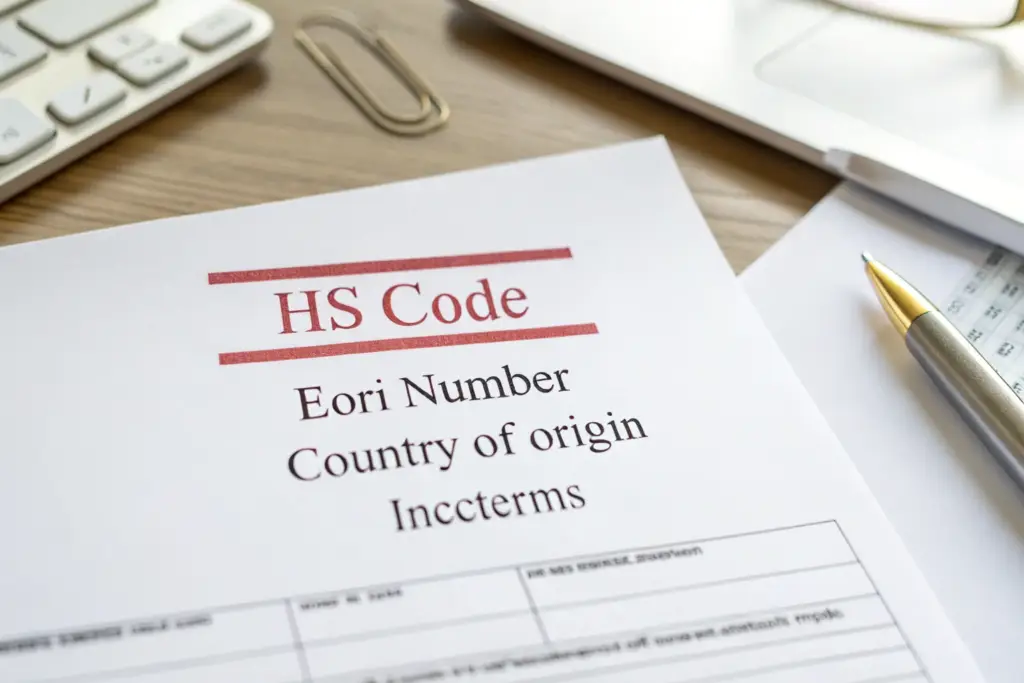
A Commercial Invoice for EU customs must include the shipper's and consignee's full legal names and addresses, the consignee's EORI number, a complete and specific description of each item including the garment type, fiber composition, and gender, the Harmonized System (HS) code at the ten-digit level, the country of origin for each item, the unit value and total value in the invoicing currency, the Incoterms of the sale, and a signed declaration of accuracy. A vague description like "clothing" or "garments" is a guaranteed cause of delay.
The EU customs system is automated. The Commercial Invoice data is entered into the system. The system cross-references the HS code, the declared value, and the origin. If any field is inconsistent or ambiguous, the system flags the shipment for a manual check. A manual check takes time. The container waits. The difference between a smooth automated clearance and a costly manual inspection often comes down to how the Commercial Invoice is completed.
Why Is the 10-Digit HS Code Specifically Required for EU Import Declarations?
The Harmonized System code is the international product classification system. The first six digits are globally standardized. A men's cotton shirt begins with an HS code starting 6205.20. The next four digits are specific to the importing country or region. The EU uses a ten-digit system for its customs declarations, known as the Combined Nomenclature.
The ten-digit code is required because it determines the exact duty rate. A garment classified under one ten-digit code might have a 12% duty rate. A very similar garment classified under a different ten-digit code might have a 0% duty rate under a preferential trade agreement. If the importer provides only a six-digit code, the customs system cannot calculate the duty. The entry is rejected. The container is held until the correct code is provided.
The ten-digit code also determines whether the product is subject to any additional restrictions, such as quota limits, anti-dumping duties, or specific labeling requirements. Using the wrong code can result in underpaid duty, which triggers a compliance audit and back-duty claims with penalties.
We maintain a database of the correct ten-digit EU CN codes for every garment type we produce. A men's wool suit jacket is 6203.31.00.10. A women's silk dress is 6204.49.10.00. A baby's cotton romper is 6111.20.90.00. Each code is verified against the latest EU Combined Nomenclature update. The responsibility for the correct code ultimately lies with the importer of record, but a professional factory ensures the Commercial Invoice is coded correctly from the start. The European Commission's TARIC database is the authoritative source for verifying current EU tariff codes.
How Do You Accurately Declare the "Country of Origin" for Multi-Component Garments?
The country of origin for customs purposes is not necessarily the country where the fabric was woven. It is the country where the garment underwent its "last substantial transformation." For apparel, this generally means the country where the fabric was cut and sewn into a finished garment. A shirt made from Italian fabric but cut and sewn in China has China as its country of origin for customs purposes.
The complication arises with multi-component garments and with preferential trade agreements. A jacket with a zip-out lining made in two different countries. A dress with an embroidered panel applied in a third country. The origin rules can become complex. The general principle is that the country where the garment is assembled from its component parts is the country of origin.
For preferential tariff treatment under a free trade agreement, the rules of origin are different and stricter. The EU's GSP, Generalized System of Preferences, and bilateral trade agreements require a specific percentage of value to be added in the claiming country. The fabric might need to be woven there, or the yarn spun there. The specific rules depend on the agreement.
The safest practice is to declare the country where the sewing and assembly occurred as the country of origin on the Commercial Invoice. If the importer is claiming preferential tariff treatment under a specific agreement, a separate origin document, the EUR1 or the Supplier's Declaration, is required, which we will discuss shortly. The Commercial Invoice origin declaration and the preferential origin claim are related but distinct.
A client importing women's woven blouses into Germany had his shipment held because the Commercial Invoice declared China as the country of origin, but his customs broker had filed for preferential tariff treatment under a scheme that required regional origin. The documents contradicted each other. The shipment was held for a week while the broker corrected the filing. The blouses eventually entered under the standard MFN tariff rate, which was higher than expected. The client's landed cost calculation was off by 6%. The lesson is that the country of origin on every document must be consistent and must match the tariff claim being filed by the broker. Inconsistency is a red flag that triggers a manual audit.
Why Is a Packing List with Carton-Level Detail Non-Negotiable?
A Packing List that says "Carton 1-50: Men's Shirts, Assorted" is a document designed to create a port delay. When a customs officer selects a carton for a physical inspection, they do not want to open an "assorted" box and try to figure out what is inside. They want to open Carton 23 and find exactly what the Packing List says is in Carton 23. If the document and the physical contents do not match, the inspection escalates. More cartons are opened. The delay extends. The inspection fees mount.
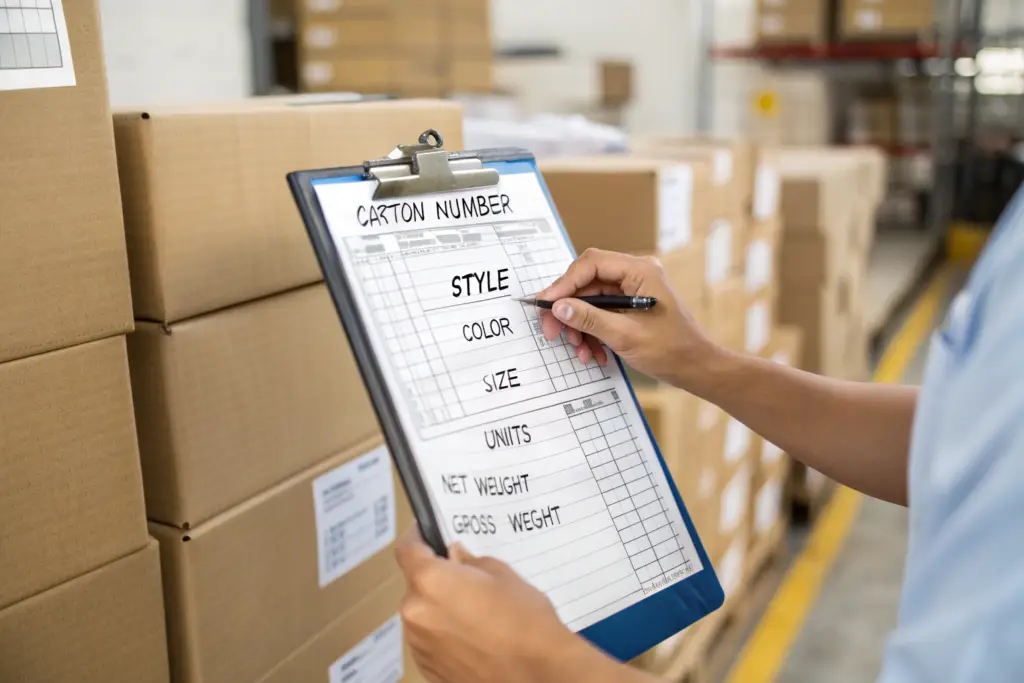
A Packing List with carton-level detail must list every individual carton by a unique carton number. For each carton, it must specify the exact contents by style number, color, size, and unit quantity. It must show the net weight and gross weight of each carton. The total units and total weight across all cartons must sum perfectly to the totals declared on the Commercial Invoice. Any mismatch between the Packing List and the Commercial Invoice, or between the Packing List and the physical cartons, is an immediate customs red flag.
The Packing List serves three functions. It is the customs officer's guide for selecting which cartons to inspect. It is the freight forwarder's basis for calculating the chargeable weight. It is the importer's receiving document for checking the shipment into their warehouse. An error on the Packing List disrupts all three functions.
How Does a Carton-Level Barcode System Streamline Port Inspections?
A carton-level barcode system adds a machine-readable identifier to each carton that links directly to the Packing List data. When a customs officer scans the barcode with a handheld device, they instantly see the declared contents of that specific carton. They can verify that the physical contents match the declared contents on the spot.
The barcode also speeds up the inspection process for the freight forwarder and the receiving warehouse. Cartons can be scanned as they are loaded and unloaded. The inventory is automatically checked against the Packing List. Discrepancies are flagged immediately.
We apply barcode labels to every carton we ship to the EU. The barcode contains a unique carton ID that ties back to our internal production records. The customs officer, or the warehouse receiver, can scan the barcode and know that Carton #47 of this shipment contains 20 units of Style WF-2406, women's linen trousers, in size Medium, color Terracotta. The scan verifies the Packing List. The scan verifies the inventory. The scan prevents errors.
A client importing a multi-style, multi-color, multi-size shipment of children's wear into Rotterdam had historically experienced inspection delays because his previous supplier provided only a summary Packing List. When we started producing his orders, we introduced carton-level barcoding. His next shipment was selected for a random physical inspection. The customs officer scanned three cartons, verified the contents matched the scans, and released the container. The inspection took twenty minutes. His previous inspections with summary Packing Lists had taken over two hours and resulted in additional cartons being opened and manually counted. The barcode system paid for itself in a single inspection.
What Gross Weight Discrepancies Trigger Automatic EU Customs Holds?
Weight is a data point that customs authorities use to cross-validate declarations. If the gross weight declared on the Packing List does not match the gross weight on the Bill of Lading, the system flags a discrepancy. If the weight recorded by the port's container scale at entry does not match the declared weight within a tolerance of a few percentage points, the system flags a discrepancy. Weight mismatches are a common trigger for a physical verification hold.
A common cause of weight discrepancy is an inaccurate Packing List. The factory estimates the carton weight instead of weighing each carton on a calibrated scale. A carton of denim jeans weighs significantly more than a carton of silk dresses of the same volume. If the factory uses an average weight per carton for a mixed garment shipment, the total declared weight will be inaccurate.
We weigh every sealed carton on a calibrated floor scale immediately before loading. The weight is recorded on the Packing List for that specific carton. The sum of the individual carton weights becomes the declared gross weight on the Bill of Lading. The precision of the weighing process eliminates weight discrepancies as a cause of customs holds.
A brand owner importing wool knitwear into France had a container held because the declared weight on the Packing List was 4,200 kg, but the port scale recorded 4,480 kg, a 6.6% discrepancy. The customs authority suspected under-declaration of quantity. The container was physically inspected. The actual weight matched the port scale. The factory had used a generic per-carton weight estimate that was too low. The inspection took three days. The storage and inspection fees were charged to the importer. The underlying cause was a factory that did not weigh the cartons. A simple weighing step would have prevented the entire incident.
When Do You Need an EUR1 Certificate Versus a Standard Certificate of Origin?
Many importers confuse the Certificate of Origin and the EUR1 Movement Certificate. They are not the same document. They serve different purposes. Using the wrong one results in either a customs hold or the loss of a significant duty reduction. Understanding the distinction is essential for managing the landed cost of goods entering the EU.
A standard Certificate of Origin simply certifies the country where the goods were manufactured. It is required for all shipments entering the EU, either as a separate document or as a declaration on the Commercial Invoice. An EUR1 Movement Certificate is a specific document that certifies the goods qualify for preferential, meaning reduced or zero, tariff treatment under a free trade agreement between the EU and the exporting country. If you claim a preferential duty rate without a valid EUR1, customs will reject the claim and charge the full standard duty rate, plus potential back-duty and penalties.
China does not have a free trade agreement with the EU that covers garments. Therefore, a EUR1 certificate is generally not applicable for direct China-to-EU garment shipments under a preferential China-EU agreement, because no such agreement exists. However, if the goods are transshipped through a country that does have an FTA with the EU, or if the goods originate in a country with an FTA and are only processed in China, the EUR1 may be relevant. This is a specific and complex scenario. For the vast majority of garment shipments from China to the EU, the standard Certificate of Origin, often combined with the Commercial Invoice declaration, is the required document.
What Is the GSP Form A and How Does It Lower Duty for Developing Country Exports?
The GSP, or Generalized System of Preferences, is a unilateral trade preference program offered by the EU to developing countries. It allows eligible products from eligible countries to enter the EU at reduced or zero tariff rates. China graduated from the EU's GSP program for most product categories several years ago, but the concept is important to understand because other garment-producing countries, such as Vietnam, India, Bangladesh, and Cambodia, currently benefit from GSP or similar arrangements.
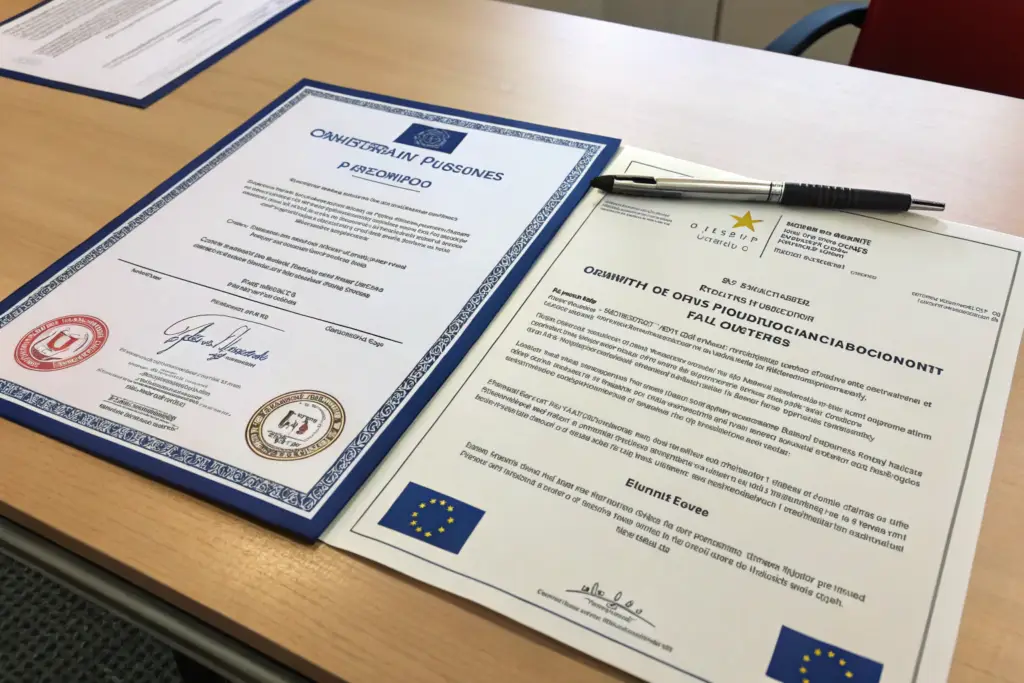
For a shipment from a GSP-eligible country, the document required to claim the preferential duty rate is a Form A Certificate of Origin, officially a "GSP Form A." This document is issued by the exporting country's designated authority and certifies that the goods meet the origin criteria for GSP treatment.
If you are sourcing garments from a GSP-eligible country, your supplier must provide a valid GSP Form A. The importer's customs broker files this document with the EU customs entry. The duty is then calculated at the GSP rate, which is often 0% or significantly reduced from the standard Most Favored Nation rate. Without the Form A, the standard duty applies.
A distributor I work with sources cotton t-shirts from both our factory in China and a partner factory in Bangladesh. For the Bangladesh shipments, we ensure every consignment includes a properly completed GSP Form A issued by the Bangladesh Export Promotion Bureau. The duty on the Bangladesh t-shirts is 0% under the EU's Everything But Arms scheme. The duty on the China t-shirts is 12% under the standard MFN tariff. The Form A is the document that unlocks the 12% duty saving. The cost of obtaining the Form A is minimal. The value is enormous.
How Does a Supplier's Declaration Replace an EUR1 for Certain Low-Value Shipments?
For shipments below a certain value threshold, EUR 6,000 for most commercial shipments, the EU allows a simplified proof of origin called a Supplier's Declaration. Instead of a formally issued EUR1 certificate from a government authority, the exporter can provide a signed declaration on their company letterhead, stating that the goods meet the origin criteria for preferential treatment.
The Supplier's Declaration must contain specific wording and specific information. It must reference the free trade agreement under which preference is claimed. It must describe the goods in sufficient detail to link them to the Commercial Invoice. It must state the origin criteria met by the goods. It must be signed and dated by an authorized representative of the exporting company.
This simplified procedure is not available for all trade agreements and not for all product types. The specific agreement determines whether the Supplier's Declaration is an acceptable substitute for the EUR1. The importer or their customs broker must verify the eligibility before relying on a Supplier's Declaration.
A small brand owner importing a sample shipment of 200 units of women's silk scarves into the Netherlands asked me about the EUR1. Her shipment value was EUR 4,500. For her specific trade agreement, a formal EUR1 was not required for shipments under EUR 6,000. We provided a Supplier's Declaration that met all the formal requirements of the agreement. The goods cleared customs with the preferential tariff rate applied, and she saved approximately EUR 540 in duty. The Supplier's Declaration was a simple, cost-free document that delivered a significant financial benefit because we knew it was an option and we completed it correctly.
How Do REACH and Product Safety Documentation Affect Customs Clearance?
Customs clearance is not only about tariffs, value, and origin. It is also about product safety and compliance. The EU has some of the world's strictest product safety regulations for textiles. REACH restricts chemical substances. The General Product Safety Directive requires that all consumer products placed on the EU market are safe. Customs authorities are the first line of enforcement for these regulations. If a shipment lacks the required safety documentation, it can be held, tested, or even destroyed.
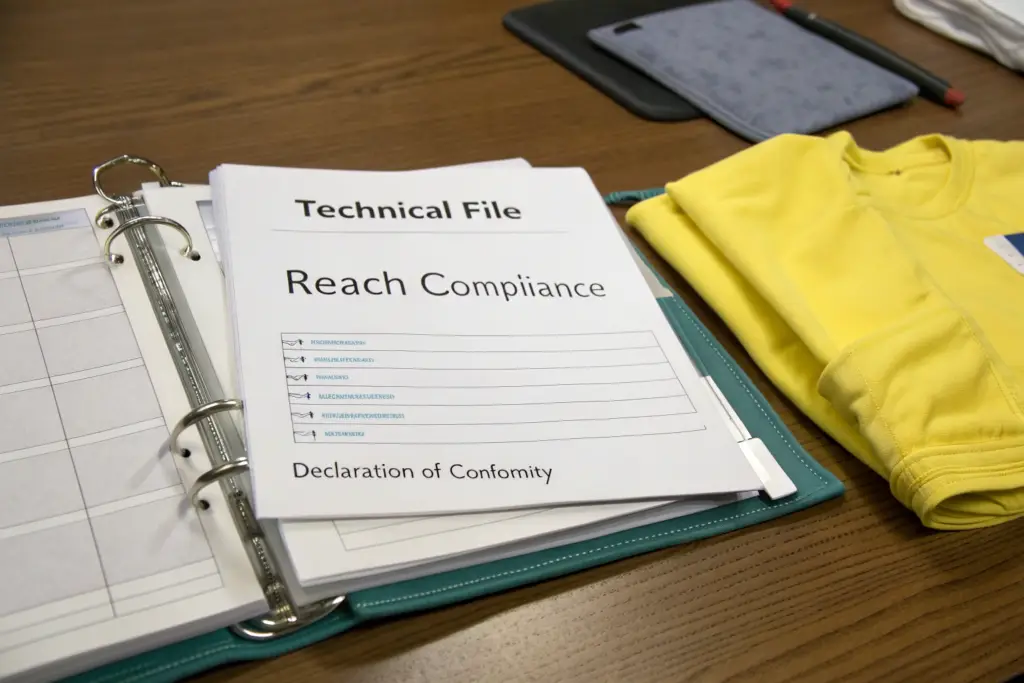
REACH compliance documentation and a formal Declaration of Conformity are increasingly required at the border for garment shipments entering the EU. The importer must be able to demonstrate, with documented evidence, that the products do not contain restricted substances above the legal limits. A test report from an accredited laboratory, a valid OEKO-TEX certificate, and a signed Declaration of Conformity referencing the specific EU regulations are the standard documentation package that satisfies customs safety requirements.
This is an area where the documentation burden has increased significantly in the last three years. Customs authorities are no longer just checking for commercial fraud. They are actively checking for unsafe products. A shipment of baby clothes without a safety compliance file is a high-risk shipment. The customs officer has the authority to take samples for laboratory testing at the importer's expense. The goods are held pending the test results. The process can take weeks.
What Is a "Declaration of Conformity" and Who Must Issue It?
A Declaration of Conformity, often abbreviated as DoC, is a formal legal document in which the manufacturer or the importer declares that the product meets all applicable EU safety, health, and environmental requirements. It is a document that carries legal weight. A false Declaration of Conformity is a criminal offense in some EU member states.
The Declaration of Conformity must identify the product, the manufacturer, and the importer. It must list the specific EU directives and regulations the product complies with, such as the General Product Safety Directive (2001/95/EC), REACH (1907/2006), and the Textile Labeling Regulation (1007/2011). It must reference the specific harmonized standards used to demonstrate compliance, such as EN standards for flammability or colorfastness. It must be signed by an individual with the authority to bind the company.
For a garment imported from China into the EU, the Declaration of Conformity is typically issued by the EU importer, who is the "responsible person" placing the product on the EU market. The importer relies on the test reports and documentation provided by the factory. The factory's documentation is the evidence that supports the importer's Declaration. If the factory provides no documentation, the importer cannot issue a legally sound Declaration of Conformity. They are either exposed to legal risk or forced to commission their own testing.
We provide all our EU-bound clients with a comprehensive Technical File for each production batch. The file contains the independent lab test reports, the OEKO-TEX certificate, and a Supplier's Compliance Statement that confirms the materials and processes used meet the specified EU regulatory requirements. This file is the raw material from which our clients build their Declaration of Conformity. We do not issue the DoC ourselves, as we are not the EU importer of record, but we provide everything the importer needs to issue it confidently and correctly.
How Should Test Reports Be Organized for a Potential Customs Audit?
A customs audit is not a phone call. It is a formal request for documentation, often with a short deadline. The customs authority will ask for the compliance file for a specific shipment or a specific product. If the importer cannot produce a complete, organized file within the deadline, the goods are detained, and penalties may apply.
The test reports must be organized by production batch. Each batch file should contain the fabric test reports for fiber composition, colorfastness, and dimensional stability. It should contain the chemical test reports for REACH restricted substances, the azo dyes, the phthalates, the formaldehyde. It should contain the OEKO-TEX certificate if applicable. It should contain the care label verification report. All reports must be current and relate to the specific batch in question. A test report from two years ago on a different fabric is not valid evidence.
We organize our client's batch files digitally, using a shared cloud folder. The folder is named with the order number and the shipment date. The individual files are named clearly: "01_Fiber_Composition_Test.pdf," "02_Azo_Dye_Test.pdf," "03_OEKO-TEX_Cert.pdf." The file naming convention allows the importer, or their customs broker, to find the specific document they need in seconds.
A client who imports women's knitwear into Sweden was audited by the Swedish Chemicals Agency. The agency requested the full compliance file for her current season's collection within ten working days. She forwarded the request to me. Within two hours, I provided her with a single zip file containing the organized batch files for every style in the collection. She submitted the file the same day. The audit was closed within a week with no findings. Her prompt and organized response demonstrated a high level of compliance maturity, which the agency noted positively. The organization of the documentation was as important as the documentation itself.
Conclusion
Port delays are not acts of God. They are acts of paperwork. Every container sitting in a European port waiting for clearance is waiting because a document is missing, incomplete, or inconsistent with another document. The customs officer is not being difficult. They are doing their job, which is to enforce the rules of the European single market. Those rules are complex, but they are not secret. They are published. They are knowable. The difference between a smooth clearance and a costly delay is whether the exporter and the importer have invested the time and expertise to get the documents right before the container leaves the factory.
We have walked through the five critical document categories. The Commercial Invoice, with its precise HS codes, EORI numbers, and origin declarations, is the foundation. The Packing List, with its carton-level detail and verified weights, is the operational guide. The Certificate of Origin and the specialized EUR1 and GSP Form A documents unlock the correct tariff treatment and protect the importer's margin. The REACH compliance documentation and the Declaration of Conformity demonstrate that the products are safe and legal for the European consumer.
At Shanghai Fumao, our shipping department is not an afterthought. It is a core function, staffed with professionals who understand European customs requirements in detail. Every shipment we dispatch to the EU is accompanied by a complete, verified document package. We check every HS code. We weigh every carton. We organize every test report. We do this because we know that our client's selling season depends on that container clearing the port without incident.
If you are importing garments into the European Union and you are tired of last-minute document scrambles, unexpected storage fees, and anxious calls from your retailers, I invite you to contact our Business Director, Elaine. She can share a sample document package, walk you through our documentation process, and discuss how we ensure that your shipment's paperwork is as polished as your product. Reach Elaine at elaine@fumaoclothing.com. Let's make sure your next container clears customs before your coffee gets cold.