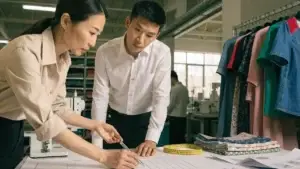
In early 2025, a menswear brand owner from Austin, Texas, sent me a direct message on Instagram. He had been following Shanghai Fumao for six months. He had never visited China. He had never placed a production order with an overseas factory. But he had watched a 90-second video I posted showing our sampling room turning a tech pack sketch into a finished bomber jacket in four days. He said, "I have been burned by Alibaba suppliers twice, but watching your hands make the jacket convinced me you are real." He placed a trial order for 200 units the following week. That order led to a 1,500-unit reorder three months later. The entire relationship started with a video that cost me nothing to produce and 90 minutes to film and edit. No trade show. No sales trip. No paid advertising. Just a video showing what we actually do every day.
The most effective social media platforms for showcasing garment factory customization videos are Instagram for visual storytelling and brand building, LinkedIn for reaching professional buyers and sourcing directors, TikTok for viral reach and demonstrating speed and capability, and YouTube for long-form, searchable content that builds trust through depth. Each platform serves a distinct stage of the buyer's journey. Instagram and TikTok generate awareness and interest. LinkedIn converts that interest into professional conversations. YouTube provides the deep, technical proof that closes the decision.
Factory customization videos are the most powerful sales tool a garment manufacturer has today. A photograph of a finished jacket tells the buyer what you made. A video of the cutting, sewing, and finishing process shows the buyer how you made it, and more importantly, that you actually made it. In an industry plagued by trading companies posing as factories, video evidence of real production capability is a trust signal that no Alibaba gold supplier badge can replicate. But the platform you choose determines who sees the video, how they engage with it, and whether that engagement turns into a purchase order. Let me break down the strategy for each platform based on what has worked for my factory.
Why Has Instagram Become the Leading Platform for B2B Garment Factory Content?
Instagram is the storefront of the modern garment factory. A buyer who is considering a new supplier will almost always check their Instagram profile before they check their Alibaba page. The Instagram profile is where the factory tells its visual story. Who are your clients? What does your work look like? What does your factory floor look like? Is there a human face behind the company name? These questions are answered in seconds on Instagram. The buyer forms an impression before they ever send an inquiry.
Instagram's visual-first format is ideally suited for the textile and apparel industry, where color, texture, drape, and finish are impossible to communicate through text alone. The platform's Reels feature, which prioritizes short-form video, allows a factory to demonstrate its customization capabilities, screen printing, embroidery, dyeing, label attachment, in 15 to 60 seconds of highly engaging content. The algorithm rewards consistency and authenticity, favoring content that shows real process over polished advertising.
At Shanghai Fumao, I post three to four times per week on Instagram. The content is not produced by an agency. It is shot on my phone by our production team on the factory floor. The rawness is the value. Buyers see actual sewing operators, actual cutting machines, actual fabric rolls with our inventory tags visible. This transparency is what converts an Instagram follower into an email inquiry. Here is how the different content formats work and how to use Instagram's B2B features effectively.
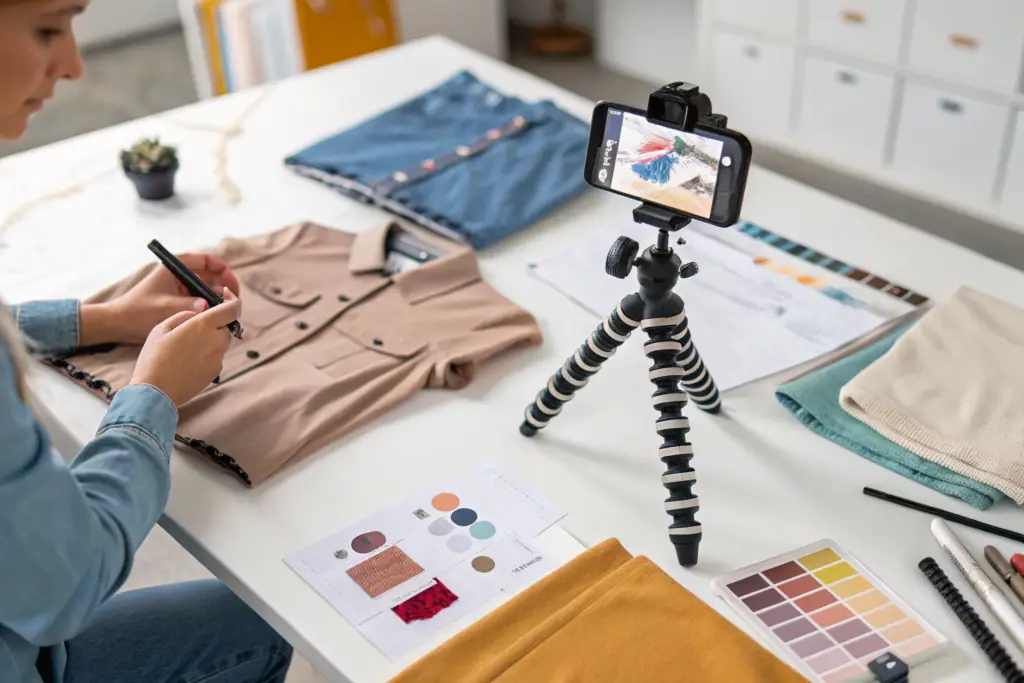
What Types of Factory Videos Perform Best on Instagram Reels?
The Reels that perform best in the B2B garment space are process videos. A 30-second Reel showing a screen-printing carousel applying a custom logo to a T-shirt. A 45-second Reel following a piece of fabric from the cutting table through the sewing line to the finishing station. A 20-second Reel with satisfying close-ups of embroidery needles creating a brand's logo on a cap.
The common elements are speed, close-up detail, and a clear before-and-after narrative. The viewer sees the raw material at the start and the finished detail at the end. The middle is the satisfying transformation. These videos do not need narration. They need clean, well-lit footage and a clear focal point. I shoot most of our Reels at 1.5x speed to compress the process into the short attention span of the platform while still showing the actual work. A Reel that goes viral on Instagram typically features a transformation, a moment of precision, or a scale that impresses, racks of identical garments, synchronized sewing lines, a cutting machine moving through 50 layers of fabric at once. The Instagram for Business resources provide technical specifications and best practices, but the creative direction should come from the factory floor.
How to Use Instagram Highlights to Organize Customization Examples?
Instagram Highlights are the permanent story collections that sit below the profile bio. They are the most underutilized asset in B2B Instagram. A buyer who lands on a factory's profile will often tap through the Highlights before scrolling the feed. The Highlights should be organized as a visual catalog of the factory's capabilities.
I organize our Highlights by customization type. One Highlight is "Embroidery" and contains 15 stories of embroidery work we have done for different brands. Another is "Screen Print." Another is "Woven Labels." Another is "Packaging." Another is "Client Work," organized by brand name with permission. This structure allows a buyer to self-navigate to exactly the capability they are interested in, without scrolling through the entire feed. A new buyer interested in custom hangtags can tap the "Packaging" Highlight and see ten examples in two minutes. They then send a direct message. The Highlight does the selling before any conversation begins.
How Does TikTok Generate Viral Trust for Garment Manufacturers?
TikTok is where trust goes viral. The platform's algorithm is fundamentally different from Instagram's. Instagram shows content to people who already follow you or who follow similar accounts. TikTok shows content to people who are interested in the topic, regardless of whether they follow you. A factory video on TikTok can be viewed by 100,000 sourcing professionals, brand owners, and curious consumers in 48 hours, even if the factory's account has zero followers. This discovery engine makes TikTok the most powerful platform for reaching new buyers who are not actively searching for a supplier but who are interested in fashion, manufacturing, or entrepreneurship.
TikTok's effectiveness for factory content lies in its algorithm's ability to match niche content with niche audiences. A video of a custom embroidery process may not appeal to the general public, but it will be served to users who have watched embroidery videos, fashion manufacturing videos, or small business sourcing content. This precision targeting, combined with TikTok's preference for authentic, unpolished content, creates an environment where a real factory video outperforms a slick corporate production.
I was initially skeptical of TikTok for B2B garment manufacturing. It seemed like a consumer entertainment platform. I was wrong. Our most-viewed TikTok video, a 60-second walkthrough of our fabric inspection process, has been viewed over 800,000 times. It generated 42 direct inquiries from brand owners in North America and Europe. The video was not professionally produced. It was a genuine walkthrough with factory noise in the background and my voice explaining each step. The authenticity was the asset. Here is how TikTok's algorithm actually works for industrial content and how to format videos for maximum impact.
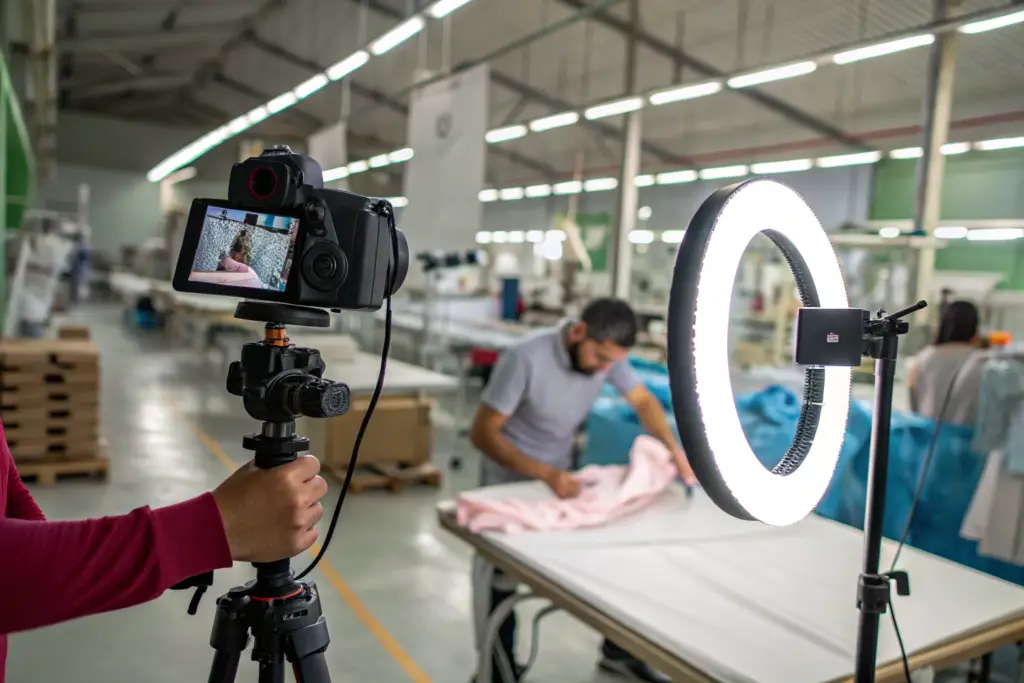
Why Does TikTok's Algorithm Favor Authentic Factory Content?
TikTok's algorithm prioritizes watch time and completion rate, not follower count or production quality. A video that holds the viewer's attention for its full duration is promoted more aggressively than a video with high production value that viewers scroll past after three seconds. Factory process videos naturally hold attention because they show a transformation. The viewer wants to see the finished product. They stay to the end.
Authenticity is favored because polished content signals "advertisement" to the viewer, triggering the scroll reflex. Raw factory content signals "real," which triggers curiosity. A video shot on a phone with ambient factory noise, a slightly shaky frame, and a genuine voiceover explaining the process will often outperform a studio-produced video because the viewer believes it. This is a structural advantage for manufacturers. The thing we are selling, real production capability, is inherently authentic. We do not need to fabricate a narrative. We just need to point the camera at what we do. The TikTok for Business creative guide confirms that authentic, native-feeling content generates higher engagement than polished ads.
How to Format a Customization Video for the TikTok Feed?
The first three seconds are everything on TikTok. The video must immediately show the hook. A close-up of a cutting blade hitting fabric. A splash of screen printing ink. An embroidery needle starting its first stitch. The hook must be visual, dynamic, and self-explanatory. No introductions. No logos. No "welcome to our factory." Just the process.
The ideal TikTok format for a factory customization video is: a strong visual hook in the first second, a continuous process sequence showing the transformation from raw material to finished detail over 30 to 60 seconds, a satisfying reveal of the completed customization at the end, and a simple text overlay explaining what is being made and for whom. The text overlay is important because many users watch without sound. "Custom embroidery for a Los Angeles streetwear brand" tells the story silently. I add a clear call-to-action in the caption: "DM for custom production inquiries" or "Link in bio for our catalog." The call-to-action must be direct. A viewer who just watched a satisfying process video is in a moment of high trust. The path to action must be frictionless.
What Role Does LinkedIn Play in Converting Buyers from Interest to Inquiry?
LinkedIn is the conversion engine. Instagram and TikTok build awareness and trust. LinkedIn converts that trust into a business conversation. The buyer who has watched factory videos on Instagram and TikTok for three months, and who is now ready to place an order, will often make first contact through LinkedIn. The platform signals professionalism. A direct message on Instagram feels casual. A connection request and message on LinkedIn feels like a business inquiry. The buyer is signaling that they are serious.
LinkedIn is the most effective platform for converting factory content engagement into qualified sales conversations because it is where professional buyers go when they are in a purchasing mindset. The platform's company page features allow a factory to present its certifications, its capacity, its export markets, and its team in a structured, credible format. LinkedIn's native video and document posting features allow factories to share deeper technical content, sample development timelines, factory audit reports, and client testimonials, that resonate with sourcing directors and procurement managers.
My LinkedIn strategy is different from my Instagram and TikTok strategies. On Instagram and TikTok, I am showing the process. On LinkedIn, I am explaining the business. I post about lead times, quality control systems, certification updates, and trade policy changes that affect garment sourcing. The content is less frequent, two to three posts per week, but more substantive. The audience is smaller but higher-value. A single inquiry from a LinkedIn connection who is a sourcing director at a major retailer is worth more than a thousand Instagram followers who are aspiring brand owners. Both are valuable. They are simply at different stages.
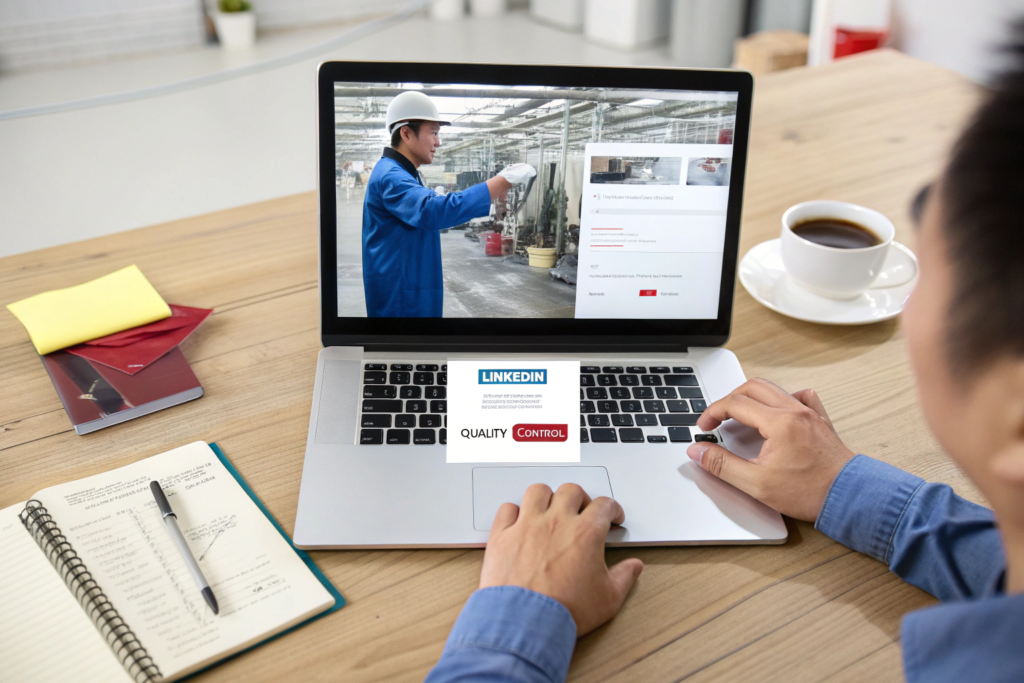
How to Use LinkedIn Articles to Demonstrate Manufacturing Expertise?
LinkedIn Articles, the platform's long-form content format, are the best tool for establishing thought leadership in garment manufacturing. An article titled "How to Audit a Garment Factory's Dye House Before Placing a Seasonal Order" positions the factory owner as an expert, not just a supplier. The article provides genuine value to the reader while demonstrating the depth of the factory's technical knowledge.
I publish one LinkedIn Article per month. The topics come directly from questions I receive from brand owners during the sales process. "What fabric testing should I request?" becomes an article. "How do MOQ negotiations work?" becomes an article. "Why is my shipping cost higher in Q4?" becomes an article. Each article answers a real question that a real buyer asked. Each article ends with a soft call-to-action: "If you are navigating this issue with your current supplier, our team can help." The article is not a sales pitch. It is a demonstration of capability. The sales conversation happens in the direct messages after the buyer has read the article and decided that we know what we are doing.
What Video Content Formats Are Most Effective for LinkedIn's Professional Audience?
LinkedIn's professional audience responds to explanatory and documentary-style video content, not the fast-paced transformation videos that work on TikTok. A three-minute video of our quality manager walking through the AQL inspection process, holding a garment, pointing to specific checkpoints, and explaining the pass/fail criteria, performs well on LinkedIn. A two-minute video of our pattern maker explaining how we adjust a Western brand's spec sheet for Asian body proportions performs well.
The format is: a human being, identified by name and role, explaining a specific technical aspect of garment manufacturing in clear, accessible language. The video should be shot horizontally, well-lit, with clean audio. A lapel microphone is a worthwhile investment. The content should assume an intelligent viewer who is not a garment industry expert. The sourcing director at a retailer may have a broad understanding of supply chain but may not know the specific technical details of stitch density measurement. The video educates while it builds credibility. I post these videos natively to LinkedIn, not as YouTube links. Native video receives significantly higher reach and engagement on the platform.
How Does YouTube Content Support Long-Term Trust and Buyer Education?
YouTube is the library. Instagram, TikTok, and LinkedIn are the daily conversation. YouTube is where the buyer goes for deep, searchable, evergreen content that answers their most important questions before they place an order. A brand owner who is researching "how to find a garment factory in China" or "what is a reasonable MOQ for a first production run" will find YouTube videos in their Google search results. A well-produced YouTube video that answers that question will be viewed for years, generating a steady stream of qualified leads with zero additional investment.
YouTube is the most effective platform for long-form, educational content that builds deep trust and supports the buyer's research phase. A 15-minute factory tour video, a 10-minute explanation of the custom apparel development process, and a 20-minute interview with a satisfied brand client all serve as evergreen trust assets. Unlike social media posts that have a lifespan of days, YouTube videos accumulate views over years and appear in both YouTube and Google search results, making them the highest-return content investment for long-term lead generation.
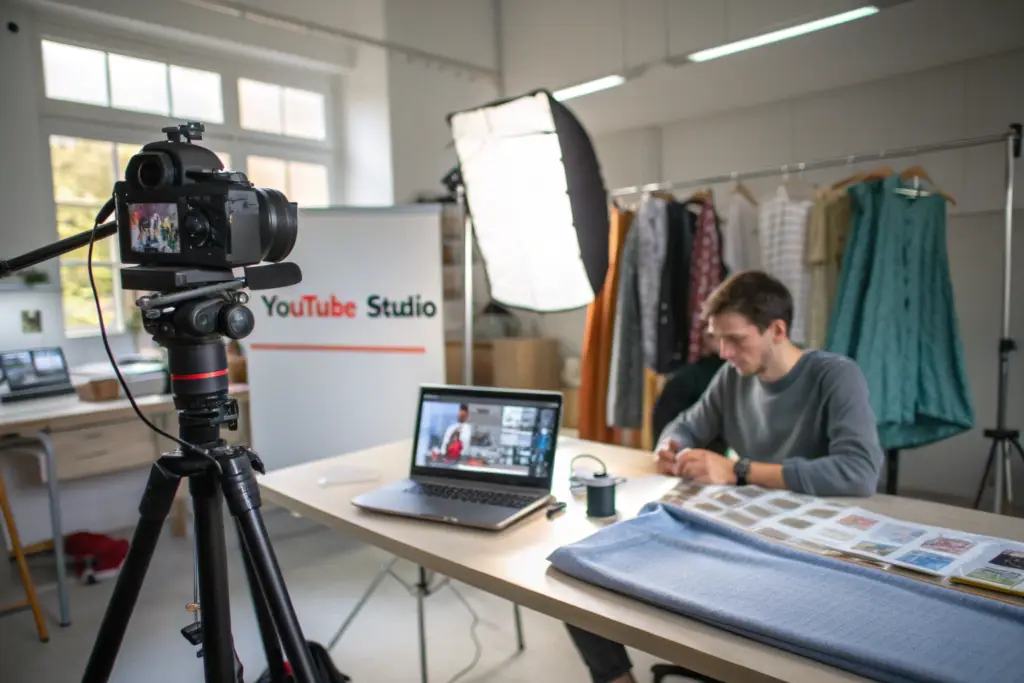
I treat YouTube as an investment in search engine real estate. When a buyer searches "Shanghai garment factory," I want our YouTube videos to appear alongside our website. The videos serve as a visual reference check. The buyer watches me explain our process, sees our factory floor, and hears me answer common questions. By the time they send an inquiry, they have already spent 30 minutes with me through video. The trust is pre-built. The sales conversation is simply a confirmation of what the video already established. Here is how to structure channel content and optimize for search.
What Types of YouTube Videos Drive the Most Factory Inquiries?
The videos that drive the most inquiries are not the most polished. They are the most useful. A factory tour video that walks through every department, receiving, cutting, sewing, finishing, quality control, packing, with honest commentary about what is good and what could be improved, is the single highest-performing video type for lead generation. The buyer gets to see the entire operation in one video. They form a complete impression.
Process explanation videos are the second most effective. "How We Develop a Custom Sample in 7 Days," "How We Ensure Color Consistency Across 10,000 Units," "How We Pack and Ship DDP to the USA." These videos answer the specific technical questions that a buyer has during the evaluation phase. Client interview videos are the third most effective. A 10-minute conversation with an actual brand owner who has produced garments with us, talking honestly about their experience, carries more credibility than any sales presentation. I produce these three video types on a rotating basis, one new video every two to three weeks. The YouTube Creator Academy provides production and optimization guidance, but the content strategy should be driven by buyer questions, not by what is trending.
How to Optimize Video Titles and Descriptions for Search Intent?
A YouTube video is a search asset. The title should match the exact search query that a buyer would type. "How to Find a Reliable Garment Factory in China" is a title. "Shanghai Garment Factory Full Production Tour" is a title. "Custom Clothing Manufacturer MOQ and Pricing Explained" is a title. The title should contain the primary keywords, be under 60 characters, and promise a clear benefit to the viewer.
The description should expand on the title with secondary keywords and a clear call-to-action. The first two lines of the description are visible before the viewer clicks "show more," so the most important information goes there: a one-sentence summary of the video, a link to our website, and our contact email. Below that, a longer description uses natural language to describe the content, incorporating related search terms without keyword stuffing. I also add chapter timestamps for longer videos, which helps with both viewer navigation and YouTube's understanding of the video structure. Each video description ends with the same call-to-action: "Contact our Business Director, Elaine, at elaine@fumaoclothing.com to discuss your production needs."
Conclusion
The right social media platform for factory customization videos is not a single choice. It is a portfolio. Instagram builds the visual brand and captures the buyer who is browsing. TikTok reaches the buyer who did not know they needed a factory but just watched a satisfying process video and wants to learn more. LinkedIn converts the serious buyer who is ready to talk business. YouTube educates the researcher who is comparing suppliers and building long-term trust before making contact.
At Shanghai Fumao, I have built this multi-platform content strategy not with a marketing agency, but with a smartphone, a tripod, a ring light, and the genuine belief that showing our work is the best sales tool we have. The videos cost time, not money. They generate leads, not likes. The menswear brand owner from Austin who messaged me on Instagram is now a recurring client with a growing order volume. He found us because a 90-second video showed him what no Alibaba listing could show: a real factory, doing real work, with real hands.
If you are a brand owner watching these videos and you are ready to move from watching to producing, send us a message on the platform where you found us, or reach out directly to our Business Director, Elaine, at elaine@fumaoclothing.com. The same hands you see in the videos can make your next collection.