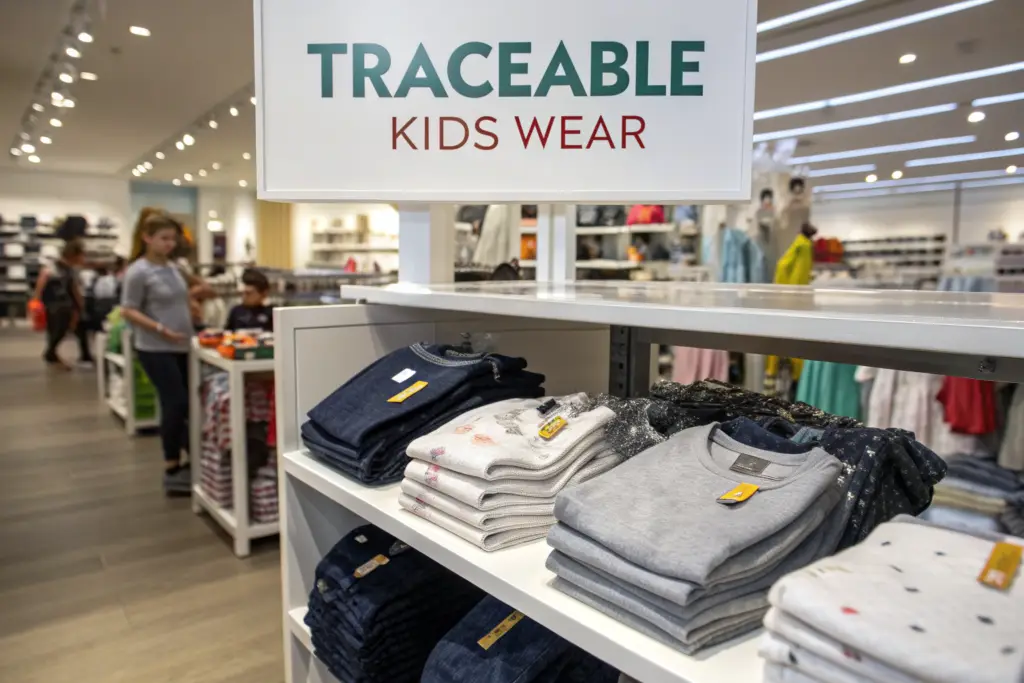
In November 2025, I sat in a meeting room in Antwerp with a children's wear brand director. She had just lost a major retail contract with a German department store. The reason had nothing to do with her designs. Her garments were beautiful. Her pricing was competitive. The retail buyer had asked for a full supply chain map showing every facility involved in producing a single baby bodysuit. She could name the cut-and-sew factory. She could not name the fabric mill, the yarn spinner, or the cotton gin. Her supply chain was opaque after the first tier. The department store walked away and gave the shelf space to a competitor who could document every hand that touched the cotton. This moment crystallized for me a shift that has been building for years. Traceability is no longer a marketing differentiator for kids' wear. It is the minimum requirement for doing business in Europe.
European buyers are prioritizing traceability in kids' wear supply chains because of a convergence of regulatory enforcement, retailer liability, and consumer demand for proof that children's clothing is free from forced labor and hazardous chemicals. The EU's Corporate Sustainability Due Diligence Directive and the upcoming Digital Product Passport mandate create legal obligations for brands to know and disclose their full supply chain. In the children's segment, where the end consumer is the most vulnerable and the emotional stakes are highest, the tolerance for opaque sourcing has dropped to zero.
The shift is structural, not seasonal. It rewrites the relationship between brand, factory, and raw material supplier. A brand can no longer buy fabric from a trader and shrug when asked where the yarn was spun. A factory like Shanghai Fumao can no longer accept a fabric shipment without documentation of its origin. The entire chain must be connected, documented, and verifiable. Let me explain why this is happening now, how the regulations work, and what it means for how you source your next kids' wear collection.
What EU Regulations Are Driving the Kids' Wear Traceability Mandate?
The regulatory engine driving traceability is not a single law. It is a package of interconnected directives and regulations that create a web of obligations for any brand selling in the European market. The most significant is the Corporate Sustainability Due Diligence Directive, which requires large companies to identify, prevent, and mitigate human rights and environmental harms in their supply chains. But the impact cascades down. Large retailers, bound by CSDDD, push the requirement onto their suppliers. Those suppliers push it onto their factories. Soon, a small brand selling to a single boutique in Paris is being asked for the same traceability data as a brand selling to a multinational chain.
The key regulatory drivers include the EU Strategy for Sustainable and Circular Textiles, which mandates a Digital Product Passport for all textile products by 2030, and the Deforestation Regulation, which affects any kids' wear containing natural rubber, leather, or viscose derived from wood pulp. Together, these laws require brands to document not just where a garment was sewn, but where its constituent fibers were grown, harvested, or extracted, and under what conditions. Non-compliance results in products being barred from the EU market entirely.
This is not a future hypothetical. The legislation is passed. The implementation timelines are set. Brands that begin building their traceability infrastructure now will be ready when the mandates take full effect. Brands that wait will face a compliance scramble. Here are the two regulatory pillars that matter most for kids' wear.

How Does the Digital Product Passport Apply to Children's Garments?
The Digital Product Passport is a digital record that travels with a product throughout its lifecycle. For a children's T-shirt, the DPP will contain data on the fiber origin, the dyeing process, the manufacturing facility, the chemical substances used, and the end-of-life recycling instructions. The consumer, the retailer, and the customs authority will all be able to access this data by scanning a QR code on the garment's hangtag or care label.
For kids' wear specifically, the DPP adds a layer of safety verification. A parent scanning the passport can see whether the garment contains any restricted substances, whether the factory has been audited for child labor, and whether the organic cotton claim is backed by a valid GOTS certificate. The DPP turns a vague sustainability claim into a verifiable data set. At Shanghai Fumao, we are already building the data infrastructure to populate DPP records for our European clients. We are mapping every fabric supplier, every trim source, and every production step onto a digital platform that can export a complete product history. This is the future of garment documentation, and it is arriving faster than most factories realize. I recommend brands review the European Commission's DPP specifications to understand the exact data fields they will need to provide.
What Is the Scope of the EU Forced Labor Regulation for Textiles?
The EU Forced Labor Regulation, adopted in late 2024 and entering full application by late 2027, bans products made with forced labor from the EU market. The regulation applies to all products, but textiles are explicitly identified as a high-risk sector. The burden of proof is on the brand. If a customs authority suspects that forced labor was used at any point in the supply chain, they can detain the shipment and demand evidence that the product is clean. Without traceability records, the brand has no defense.
Kids' wear is under particular scrutiny because cotton and cotton-adjacent supply chains have documented forced labor risks in certain sourcing regions. A brand importing children's pajamas made from cotton that was grown in a high-risk region must be able to prove that their specific cotton was not produced with forced labor. Generic certifications are not enough. The EU wants specific, batch-level traceability from the garment back to the gin. I have advised our European clients to begin mapping their cotton supply chains immediately, even if the regulation's full enforcement date seems distant. The mapping process takes months, especially if you are tracing through multiple intermediaries. Start now. The European Parliament's briefing on the regulation is essential reading for any brand owner.
How Does Supply Chain Mapping Work from Cotton Field to Finished Garment?
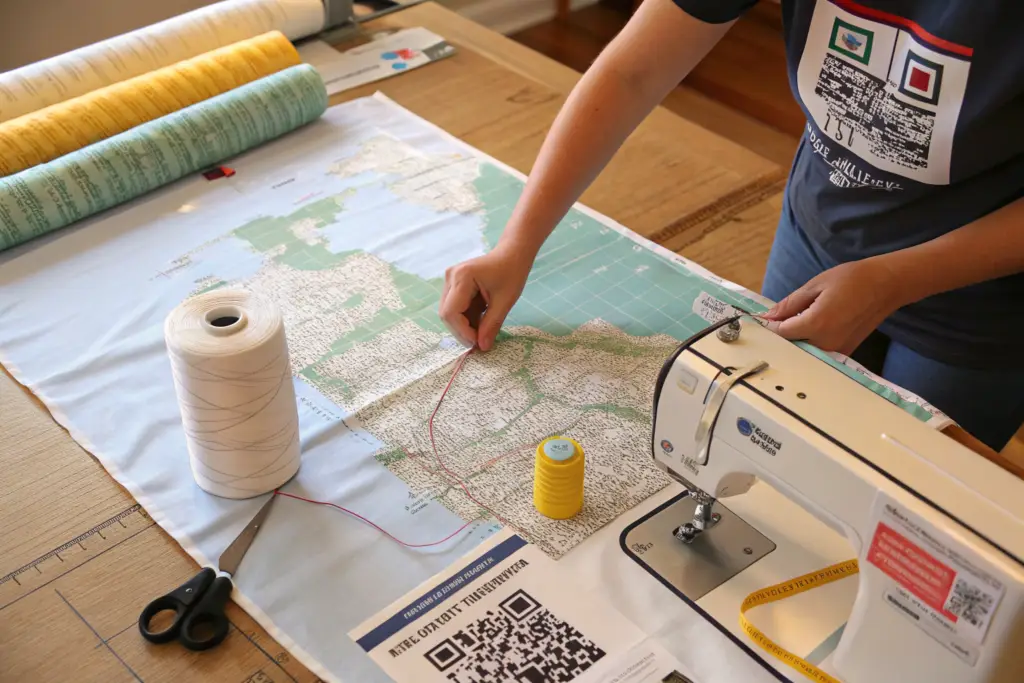
Supply chain mapping sounds abstract until you have to do it. Then it becomes a very concrete, very frustrating exercise in calling suppliers and asking questions they are not used to answering. Most garment supply chains are built on a chain of trust that has no documentation. The fabric mill trusts the yarn supplier. The yarn supplier trusts the cotton trader. The cotton trader trusts the gin. Nobody has asked for a piece of paper connecting one link to the next because nobody needed it. Traceability breaks this model. It requires every link to produce a transaction certificate that proves the material moved from A to B to C.
Supply chain mapping for kids' wear involves identifying every entity that handled the product from raw fiber to finished garment, collecting a verifiable document at each transfer of ownership, and logging the data onto a digital platform that can be shared with buyers, auditors, and regulators. The most reliable method uses a chain-of-custody standard like GOTS or OCS that requires independent certification at each processing stage. This transforms an opaque, trust-based chain into a transparent, auditable chain.
I have led this mapping process for several of our brand partners. It is painstaking work, but it is the only way to generate the data that the European market now demands. Here is how we approach fiber-level verification and digital chain-of-custody tools.
What Technologies Enable Fiber-Level Verification?
Fiber-level verification uses physical or chemical markers to prove that a specific garment contains a specific batch of cotton from a specific farm. The two most established technologies are isotopic tracing and forensic fiber analysis. Isotopic tracing analyzes the natural chemical signature of the cotton fiber, which varies by the soil and water conditions where it was grown. This signature is unique to a region and cannot be faked. Forensic fiber analysis uses microscopy and chemical testing to verify that the fiber in the finished garment matches a reference sample taken at the gin.
A more scalable approach for commercial production is the use of blockchain-backed chain-of-custody platforms. These do not physically mark the fiber, but they create a digital ledger where each transaction in the supply chain is recorded and cannot be altered retroactively. We are piloting a platform that integrates with our fabric suppliers' shipping systems. When a bale of certified cotton leaves the gin, the transaction is logged. When the yarn spinner receives it, the receipt is logged. When we receive the finished fabric, we confirm the receipt on the chain. The brand and the retailer can view the entire history on a dashboard. This technology is becoming accessible and affordable, and I expect it to be standard practice for European kids' wear within three years. The Textile Exchange standards provide the framework for these chain-of-custody models.
How to Audit Tier 2 and Tier 3 Suppliers Effectively?
Your cut-and-sew factory is Tier 1. Your fabric mill is Tier 2. Your yarn spinner is Tier 3. Most brands audit their Tier 1 suppliers and stop there. The traceability mandates require visibility into Tier 2 and Tier 3 as a minimum, and often into Tier 4, the raw material source. Auditing a yarn spinner is not the same as auditing a sewing factory. The risks are different. The energy use and chemical management are the primary concerns at the spinning level, rather than stitching quality.
I recommend brands partner with their Tier 1 factory to manage Tier 2 and Tier 3 auditing. The Tier 1 factory has the commercial relationship with the mill and the spinner. They can request the audit, schedule the visit, and include the cost in the fabric price. At Shanghai Fumao, we have added a clause to our fabric purchase agreements that requires our mills to submit to an annual third-party audit and to share the audit report with our brand clients. This pushes the due diligence burden upstream in a way that is commercially fair and practically efficient. A brand should not have to fly to a spinning mill in a different country to verify compliance. The supply chain should share that responsibility.
Why Are Retailers Rejecting Kids' Wear Without Full Chain-of-Custody Proof?
The retailer is the choke point. European department stores and specialty chains are legally exposed if they sell products that violate the new due diligence laws. Their legal teams have responded by building compliance gates that suppliers must pass before a purchase order is issued. A brand that cannot provide a full chain-of-custody dossier simply does not get a slot on the shelf. I have spoken to retail buyers in Germany, the Netherlands, and Scandinavia, and their message is consistent: "If you cannot show us the whole chain, we cannot buy your product." This is not a negotiation. It is a condition of entry.
Retailers are imposing chain-of-custody requirements because their own legal liability under CSDDD extends to the products they sell. A retailer who stocks a children's garment that is later found to contain cotton produced with forced labor faces fines, reputational damage, and potential exclusion from public procurement contracts. The only defense is documented proof that reasonable due diligence was conducted, and the standard of proof is rising from "we asked our supplier" to "we have audited the chain."
The consequences of failing a retailer's traceability audit are not theoretical. They are happening now. Here is what a retailer expects and how your factory can help you meet their standards.
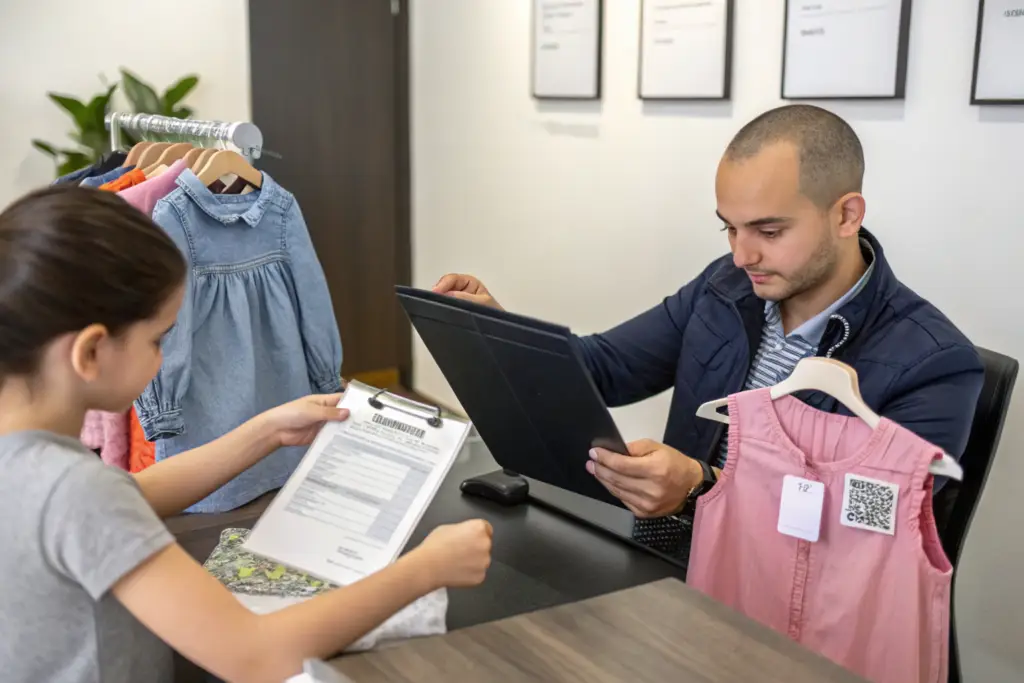
What Documentation Does a German Retailer Expect in a Tech Pack?
A German department store buyer once showed me their supplier compliance checklist for a children's pajama program. It had 47 items. The traceability section alone required: the GOTS scope certificate for every facility in the chain, the transaction certificates linking each facility, the audit reports for Tier 1 through Tier 3, a chemical test report from an ISO 17025 accredited lab, and a completed RSL compliance declaration signed by an officer of the supplying company.
This is not a wish list. This is the standard submission packet. If a single document is missing, the submission is rejected before it reaches the buyer's desk. The compliance team reviews it first, and they do not make exceptions. I recommend brands build a "Retailer Compliance Dossier" template that mirrors the most demanding retailer in their target market. If you build to the German standard, you will clear the French, Dutch, and Scandinavian standards as well. The amfori BEPI platform provides a framework for environmental compliance documentation that many European retailers recognize and accept.
How Can a Factory Help Brands Meet Retailer Audit Standards?
The factory is the data hub. We hold the relationships with the fabric mill, the trim supplier, and the printer. We are the ones who receive the certificates, the test reports, and the shipping documents. If we organize this data proactively and share it with the brand in a structured format, the brand can assemble their retailer dossier in days instead of weeks.
At Shanghai Fumao, we have created a "Compliance Data Pack" for every kids' wear order. The pack includes all upstream certificates, all test reports, a factory audit report, and a signed declaration of conformity. We deliver this pack to the brand before the shipment leaves our facility. The brand then has everything they need to satisfy their retail buyer without chasing documents across five different suppliers. This service costs us time but adds enormous value. It is the kind of invisible work that separates a commodity factory from a strategic partner.
How Can Brands Turn Traceability from a Cost into a Marketing Asset?
Traceability costs money. The audits, the certifications, the digital platforms all add to the cost of goods sold. A brand that treats traceability purely as a compliance burden will feel only the cost. A brand that integrates traceability into their marketing and customer experience will recover that cost and more. The European consumer, especially the parent buying for a child, is willing to pay a premium for verified safety and ethics. But they need to see the proof. A hangtag that says "Made with Organic Cotton" is background noise. A hangtag that says "Scan to see the farm where this cotton was grown" is a brand story.
Traceability data, when packaged for the consumer, becomes a powerful marketing asset that justifies a higher retail price point. The QR code on the garment links to an interactive supply chain map, a farmer story, and the lab test results proving the absence of harmful chemicals. This transparency builds trust with a generation of parents who research purchases deeply and share their findings on social media. The compliance cost becomes a customer acquisition investment.
I have seen this work in practice. A Danish kids' wear brand we partner with launched a "Cotton Journey" campaign on their website. They took the traceability data we provided and turned it into a beautiful, illustrated map showing the cotton farm in India, the spinner in Tamil Nadu, the knitter in Tiruppur, and the cut-and-sew facility in our Shanghai factory. The campaign generated a 22% increase in their email click-through rate and was covered by a major Scandinavian parenting magazine. The traceability investment paid for itself in one season.

How to Design a Consumer-Facing "Garment Journey" Experience?
The QR code is the entry point. It should link to a mobile-optimized page, not a PDF. The page should show, in simple visuals, the journey of the garment. Use photos of the actual facilities, not stock images. The consumer does not need to see the audit report. They want to see the farmer's face, the spinner's hands, the sewer's workstation.
We provide our brand partners with approved facility photos and short video clips from our production floor. The brand then combines these with the upstream data to create a narrative. The key is authenticity. If the story feels manufactured, it backfires. If the story feels real, it is shared. One parent who scans a code and sees a photo of the actual cutting table where her child's dress was cut becomes a brand ambassador for life. This is the return on traceability that no compliance spreadsheet can capture.
How to Use Traceability Data in E-Commerce Product Pages?
The product page is where the traceability investment converts to sales. Instead of a generic "sustainably made" bullet point, list the specific certifications with verifiable certificate numbers. Show the supply chain map as an interactive graphic. Embed the QR code scan result as a static image for desktop shoppers.
A brand we work with in the UK added a "Provenance" section to their product pages. It includes the farm location, the GOTS certificate number with a live verification link, and the date of the most recent factory audit. Their conversion rate on those product pages increased by 14% compared to pages without the traceability section. The data is the differentiator. In a market where every brand claims to be sustainable, the brand that proves it wins the click.
Conclusion
Traceability in kids' wear is not a trend. It is the new structural reality of the European market. The regulations are passed. The retailers are enforcing. The consumers are demanding. A brand that cannot trace its cotton back to the field will find its products locked out of the European shelf, not by consumer boycott but by retail compliance gatekeepers. The brands that invest now in mapping their supply chains, digitizing their chain-of-custody records, and packaging their traceability data for the consumer will be the brands that own the kids' wear category in Europe for the next decade.
At Shanghai Fumao, we have seen this shift coming and we have built the infrastructure to support it. We audit our fabric suppliers. We maintain digital records of every transaction certificate. We deliver a Compliance Data Pack with every kids' wear order. We are ready for the Digital Product Passport. More importantly, we are ready to help our brand partners tell the story of their supply chain in a way that builds trust with parents and satisfies the most demanding retail compliance teams.
If you are a kids' wear brand navigating the European traceability requirements and you need a manufacturing partner who understands the documentation as well as the stitching, let us talk. We can walk you through our traceability infrastructure and show you exactly how we will build the compliance dossier for your next collection. Reach out to our Business Director, Elaine, at elaine@fumaoclothing.com. The European market demands proof. Let us help you provide it.