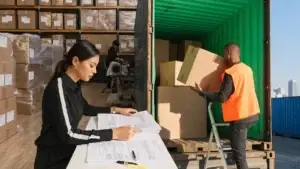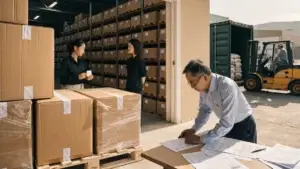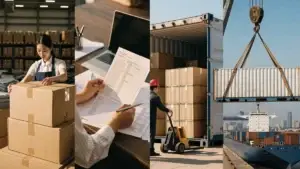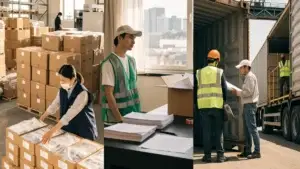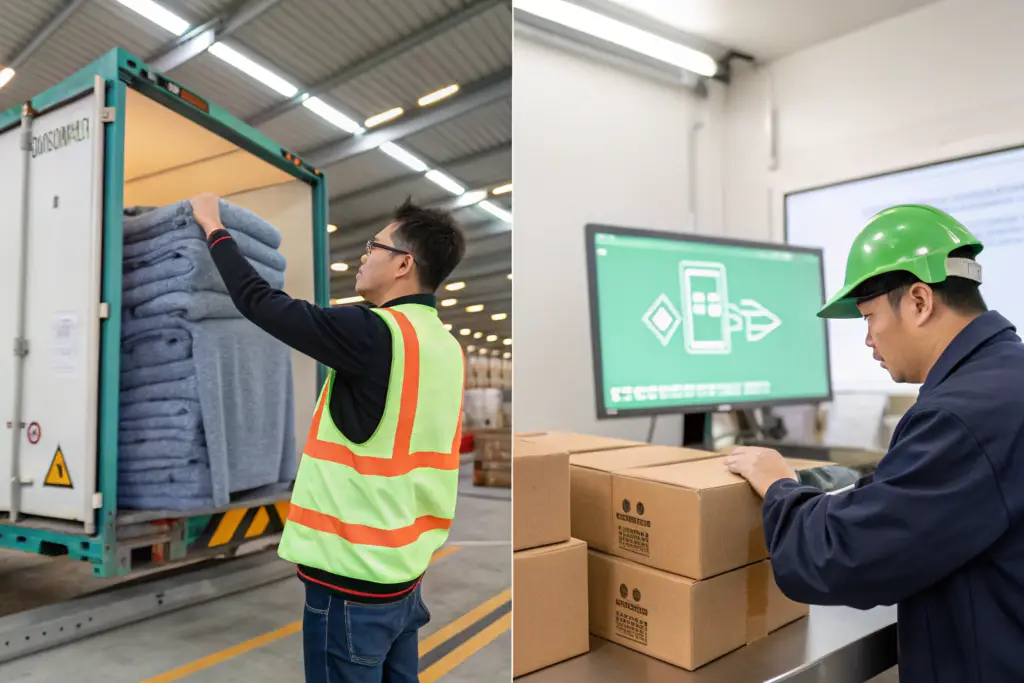
Last August, a distribution partner in Berlin called me in a state of panic. A shipment of 4,500 organic cotton henley shirts had been sitting in Hamburg customs for three weeks. The hold was not about the product quality. It was not about the duty payment. It was about a single missing line on the care label. The washing instructions were printed only in English, and the German customs officer requested a legally compliant German-language version. By the time we shipped corrected labels to Germany, had a third-party logistics provider relabel the entire shipment, and cleared the hold, the brand had missed its autumn catalog launch window entirely. The cost of the label reprint was $400. The cost of the delay in lost seasonal sales was over $60,000. This is a mistake that should never happen, yet I see some variation of it every single quarter.
The best practices for avoiding European customs delays center on three pillars: legally compliant fiber composition and care labeling in the official language of the destination country, accurate and complete commercial invoice descriptions that match the physical carton contents exactly, and packaging that meets the EU's Packaging and Packaging Waste Directive requirements for material marking and recycling identification. A shipment that arrives with these elements in place clears customs in hours, not weeks.
The European Union is not a single market when it comes to labeling enforcement. Each member state has its own language requirements, its own interpretation of the textile labeling regulation, and its own customs inspection culture. Germany and France are particularly strict. Sweden and the Netherlands tend to be more pragmatic. But the law is the law across the entire bloc, and ignorance of a language requirement is never an acceptable defense. Let me walk you through exactly what your labels must say, how your cartons must be marked, and what packaging materials to avoid entirely.
What Information Must a Garment Label Include to Satisfy EU Textile Regulations?
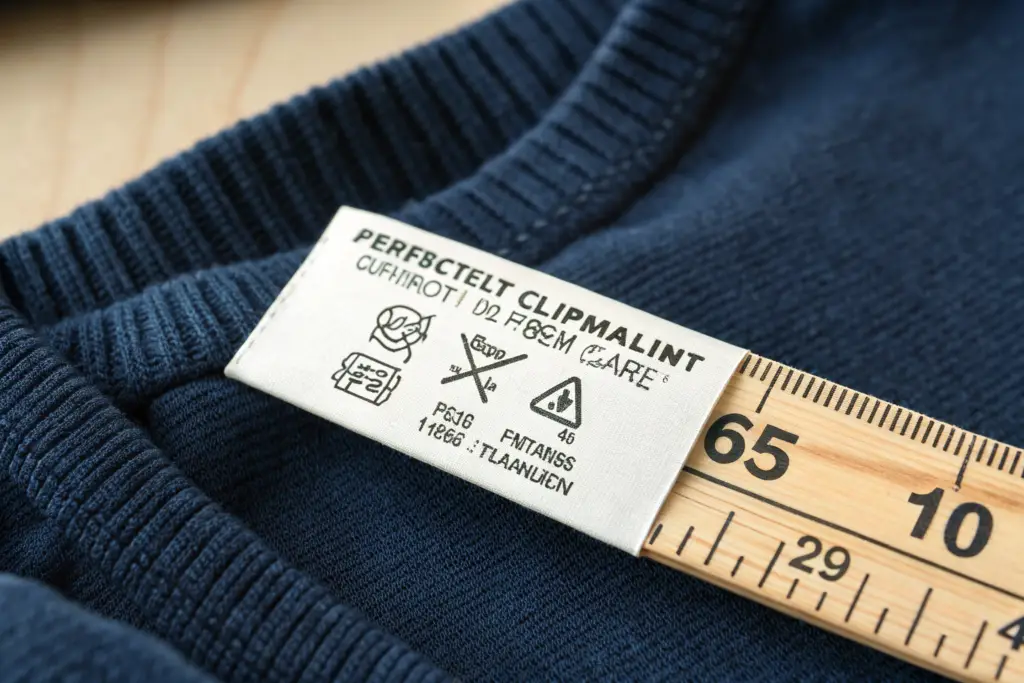
The EU Textile Fiber Names and Labelling Regulation is not optional. It is mandatory for every textile product sold in the European Economic Area. The label must state the fiber composition using only the standardized fiber names listed in Annex I of the regulation. You cannot call a fabric "vegan silk." If it is made from regenerated cellulose, you must label it as "viscose" or "lyocell" depending on the specific production process. If the product contains multiple fiber types, you must list them in descending order of weight percentage, and you must list every fiber that makes up at least 5% of the total. Any fiber below 5% can be grouped as "other fibers," but nothing can be omitted entirely.
A legally sufficient EU garment label includes the full fiber composition in descending weight order using standardized fiber names, a set of five care symbols conforming to ISO 3758, and the name or registered identification number of the manufacturer or importer established in the EU. This label must be durable, legible, and permanently attached to the garment. The information must appear in the official language or languages of the member state where the product is sold, which for most of Western Europe means the label must include the local language.
Let me break down the two most common areas where I see labels fail EU customs inspection. These are the spots where the officer's magnifying glass lands first.
Why Do Fiber Names Like "Bamboo" Get Flagged by EU Customs?
The word "bamboo" is a red flag to a European customs officer. Bamboo is a plant. It is not a textile fiber. The fiber made from bamboo pulp through a chemical process is viscose. A label that says "100% Bamboo" is technically inaccurate and will be rejected. The EU regulation explicitly requires that only the generic fiber name be used. The material's natural origin can be mentioned in marketing copy on a hangtag, but the sewn-in label must say "100% Viscose" with "made from bamboo" allowed only as supplementary text in a smaller font.
I had a buyer who imported a line of baby blankets labeled as "Bamboo Cotton Blend." The shipment was stopped in Rotterdam. The customs authority demanded that the labels be corrected to "70% Viscose, 30% Cotton" before the goods could be released. We had to airfreight corrected labels and pay for relabeling at the port, costing the brand a $2,800 penalty from their own logistics provider. I now keep a printed copy of the EU Textile Fiber Names list in our label approval file. Before we print a single care label for a European-bound order, our quality team cross-references the fiber name against the official EU register. This is a five-minute check that prevents a five-week delay.
How Should Care Symbols Be Sequenced on a European Label?
The care symbols are not decorative. They follow a strict, legally recognized sequence under ISO 3758, which is incorporated into European labeling norms. The five symbols must appear in a specific order: washing (a tub with water), bleaching (a triangle), drying (a square with a circle), ironing (an iron), and professional textile care (a circle, for dry cleaning). If the drying symbol appears before the bleaching symbol, the label is technically non-compliant, though enforcement on sequence alone is less common than on missing symbols entirely.
The real trap is using the wrong version of a symbol. A circle with a "P" inside means dry clean with perchloroethylene. A circle with an "F" means dry clean with petroleum solvents only. If your fabric requires the "F" solvent and your label shows a "P", the garment is mislabeled. If a consumer takes it to a dry cleaner who uses perc, and the fabric is damaged, the brand is liable. We use a standardized care symbol template sourced from GINETEX, the international association for textile care labeling. Their symbols are the definitive standard recognized across Europe. We never invent our own symbols or use aesthetic variations.
How to Structure a Commercial Invoice to Satisfy EU Customs Officials?
The commercial invoice is the single most important document in your shipping packet. It is not just a bill. It is a declaration of fact to the customs authority of an EU member state. When an officer in Rotterdam or Hamburg opens your shipment file, the first document they read is the commercial invoice. If the information is vague, incomplete, or inconsistent with the physical cartons, the shipment goes to the inspection bay. Once a shipment is physically inspected, the delay multiplies. An inspection that could have been avoided with a better invoice costs time and money that no one can recover.
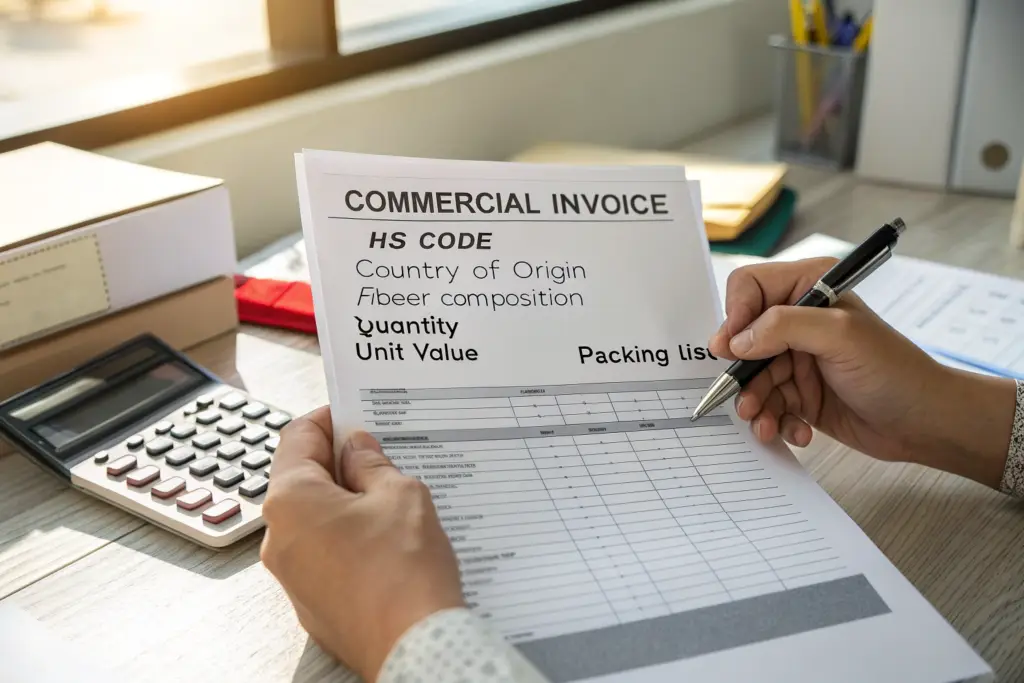
A customs-compliant commercial invoice for the EU must include a detailed, non-generic product description for each line item, the harmonized system code at the ten-digit level where applicable, the country of origin for each item, the unit value and total value in the currency of the transaction, the Incoterms rule governing the shipment, and the importer's EORI number. Descriptions like "Clothing" or "Garments" are insufficient. The invoice must state whether the goods are knitted or woven, the fiber composition, and the intended gender and age group.
This is not bureaucracy for its own sake. Customs uses this data to assess duties, to enforce quotas, and to verify that the goods are not counterfeit. Give them clean data, and they will give you a fast release. Here are the two invoice fields that cause the most trouble.
What Product Descriptions Trigger an Automatic Customs Hold?
"T-shirt" is not a description. It is a category. A proper description reads: "Men's short-sleeved T-shirt, 100% cotton, knitted, white, size M." A proper description for a jacket reads: "Women's insulated parka, outer shell 100% polyester woven, lining 100% nylon, filling 80% down 20% feather, black, size S."
I learned this lesson on a shipment of children's wear to France. We described the goods as "Kids' Garments" on the invoice. The French customs officer flagged it for a manual review. The officer then had to open cartons to determine whether the items were knitted or woven, what the fiber content was, and whether they were for boys or girls. This manual check took eleven days. We now use a standardized description template for every line item: Gender + Age Group + Garment Type + Sleeve Length + Fiber Composition + Fabric Construction + Color + Size. This string of descriptors answers every question a customs officer might ask before they ask it. I recommend exporters build their invoice directly from their tech pack specifications to ensure perfect consistency between the product and the document.
Why Must the HS Code Match the Physical Garment Exactly?
The Harmonized System code determines the duty rate. Knitted cotton T-shirts fall under HS code 6109.10. Woven cotton shirts fall under 6205.20. The duty rates are different. If your invoice declares a woven shirt under a knitted shirt HS code, even by honest mistake, you have misdeclared the goods. The customs authority can impose a penalty, and the importer may face a back-duty assessment.
I have seen a distributor try to save 2% duty by classifying a knitted sweater as a woven garment. They got caught during a random audit. The penalty was three times the duty underpaid, plus interest, plus a flag on their EORI number that triggered additional inspections on their next six shipments. The short-term savings evaporated instantly. We verify every HS code against the EU TARIC database before printing the invoice. TARIC is the official EU customs tariff database, and it is updated daily. An HS code that was correct last season may be split or reclassified this season. We check it every time.
What Packaging Materials Are Banned or Restricted in the EU?
The European Union is waging a war on packaging waste, and your garment shipment is on the front line. The Packaging and Packaging Waste Directive sets rules for what materials can enter the EU market, how they must be marked, and who is responsible for their end-of-life disposal. Certain materials that are standard in American and Asian packaging are now restricted or face high fees under Extended Producer Responsibility schemes. If you pack your garments the same way for Europe as you do for the United States, you are likely shipping non-compliant packaging that could be stopped at the border.
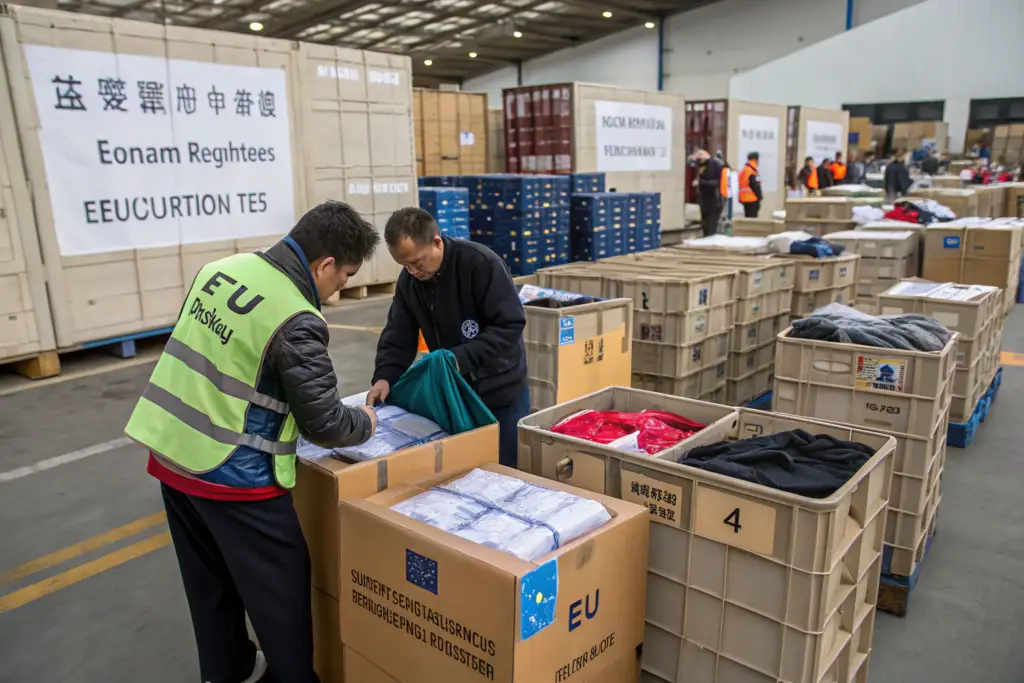
The key packaging restrictions for EU-bound garment shipments include a ban on single-use plastic polybags unless they are made from recycled content or marked for proper recycling, restrictions on expanded polystyrene void fill, and a requirement for all packaging components to be separable for recycling. Additionally, wood packaging materials like pallets and crates must be ISPM 15 certified to prove they have been heat-treated against pests. Non-compliance with any of these rules can result in the entire shipment being held, re-exported, or destroyed at the importer's expense.
The rules are evolving. The new EU Packaging and Packaging Waste Regulation, which will replace the current directive, is even stricter. Let me tell you what to use and what to avoid right now.
Are Plastic Polybags Still Allowed for Garment Protection?
Yes, polybags are still allowed, but the ground is shifting under our feet. Currently, polybags must be marked with the correct material identification code, typically "04" for LDPE, and the "Recycle" symbol. They must also carry a warning label about suffocation risk for children, printed in the language of the destination country. A plain, unmarked polybag will be flagged.
More importantly, several EU member states, including France and Spain, have already implemented plastic packaging taxes that apply to polybags. These taxes are the importer's responsibility, but the factory needs to provide accurate data on the weight and material type of every packaging component so the importer can file the tax correctly. We now offer a "European Packaging Specification" to all our EU-bound clients. This document lists every packaging component—polybag weight in grams, carton material, tape type, void fill material—so the importer has the data they need for their EPR registration. I recommend brands talk to their EU-based fulfillment partners about the specific packaging waste regulations in their target countries before finalizing packaging specifications.
What Void Fill and Carton Sealing Materials Should Be Avoided?
Expanded polystyrene peanuts are effectively banned. They cannot be recycled economically, and they break into microplastics. Using them for a shipment to Germany is asking for trouble. The same goes for PVC packing tape. PVC is a restricted plastic under EU chemical regulations, and some member states require it to be separated from cardboard cartons before recycling. Using PVC tape on a cardboard carton creates a mixed-material problem that can trigger a waste disposal fee for the importer.
We have switched entirely to paper-based void fill and kraft paper water-activated tape for our European shipments. The paper void fill is recyclable alongside the carton. The kraft tape bonds to the carton and can be recycled as a single unit. The cost difference is minimal—maybe $0.08 per carton—but the compliance benefit is enormous. I also recommend avoiding any black-colored plastic in packaging. Black plastic cannot be detected by the near-infrared sorting machines used in European recycling facilities. A black polybag, even if it is technically LDPE, will likely end up in landfill and may not satisfy the recyclability requirements of the new regulation.
How to Manage Multi-Language Labeling for a Pan-European Brand?
Selling across Europe means navigating a Tower of Babel of language requirements. France requires French. Germany requires German. Italy requires Italian. A brand that sells through a single e-commerce website shipping to all EU member states cannot simply put an English-only label on their garments and hope for the best. Even if the product is sold online, the labeling requirements of the consumer's member state apply at the point of delivery. This creates a logistical puzzle for a factory: how do you label a single production run for a market that speaks 24 official languages?
The most practical solution for pan-European labeling is a multi-language printed label or hangtag that includes the required information in all the languages of the target markets. If a single label becomes too large, a two-part system using a sewn-in permanent label for fiber composition in English and a removable multi-language hangtag for care instructions is an accepted alternative. The key is that the required information must be available to the consumer at the point of sale in the language of their country.
I have worked through several iterations of this problem with brands that sell from Stockholm to Lisbon. Here are the two most effective strategies we have developed.
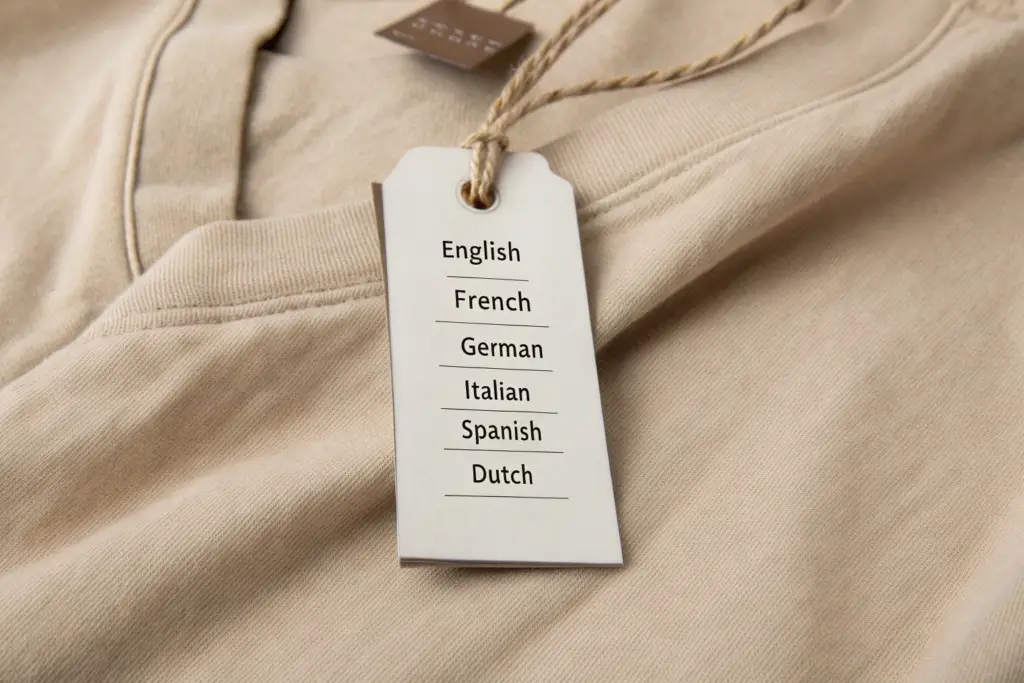
Is a Single Multi-Language Label Acceptable Across All EU States?
Yes, this is the cleanest solution. We print a single care and content label that contains the fiber composition and care symbols, followed by the translated washing instructions in English, French, German, Italian, and Spanish. These five languages cover the vast majority of Western European markets. If the brand also sells into Eastern Europe, we add Polish and possibly Romanian.
The label naturally becomes larger, which can be an aesthetic issue for lightweight, delicate garments. For a silk blouse or a fine-gauge knit, a large label can show through the fabric or irritate the skin. In these cases, we use a two-part approach. The sewn-in label carries only the fiber composition and care symbols, which are universally understood. The multi-language text is printed on a removable hangtag attached with a safety pin or a loop. This satisfies the legal requirement without compromising the garment's wearability. I have confirmed this approach with several EU-based compliance consultants, and it has never failed a customs check.
What Happens If the Label Language Does Not Match the Destination Country?
The shipment can be stopped. I described this at the start with the German example, but it applies across the board. A shipment labeled exclusively in English and destined for a French retailer is non-compliant with French consumer law. The French DGCCRF, their consumer protection authority, has the power to pull the product from shelves and fine the importer.
For a brand that sells direct-to-consumer across Europe, the safest path is the multi-language label. For a brand that sells wholesale to a single retailer in France, a French-only label is sufficient and often preferred by the retailer for shelf presentation. We produce both types of labels in-house at Shanghai Fumao. The important point is that the labeling language must be decided before production begins. We cannot print French labels after the fact if the original order specified English. The decision must be locked into the tech pack at the pre-production stage.
Conclusion
Customs delays are a self-inflicted wound. The officer in Hamburg is not looking for a reason to stop your shipment. They are looking for a reason to release it quickly. If your labels are compliant, your invoice is detailed and accurate, and your packaging materials are properly marked and free of restricted substances, the officer checks the boxes and moves on. The problem is that most exporters treat labeling and packaging as an afterthought, something to be thrown together during the final week of production. That is the mistake that costs brands their selling season.
At Shanghai Fumao, we have built a compliance-first workflow that integrates labeling and packaging specifications into the pre-production sample stage, not the shipping stage. We verify fiber names against the EU register before we print. We check HS codes against the TARIC database before we invoice. We maintain a library of compliant packaging materials that meet the latest EU directive requirements. We do this because we have learned that a perfectly sewn garment that sits in a customs warehouse is just as unsellable as one with a broken zipper.
If you are exporting apparel to Europe and you want a manufacturing partner who understands that a care label is as important as a collar seam, let us handle the details. You focus on design and sales. We will make sure the paperwork matches the product and the product clears the border. Reach out to our Business Director, Elaine, at elaine@fumaoclothing.com. Let us make your European expansion a logistics success story, not a customs detention case study.