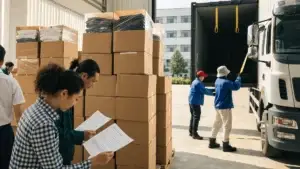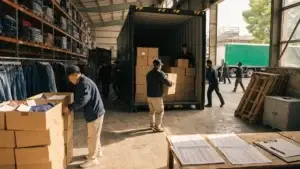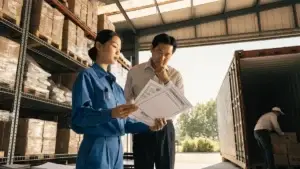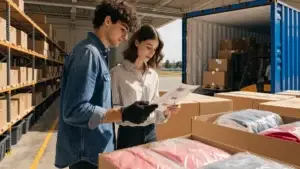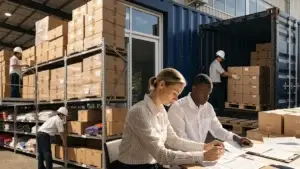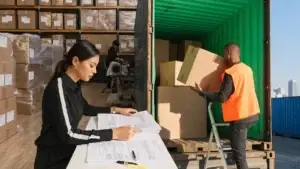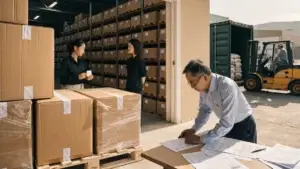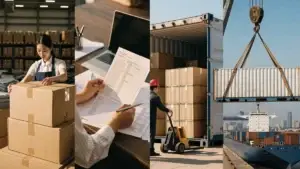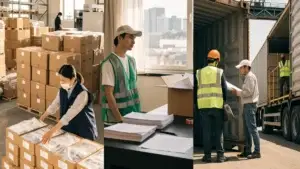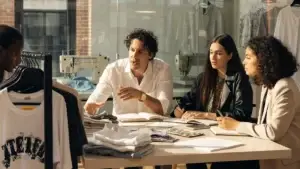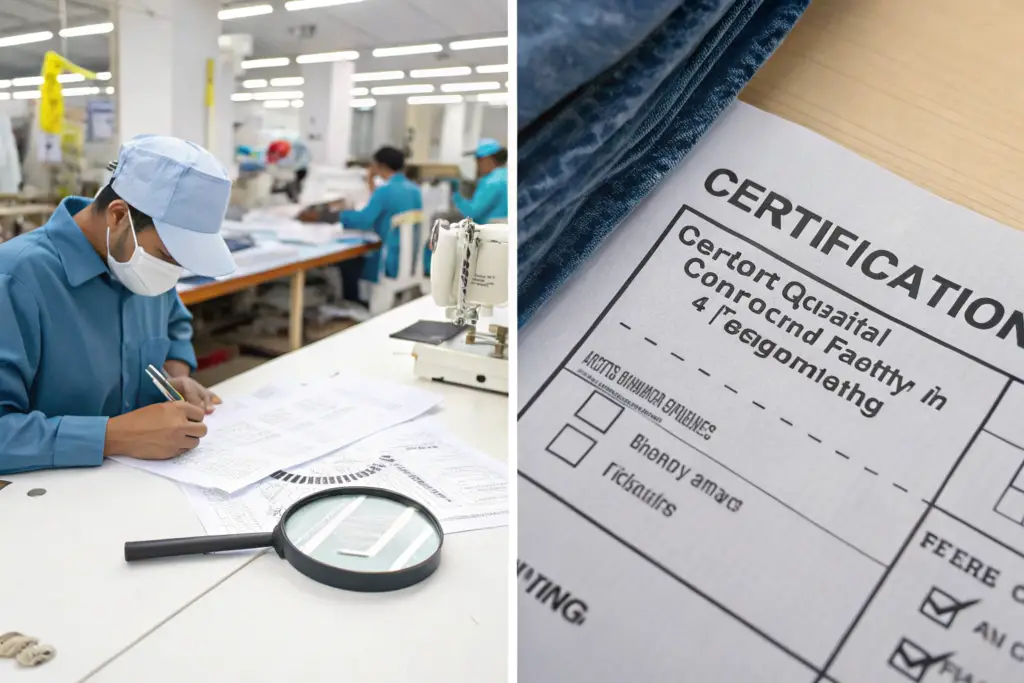
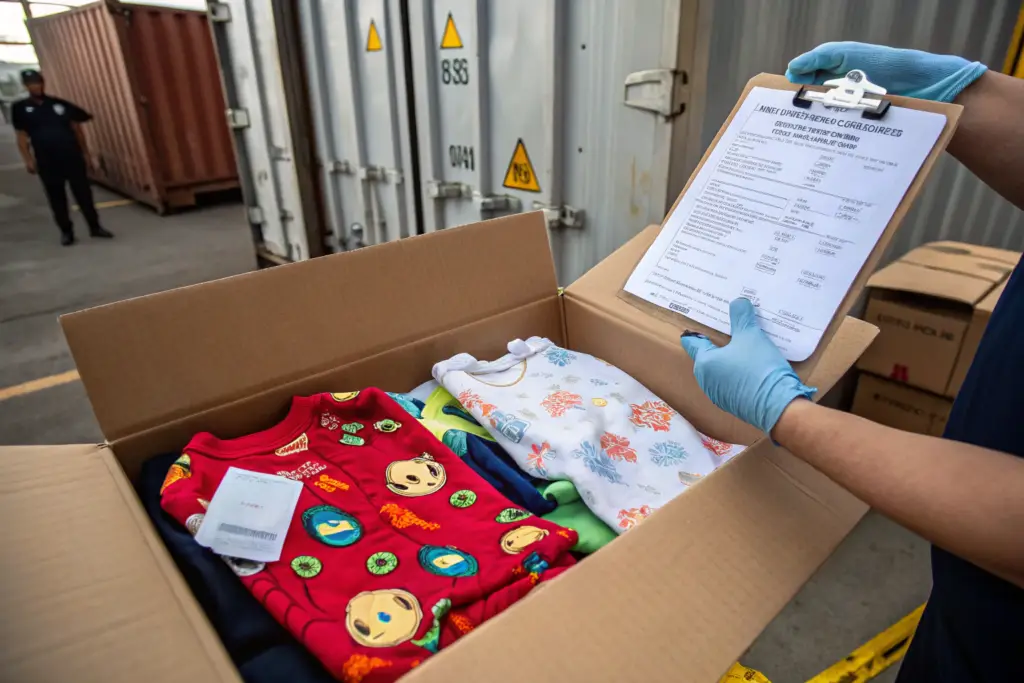
In January this year, I received a frantic email from a brand partner in Chicago. Their shipment of 8,000 children's pajamas had been flagged by U.S. Customs at the Port of Long Beach. The detention notice cited insufficient documentation for flammability compliance under 16 CFR Part 1615. The container sat for 42 days, racking up demurrage fees of $1,200 per day. By the time we resolved the issue, they had missed the Valentine's Day selling window entirely. The worst part? The pajamas were perfectly safe. The paperwork was wrong. I have seen this story play out too many times. A factory cuts corners on a certificate to save $300, and the brand loses $50,000 in missed sales. Certification is not a bureaucratic nuisance. It is the price of admission to the American market.
The most damaging certification pitfalls for Chinese garment exporters in 2026 involve regulatory misalignment between evolving U.S. state-level chemical laws, incomplete documentation for children's wear flammability, and relying on supplier-generated lab reports instead of accredited third-party testing. At Shanghai Fumao, we have learned that a single outdated test report or a missing amendment in a CPSIA tracking label triggers a supply chain stoppage that costs far more than the testing itself.
The regulatory landscape in 2026 is not static. States like California and New York are adding layers of chemical restrictions that go beyond federal CPSIA requirements. The exporter who treats compliance as a one-time checkbox will inevitably face a detention, a recall, or a canceled order. Let me break down exactly where the traps are hiding, so you can step around them.
How Are 2026 Chemical Regulations Changing for Textile Exports?
The biggest shift I am tracking in 2026 is the patchwork of state-level chemical bans. For years, we could rely on a single CPSIA compliance certificate to cover most requirements. That is no longer enough. California's Proposition 65 list keeps expanding. New York's proposed Fashion Sustainability and Social Accountability Act is pushing for disclosure of chemicals used in the entire supply chain. Minnesota and Washington have their own PFAS bans taking effect in apparel. If you are an exporter shipping to multiple U.S. states, you cannot assume that a federal standard covers you everywhere.
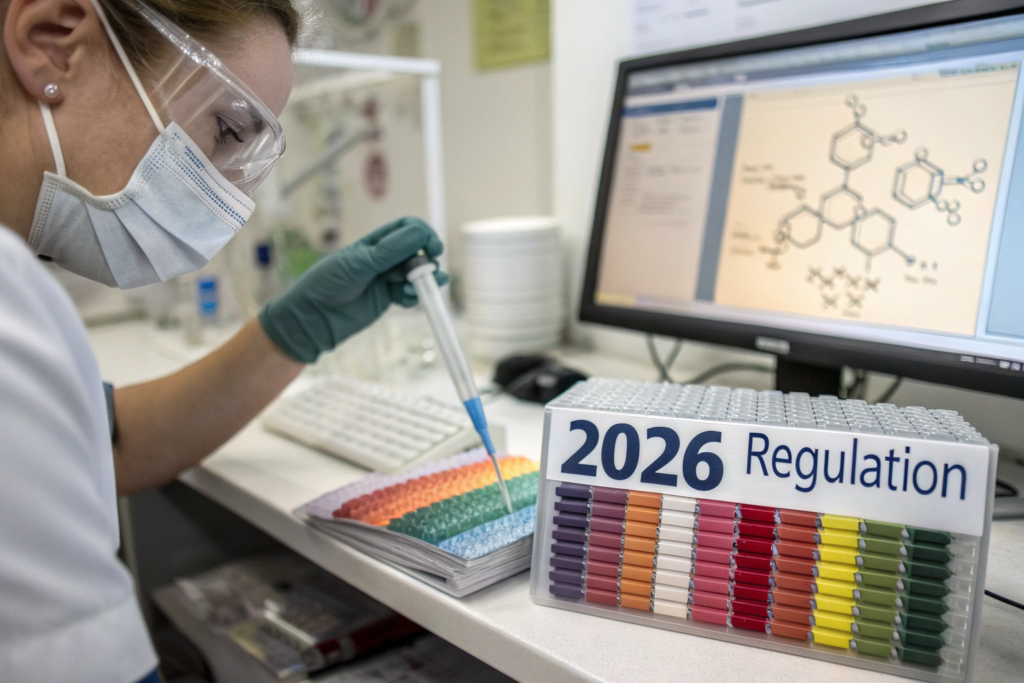
The 2026 regulatory environment demands that Chinese garment exporters treat chemical compliance as a moving target rather than a fixed standard. The pitfall lies in assuming last year's test report covers this year's production run, when in reality, substance restriction lists are updated quarterly. Brands are increasingly auditing their supply chains for restricted substances like PFAS in water-repellent outerwear and phthalates in plastisol prints, pushing the testing burden upstream to the factory.
At Shanghai Fumao, we now maintain a running list of restricted substances that updates every quarter, synced with the American Apparel & Footwear Association's bulletins. Here is how we navigate the two most volatile areas of chemical compliance right now.
Why Are PFAS Bans Catching Outerwear Manufacturers Off Guard?
PFAS, the "forever chemicals," have been used for decades to make water-repellent finishes on jackets and snow pants. In 2026, multiple U.S. states now explicitly ban intentionally added PFAS in apparel. A factory that still uses a standard C6 durable water repellent treatment without verifying it is PFAS-free is shipping a product that is technically illegal in California and New York.
I had a conversation with a raincoat buyer from Oregon last month. They needed a DWR finish that performs in heavy rain but contains zero PFAS. Our standard finish supplier initially quoted a C6 formula. We pushed back. We sourced a PFAS-free, plant-based DWR treatment instead. It cost 12% more per yard. But the alternative—shipping a jacket that gets flagged at a state border—would have been financially catastrophic. My advice to other exporters is to audit your chemical supplier now. Demand a certificate that explicitly states "PFAS-free" using the specific testing methodology of EPA Method 1633. A generic "non-toxic" label is not a legal defense.
How Does Proposition 65 Affect Button and Trim Sourcing?
This is the trap that hides in plain sight. You source a beautiful custom button from a small trim shop. It looks perfect. But it contains lead in the alloy, or cadmium in the plating. If that button ends up on a garment sold in California, you need a Prop 65 warning, or you face a citizen lawsuit.
We test every new metal trim component before ordering. Crystal embellishments are another danger zone. Some crystals contain lead oxide to increase their refractive index. A high-end women's blouse with sparkling crystal buttons can become a legal liability if those buttons exceed the Prop 65 safe harbor level for lead. I have switched our trim procurement to suppliers who provide a Prop 65 compliance certificate for every lot number. This is not optional anymore. The lawyers who file Prop 65 actions actively scan retail shelves looking for non-compliant hardware. The OEKO-TEX Standard 100 certification is a helpful baseline, but it does not fully substitute for a dedicated heavy metals test when you are dealing with metal trims and rhinestones.
Why Do Children's Wear Certificates Still Get Rejected at U.S. Borders?
Children's wear is the highest-risk category for certification failures. The regulations are not suggestions. They are federal law. When a shipment of kids' apparel arrives at a U.S. port, the Consumer Product Safety Commission has the authority to seize and destroy non-compliant goods. I have seen factories try to ship sleepwear without the proper flammability test because "the fabric supplier said it was compliant." That statement means nothing to a CBP officer holding a detention notice.
The most frequent children's wear certification pitfall in 2026 is the mismatch between the product's intended use and the testing protocol applied to it. A loose-fitting cotton romper requires a totally different flammability standard than a snug-fitting fleece pajama set. Exporters often submit a test report that covers only the fiber content but not the specific construction and end-use category mandated by 16 CFR Part 1615 or 1616. This leads to an automatic "hold" and a lengthy re-test process at the importer's expense.
The rules are complex, but the mistakes are predictable. Here are the two places where the breakdown almost always happens.
What Is the Difference Between 16 CFR 1610 and 1615 for Sleepwear?
This is the single most expensive misunderstanding in children's wear exporting. 16 CFR Part 1610 is the standard for general wearing apparel flammability. It applies to everyday playwear, like a cotton T-shirt or denim jeans. 16 CFR Parts 1615 and 1616 are the strict flammability standards for children's sleepwear. The test is far more rigorous. The fabric must self-extinguish within a specific time limit when exposed to a flame.
If you label a garment as "pajamas" but test it only to the 1610 standard, you have a non-compliant product. It will be stopped. I recall a shipment of plush fleece sleep sacks for infants. The factory tested the fabric to 1610, which it passed easily because fleece doesn't easily ignite. But a sleep sack is sleepwear. Under 1615, the same fleece required a chemical flame retardant treatment to pass, because fleece burns with a rapid surface flash. The factory owner did not know the difference. We had to air-freight 500 replacement units with the correct treatment, a $23,000 mistake. Always determine the "intended use" before choosing the flammability test. The CPSC website provides clear guidance on this classification, and I consult it before finalizing any children's wear tech pack.
How Do Tracking Label Errors Trigger Mass Recalls?
A tracking label is a small piece of printed fabric, but it carries huge legal weight. The Consumer Product Safety Improvement Act requires that all children's products carry a permanent tracking label with specific information: the manufacturer's name, the location and date of production, and a batch number. I have seen entire shipments rejected because the tracking label was missing the quarter of production, or the factory address was incomplete.
A buyer once called me in a panic. His previous supplier in another country had printed tracking labels that said only "Made in China" with a style number. No specific factory name. No date code. The U.S. retailer flagged it during a compliance audit. The entire order of 15,000 units had to be unpacked, relabeled by a third-party logistics company in New Jersey, and repacked. That cost $18,000 plus a two-week delay. At Shanghai Fumao, our tracking label template includes our full legal entity name, "Shanghai Fumao Garment Co., Ltd.", the city and country of finishing, and a date code in the format "MFG: 2026-Q2." We cross-check every label proof against a CPSIA compliance checklist before printing. It takes five extra minutes per style. It prevents weeks of chaos.
Are Your Fabric Testing Reports Actually Valid in the U.S. Market?
I learned this lesson in a conference room in Dallas in 2020. A retail buyer slid a test report across the table. "Your fabric failed the fiber content analysis," she said. I looked at the report. It was from a lab I had never heard of, with an accreditation body that turned out to be a shell organization. The test was garbage. The fabric was 100% cotton as claimed, but we had to re-test at an accredited lab—on our dime—to prove it. A test report is only as good as the credibility of the entity that issued it. In the U.S. market, a report from an uncertified lab is worse than no report at all. It gives a false sense of security.
An invalid testing report in 2026 typically stems from one of two root causes: the testing lab lacks ISO/IEC 17025 accreditation recognized by a U.S. signatory body, or the test method cited does not match the specific ASTM or AATCC standard required by the retailer. U.S. brands and customs officials will reject any document that does not show a clear chain of accreditation leading back to a recognized national body like A2LA or equivalent under ILAC mutual recognition.
Let me explain exactly how to spot a fake report and how to build a testing protocol that stands up in any U.S. court or customs office.
How Can You Verify a Testing Lab's ISO 17025 Accreditation?
This is a simple verification step that most buyers skip. A legitimate testing lab will list its ISO/IEC 17025 accreditation certificate number on its website and on every test report. You can take that number and look it up on the accrediting body's database. For labs testing products bound for the U.S., look for accreditation from A2LA, Perry Johnson Laboratory Accreditation, or another body that is a signatory to the ILAC Mutual Recognition Arrangement.
I will not name the bad actors, but I have seen labs in Asia offer a full "fiber content test" for $15. A real quantitative fiber analysis from an accredited lab costs $80 to $150. If the price is too good to be true, the certificate is probably worthless. I send all our critical-path testing to labs like Intertek or Bureau Veritas that have globally recognized accreditations. When a U.S. buyer questions a result, I can forward them the report and say, "Look up the accreditation number. It is valid." That moment of verification saves hours of back-and-forth and builds immediate trust. For smaller brands, I recommend budgeting for at least one independent third-party test per season, even if your factory provides an in-house report.
What Specific ASTM Standards Matter for Garment Labeling?
Fiber content labeling in the U.S. is governed by the Textile Fiber Products Identification Act. The test method behind it is ASTM D629 for quantitative fiber analysis. If a lab tests your fabric using an ISO method, and you try to use that to justify a "100% Cotton" label, a U.S. customs official can reject it because the method does not precisely align with the U.S. regulatory requirement.
I keep a matrix for our production team. Here is a simplified version of what we use:
| Test Category | Required ASTM/AATCC Standard | Common Invalid Substitute |
|---|---|---|
| Fiber Content Analysis | ASTM D629 | ISO 1833 (without correlation data) |
| Colorfastness to Laundering | AATCC Test Method 61 | ISO 105-C06 (must show equivalence) |
| Dimensional Stability | AATCC Test Method 135 | ISO 5077 (different marking/grid) |
| Flammability (General) | 16 CFR Part 1610 / ASTM D1230 | Any non-equivalent ISO standard |
The table looks technical. It is supposed to be. When I sign a contract with a new fabric supplier, I specify the exact test method in the purchase order. "Test to AATCC 135, not ISO." This closes the loophole that dishonest suppliers use to present a passing result from a weaker test. The ASTM International website is my reference point for any textile testing dispute.
How to Avoid Certificate Fraud from Overseas Suppliers?
Certificate fraud is a cancer in the garment export industry. I have personally handled three cases in the last two years where a factory presented a GOTS organic cotton certificate that was either entirely forged or had been suspended months earlier without the brand's knowledge. The fraudsters count on the complexity of the system. They know most buyers will look at a PDF of a certificate, see a fancy logo, and approve the shipment. By the time the brand discovers the fabric is not organic, the offending factory has already been paid and the garment is on a clearance rack.
The most effective defense against certificate fraud in 2026 is a verification-first workflow, where every certificate is validated on the issuing body's public registry before cutting begins. Buyers and reputable intermediaries must also be aware of "brokered certificates," where a legitimate certificate for one factory is illegally copied and presented by a completely different, uncertified manufacturer. The chain of custody from the certifier's database to the physical shipping label must be unbroken.
This is personal for me. A fake certificate does not just cheat a buyer. It cheats every factory that invests real money in real compliance. Here is how we protect the supply chain.
How to Spot a Forged Organic or Recycled Fiber Certificate?
The Global Organic Textile Standard and the Global Recycled Standard both maintain free, public databases. You can go to the GOTS public database right now and search for a supplier's name. If they are not listed, their certificate is not real. It is that simple.
I had a fabric agent offer me a deal on "GOTS-certified" organic cotton twill last year. The price was 15% below market. I asked for the scope certificate number. The number he sent had an extra digit. I entered it into the GOTS database. Nothing. I pressed him. He admitted the certificate was his "cousin's factory" certificate, and he was just brokering the fabric. That fabric was likely conventionally grown cotton, sprayed with pesticides, being sold as organic. If we had used it for a brand claiming organic status, and the brand got audited, they could have faced a lawsuit for false advertising. Always check the certificate number online. Do not trust a PDF alone.
Why Should Buyers Demand an "Audit Trail" for High-Value Claims?
A certificate shows a snapshot. An audit trail shows the history. If a factory claims their recycled polyester comes from post-consumer plastic bottles, I want to see the transaction certificate that traces the raw material from the recycling facility to the yarn spinner to the fabric mill.
This is the principle behind the Recycled Claim Standard. It requires each step in the chain to be independently verified. I had a U.S. brand that markets "ocean-bound plastic" as their core narrative. We sourced their zipper tapes from a supplier that provided an RCS transaction certificate. I visited the supplier's factory personally during a sourcing trip in 2024. I saw the bales of crushed bottles with my own eyes. That visit cost me a flight and two days. But when the brand's marketing team asked for proof of the ocean plastic story, I could give them not just a certificate, but photos, names, and a clear chain of custody. That level of diligence separates a commodity supplier from a true partner.
Conclusion
The most expensive mistake in garment exporting is assuming a certificate is a permanent, static asset. It is not. Certifications expire. Regulations change. Testing labs lose their accreditation. A valid 2025 test report does not clear a 2026 shipment. The U.S. market is becoming more regulated, not less, and the enforcement mechanisms at the border are getting smarter every year. The exporters who survive and thrive in 2026 will be the ones who treat compliance as an ongoing operational function, not a one-time hurdle to clear during onboarding.
I have stood in a warehouse next to a pallet of detained goods, and I can tell you that the feeling of helplessness is not something I want any of my brand partners to experience. That is why Shanghai Fumao invests heavily in staying ahead of the regulatory curve. We maintain a dedicated compliance calendar, a vetted network of accredited testing labs, and a zero-tolerance policy for suppliers who try to pass off questionable paperwork. We want you to sell your products with confidence, not with your legal team on speed dial.
If the alphabet soup of PFAS, GOTS, CPSIA, and Prop 65 gives you a headache, let us handle the translation. We can walk you through exactly what your product needs, which tests are essential, and which are just noise. Reach out to our Business Director, Elaine, at elaine@fumaoclothing.com. Let's make sure your next shipment clears customs without a single hold.