You receive a compliance certificate from a potential supplier. It has the right logo. The format looks correct. The signature appears genuine. You file it in your vendor approval package and move forward with the order. Three months later, a shipment is detained at the port because the certificate was a sophisticated forgery. The factory does not exist at the registered address. The audit report belongs to a different facility with a digitally altered name. You have lost your inventory, your launch timeline, and potentially your relationship with a retail partner who was counting on that delivery. The certificate you trusted was a piece of paper designed to deceive you.
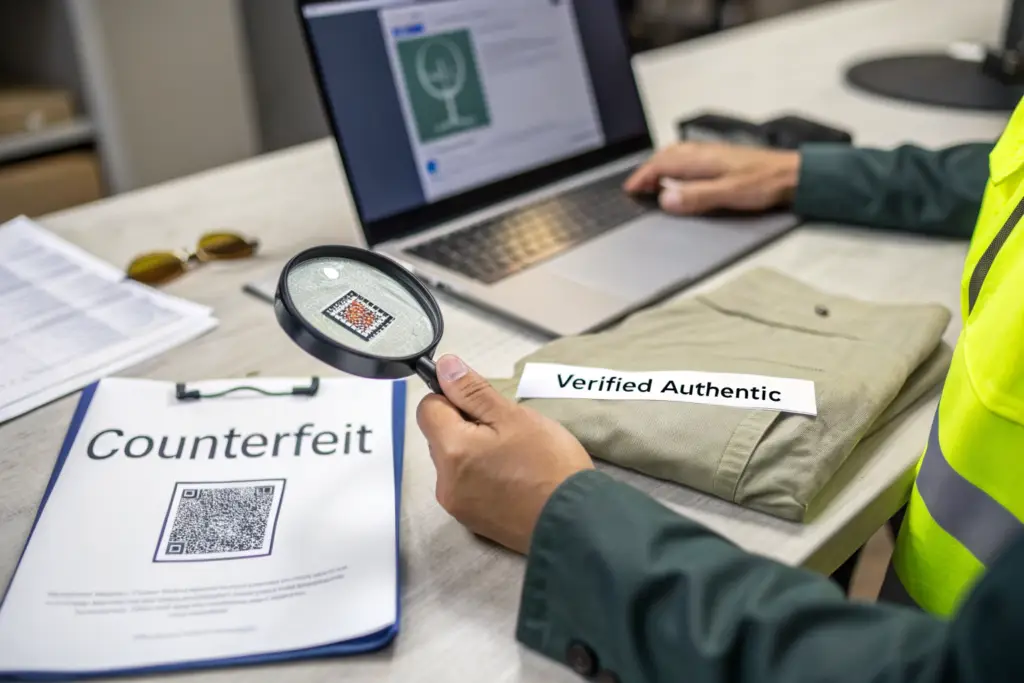
Verifying garment certificates in an environment where falsification is common requires a systematic, multi-layered approach that never relies on a single document. The verification process has four essential layers: database validation, where the certificate number is cross-checked against the issuing body's live online registry; direct auditor confirmation, where you independently contact the certification body or auditor to confirm the document's authenticity; factory address triangulation, where the address on the certificate is verified through live video, satellite imagery, and corporate records; and document forensics, where the PDF or physical document is examined for metadata anomalies, editing artifacts, and formatting inconsistencies. A certificate that passes all four layers is trustworthy. A certificate that fails any layer is a red flag that demands investigation before any order is placed.
At Shanghai Fumao, we encourage every potential partner to verify our certificates using these exact methods. We provide the certificate numbers, the database links, and the auditor contact information proactively because we know that a buyer who verifies independently is a buyer who will trust the partnership. Let me walk you through each layer of verification in detail, so you can protect your brand from the certificate fraud that has burned so many apparel importers.
What Is the First Layer of Certificate Verification: Live Database Cross-Checking?
A PDF certificate is not proof of compliance. It is a claim of compliance that must be verified against an independent source. Every legitimate certification body—BSCI, WRAP, GOTS, OEKO-TEX, SGS, Intertek, Bureau Veritas—maintains a public online database where certificate numbers can be checked. If a supplier provides a certificate without a verifiable identification number, or if the number does not appear in the issuing body's database, the certificate is not trustworthy. This first layer of verification takes five minutes and eliminates the majority of falsified documents.
The live database cross-check is the single most effective verification step because it bypasses the document entirely and goes directly to the source. You are not checking whether the certificate looks authentic. You are checking whether the certification body itself confirms that the certificate exists and is valid. A supplier who refuses to provide the certificate number, or whose certificate number does not return a matching result in the official database, is presenting fraudulent documentation regardless of how convincing the PDF looks.
Which Certification Bodies Maintain Public Verification Databases?
Every major apparel certification body provides a public database for certificate verification. The amfori BSCI platform allows you to search by DBID number to confirm audit status, date, validity period, and facility rating. The WRAP compliance directory allows you to search by certificate number to confirm certification status and scope. The GOTS (Global Organic Textile Standard) public database allows you to verify organic certification by license number. The OEKO-TEX label check allows you to verify product certification by certificate number.
The verification process is consistent across all platforms. Obtain the certificate number from the supplier. Navigate to the official certification body's website—not a link provided by the supplier, which could itself be fake. Enter the certificate number into the public search tool. Verify that the facility name, address, and scope of certification on the database result match the information on the certificate the supplier provided. If the database returns no result, the certificate is fake. If the database returns a result for a different facility, the certificate has been stolen and altered. If the database shows an expired or suspended status, the certificate is no longer valid. This certification database verification check should be performed for every certificate a supplier provides, no exceptions.
How Do You Avoid Fake Verification Links Provided by Fraudulent Suppliers?
A sophisticated fraudster will not simply send a fake certificate. They will also send a link to a fake verification website that is designed to look like the official certification body's platform. You enter the certificate number on the fake site, it returns a "valid" result, and you believe the certificate is genuine. The entire verification experience has been simulated.
Never use a verification link provided by the supplier. Navigate to the certification body's website independently through a search engine or by typing the known URL directly into your browser. Find the certificate verification tool on the official website. Enter the certificate number there. If you are unsure of the correct URL for a certification body's database, contact the certification body directly through their publicly listed contact information—not through contact details provided by the supplier. This independent certificate verification process discipline prevents the most common form of verification fraud.
How Do You Independently Confirm Certificate Authenticity with the Auditor?
A database check confirms that a certificate number exists and matches the facility name. It does not confirm that the PDF document the supplier sent you is an accurate representation of the audit findings. A fraudulent supplier could obtain a legitimate certificate number from a genuine facility and attach it to a PDF that misrepresents the audit results. Direct confirmation with the auditor or certification body closes this gap by verifying the content of the document, not just the existence of the certificate number.
Direct auditor confirmation involves contacting the certification body or the auditing firm that conducted the assessment and requesting independent verification of the certificate details. You are not asking the supplier to facilitate this contact. You are initiating it yourself, through publicly available contact information. Ask the auditor to confirm the facility name, address, audit date, audit scope, and overall rating. If the auditor's confirmation matches the certificate, the document is authentic. If the auditor cannot locate the certificate, or if the details differ, the document has been altered.
What Contact Information Should You Use to Reach the Auditor?
A fraudulent supplier who provides the "auditor's contact information" may be providing the phone number of an accomplice. You call the number, a person claiming to be the auditor confirms the certificate, and you are deceived. The contact information for the auditor must be sourced independently.
Locate the certification body's official website through an independent search. Find their contact page, regional office directory, or certificate verification contact. Call the main switchboard and ask to be connected to the department that handles certificate verification. If the certificate lists a specific auditing firm, locate that firm's official website and contact them through their publicly listed channels. Do not use any contact information provided by the supplier. This independent auditor contact protocol ensures that you are speaking with the genuine certification body, not an impersonator arranged by the supplier.
What Questions Should You Ask the Auditor to Verify Document Integrity?
A simple "Is this certificate valid?" call may not uncover a situation where a legitimate certificate number has been attached to an altered document. Ask specific questions that require the auditor to reference the original report on file and compare it to the document you received.
Ask: "Can you confirm the exact audit date and the audit scope? What was the overall rating or grade? Were there any non-conformities identified, and if so, what were they? Is the certificate currently valid and in good standing?" Compare the auditor's answers to the information on the certificate in your possession. If the certificate you received shows a clean audit with no non-conformities, but the auditor mentions a minor non-conformity that was recorded, the document has been altered. A genuine certificate reflects the audit findings accurately. An altered certificate hides or changes information. This certificate integrity verification through auditor contact is an advanced verification step that catches sophisticated document fraud.
How Does Factory Address Triangulation Expose Nonexistent Facilities?
A certificate lists a factory address. A fraudulent supplier can copy a legitimate address from a real factory, or register a shell company at a virtual office address. The address on the certificate is a claim that must be verified independently. A factory that physically exists at the registered address and operates the production lines claimed on the certificate is a genuine manufacturer. An address that leads to a virtual office, a residential apartment, or a completely different facility is evidence of fraud.
Factory address triangulation uses three independent verification methods to confirm the facility exists at the claimed location: live video verification where the supplier walks outside the building and shows the street sign and surrounding landmarks in real-time, satellite imagery comparison where the facility shown on video is cross-referenced with the satellite view of the address, and corporate registry confirmation where the business registration records are checked to confirm the company is registered at that address for manufacturing activities, not just as a trading or consulting entity.
How Do You Conduct a Live Video Address Verification?
Request a live video call with the supplier. Do not accept a pre-recorded video. Ask the person on the call to walk outside the factory building and show you the street sign, the building number, and surrounding landmarks. Ask them to pan the camera slowly so you can observe the environment. Ask them to show you the entrance to the production floor from the outside. If the address on the certificate is "No. 88, Changjiang Road, Shanghai," the street sign in the video must read "Changjiang Road" and the building number must be visible as 88.
During this video call, cross-reference what you see with a satellite map of the address. The street layout, the building shape, and the surrounding landmarks should match. If the supplier makes excuses—"the factory is in a remote area with poor signal," "we have a security policy against showing the exterior," "it is raining today"—insist on a follow-up call when conditions allow. A legitimate factory can always show its exterior. A fraudulent operation cannot show what does not exist. This live video factory verification is a powerful tool that remote buyers can use to confirm physical presence without traveling.
What Corporate Registry Checks Confirm Manufacturing Activity?
A business license confirms that a company is legally registered. It does not confirm that the company engages in manufacturing. Many trading companies register with business scopes that include "manufacturing" in their description but do not own or operate any production facility. A deeper corporate registry check reveals the company's registered business scope, registered capital, and registration history.
In China, the National Enterprise Credit Information Publicity System allows public searching of company registration details. Check the supplier's registered business scope. Does it specifically include "manufacturing" or "production" as a primary activity, or does it list "trading" and "consulting" with manufacturing mentioned as a secondary activity? Check the registered capital. A genuine factory typically has significant registered capital reflecting investment in physical assets. A trading company with minimal registered capital claiming to operate a large factory is a red flag. This Chinese corporate registry verification adds a layer of legal entity verification that complements the physical address verification.
What Document Forensic Techniques Detect Altered Certificates?
A well-made fake certificate may pass a visual inspection. The logos look correct. The formatting appears professional. The signatures seem genuine. But document forensics—examining the metadata, the digital artifacts, and the physical characteristics of the document—can reveal alterations that the naked eye misses. These techniques are not difficult to apply, and they catch a significant percentage of falsified documents that survive the database and auditor checks.
Document forensic verification examines three aspects of the certificate: metadata analysis, where the PDF or image file properties are checked for creation date, modification history, and author information that should match the certification body; visual artifact detection, where the document is examined at high magnification for font inconsistencies, alignment errors, and image compression artifacts that indicate editing; and security feature verification, where genuine security features such as watermarks, holograms, microtext, and QR codes are checked for authenticity. A document that fails any of these forensic checks has been altered, even if it looks convincing at normal viewing size.
How Do You Check PDF Metadata for Signs of Alteration?
Every PDF file contains metadata—information about the document's creation and modification history. A genuine certificate from a certification body will have metadata showing the certification body as the author, a creation date consistent with the audit date, and a PDF producer consistent with the certification body's standard document systems.
Download the PDF file. In Adobe Acrobat, go to File > Properties. Check the Author field. Does it show the certification body's name, or does it show an individual's name or a generic computer name? Check the Created and Modified dates. Do they align with the certificate's issue date? Check the PDF Producer. Is it a standard enterprise PDF tool, or is it a consumer PDF editor that could indicate a document created by an individual rather than an institution? If the author is "User" or an unfamiliar name, if the creation date is significantly later than the certificate's issue date, or if the PDF producer suggests personal editing software, the document warrants deeper investigation. This PDF metadata verification for certificates is a simple check that reveals whether the document originated from the claimed source.
What Visual Artifacts Reveal a Photoshopped Certificate?
When a genuine certificate is altered—a facility name changed, a date modified, a rating adjusted—the editing leaves visual traces. Fonts may not match exactly between the original and altered text. Text alignment may shift slightly. Image compression around edited areas may differ from the rest of the document. A logo that was copied and pasted may have a subtly different resolution or color profile.
Open the certificate at high magnification, 400% or more. Examine the areas where text appears. Are all fonts identical in weight, spacing, and rendering? Are text baselines perfectly aligned, or does the altered text sit slightly higher or lower? Examine areas around logos and stamps. Are there compression artifacts—blocky pixelation—that differ from the rest of the document? Look for subtle rectangular regions where the background color or texture is slightly different, indicating a pasted element. These document forensics for certificate verification techniques require no specialized equipment, just careful observation. A document with visual editing artifacts is not trustworthy, regardless of what the database check shows.
Conclusion
Verifying garment certificates in an environment where falsification is common is not about becoming a forensic document expert. It is about adopting a systematic, multi-layered verification process that never relies on a single source of confirmation. The certificate PDF is not proof. It is a starting point for verification. The database check confirms the certificate number exists. The auditor call confirms the content is accurate. The address triangulation confirms the facility is real. The document forensics confirm the PDF has not been altered. A certificate that passes all four layers is trustworthy. A supplier who resists any layer of verification is not.
At Shanghai Fumao, we do not ask potential partners to trust our certificates. We provide the certificate numbers, the database links, the auditor contact information, and the live video access to our facility that enables independent verification. We do this because we know that trust must be earned through transparency, not assumed through documentation. Every certificate on our wall and in our files can be verified independently, by you, through the methods described in this article.
If you have been burned by falsified certificates in the past, or if you want to establish a verification protocol that protects your brand before you engage with new suppliers, we encourage you to apply these methods to every factory you evaluate, including us. Verify our BSCI audit on the amfori platform. Confirm our WRAP certification on the WRAP directory. Call our auditors independently. Request a live video walkthrough of our facility showing the street sign. Check our corporate registration. Do all of it. When you are satisfied that our certificates are authentic, contact our Business Director, Elaine, at elaine@fumaoclothing.com. Let us build a partnership based on verified trust, not unverified documents.