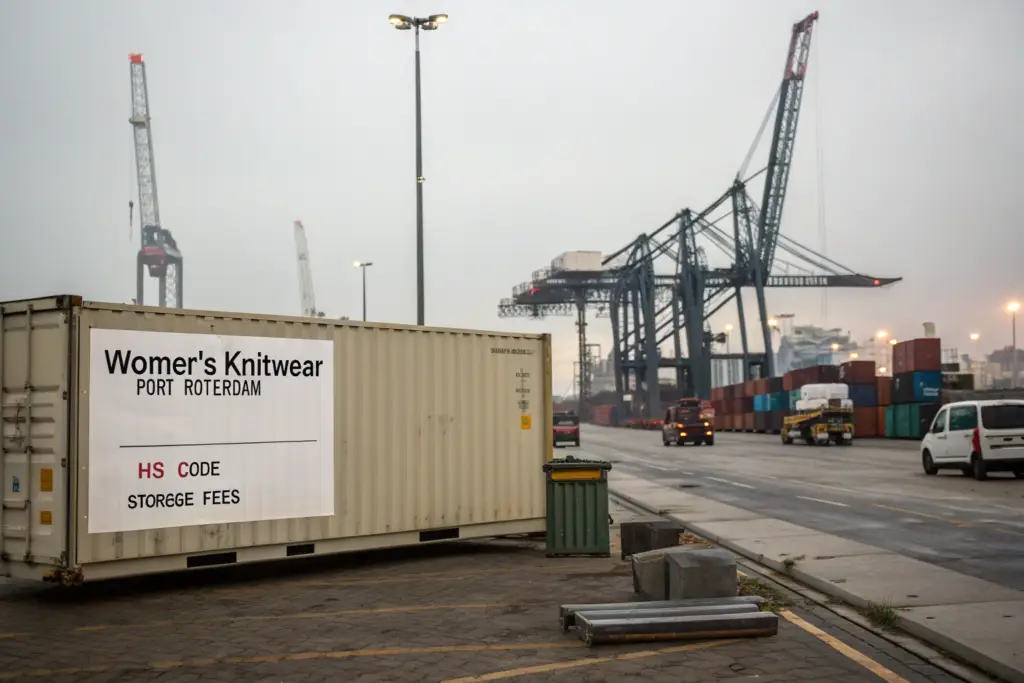
Your container of women's knitwear arrives at the Port of Rotterdam. You receive an email from the customs broker you hired: the HS code on the commercial invoice does not match the fabric composition, and customs has flagged the shipment for inspection. Storage fees begin accruing at €150 per day. Your freight forwarder is unresponsive. The factory in Shanghai, operating on FOB terms, tells you the shipment is no longer their responsibility. You are alone, in a different time zone, managing a customs problem you did not create, paying fees you did not budget, while your retail launch date slips further out of reach. This is the FOB experience that European apparel importers are increasingly unwilling to accept.
DDP (Delivered Duty Paid) is becoming the preferred shipping term for European apparel importers in 2026 because it transfers the entire logistics and customs compliance burden from the importer to the manufacturer. Under DDP, the factory quotes a single landed cost that includes the garment, export clearance, ocean or air freight, import duties, VAT, customs brokerage, and final delivery to the importer's specified European address. The importer receives one invoice, one point of accountability, and absolute cost certainty. In an era of increasing customs complexity, environmental documentation requirements, and supply chain volatility, DDP's value proposition—simplicity, certainty, and reduced administrative burden—has become compelling enough to overcome its slightly higher headline cost.
At Shanghai Fumao, we have seen our European DDP volume grow substantially as importers across the continent shift away from FOB and EXW terms. The European market, with its multiple countries, multiple languages, and increasingly stringent regulatory environment, is the market where DDP delivers the greatest value. Let me explain the specific forces driving this shift, how DDP solves the unique challenges of European apparel importing, and why this trend is likely to accelerate through 2027 and beyond.
What Regulatory Burdens Are Pushing European Importers Toward DDP?
The European Union is the world's most regulated apparel import market, and the regulatory burden is increasing, not decreasing. Every new regulation adds documentation requirements, compliance verification steps, and financial obligations for the importer. For a European apparel brand or distributor, staying current with evolving regulations across the EU plus the UK, managing compliance across multiple product categories, and handling the associated administrative work is consuming an increasing share of operational resources. DDP offers an escape from this complexity spiral.
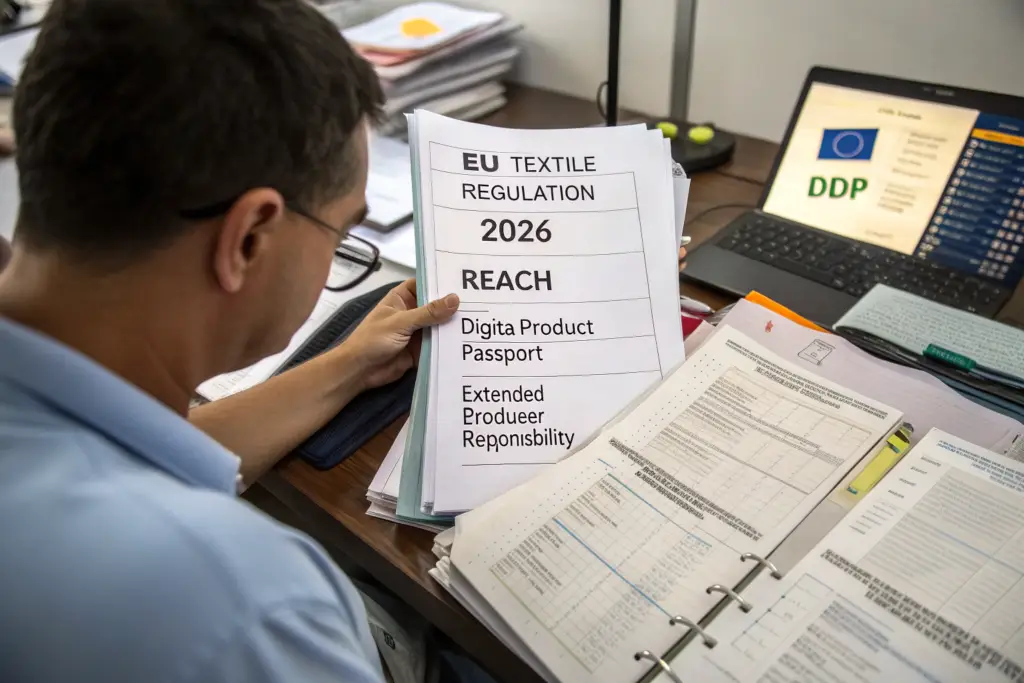
The regulatory burdens pushing European importers toward DDP include the upcoming Digital Product Passport requirement for textiles, REACH chemical compliance documentation, Extended Producer Responsibility fees being implemented in multiple EU member states, country-specific VAT rate variations and filing requirements, and post-Brexit UKCA marking and customs procedures for the UK market. Each of these regulations requires expertise, documentation, and administrative processes. Under DDP, the manufacturer assumes responsibility for ensuring that the shipment complies with these requirements, removing the burden from the importer's operations team.
How Does the Digital Product Passport Shift Compliance Responsibility?
The EU Digital Product Passport for textiles, being phased in with full implementation expected by 2030, will require every textile product sold in the EU to carry a digital record containing detailed information about material composition, country of origin, manufacturing processes, chemical substances used, recycled content, and recyclability. The passport must be accessible to consumers, recyclers, and regulators via a QR code or similar digital identifier.
For a European importer managing multiple suppliers across multiple countries, compiling and maintaining this data for every product is a significant operational undertaking. The data must be accurate, verifiable, and updated as products and supply chains change. Under DDP, the manufacturer who produces the garment is best positioned to provide this data because they control the supply chain inputs. We are building our Digital Product Passport data infrastructure now, documenting every fabric source, every chemical input, and every production process for garments destined for the EU market. Our European DDP clients will receive the passport-ready data as part of their DDP documentation package, removing the need to chase suppliers for information or build their own data collection systems. This EU Digital Product Passport for textiles compliance integration is a service that DDP makes logical because the manufacturer controls the data at its source.
How Does Multi-Country VAT Complexity Make DDP Simpler?
The European Union is not a single customs territory for VAT purposes. Each member state has its own VAT rate, its own filing requirements, and its own registration thresholds. An importer selling into multiple EU countries must either register for VAT in each country or use the Import One-Stop Shop (IOSS) scheme, which has its own complexity. Incorrect VAT handling can result in penalties, delayed shipments, and customer dissatisfaction.
Under DDP, the manufacturer or its designated customs broker handles the VAT payment at the point of import. The correct VAT rate for the destination country is applied. The documentation is filed correctly. The importer receives a single invoice that includes the VAT, which they can recover through their normal VAT return process. The administrative burden of multi-country VAT management is shifted from the importer to the manufacturer's logistics team. For a European distributor importing into France, Germany, and the Netherlands, the DDP model eliminates the need to manage three different VAT processes. We handle it as part of the DDP service. This VAT handling under DDP for European imports simplification is particularly valuable for mid-sized importers who lack dedicated customs compliance departments.
How Does DDP Solve the UK Post-Brexit Customs Challenge for Apparel Importers?
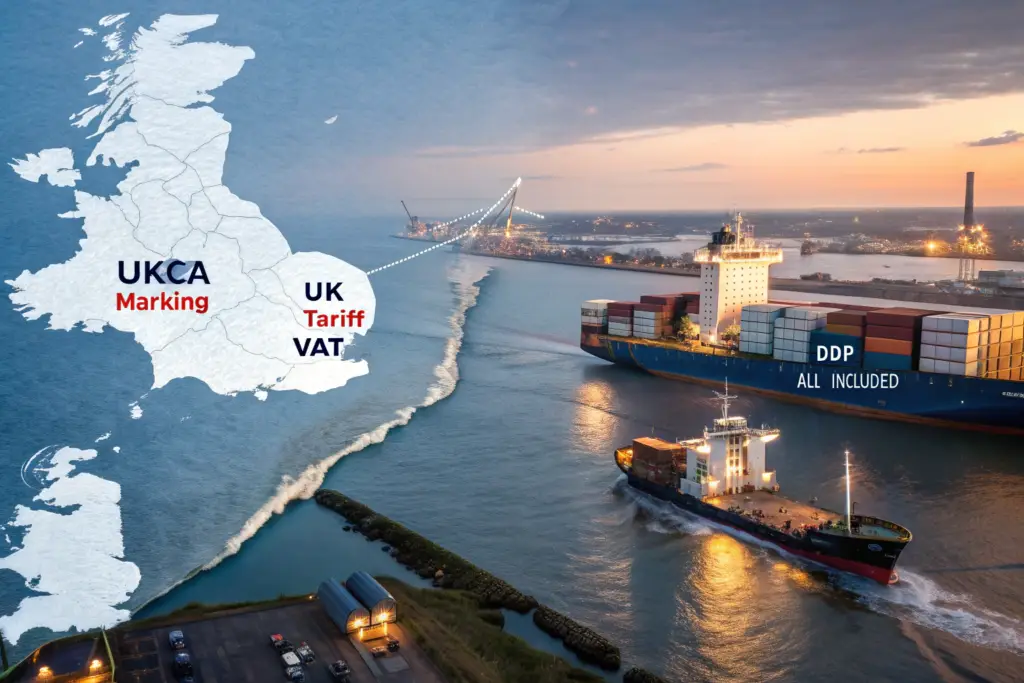
Brexit created a customs border between the United Kingdom and the European Union that did not previously exist. Apparel importers serving the UK market now face a separate regulatory regime with its own product marking requirements (UKCA), its own tariff schedule (UK Global Tariff), and its own customs procedures. For importers who previously served the UK as part of their EU operations, this has added a layer of complexity and cost. For importers focused specifically on the UK market, the post-Brexit environment has made direct importing more administratively demanding.
DDP solves the UK post-Brexit customs challenge by making the manufacturer responsible for UK customs clearance, UKCA compliance documentation, and UK VAT payment. The UK importer receives the same simple experience as an EU importer: a single landed cost, a single invoice, and delivery to their UK address. The complexity of the post-Brexit border is absorbed by the manufacturer's logistics and compliance team, not by the importer's operations staff.
What UK-Specific Documentation Does DDP Handle for Apparel Shipments?
Importing apparel into the United Kingdom requires specific documentation that differs from EU imports. The UKCA (UK Conformity Assessed) marking is required for products placed on the UK market, including apparel where applicable. The UK Global Tariff applies its own duty rates and classification rules. Customs declarations must be filed through the UK's Customs Declaration Service (CDS). The documentation package is different from the EU package, and errors cause delays at UK ports.
Our DDP service for UK-bound shipments includes a UK-specific documentation package. We classify garments according to the UK Global Tariff. We prepare UKCA documentation where required. We file customs declarations through the CDS system. We handle UK VAT payment at the applicable rate. The importer does not need to understand the differences between EU and UK customs procedures because we handle both through our DDP service, applying the correct rules for the destination. This UK post-Brexit customs procedures for apparel management is a service that European importers who previously treated the UK as part of their domestic market now find essential.
How Does DDP Benefit UK-Based Brands That Previously Sourced Within the EU?
Many UK-based apparel brands previously sourced their production from EU-based manufacturers, benefiting from frictionless trade within the single market. Post-Brexit, those same brands face customs declarations, duty payments, and VAT complexity when importing from the EU. Some have shifted sourcing to non-EU manufacturers, including those in China, because the customs friction from the EU is now similar to the customs friction from China, and the production cost advantage of China is significant.
For these UK brands, DDP from a Chinese manufacturer provides a simpler experience than FOB from an EU manufacturer. The DDP manufacturer handles everything from factory door to UK delivery address. The UK brand compares the landed DDP cost from China with the landed cost from the EU, and increasingly finds that the Chinese option, with DDP simplicity, is more attractive both financially and operationally. We have onboarded several UK-based brands that previously sourced within the EU. They tell us that the DDP experience—one quote, one invoice, one delivery—is actually simpler than their previous EU sourcing arrangements, which now involve customs declarations they never had to manage before. This post-Brexit sourcing shift to DDP from China is a trend that benefits manufacturers who offer comprehensive DDP service.
What Cost Predictability Advantages Does DDP Offer European Importers?
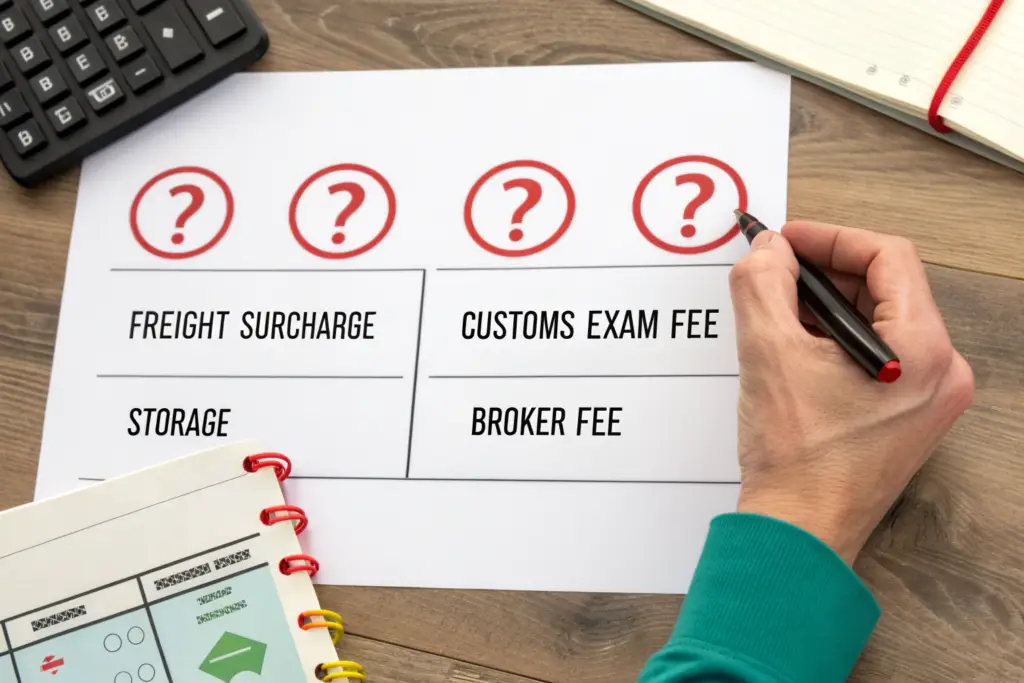
The headline FOB price from a factory is almost always lower than the DDP price from the same factory. This price difference has historically led many importers to choose FOB, believing they are saving money. But the FOB price is not the landed cost. It is the starting point of a cost journey that includes ocean freight, fuel surcharges, port handling charges, customs brokerage fees, customs examination fees, duty payments, VAT payments, storage charges, and final-mile trucking. Many of these costs are unpredictable at the time of order placement. The importer discovers the true landed cost only after the goods have arrived and all invoices have been received.
DDP offers European importers cost predictability that FOB cannot match. Under DDP, the importer knows the total landed cost at the moment of order confirmation. This cost is locked regardless of freight rate fluctuations, port congestion surcharges, or customs examination fees that occur between order placement and delivery. For a European brand setting wholesale prices for a season 6-9 months in advance, this cost certainty is not a convenience. It is a financial planning necessity. The slightly higher headline DDP cost is the price of eliminating cost uncertainty.
How Do Hidden FOB Costs Erode the Apparent Price Advantage?
An importer who exclusively compares FOB prices from different factories is making a decision based on incomplete information. Factory A offers FOB $10.00 per unit. Factory B offers DDP $12.50 per unit. The difference appears to be $2.50 per unit in Factory A's favor. But the FOB price from Factory A does not include freight, insurance, customs clearance, duty, VAT, or delivery. When the importer adds these costs, the true landed cost from Factory A might be $12.20 or $13.80 or $11.90, depending on freight market conditions at the time of shipment.
The importer only discovers the true cost after the goods have shipped. If the freight market has spiked, the landed cost might actually exceed the DDP quote from Factory B. The importer thought they were saving money. They were actually taking a financial risk that materialized against them. A European distributor we work with conducted a year-long analysis comparing their FOB shipments with our DDP shipments. They found that the average FOB landed cost was 3% lower than our DDP quote in months with low freight rates, but 8% higher in months with high freight rates. The DDP quote provided consistent, predictable costs. The FOB shipments were a gamble. They have since converted their entire program to DDP. This FOB vs DDP landed cost comparison analysis is an exercise that every importer should conduct with their own shipping data.
How Does DDP Cost Certainty Support Wholesale Pricing and Retail Planning?
A European brand selling to wholesale accounts sets prices at the beginning of the selling season, often at a showroom presentation 6-9 months before delivery. The wholesale price is based on an estimated landed cost. If the actual landed cost exceeds the estimate due to freight or customs cost increases, the brand's margin on those wholesale orders shrinks. The brand cannot go back to the wholesale buyer and renegotiate the price.
DDP eliminates this margin risk. The landed cost is locked at order confirmation, before the wholesale pricing is finalized. The brand sets wholesale prices with confidence, knowing the exact margin they will achieve. This certainty allows more competitive pricing because the brand does not need to build a large contingency buffer into the wholesale price to protect against cost overruns. The wholesale price can be sharper, or the margin can be more reliable, or both. A European brand partner told us that switching to DDP allowed them to reduce the contingency buffer in their wholesale pricing by 5%, making their prices more competitive with larger brands while improving their margin reliability. This DDP pricing certainty for wholesale planning is a strategic advantage that compounds across seasons.
How Does DDP Simplify the Multi-Country Distribution Model of European Apparel Brands?
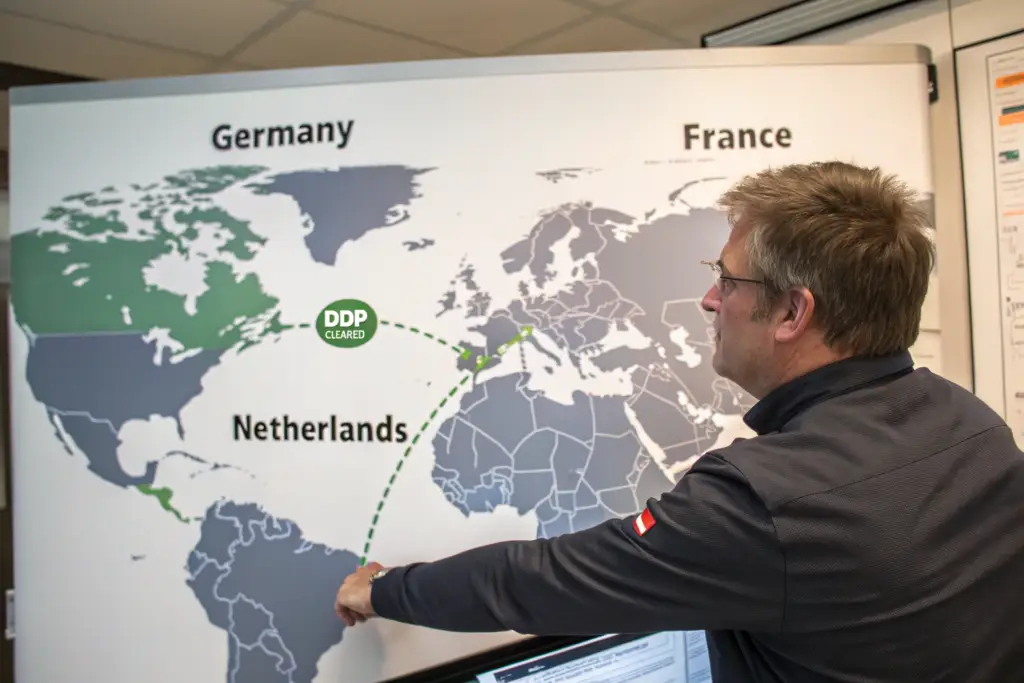
European apparel brands and distributors rarely serve a single country. A brand based in the Netherlands may sell to retailers in Germany, France, Belgium, and Austria. A distributor in Germany may serve the entire DACH region. Managing customs clearance, duty payment, and VAT handling for multiple destination countries from a single import shipment is logistically complex. Each country has different rules, different rates, and different documentation expectations.
DDP simplifies multi-country distribution by consolidating the complexity within the manufacturer's logistics function. The importer provides the delivery addresses for each destination country. The manufacturer quotes a single DDP price that covers delivery to all specified addresses. The manufacturer handles the customs clearance, duty, and VAT for each destination. The importer manages one relationship, one contract, and one set of invoices, regardless of how many countries the goods are distributed across. The operational simplification is transformative for mid-sized European brands that lack the scale to support an in-house multi-country customs compliance team.
How Does DDP Handle Split Deliveries to Multiple European Countries?
A single production order of 5,000 units may need to be delivered to three different warehouses: 2,000 units to the brand's main distribution center in the Netherlands, 1,500 units to a 3PL in Germany, and 1,500 units to a retail partner's facility in France. Under FOB terms, the importer must arrange three separate final-mile deliveries, each with its own customs implications, or arrange a complex deconsolidation and redistribution process within Europe.
Under our DDP service, the importer provides the three delivery addresses at the time of order. We arrange the shipment to a central European port, clear customs for all three destinations, and arrange final-mile delivery to each address. The importer receives three delivery confirmations, one consolidated invoice, and zero customs-related administrative work. A European streetwear brand we serve distributes to six countries from their base in Amsterdam. Our DDP service delivers directly to each of their six warehouse locations. They do not employ a single logistics coordinator. The entire European distribution function is handled through our DDP service. This multi-country DDP distribution in Europe is a level of service that enables brands to scale their geographic reach without scaling their logistics headcount.
How Does DDP Handle the Special Case of Northern Ireland?
Northern Ireland occupies a unique position post-Brexit. Under the Windsor Framework, Northern Ireland remains aligned with EU customs rules for goods, while being part of the United Kingdom. Shipments from outside the EU to Northern Ireland involve complex dual-status considerations. An importer unfamiliar with the nuances can easily make costly documentation errors.
Our European DDP service includes specialized handling for Northern Ireland deliveries. We apply the correct customs treatment under the Windsor Framework, ensuring that shipments comply with both EU and UK requirements where applicable. The importer does not need to understand the intricacies of the Northern Ireland protocol. We handle it as part of the DDP service. This Northern Ireland customs handling under DDP is a niche but important capability for importers serving the UK and Irish markets. It exemplifies the broader DDP value proposition: the manufacturer absorbs the regulatory complexity so the importer does not have to.
Conclusion
DDP is becoming the preferred shipping term for European apparel importers in 2026 because the European regulatory environment has become too complex, too dynamic, and too costly for importers to manage efficiently on their own. The Digital Product Passport, REACH compliance, multi-country VAT variations, post-Brexit UK customs procedures, and the general trend toward supply chain transparency and sustainability documentation are adding layers of administrative burden that consume operational resources and create compliance risk. DDP transfers this burden to the party best equipped to manage it: the manufacturer who controls the supply chain data at its source.
At Shanghai Fumao, our European DDP service is not a generic shipping option. It is a specialized capability built for the specific regulatory, logistical, and commercial requirements of the European market. We handle EU customs clearance, UK-specific procedures, multi-country VAT, and the documentation infrastructure required for current and upcoming regulations. Our European DDP clients receive cost certainty, operational simplicity, and compliance peace of mind that FOB and EXW terms cannot provide.
If you are a European apparel importer currently managing the complexity of FOB shipments across multiple countries, or if you are considering shifting sourcing to China and want a logistics model that simplifies rather than complicates your operations, let us provide a DDP proposal for your specific European distribution needs. Contact our Business Director, Elaine, at elaine@fumaoclothing.com. Share your product categories, your destination countries, and your volume estimates. We will return a transparent DDP landed cost and a logistics plan that turns the complexity of European importing into the simplicity of a single invoice.