You spent six months developing your fall collection. The prints were hand-painted. The silhouettes were draped and refined through a dozen iterations. The collection is your brand's most valuable asset. Then a friend sends you a link to an online marketplace. A factory you sourced a quote from six months ago is selling a near-identical jacket using your design. The color is different. The fabric is cheaper. But the distinctive seam lines and collar shape are unmistakably yours. Your stomach drops. You never signed anything with that factory. You just sent them the tech pack for a quote. Now your design is on the open market, and you have no clear path to stop it.
A top clothing manufacture in China protects your custom garment designs through a layered defense system: legally binding Non-Disclosure and Non-Use Agreements executed before any design information is shared, physical and digital access controls that restrict design file exposure to only essential personnel, a documented production workflow that prevents unauthorized replication, and a corporate culture of design respect enforced through employee training, monitoring, and severe consequences for violations. Protection begins before the first sketch is shared and continues after the final shipment is delivered.
At Shanghai Fumao, we understand that a brand's designs are not just patterns and specifications. They are the tangible expression of creative vision, market research, and financial investment. Protecting them is not a courtesy we extend. It is a core operational requirement. Let me explain the specific legal, technical, and cultural mechanisms we have built to ensure your designs never appear anywhere except on your authorized products.
What Legal Frameworks Protect Foreign Apparel Designs in China?
Many foreign brand owners assume their designs have no legal protection in China. This belief is outdated and incorrect. China's intellectual property laws have strengthened significantly over the past decade, driven by both domestic innovation priorities and international trade agreement obligations. The legal framework exists. The challenge for foreign brands is not the absence of law but the practical enforcement of rights from a distance. The right manufacturing partner bridges this gap by putting contractual protections in place before a single design file is exchanged.
The primary legal instruments protecting foreign apparel designs in China are the Non-Disclosure Agreement (NDA), the Non-Use Agreement (NUA), and the original design copyright that exists upon creation. A top manufacturer executes a combined NDA-NUA with every brand partner before receiving any design materials. This agreement defines the design information as the brand's exclusive property, restricts its use to the specific production purpose, prohibits any sharing with third parties, and establishes legal liability for violations under Chinese contract and intellectual property law.

What Specific Clauses Should an NDA-NUA Contain for Garment Manufacturing?
A generic NDA downloaded from the internet is insufficient for apparel manufacturing. The unique nature of garment design—where a changed fabric, a modified collar, or an adjusted seam line can be argued as a "different design"—requires specificity that standard templates lack. A garment manufacturing NDA-NUA must define the protected designs with precision. It must address the specific ways design theft occurs in the industry. It must establish jurisdiction and damages in terms that are enforceable.
Our NDA-NUA includes a design description appendix where each protected design is documented with technical sketches, reference images, and key distinguishing features. The agreement explicitly prohibits the factory from producing the design or any "substantially similar" design for any party other than the brand. "Substantially similar" is defined to capture derivative designs where a minor change is made to circumvent protection. The agreement prohibits the factory from displaying the brand's designs in showrooms, on websites, or in marketing materials without written permission. It establishes that violations will cause irreparable harm to the brand and entitles the brand to injunctive relief and liquidated damages. The agreement is governed by Chinese contract law with a designated court jurisdiction in Shanghai, where enforcement is practical. A garment industry NDA of this specificity demonstrates to the brand that the factory takes design protection seriously and has thought through the actual mechanisms of potential theft.
How Does Chinese Copyright Law Protect Original Garment Designs?
China is a signatory to the Berne Convention, which provides automatic copyright protection to original artistic works upon creation. Garment design elements that qualify as original artistic works—such as unique prints, original embroideries, and distinctive graphic elements—are protected by Chinese copyright law without the need for registration. The protection exists from the moment the design is created.
However, the practical challenge for foreign brands is proving originality and ownership in a Chinese legal context. We assist our brand partners by documenting the design creation timeline with dated records. When a brand sends us a new print design, our system timestamps the receipt and logs it in a digital chain of custody. This documentation creates a verifiable record of when the design entered our possession and from whom. If a dispute arises, the brand has a clear evidence trail. For particularly valuable designs, we recommend and facilitate copyright registration with the Copyright Protection Center of China. Registration is not required for protection, but it creates a government-certified record of ownership that simplifies enforcement. A children's wear brand we work with registers their seasonal prints each collection. The registration cost is modest. The enforcement leverage is significant. This Chinese intellectual property protection strategy combines automatic copyright with voluntary registration for high-value assets.
What Operational Controls Prevent Design Leakage Inside the Factory?
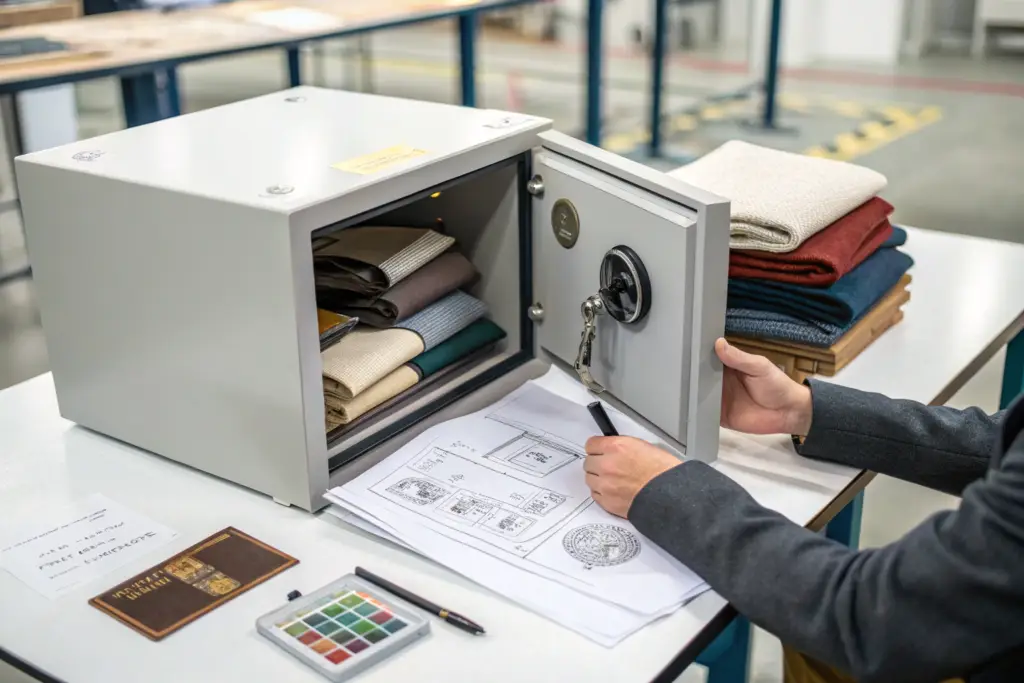
A signed NDA is a piece of paper. It deters bad actors and provides legal recourse after a violation. But it does not prevent a curious employee from photographing a sample with their phone, or a pattern file from being copied to a USB drive, or a production manager from running an extra 200 units to sell out the back door. Operational controls prevent the violations that legal agreements punish. A factory serious about design protection builds physical and digital barriers that make unauthorized access to design information difficult, detectable, and traceable.
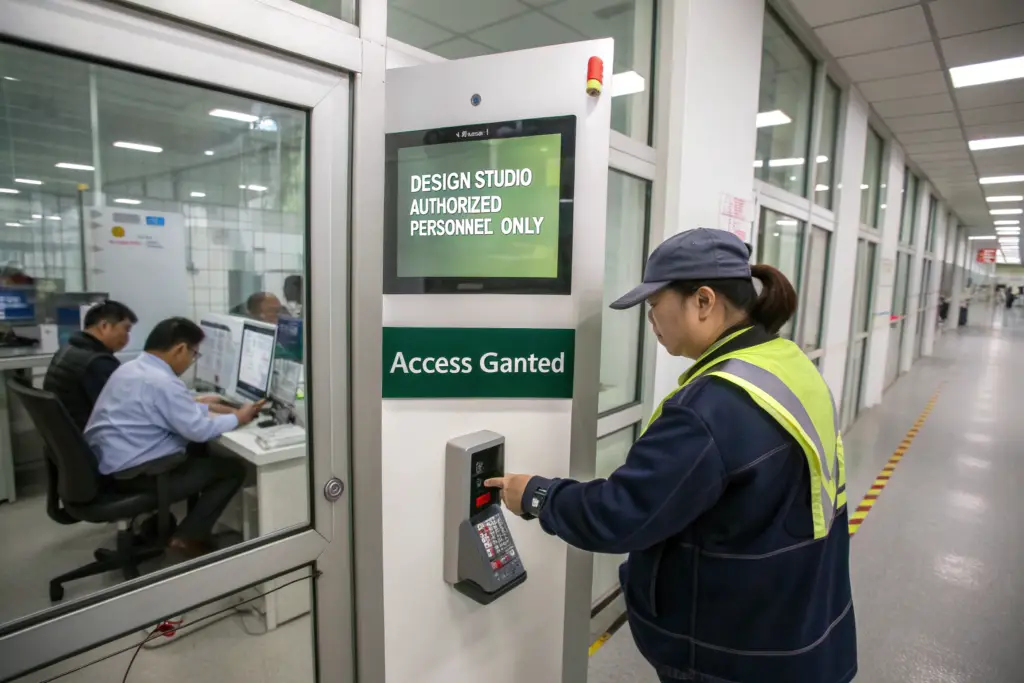
Shanghai Fumao's operational design protection system includes segregated design storage with access limited to named personnel on a need-to-know basis, a no-phone policy in sample rooms and pattern-making areas, digital file management with access logs and no external transfer capability on design workstations, and serialized production tracking that makes any unauthorized overproduction immediately visible during inventory reconciliation. These controls transform design protection from a legal promise into a physical reality.
How Does Segregated Access Limit Design Exposure?
In a typical factory, the tech pack for a new design might pass through ten hands. The merchandiser who receives it. The pattern maker who digitizes it. The cutting supervisor who prints the marker. The sewing line supervisor who distributes work. The quality inspector who checks measurements. The packing supervisor who attaches hang tags. Each handoff is an opportunity for the design to be photographed, copied, or remembered.
We collapse this exposure through segregated access. Your design files are stored on a dedicated server accessible only to named personnel who require access for their specific function. The pattern maker can access the pattern file but not the brand's pricing information or the full tech pack. The cutting room receives a marker file with dimensions but not the original design sketches. The sewing line receives assembly instructions but not the full pattern. Information is compartmentalized so that no single employee outside the core design team has access to the complete design package. This factory data security model follows the principle of least privilege. Each person has access to exactly what they need to perform their job and nothing more. A sewing operator cannot access the pattern file. A pattern maker cannot access the brand contract. The design is protected not by a single locked door but by a series of compartmentalized barriers.
The digital design files are the most vulnerable point in the modern garment supply chain. A single email attachment forwarded to an unauthorized recipient can put a design on the open market. A USB drive can walk out of the factory with an entire collection's worth of pattern files. Digital controls are as important as physical controls.
Our design workstations are configured without external data ports. USB drives cannot be connected. The email client on design workstations is restricted to internal addresses only. Files cannot be emailed outside the company domain from a design workstation. File transfers to the brand are conducted through a secure, encrypted portal with access logs and download tracking. Every file access is logged with the user identity, timestamp, and action taken. These logs are reviewed regularly for unusual access patterns. If a pattern maker accesses ten design files in an hour at 2 AM, the system flags the activity for investigation. This digital intellectual property protection infrastructure is not expensive relative to the value of the designs it protects. It requires intentional investment and a management commitment to data security. A factory without these controls is a factory that has not prioritized design protection.
What Cultural and Training Measures Reinforce Design Respect?
Technology and legal agreements create the framework for design protection. But the framework is operated by people. A factory worker who does not understand why design protection matters, or who feels no loyalty to the factory's ethical standards, can circumvent any technical control. Design protection ultimately rests on the integrity and awareness of the people handling the designs. Building a culture of design respect is a long-term investment that pays off in consistent protection that technology alone cannot guarantee.
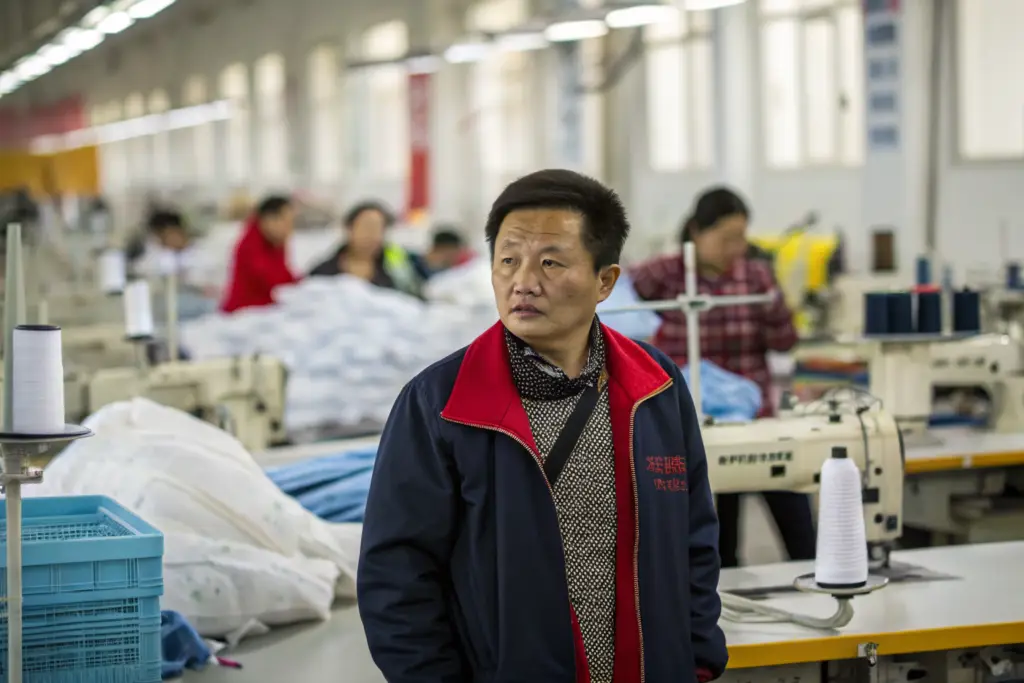
Shanghai Fumao cultivates a culture of design respect through mandatory onboarding training on intellectual property ethics, ongoing reinforcement through team meetings and visible signage, a confidential violation reporting hotline that protects whistleblowers, and a zero-tolerance enforcement policy with publicly known consequences for violations. Employees understand that protecting a brand's designs is part of their job, not an obstacle to it.
What Does Intellectual Property Training Cover for Factory Staff?
Every new employee at Shanghai Fumao, from the sewing operator to the senior production manager, completes a mandatory IP protection training module during onboarding. The training explains, in plain language with visual examples, what intellectual property is, why it matters to the brands we serve, and what specific behaviors are prohibited. The training is not a legal lecture. It is a practical guide.
Employees learn that photographing samples with personal phones is prohibited and why. They learn that discussing design details with friends or family outside work is a violation. They learn that running extra units "for personal use" is theft, not a perk. They learn the specific consequences for violations: termination of employment, forfeiture of bonuses, and in serious cases, referral to law enforcement. The training is reinforced annually with updated case examples. Real incidents from the industry, anonymized, are used to illustrate the damage caused by design leaks and the severity of the consequences. This ongoing employee IP training keeps design protection top of mind and communicates that the factory leadership takes it seriously.
How Does the Violation Reporting System Deter Internal Leaks?
Design theft often requires collusion. An employee photographs a sample and shares it with an external contact. A production manager approves an unauthorized overrun. These activities happen in the presence of other employees. If those employees fear retaliation for reporting what they see, the violations go unreported. A confidential reporting system breaks the silence.
We operate an anonymous hotline and digital reporting platform accessible to all employees. Reports can be submitted without identifying the reporter. The hotline is managed by a third-party service to ensure anonymity and prevent internal interference. Employees are trained on how to use the system and assured that reports made in good faith will not result in retaliation. When a report is received, our compliance officer investigates promptly and confidentially. The existence of this system creates a powerful deterrent effect. An employee considering a violation knows that their colleagues have a safe, anonymous way to report suspicious activity. The risk of detection is high. This internal compliance reporting mechanism turns every employee into a guardian of design integrity rather than a passive bystander.
How Do We Handle Sample and Overrun Accountability?
Design protection is not only about preventing copies. It is also about controlling the physical items that already bear the design. Development samples, fit samples, pre-production samples, and production overruns are physical embodiments of your intellectual property. If these items are not tightly controlled, they can find their way to unauthorized sellers, sample sales, or competitor factories. A factory serious about design protection accounts for every physical item bearing a brand's design from creation to destruction or return.
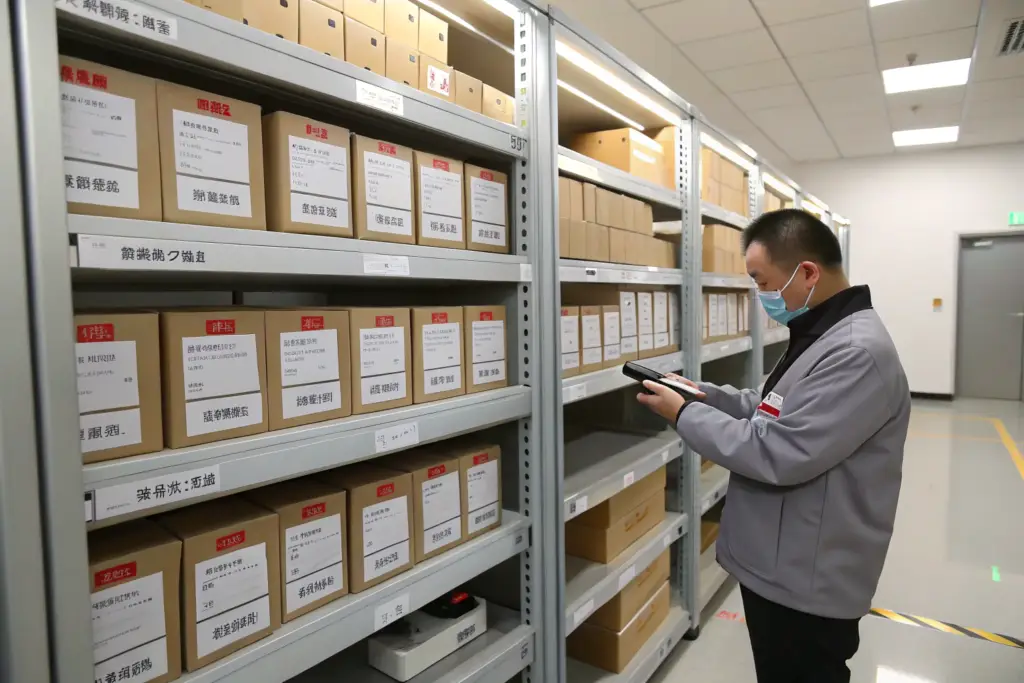
Shanghai Fumao maintains a serialized sample registry that tracks every sample produced during development. Samples are stored in a secured archive with access limited to authorized personnel. At the project's conclusion, samples are returned to the brand or destroyed with documented proof. Production overruns—the small quantity of extra units produced to cover potential defects—are fully accounted for. They are either shipped to the brand as part of the order, held for a defined period for potential reorder fulfillment with the brand's permission, or destroyed under documented protocol. No unauthorized units leave the factory.
What Happens to Development Samples After Production Concludes?
A development process generates multiple samples. The first pattern draft sample. The fit sample. The revised fit sample. The pre-production sample. The sealing sample. Each of these samples bears the brand's design. In a factory without sample control, these samples might end up in a sample sale room, given to employees, or sold to discount retailers. The brand's design appears on the gray market at a fraction of its intended retail price.
Our sample registry assigns a unique serial number to every sample produced. The registry records the sample type, creation date, fabric lot, and current location. At the conclusion of the production order, the brand is offered the option to have all samples returned with the bulk shipment. If the brand prefers not to pay shipping for samples, the samples are destroyed under documented protocol with timestamped photographs provided to the brand as proof. No sample bearing a brand's design is ever sold, gifted, or retained without the brand's explicit written permission. A garment sample management process this rigorous requires administrative discipline. The cost of maintaining it is negligible compared to the brand damage caused by unauthorized sample leakage.
How Is Overproduction Controlled and Accounted For?
Every production order includes a small overproduction allowance, typically 3-5% of the order quantity. This overrun covers units that may be rejected during quality inspection, ensuring the brand receives at least the ordered quantity. A factory with weak controls might produce 10% overrun, ship the contracted quantity to the brand, and sell the unauthorized excess through gray market channels. The brand's design is sold without the brand's knowledge or revenue.
We agree on the overrun percentage with the brand before production begins. The percentage is documented in the production contract. During production, our serialized tracking system monitors cut quantities against order quantities. The final packing list reconciles total production, QC rejections, and shipped quantity. Any overrun units remaining after QC rejections are fully documented and reported to the brand. The brand has three options: ship the overrun units with the order at the agreed unit price, hold the overrun units for a defined period as safety stock for reorders, or have the units destroyed with documented proof. The choice belongs to the brand, not the factory. This production overrun control transparency eliminates the financial incentive for unauthorized overproduction and gives the brand complete visibility into the total quantity of their design produced.
Conclusion
Protecting custom garment designs in China is not a matter of hoping for the best or accepting design theft as a cost of doing business. It is a matter of choosing a manufacturing partner that has built design protection into its legal framework, operational controls, employee culture, and inventory management systems. The factory that takes your design protection seriously will be eager to explain its protections before you ask. The factory that treats design protection as an afterthought will offer vague reassurances and have no specific mechanisms to describe.
At Shanghai Fumao, we protect your designs because your designs are the reason you exist as a brand. If your designs are compromised, your brand is compromised. Our NDA-NUA is ready before you send your first sketch. Our segregated access controls limit who sees your designs and what they can do with them. Our digital file controls prevent unauthorized copying. Our employee training and reporting systems build a culture where design theft is unthinkable and unrewarding. Our sample and overrun controls ensure that every physical item bearing your design is either in your hands or destroyed with proof.
If you have been burned by design theft in the past, or if the fear of it is preventing you from exploring manufacturing partnerships in China, let us show you our design protection systems in detail. Contact our Business Director, Elaine, at elaine@fumaoclothing.com. We will walk you through our NDA, our access controls, our sample registry, and our overrun reconciliation process. Your designs deserve a factory that treats them as the valuable assets they are.